Phyllidiella rudmani
A small warty nudibranch turning up on reefs around Koh Phi Phi, Thailand, year-round in warm 26-32C water.
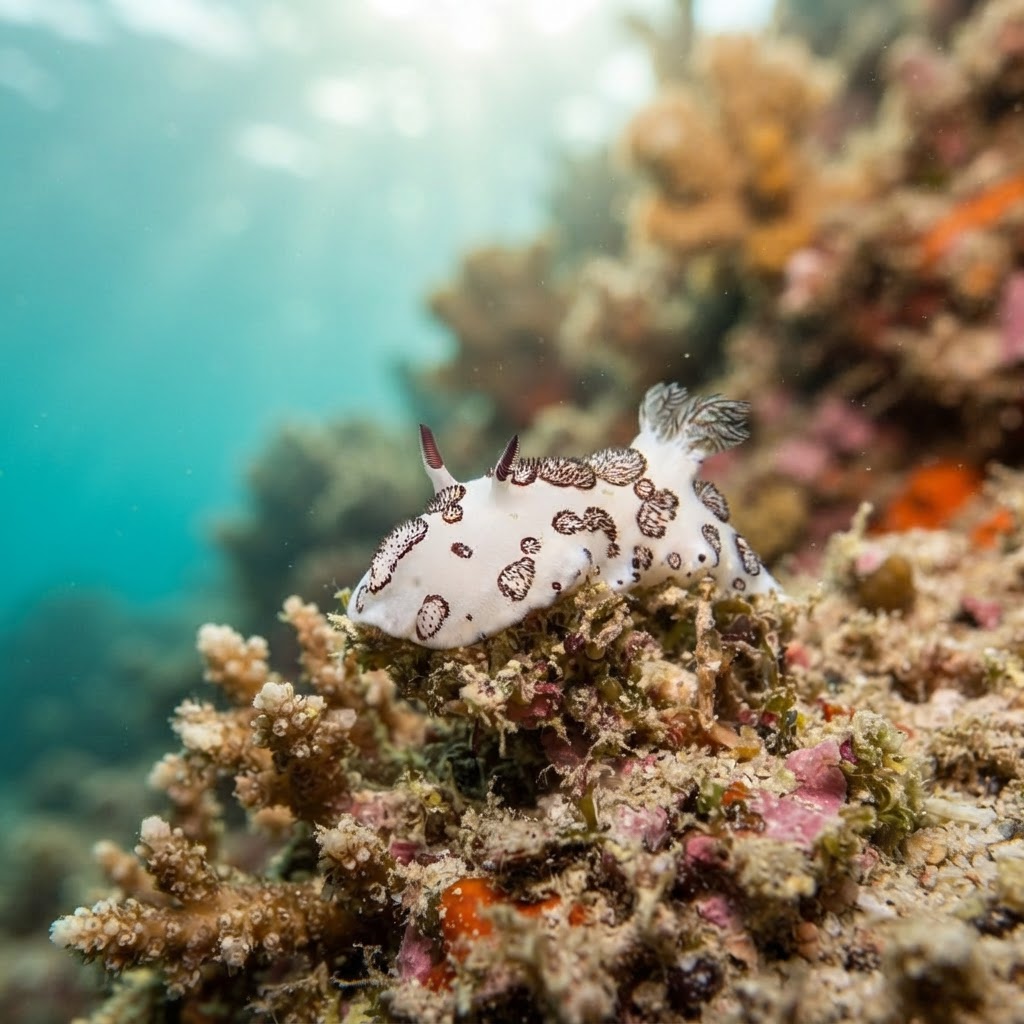
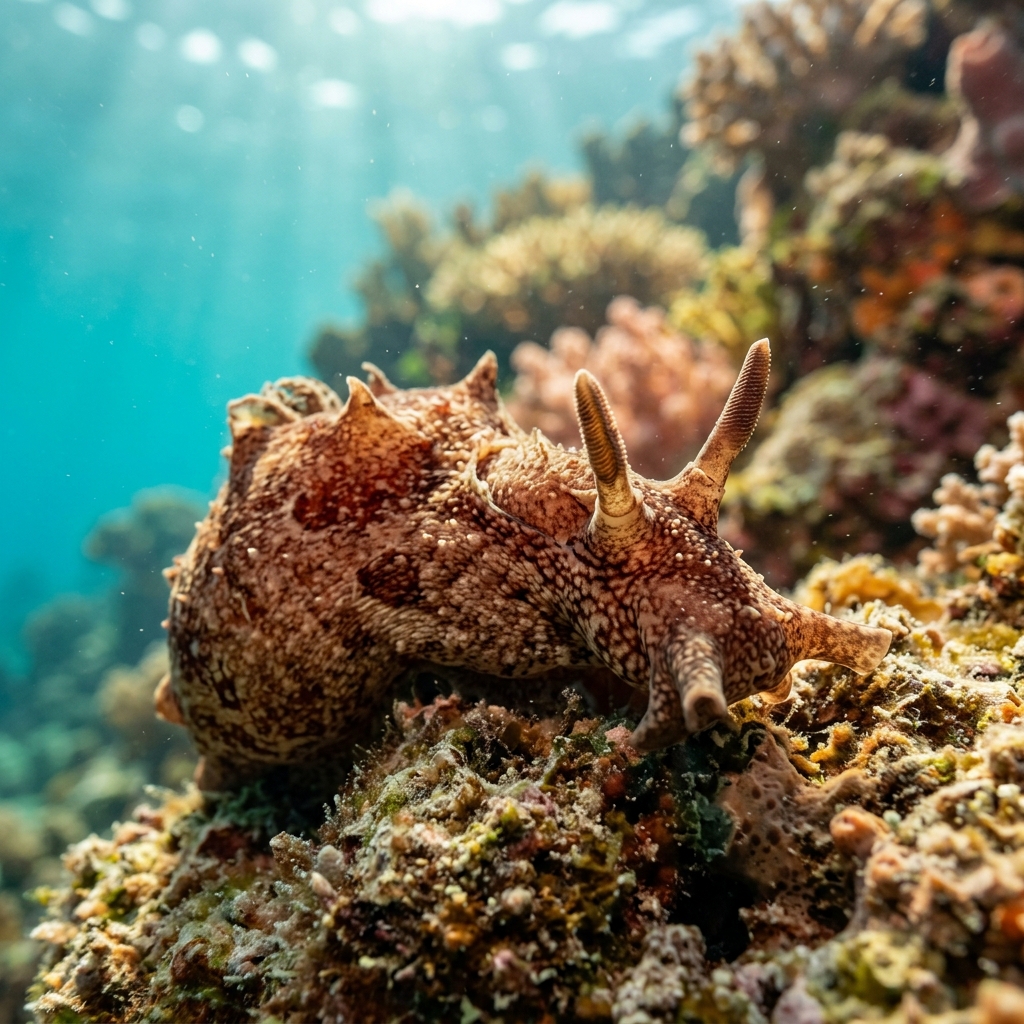
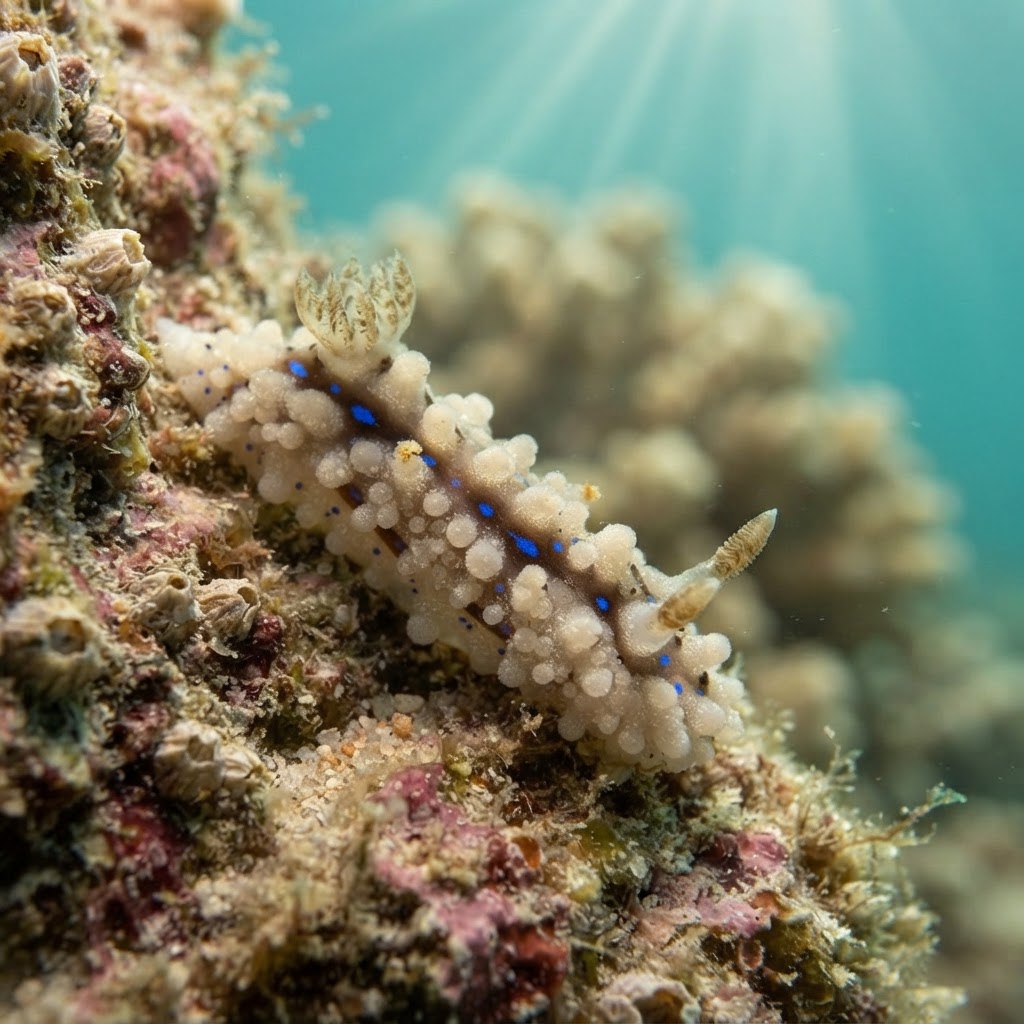
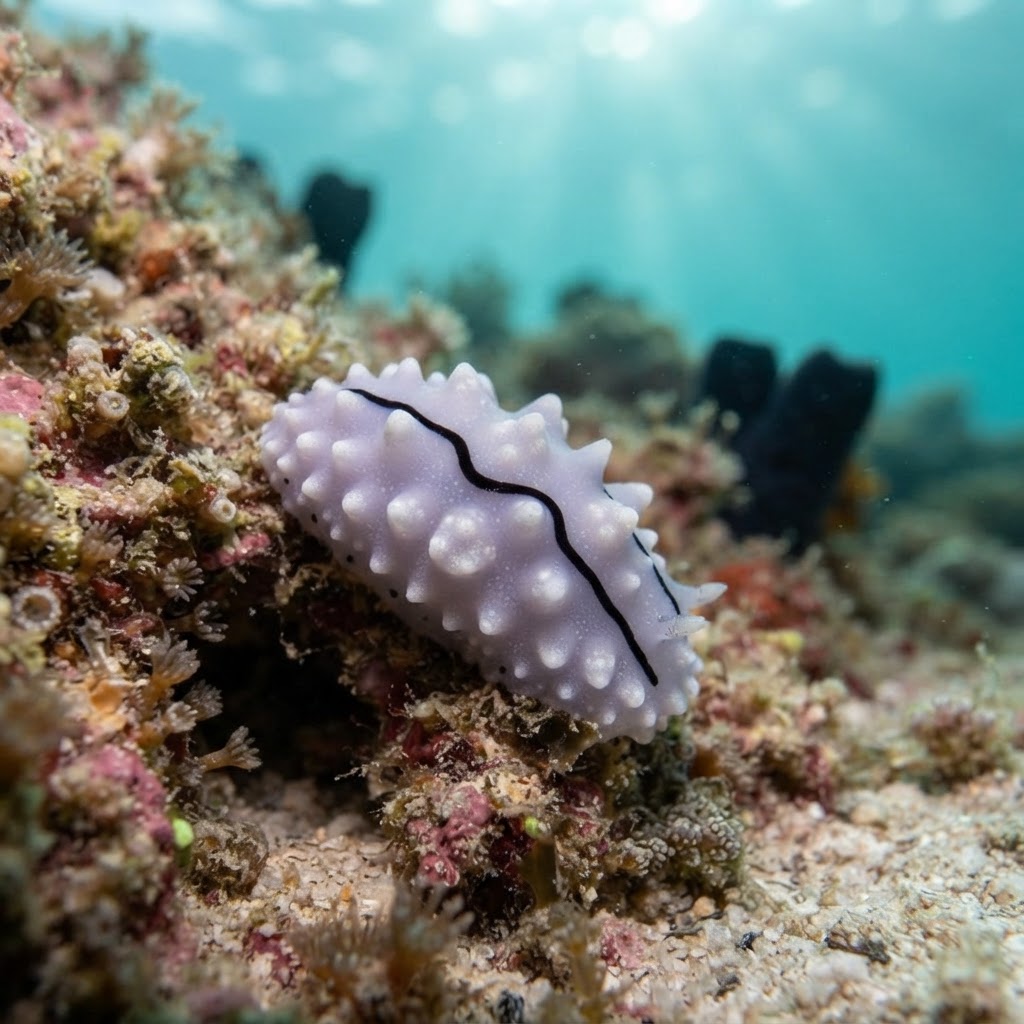
A small, low-slung nudibranch reaching about 4 cm, with a firm warty body covered in raised bumps (tubercles) rather than a smooth skin. Look for the dark base colour broken up by pale patches across the tubercles, giving a mottled, almost cobbled look rather than bold stripes. Like other Phyllidiella species it has no visible gills on its back, breathing instead through structures under the mantle edge, so the upper surface reads as uniformly rough and textured.
Divers find it slowly grazing over reef rubble and hard substrate, usually alone, moving at the unhurried pace typical of dorid nudibranchs. It shows no reaction to divers beyond simply continuing to crawl, and like most nudibranchs it's most often spotted by slow, close-focus divers scanning the substrate rather than swimming past at normal pace.
Phyllidiids, this species included, are thought to concentrate toxic compounds from the sponges they graze on, which is why their bold or mottled patterning likely serves as a warning rather than camouflage.
No clear seasonal pattern shows up in the sightings, and with a comfortable water-temperature range of roughly 26 to 32C it likely stays active on these reefs year-round. Plan around good diving conditions at your chosen site rather than a specific month.
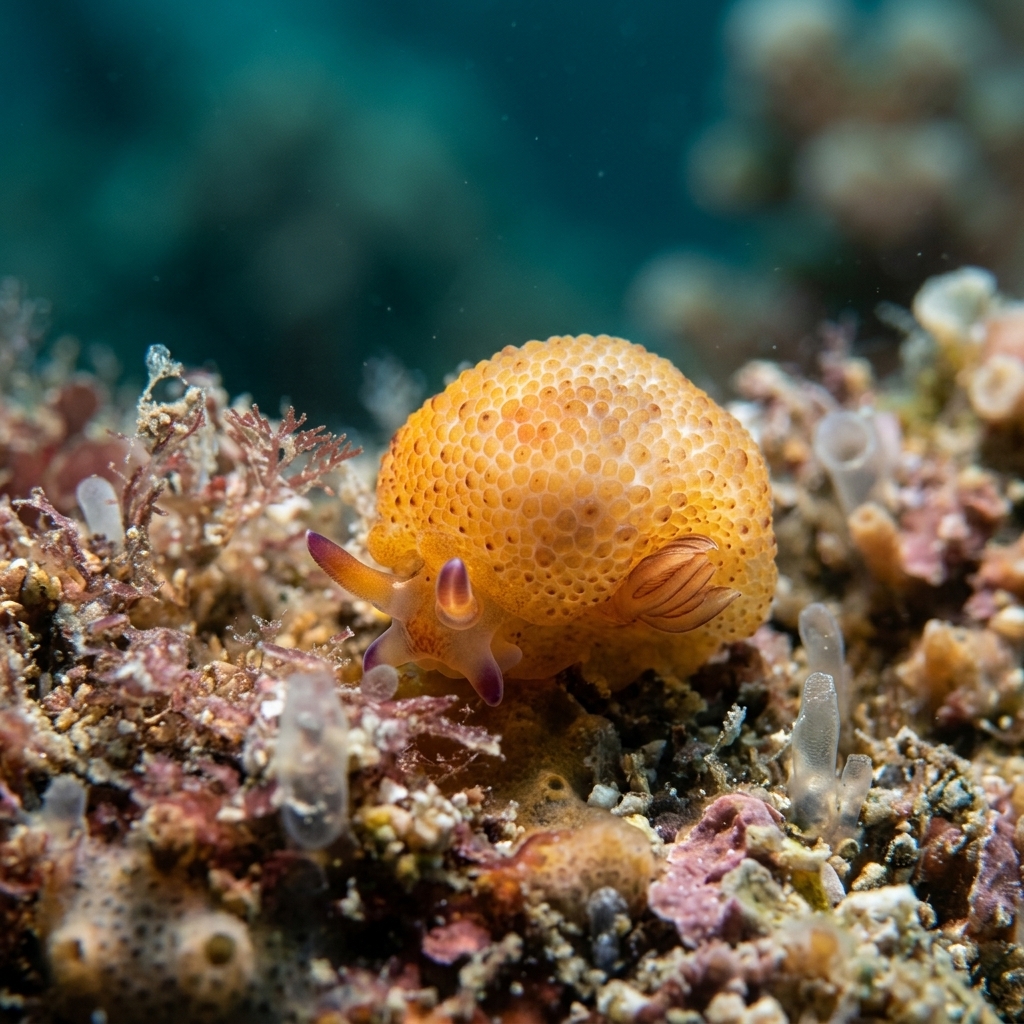
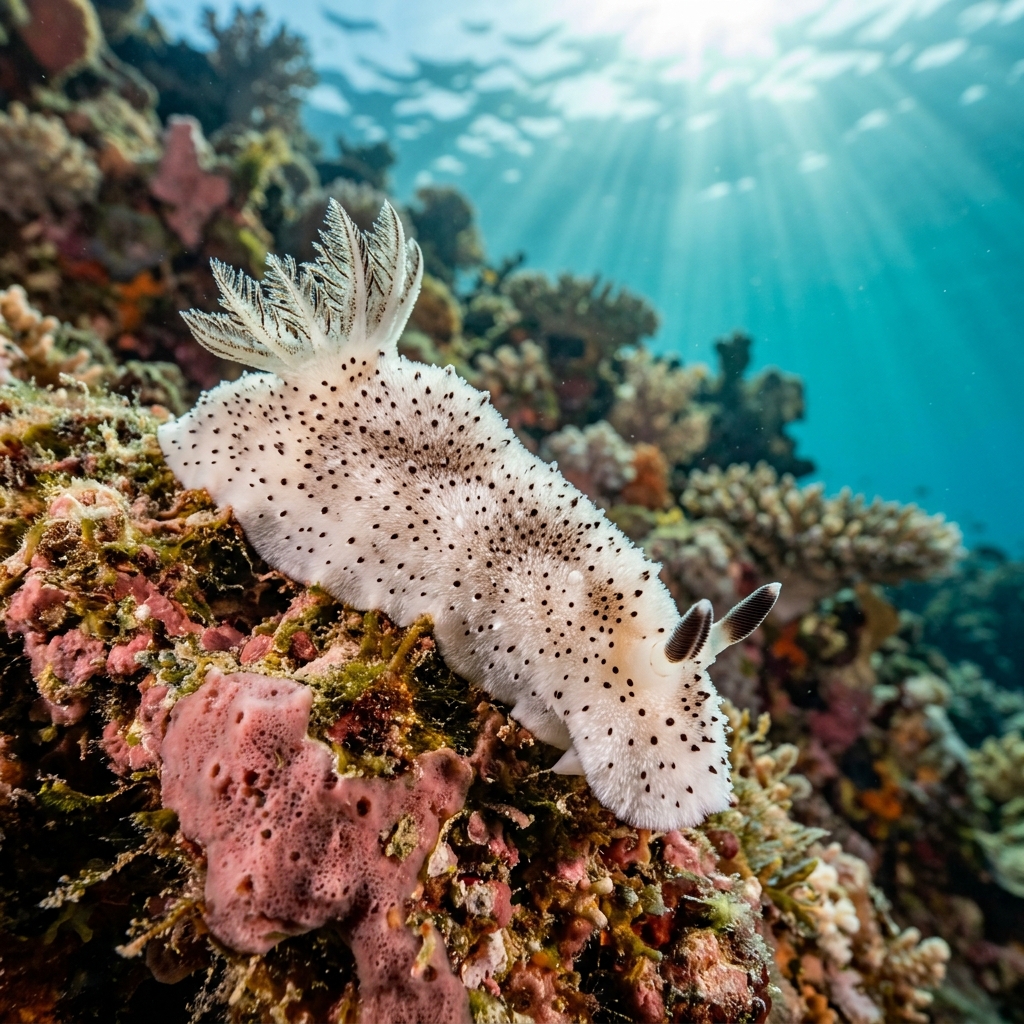
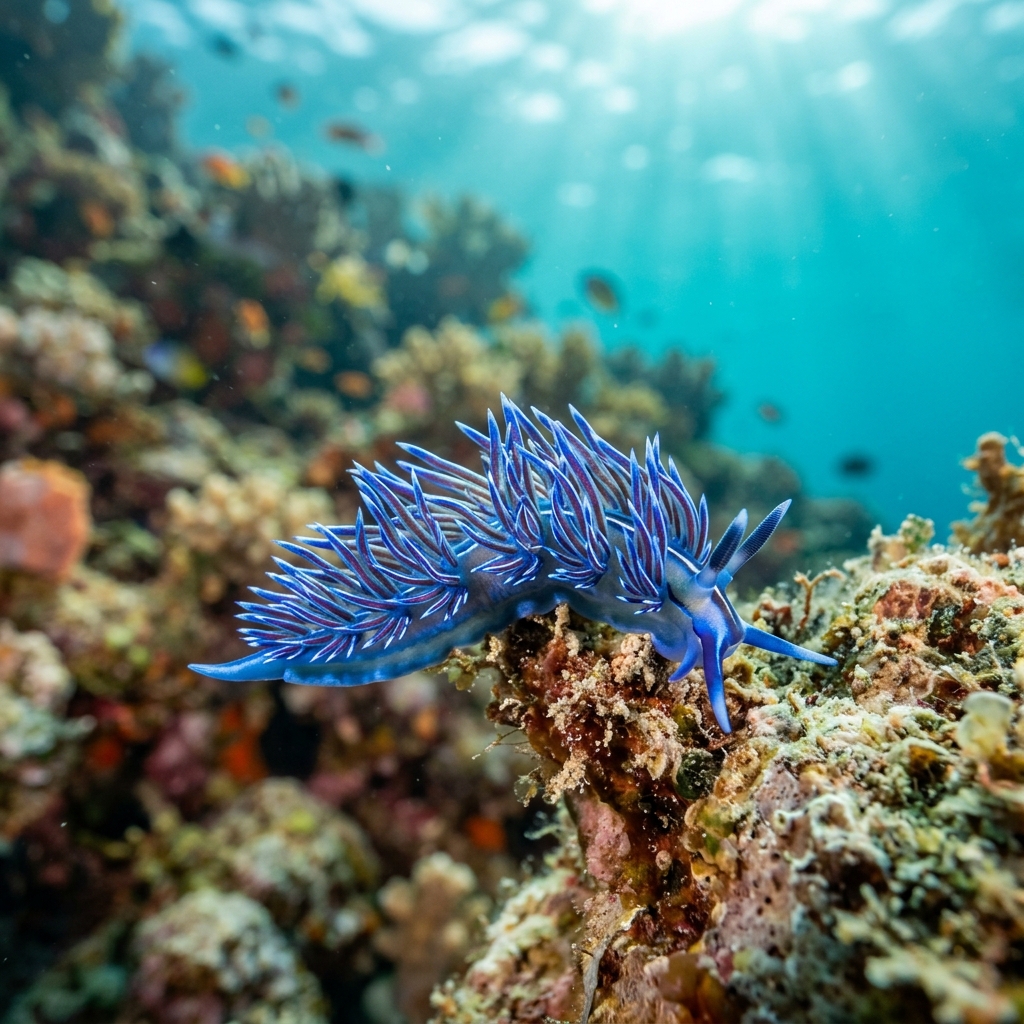
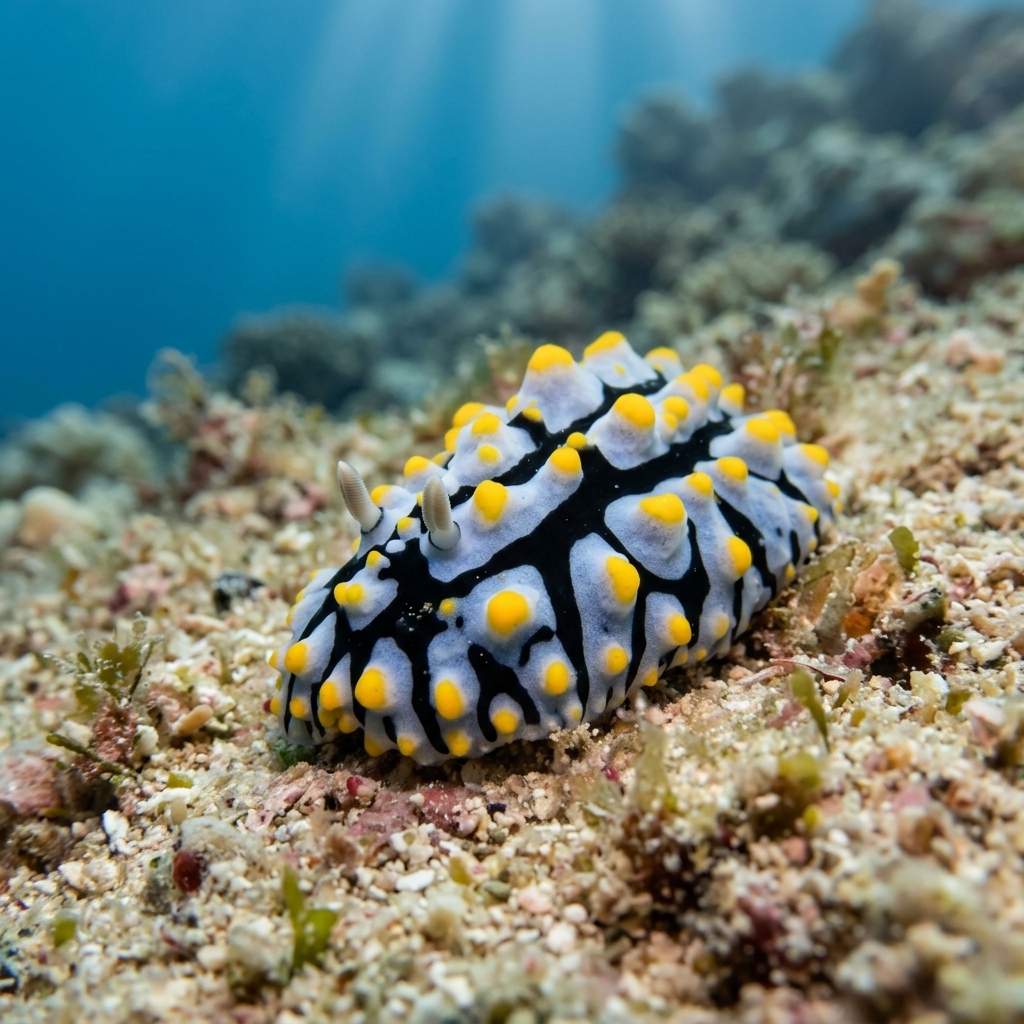
Reef neighbours a diver could mistake it for. Use the identification notes above to tell them apart.
Most reliably logged around Koh Phi Phi in Thailand, which accounts for the bulk of recorded sightings, with a smaller but consistent presence in Singapore's Southern Islands and a single record from Kavieng in Papua New Guinea. Thailand is currently the strongest bet for a dedicated search, with Singapore a useful backup if you're diving that region.
Mapping where Rudman's Phyllidiella is logged…
Koh Phi Phi in Thailand is the most consistent location, with additional sightings around Singapore's Southern Islands and Kavieng in Papua New Guinea.
There's no detected season in the sightings, and its warm-water niche of roughly 26 to 32C suggests it can be found year-round on tropical reefs.
Look for a small warty nudibranch around 4 cm long with a dark body broken up by pale patches across raised tubercles, giving it a rough, mottled texture rather than smooth skin or bold stripes.
They stay small, typically around 4 cm in length, so a slow eye and a bit of patience helps when searching reef rubble for one.
No. It poses no threat to divers and simply grazes slowly across the reef surface, ignoring anything nearby.
Like other phyllidiids, it likely absorbs and stores toxic compounds from the sponges it feeds on, using its rough patterned body as a warning to predators rather than for camouflage.
Site and sighting data is aggregated from diver logs, iNaturalist and GBIF. For taxonomy and conservation status:
Light-spotted Aegires
3,168 sites