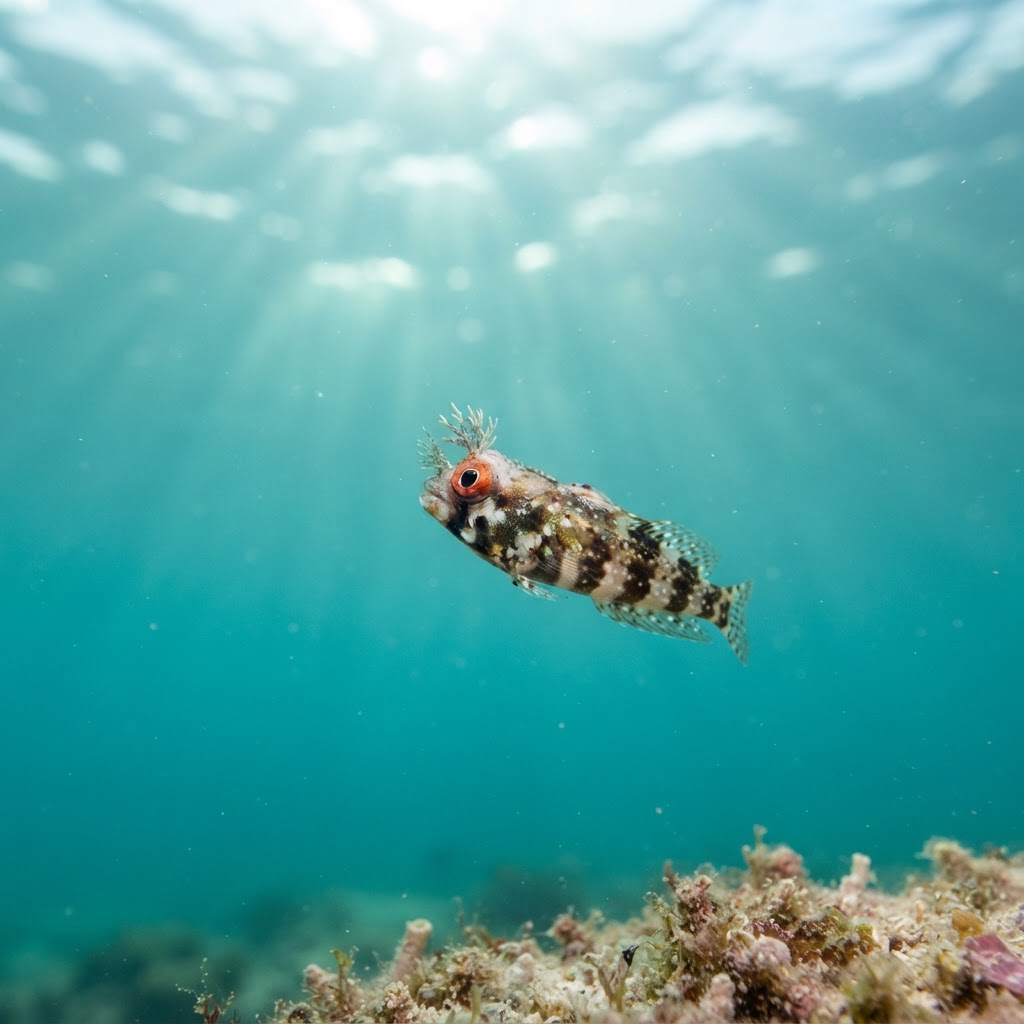
Acanthemblemaria aspera
Peek into old worm holes on Florida and Cayman reefs and you might spot this 2cm blenny staring back at you.
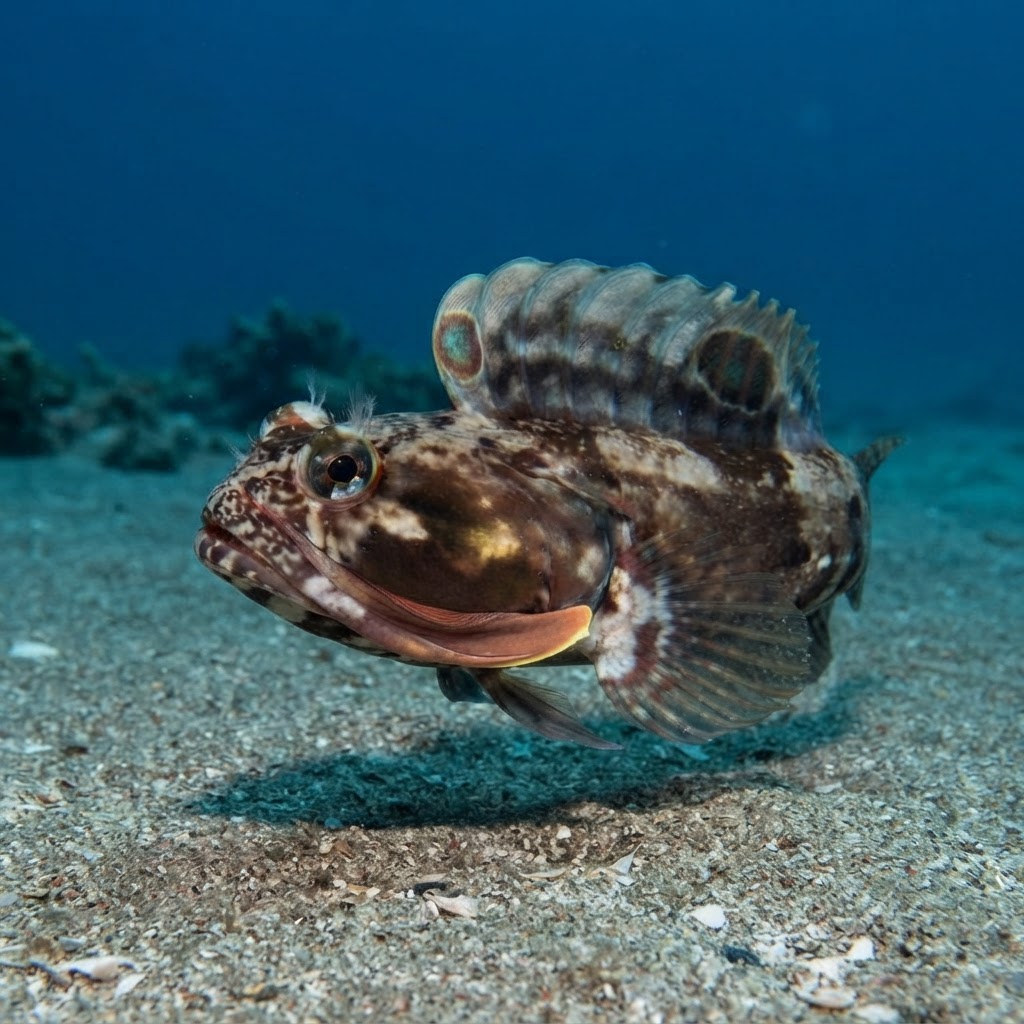
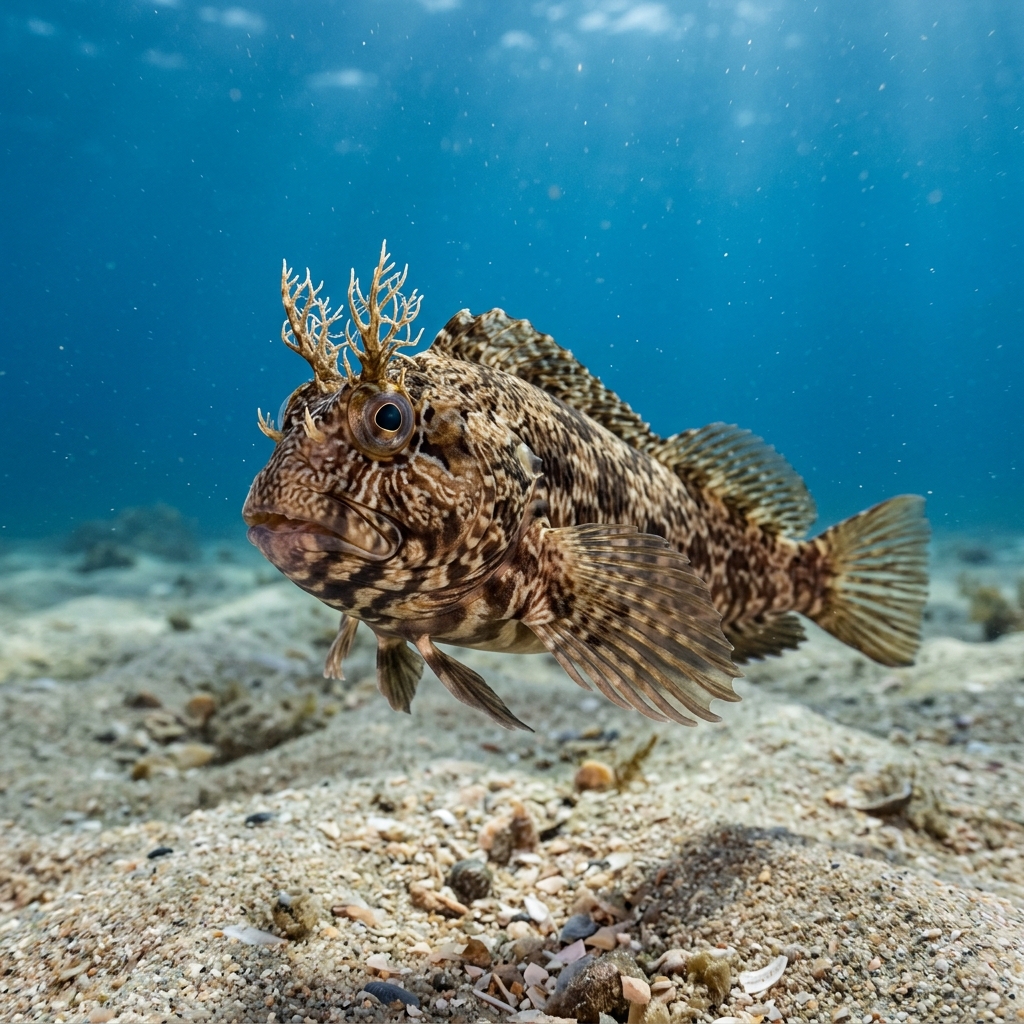
A tube-dwelling blenny barely 2cm long, usually seen as just a head poking out of an old worm burrow in coral rock or rubble. Look for the spiky, bristled crown (cirri) above the eyes and a mottled brown-and-white body that vanishes as soon as it retreats into its hole. The head is disproportionately large and bumpy compared to the slender body hidden inside the tube.
Spend most of the dive parked head-out in a single burrow, watching the reef go by and darting back inside at the first hint of a hand or torch getting close. Divers usually find them by scanning old worm tubes and dead coral heads at close range rather than swimming across open reef. Most sightings happen during the day when the light makes their tiny heads easier to pick out against the rock.
Like other tube blennies, it never leaves its burrow voluntarily, using the same abandoned worm hole as a permanent address, ambush point for passing plankton, and refuge all in one.
Sighting records don't show a clear seasonal pattern, and with water in the 27 to 28C range typical of these Caribbean reefs, it's a year-round resident rather than a seasonal visitor.
Reef neighbours a diver could mistake it for. Use the identification notes above to tell them apart.
Most commonly logged on reefs off Florida, with strong showings in Grand Cayman and around Saint John and Saint Thomas in the US Virgin Islands. It also turns up reliably in the Bay Islands of Honduras and through the British Virgin Islands, including Tortola and the southern islands.
Mapping where Roughhead Blenny is logged…
Florida reefs turn up the most sightings, with Grand Cayman, Saint John and Saint Thomas in the US Virgin Islands, and the Bay Islands of Honduras also reliable spots to find them.
There's no strong season in the sighting data, and the warm 27 to 28C water they favour holds steady year-round, so any month on these Caribbean reefs works.
Look for a tiny, bristly head poking out of an old worm hole in coral rock, about 2cm across, with a mottled brown pattern and spiky cirri above the eyes. The body stays hidden in the burrow, so the head is really all you see.
They max out around 2cm, making them one of the smaller reef fish a diver can realistically pick out, and usually only the head is visible above the burrow.
No, they pose no threat to divers. They're too small and too committed to hiding in their burrows to interact with anyone beyond a passing glance.
It lives its whole adult life inside a single abandoned worm tube, using the same hole as home, hunting perch, and hiding spot rather than ranging over the reef like most fish.
Site and sighting data is aggregated from diver logs, iNaturalist and GBIF. For taxonomy and conservation status:
Rusty Blenny
2,605 sites