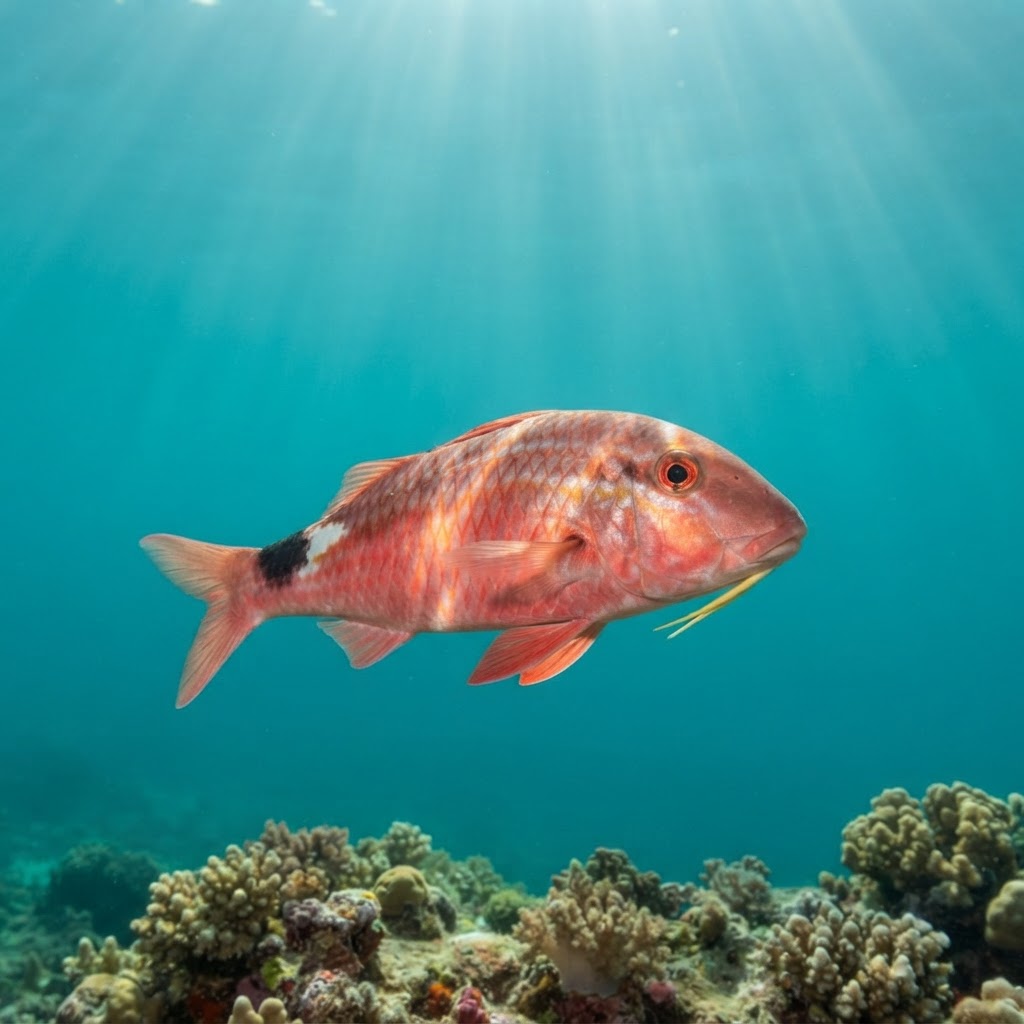
Parupeneus rubescens
Uncommon but reliable in KwaZulu-Natal reefs, this pink-hued goatfish probes sand with its barbels in 21 to 27C water year-round.
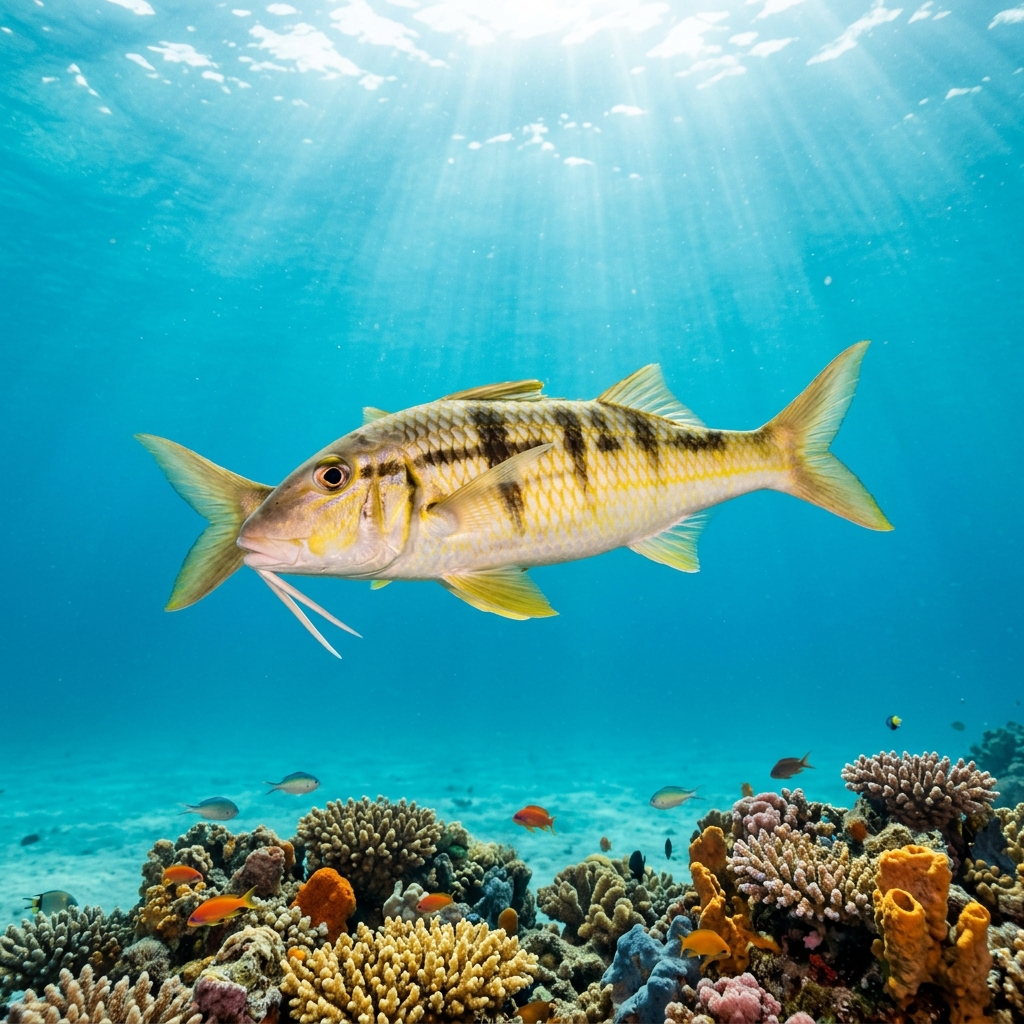
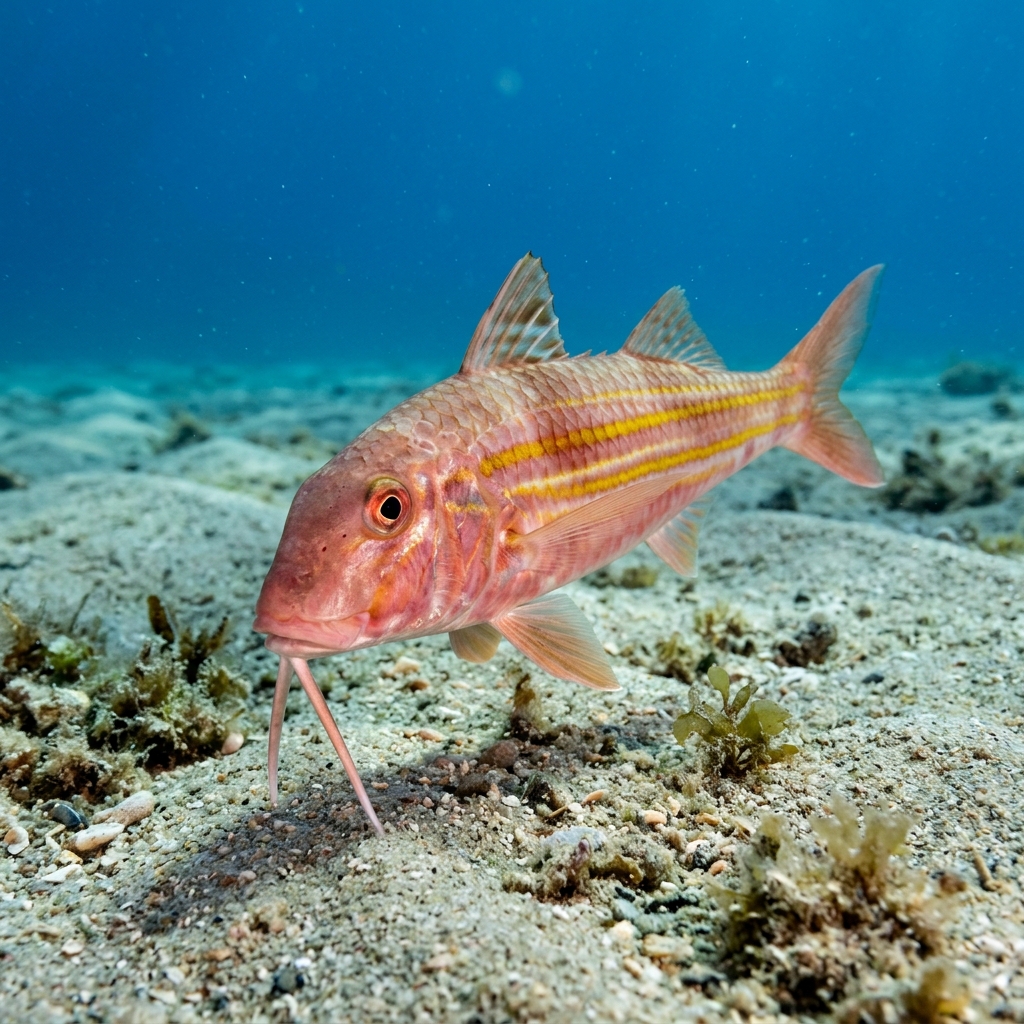
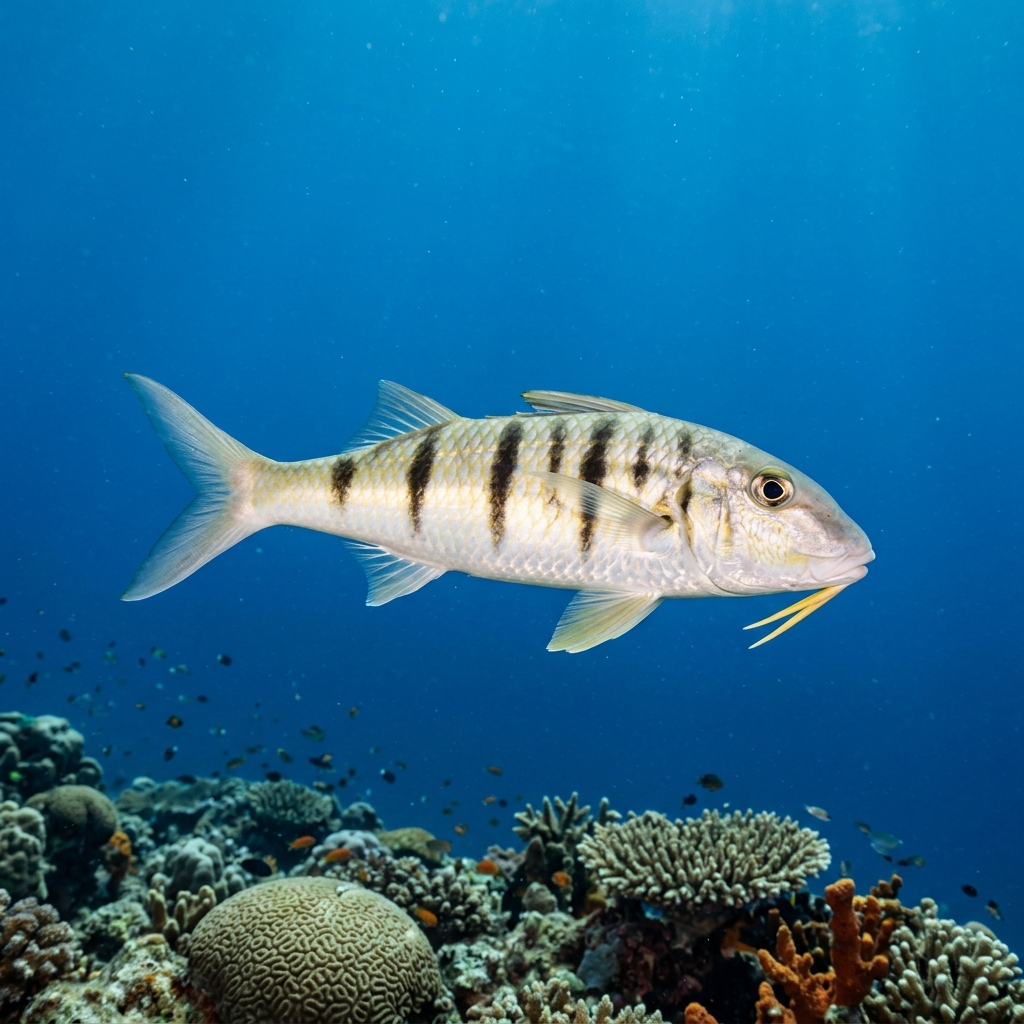
Look for a slender, pinkish-rose body around 30 cm long with a pair of long chin barbels it drags through the sand to find food. The head often shows a faint reddish or pink wash that fades toward the tail, and there is no bold saddle patch or dark spot to distract you. Watch the barbels rather than the colour alone, since that sand-probing motion is the giveaway from a distance.
Divers typically find it working sandy patches or rubble near reef edges, barbels sweeping the bottom as it hunts for buried invertebrates. It tends to move steadily rather than dart, giving a fair look before it drifts off, and it is not particularly wary of divers who keep a slow, low profile.
Those chin barbels are loaded with taste and touch sensors, letting it detect prey buried in sand without ever seeing it, a trick shared across the whole goatfish family.
No clear seasonal pattern shows up in the sightings, and the observed range of 21.1 to 27.1C spans a broad comfort zone, so it is worth looking for year-round rather than timing a trip around it.
Most reliably logged along South Africa's KwaZulu-Natal coast, with a smaller but steady presence in the Western Cape, and it also turns up around Eilat on Israel's Red Sea coast. Sightings across these sites are consistently uncommon to rare, so it is a fish you notice rather than one guaranteed on every dive.
Mapping where Rosy Goatfish is logged…
KwaZulu-Natal in South Africa is the most consistent spot, with additional sightings in the Western Cape and around Eilat in Israel's Red Sea.
There is no strong seasonal signal in the sightings, and its temperature range of 21.1 to 27.1C covers most of the year, so it can be seen across the seasons rather than in one particular window.
Check for a pinkish, slender body around 30 cm long and a pair of long barbels under the chin used to probe sand for food. There is no bold contrasting patch, so the barbel-sweeping behaviour is often the clearest clue.
They reach around 30 cm in length, a typical size for goatfish species found on reef sand flats and rubble zones.
Its chin barbels carry sensory cells that detect buried prey by touch and taste, letting it feed on invertebrates hidden in sand it cannot see.
No, they pose no danger to divers and are generally unbothered by a calm, slow approach.
Site and sighting data is aggregated from diver logs, iNaturalist and GBIF. For taxonomy and conservation status:
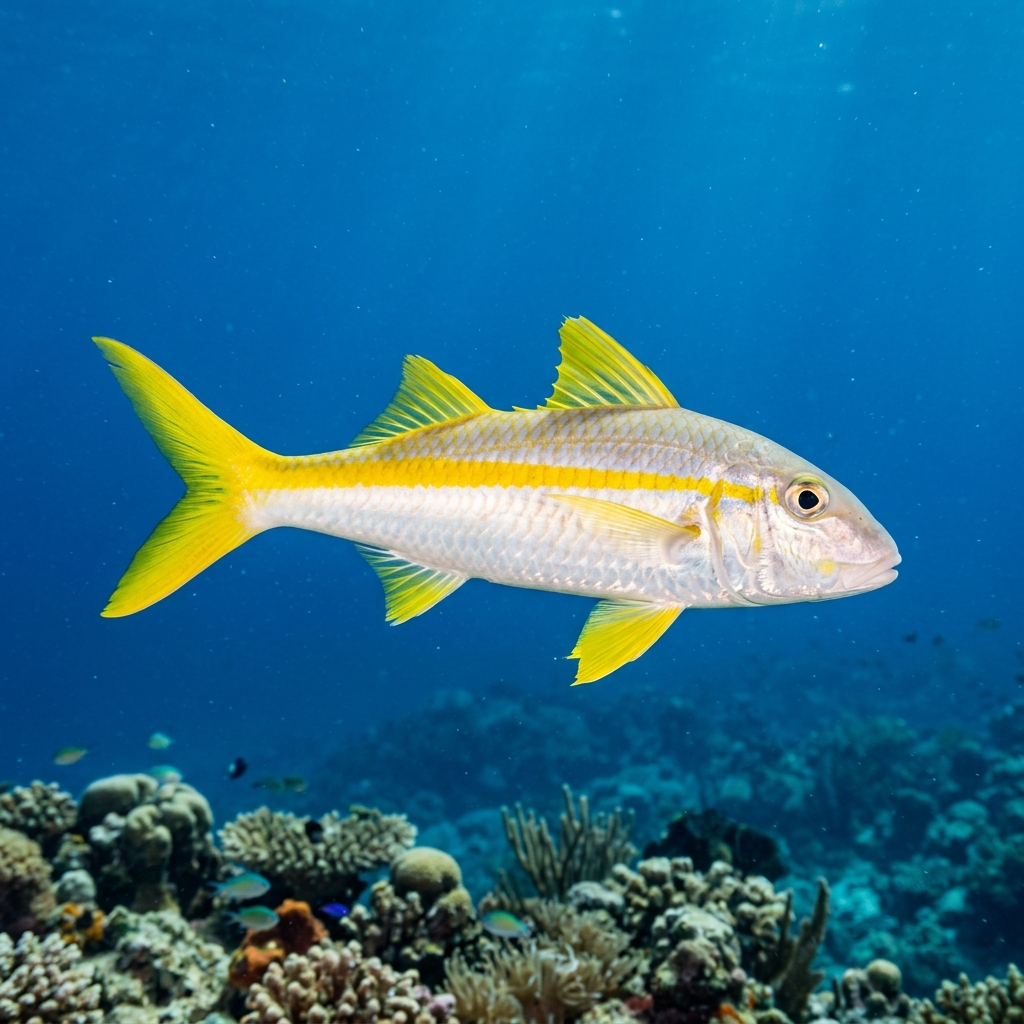
Yellowfin Goatfish
2,241 sites