Halichoeres semicinctus
Common on California's rocky reefs and Baja California kelp beds, in water from 16.7 to 24.2C, year-round.
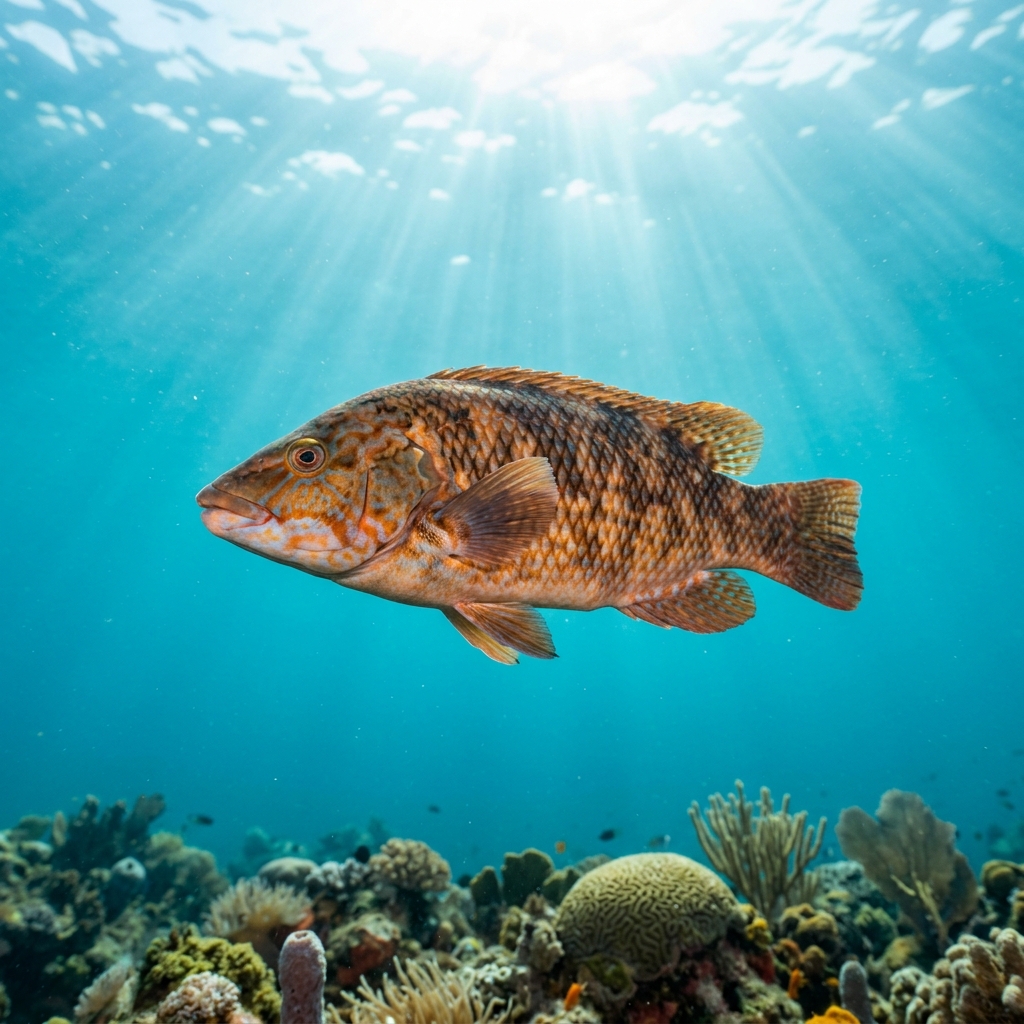
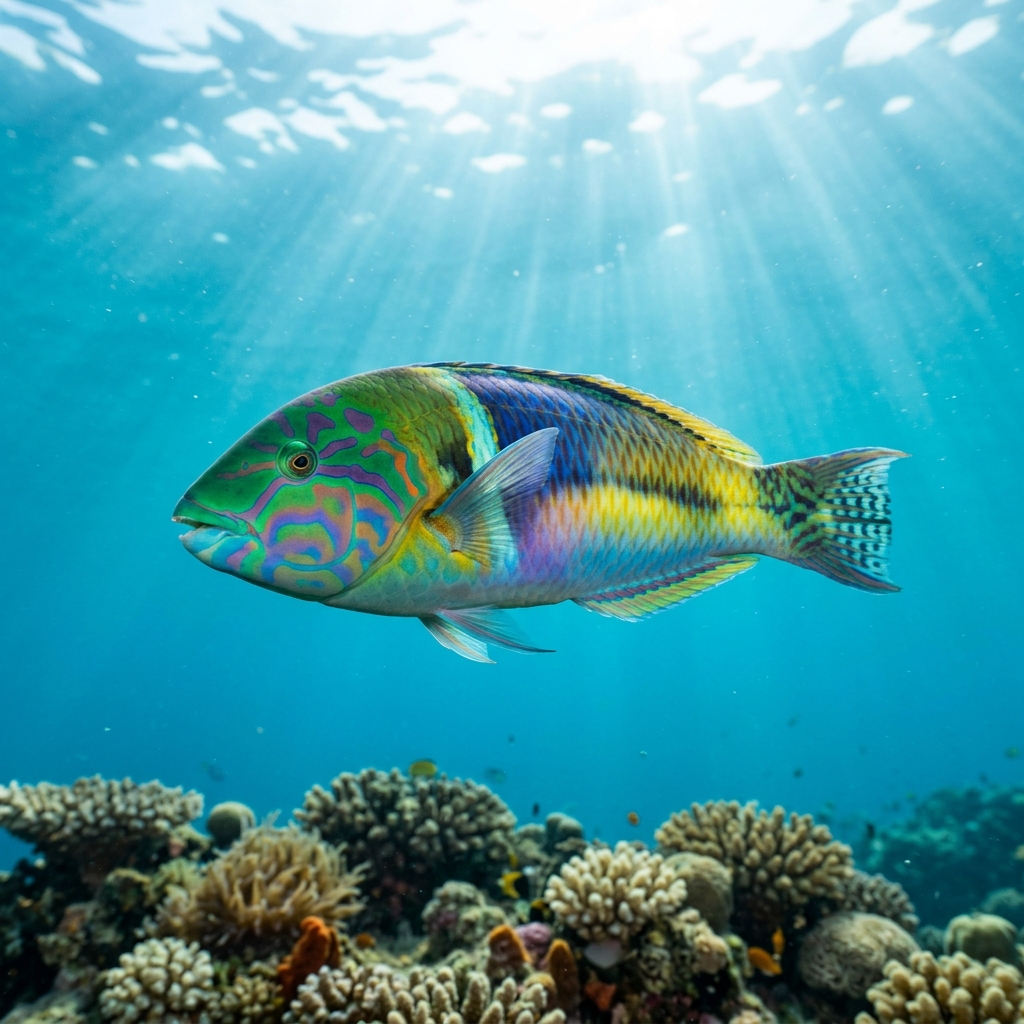
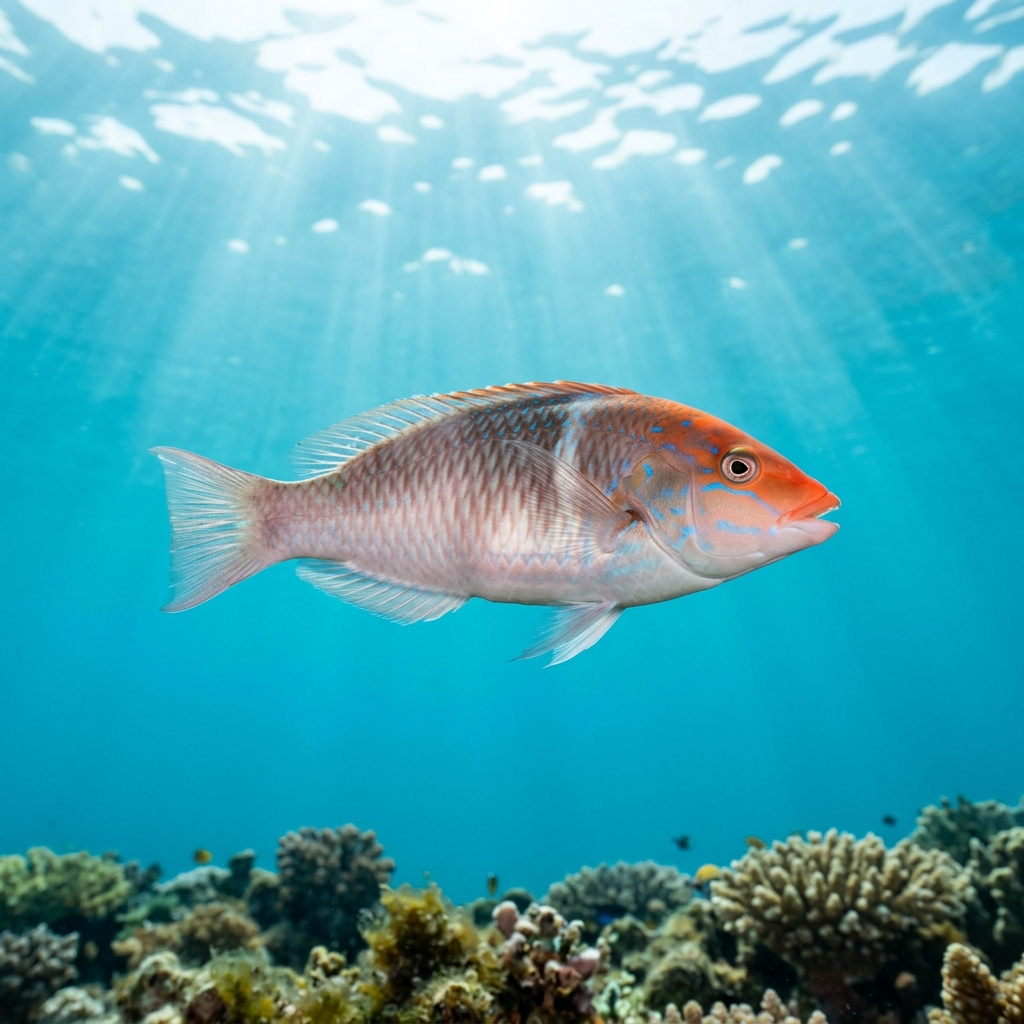
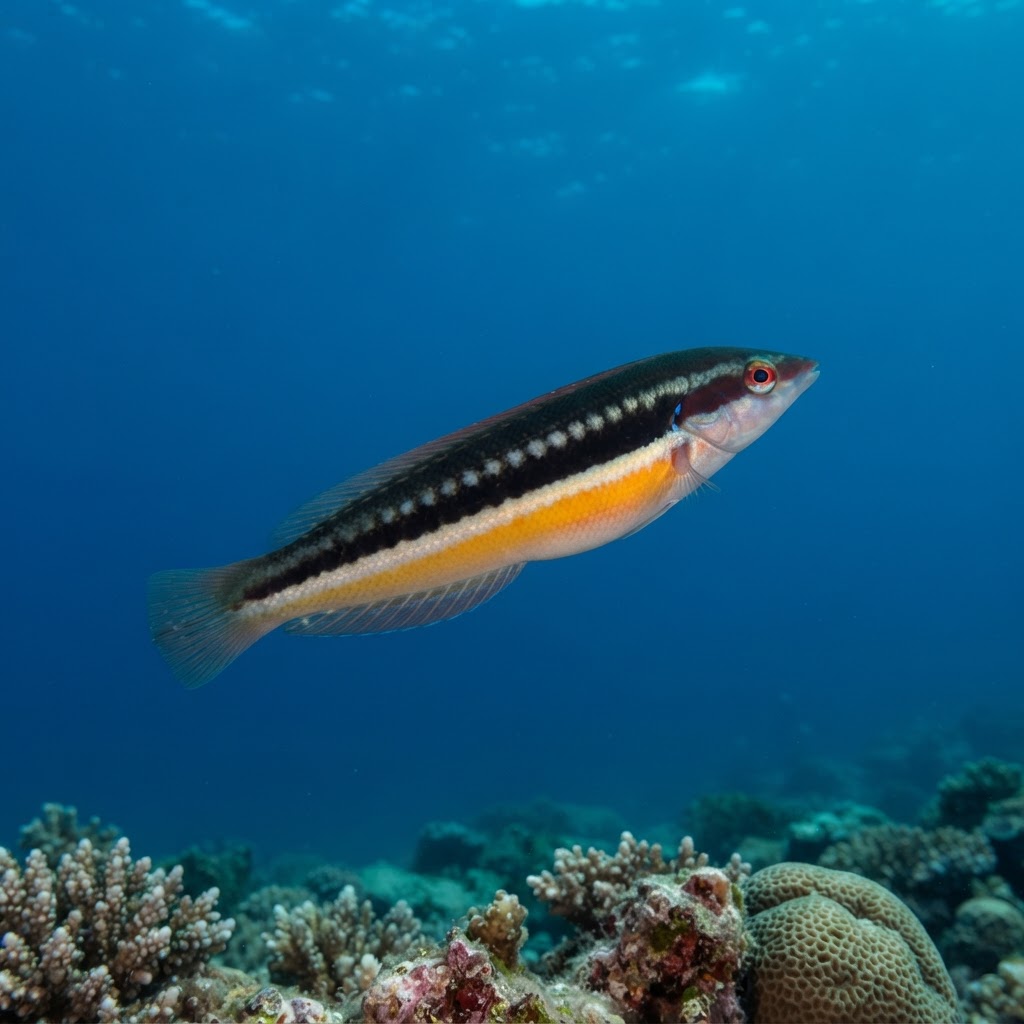
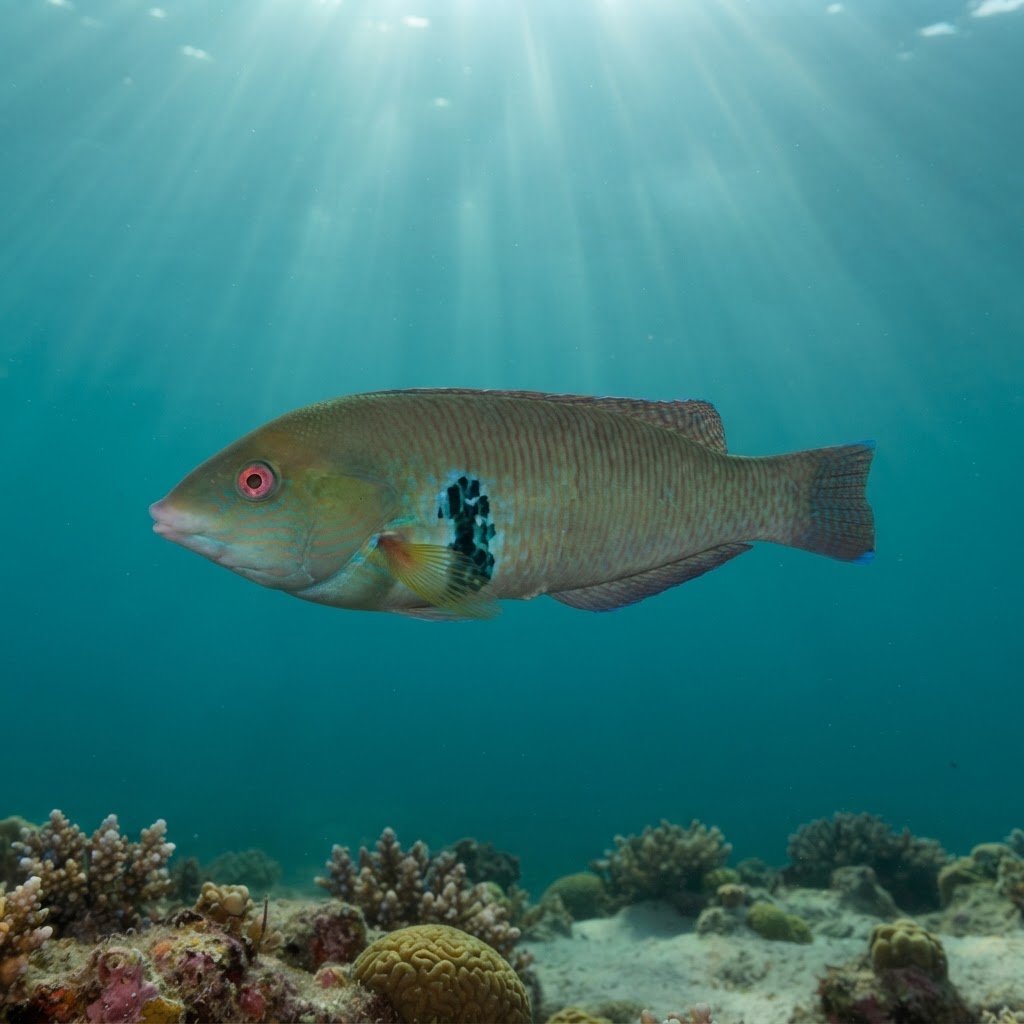
A slender, torpedo-shaped wrasse to about 26 cm, usually seen weaving low over rock and kelp reef rather than out in open water. Adults show a mottled orange-brown to olive body with a dark saddle-like blotch on the back near the tail, and males develop a more vivid greenish-blue head and blue-edged fins during the breeding period. The overall look underwater is a fast, low-slung fish that never quite holds still long enough for a clean photo.
Divers most often spot rock wrasse darting low over rocky substrate and kelp holdfasts, picking at crevices and sand patches for small invertebrates rather than schooling or hanging in midwater. It is generally unbothered by divers, continuing to forage nearby rather than bolting, though it rarely pauses long enough for divers to get more than a quick look. Most sightings come from shallower rock reef sections of a dive rather than the deeper, sandier stretches.
Like many wrasses, rock wrasse are protogynous hermaphrodites, meaning individuals start life as females and some later transition into males, which explains the more colourful blue-green head seen on larger fish.
Sightings show no strong seasonal pattern, so this is a year-round fish on Californian and Baja reefs. It sits comfortably in the 16.7 to 24.2C range typical of these temperate kelp and rock habitats, which likely explains why it turns up in dive logs across all months.
Most reliably logged along the coast of California, especially in the kelp and rock reefs that make up the bulk of its recorded sites, with a smaller but solid presence in Baja California, Mexico. If you are diving temperate reefs anywhere from Southern California down into northern Baja, there is a fair chance of running into one.
Mapping where Rock Wrasse is logged…
California's rocky reefs and kelp forests are the most reliable spot, with additional sightings logged along Baja California, Mexico. It favours shallow, rock-strewn terrain over open sand or deep drop-offs.
There is no strong seasonal pattern in sightings, so it is considered a year-round fish on Californian and Baja reefs, consistent with its tolerance for a fairly wide temperature range of 16.7 to 24.2C.
Look for a slim, fast-moving fish around 26 cm with a mottled orange-brown body and a dark saddle patch near the tail, darting low over rock and kelp. Larger males show a more blue-green head and blue-tinged fins.
They typically reach around 26 cm in length, making them a modest-sized reef fish rather than a standout in size.
No, they pose no threat to divers and simply carry on foraging over the reef when approached.
Yes, they are protogynous hermaphrodites, starting life as females with some individuals later becoming males, which usually coincides with a shift to brighter, more blue-green head colouring.
Site and sighting data is aggregated from diver logs, iNaturalist and GBIF. For taxonomy and conservation status:
Bird Wrasses
3,632 sites