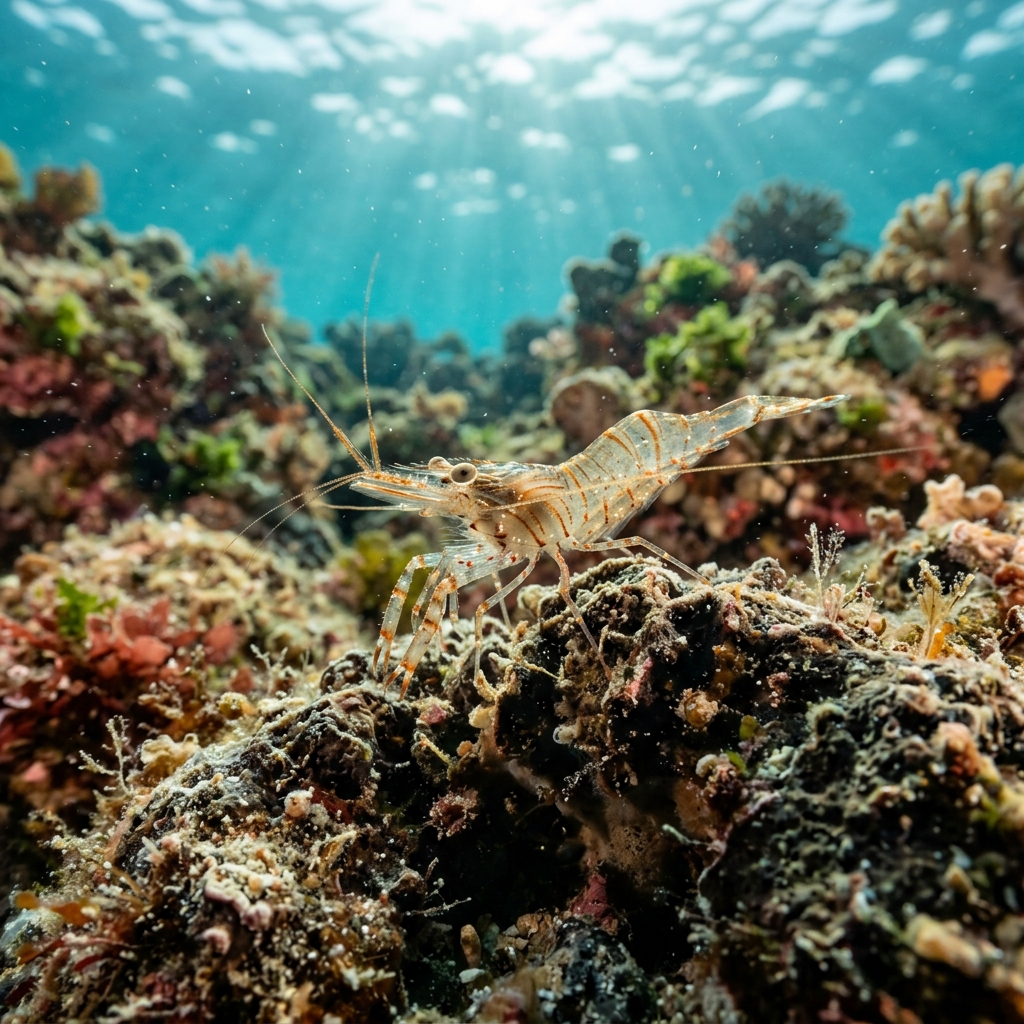
Palaemon serenus
Spot Rock-pool Shrimp in Victoria, Western Australia and New Zealand between Nov, May in waters from 13 to 21°C. Tips on where, when and how to find them.
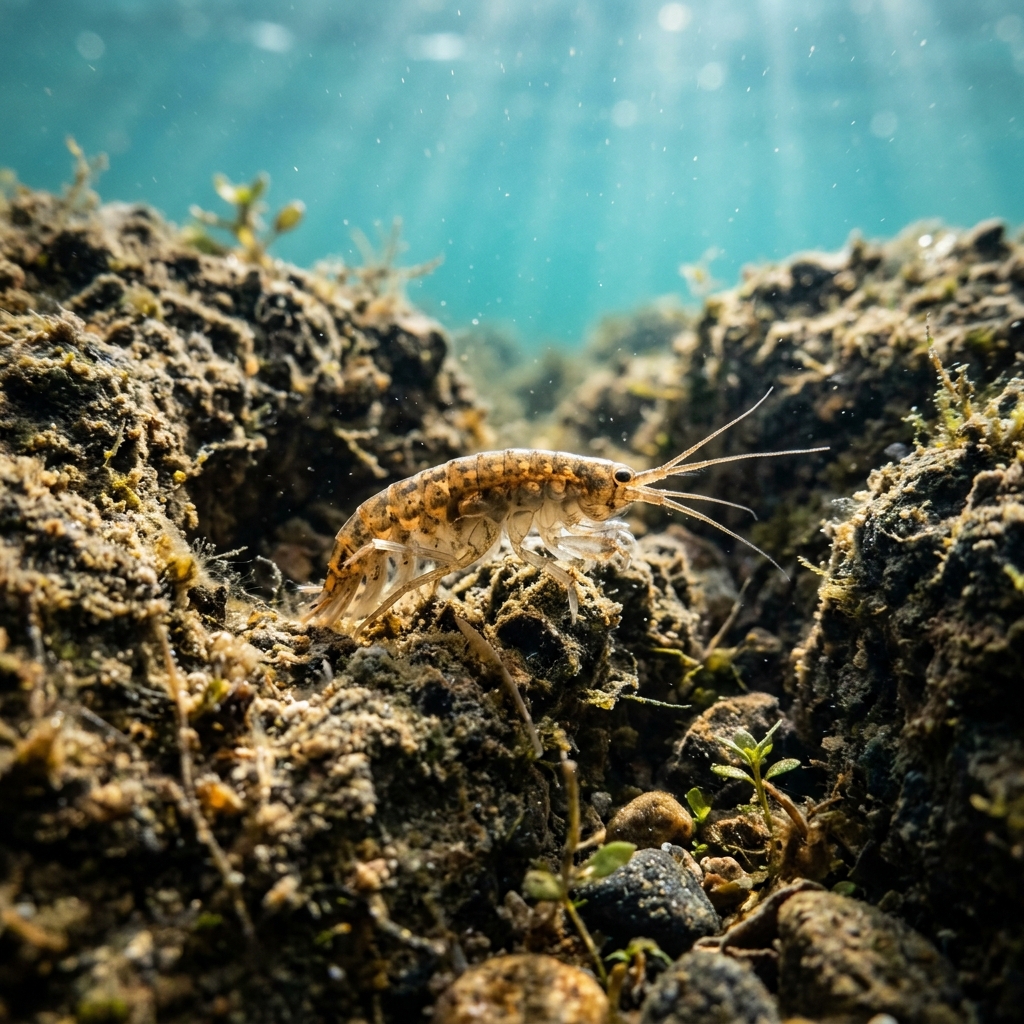
A small, largely translucent shrimp with a slender body and faint brownish or greenish banding along the abdomen, which helps it blend into weedy rock surfaces. The rostrum (the pointed projection between the eyes) is typically long and slender, a useful feature when you can get close enough to see it. In the water it appears almost glassy, making it easy to overlook unless it moves. Look for the flicker of a darting shape between rocks and seaweed rather than a stationary animal.
When you do spot one, it is usually actively picking through algae and detritus in rock crevices during daylight hours, pausing only to dart quickly to the next hiding spot. Any sudden movement from a diver tends to send it straight into cover, so slow your approach and keep still once you are close. Patience pays off: give it a minute and it will often resume foraging as if you are not there.
Being a palaemonid shrimp, it moults its entire exoskeleton periodically to grow, leaving behind a paper-thin ghost of itself that can briefly fool even a careful observer into thinking they have found the animal.
Sightings concentrate between November and May in the Southern Hemisphere, aligning with the warmer end of the species' temperature range (up to about 21°C). Outside those months encounters become much less frequent.
Rock-pool shrimp are almost entirely an Australian and New Zealand species. In Australia, Victoria leads for logged sightings, followed by Western Australia, South Australia, and Tasmania, making the cooler southern coastline the most productive stretch to search. New Zealand's Central region and Northland and Auckland also produce sightings, rounding out the species' distribution across temperate Australasian waters.
Mapping where Rock-pool Shrimp is logged…
They are logged almost exclusively in Australia and New Zealand. Victoria, Western Australia, South Australia, and Tasmania are the strongest Australian regions, while Central New Zealand and Northland and Auckland offer the best chances across the Tasman. Rocky, weedy shallows are the habitat to target.
Sightings peak between November and May in the Southern Hemisphere, which corresponds to spring through early autumn when water temperatures are at their warmest within the species' range. Outside this window sightings drop off noticeably.
Look for a small, nearly transparent shrimp with faint abdominal banding and a long, slender rostrum. Its translucency makes it very easy to miss against weedy rock, so watch for movement rather than colour. The darting, stop-start foraging pattern among algae is a reliable behavioural clue.
Rare to uncommon at most sites where they are recorded. Only a small number of sites rate them as common, so treating any encounter as a bonus rather than a certainty is the realistic expectation. Snorkellers in calm rock pools may have the best odds, as the shrimp occur in very shallow water.
Not at all. They are small, shy, and pose no threat. The only challenge they present is getting close enough to observe them before they vanish into a crevice.
Site and sighting data is aggregated from diver logs, iNaturalist and GBIF. For taxonomy and conservation status:
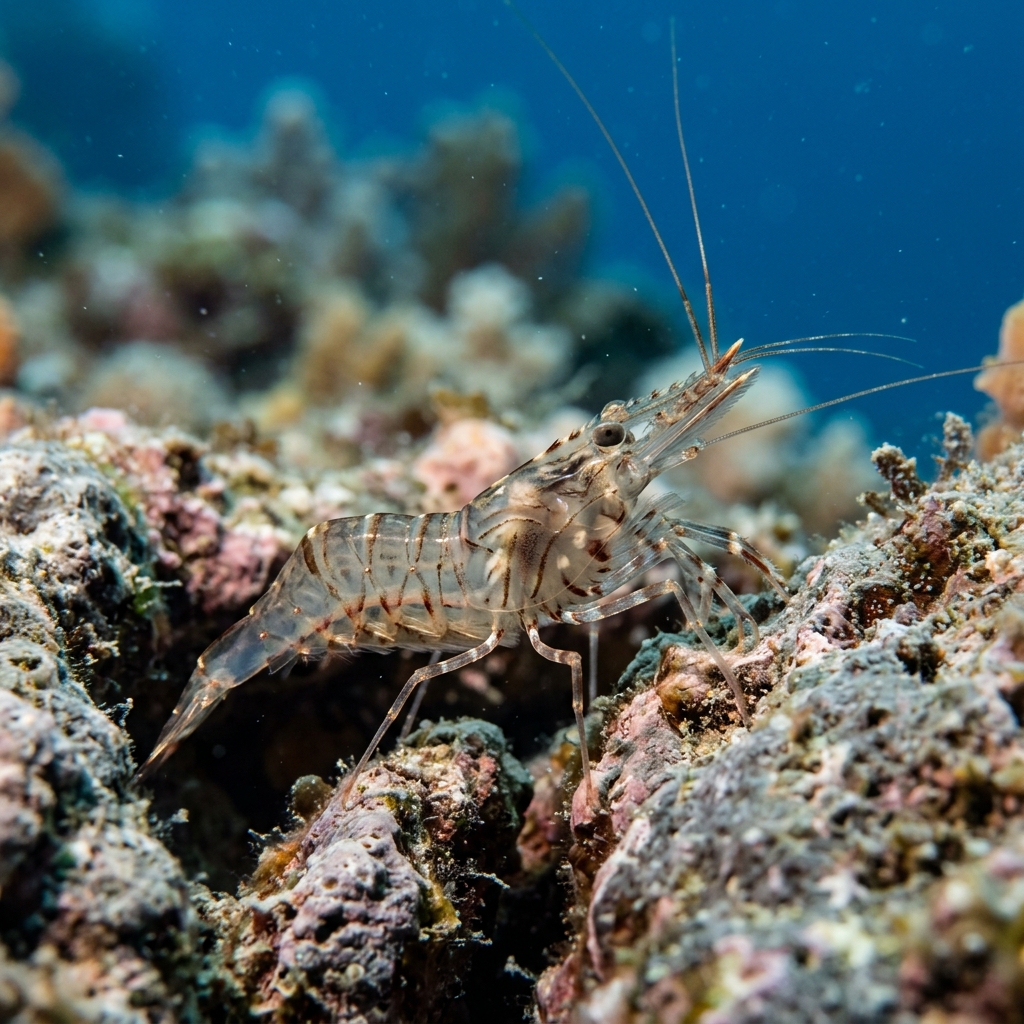
Rockpool Prawn
2,179 sites