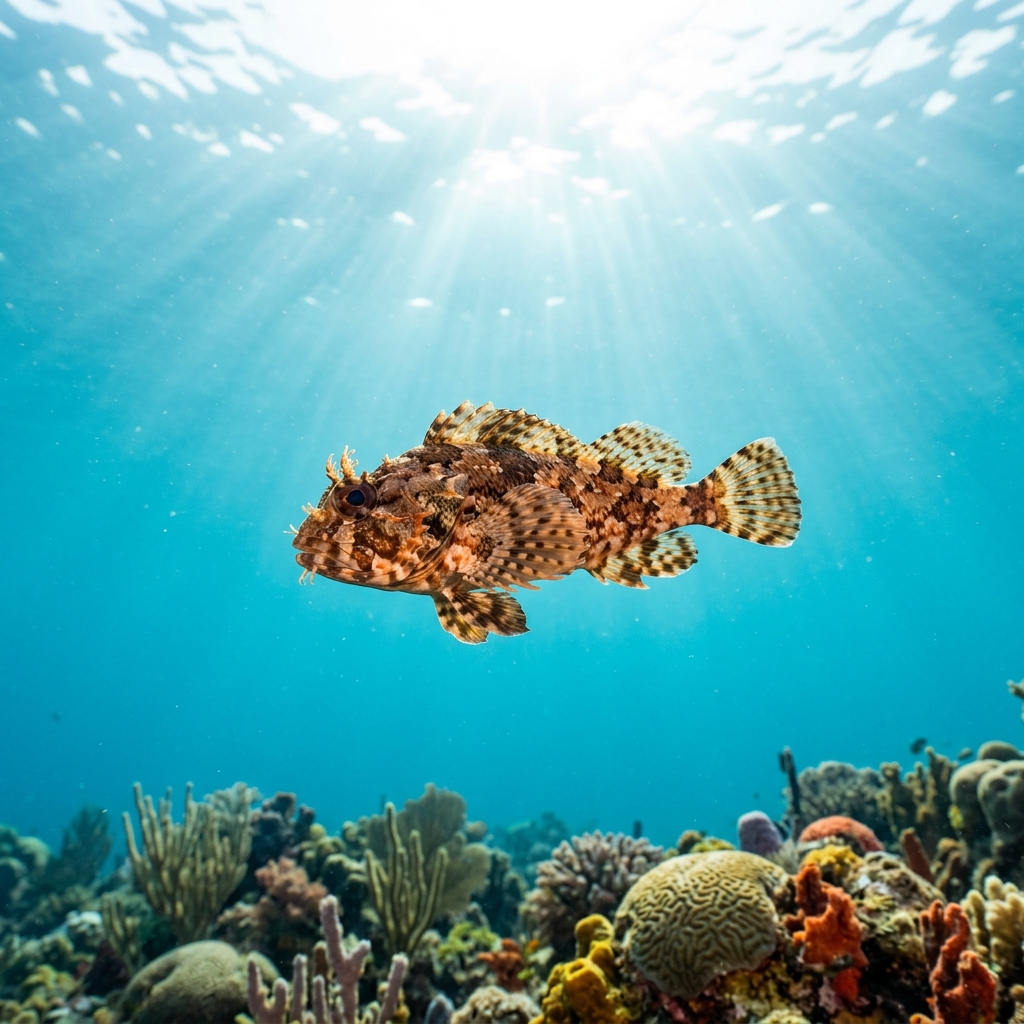
Parablennius parvicornis
A tiny, big-eyed blenny common in Tenerife and Gran Canaria's surge zone, often overlooked in water under a metre deep.
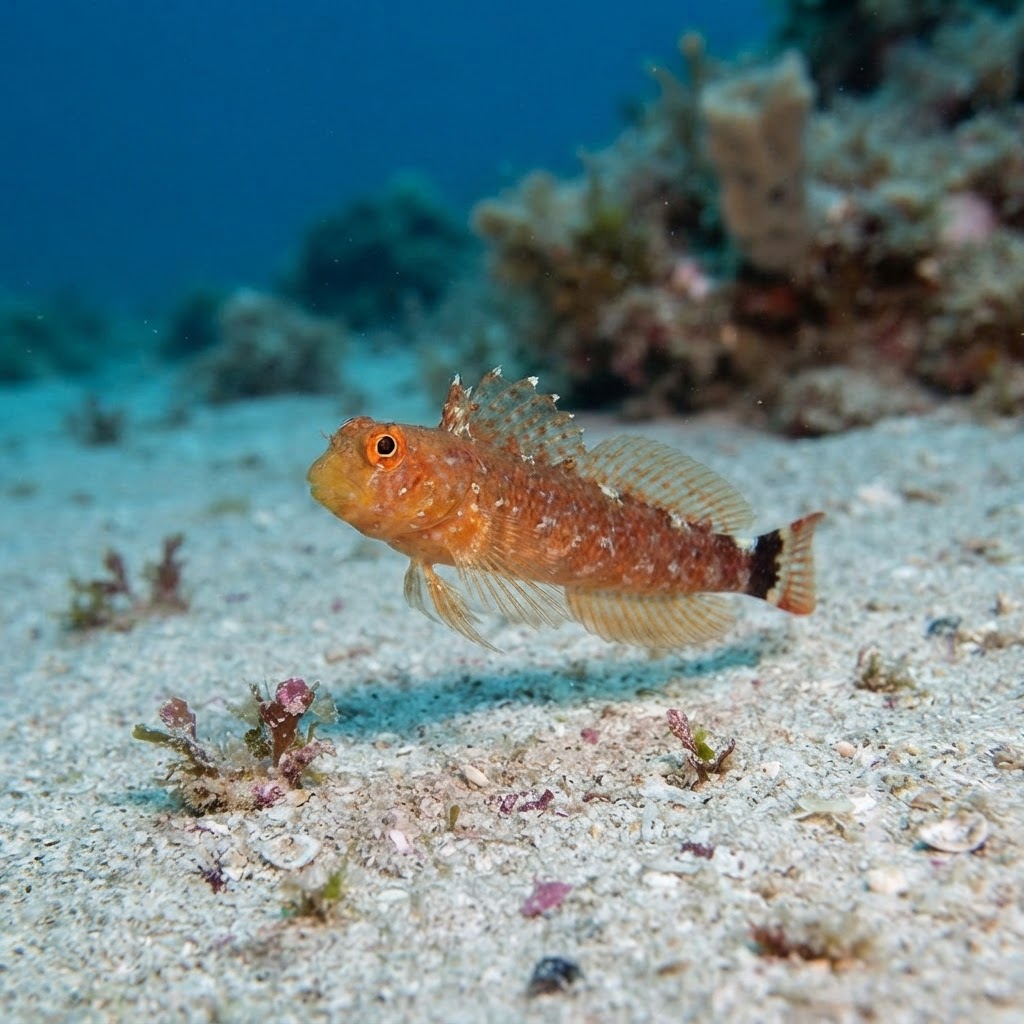
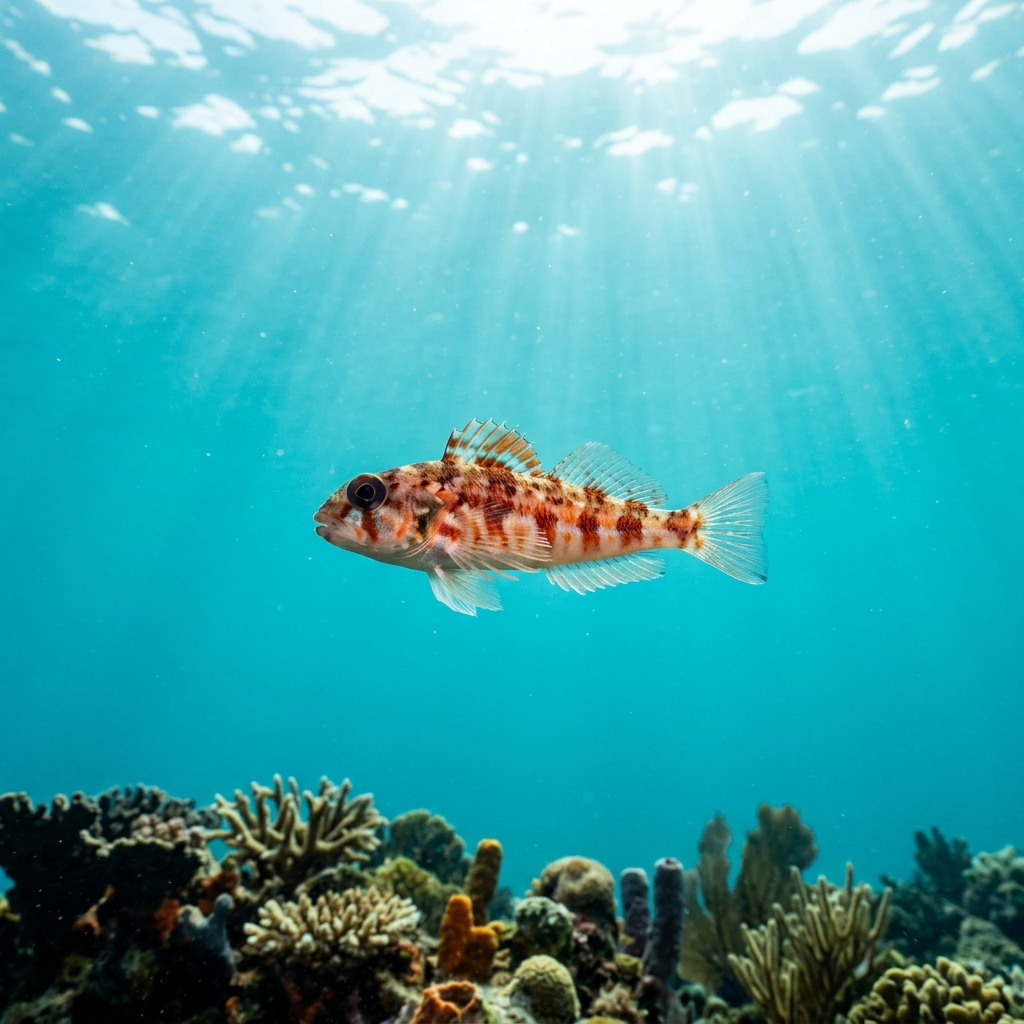
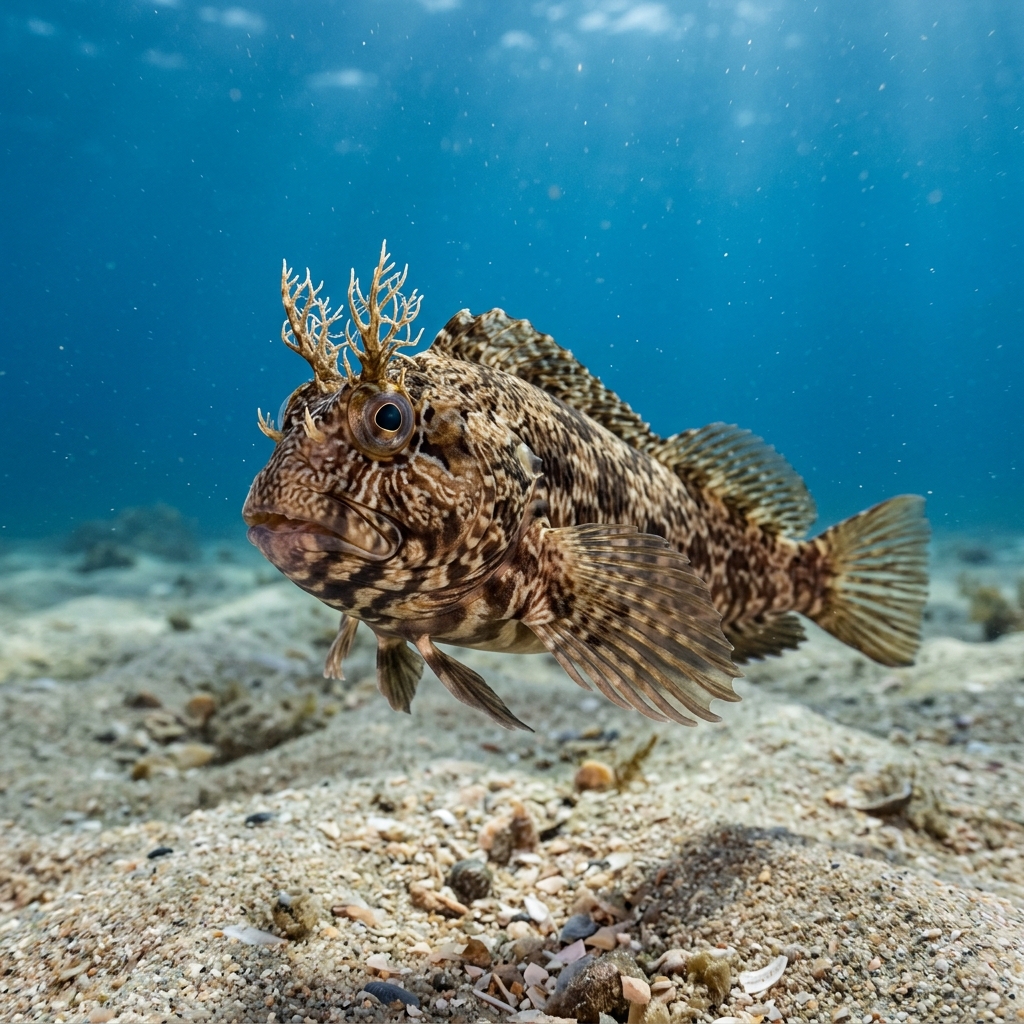
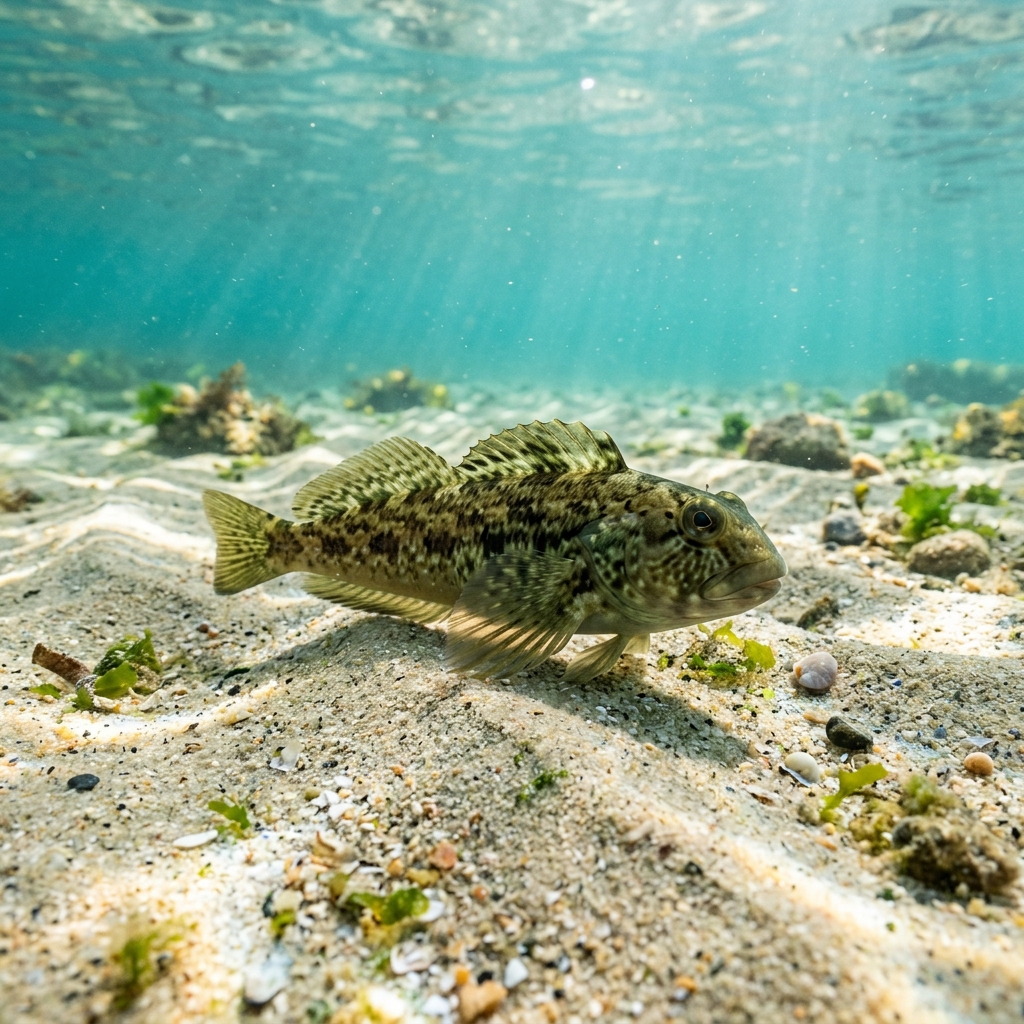
A small, stubby fish barely 8cm long, usually seen propped on its pectoral fins against a rock rather than swimming in open water. Look for a blunt head with large, high-set eyes and small fleshy tufts (cirri) above them, plus mottled brown, olive and cream camouflage that blends into algae-covered rock. It rarely strays from the substrate, which combined with its size is the easiest tell against faster-moving reef fish.
Spend most of a sighting hovering or perched motionless on rock in the very shallow surge zone, often in less than a metre of water where waves wash back and forth. It holds its ground rather than fleeing divers or snorkellers, relying on its camouflage, and will often let you get close for a photo before flicking off to the next crevice. Best looked for by scanning still patches of rock between wave sets rather than swimming past quickly.
Grazes algae directly off the rock surface with its small teeth, making it one of the few blennies in its range you can watch actually feeding in real time if you hover quietly nearby.
No clear seasonal pattern shows up in the data, and its comfort range of roughly 18.5 to 25.6C covers this region's water temperature all year, so it is a year-round find in the shallows.
Reef neighbours a diver could mistake it for. Use the identification notes above to tell them apart.
Overwhelmingly a Canary Islands fish, with the strongest logs from Tenerife, Gran Canaria, Fuerteventura, Lanzarote and La Palma. It also turns up reliably in the Azores, especially around Sao Miguel and Santa Maria, and has a solid presence in Cape Verde (notably Sal) and Madeira, with smaller numbers in France, Senegal, Spain and Portugal.
Mapping where Rock-pool Blenny is logged…
Most reliably found across the Canary Islands, particularly Tenerife, Gran Canaria, Fuerteventura and Lanzarote, plus the Azores around Sao Miguel and Santa Maria. Cape Verde's Sal and Madeira Island also hold steady populations.
There's no strong seasonal signal in sightings, and it tolerates water from about 18.5 to 25.6C, so divers and snorkellers see it year-round in its Atlantic island range.
Look for a small, 8cm fish perched on rock in very shallow water, with a blunt head, large eyes, tiny cirri tufts above them, and mottled brown-and-cream camouflage. It stays still against the substrate rather than swimming freely.
They top out at around 8cm, making them one of the smaller blennies you'll spot while snorkelling shallow rocky shorelines.
No. They're harmless, tiny, herbivorous fish that hold still on rocks and pose no risk to divers or snorkellers.
Unlike many reef fish, it's happy sitting almost motionless in water under a metre deep, propped on its fins in the wash zone, and can be watched grazing algae off rocks at close range.
Site and sighting data is aggregated from diver logs, iNaturalist and GBIF. For taxonomy and conservation status:
Rusty Blenny
2,605 sites