Omegophora armilla
An uncommon sighting across South Australian dive sites in cool water from 14.8 to 21.5°C, year-round.
Safety warning
Its tissues are presumed to carry the same tetrodotoxin defence found across the pufferfish family, so it should never be handled or provoked. The real diver risk is incidental: give it space, avoid touching it, and let it move off on its own rather than cornering it against rock or rubble.
Handle with care
Toxic if eatenGeneral first-aid guidance, not a substitute for professional medical care. In an emergency, call your local emergency number.
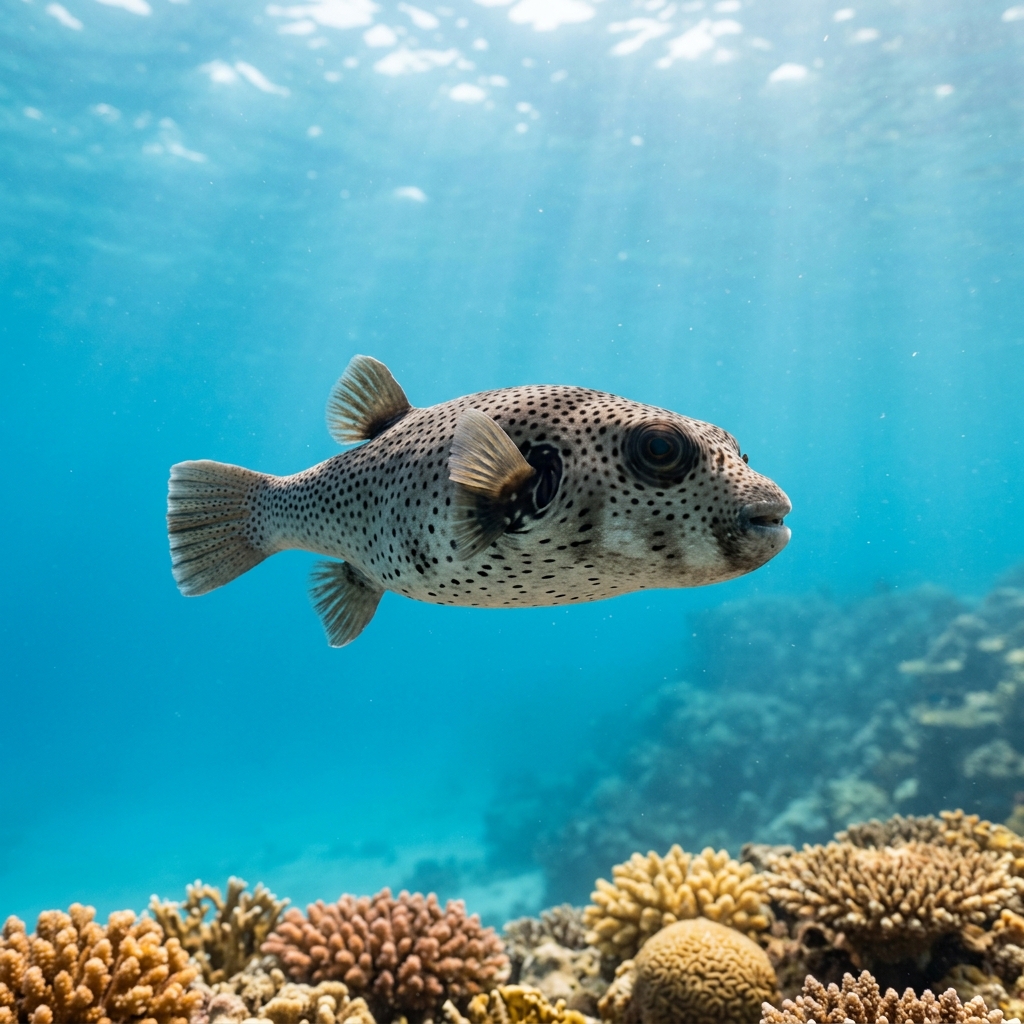
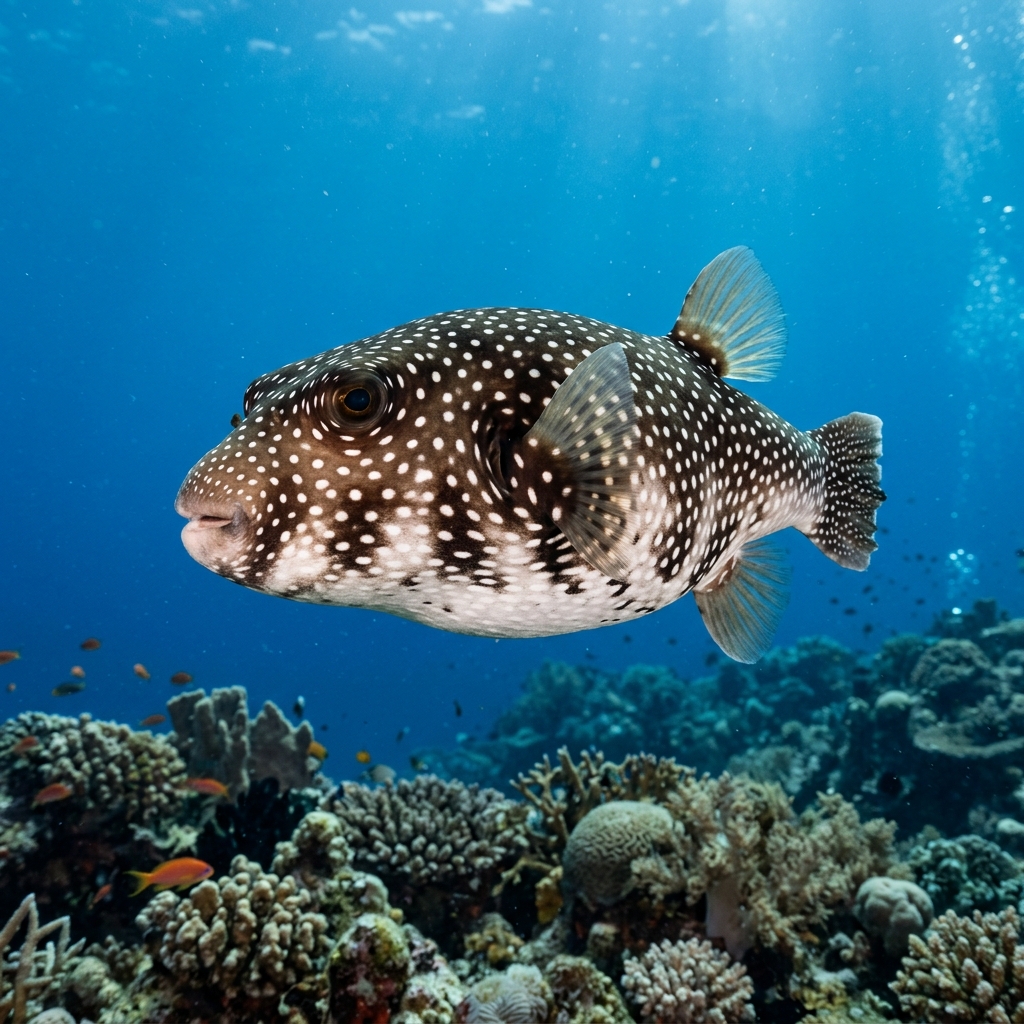
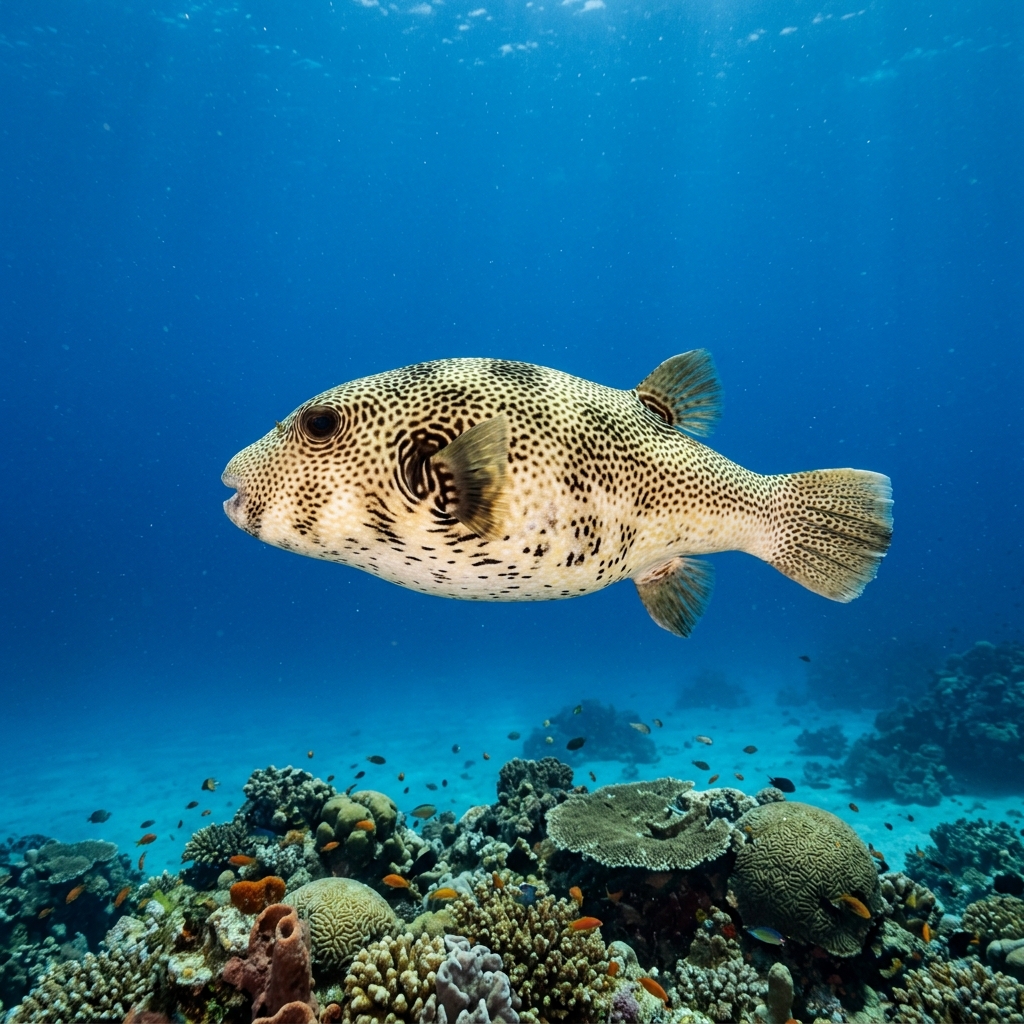
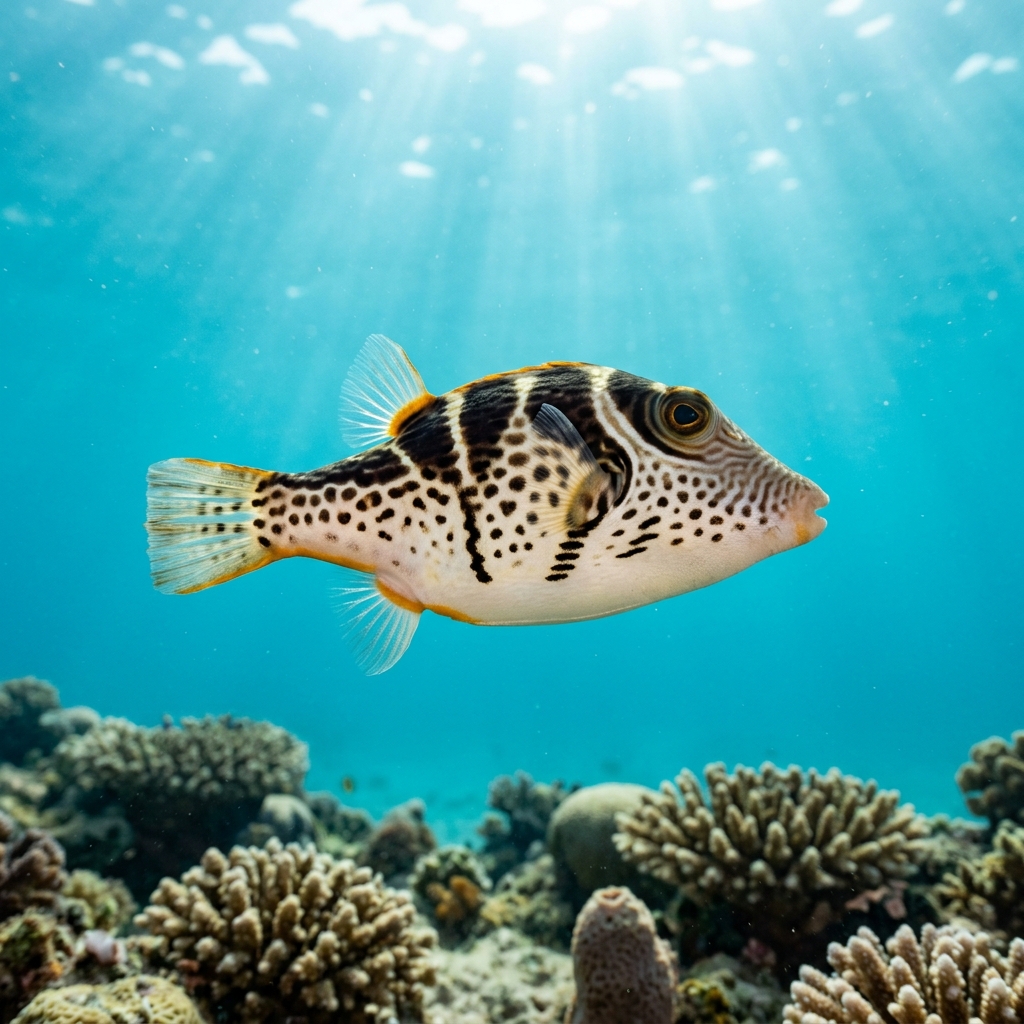
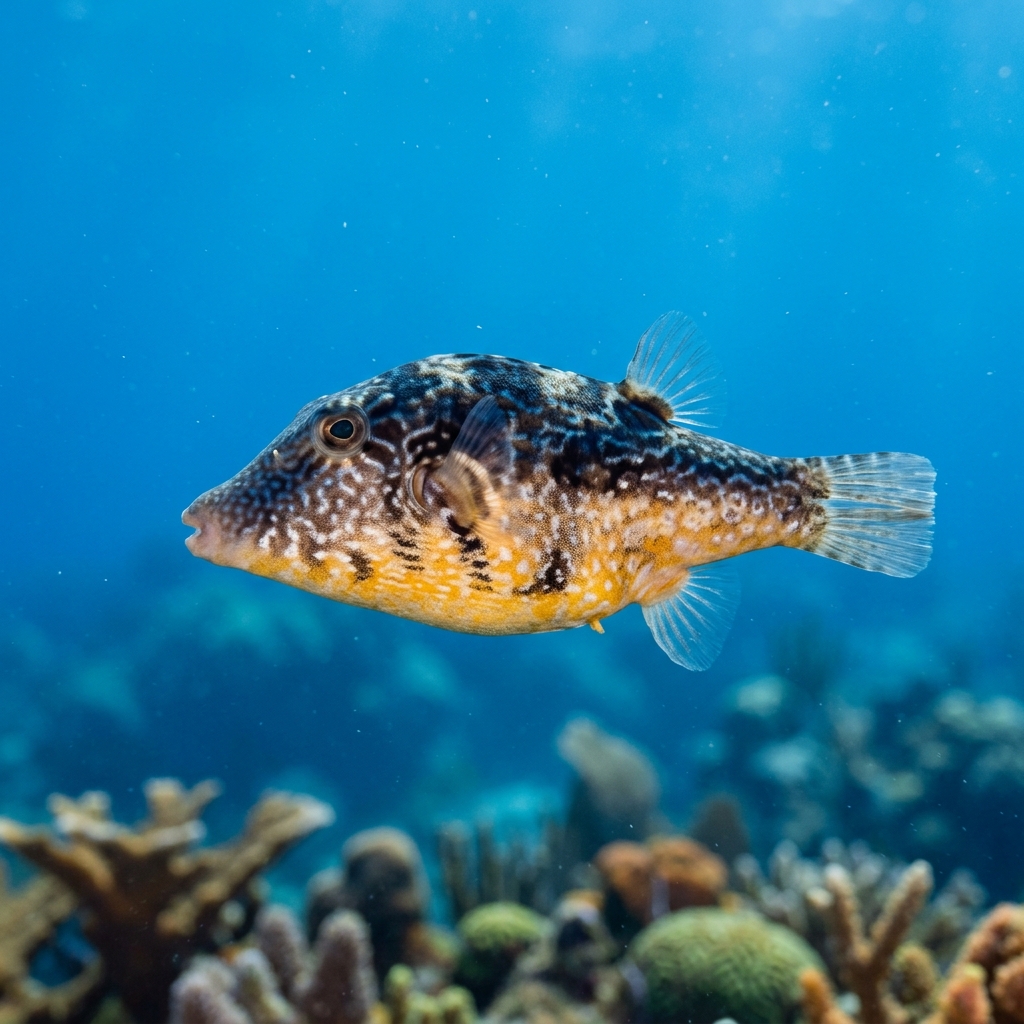
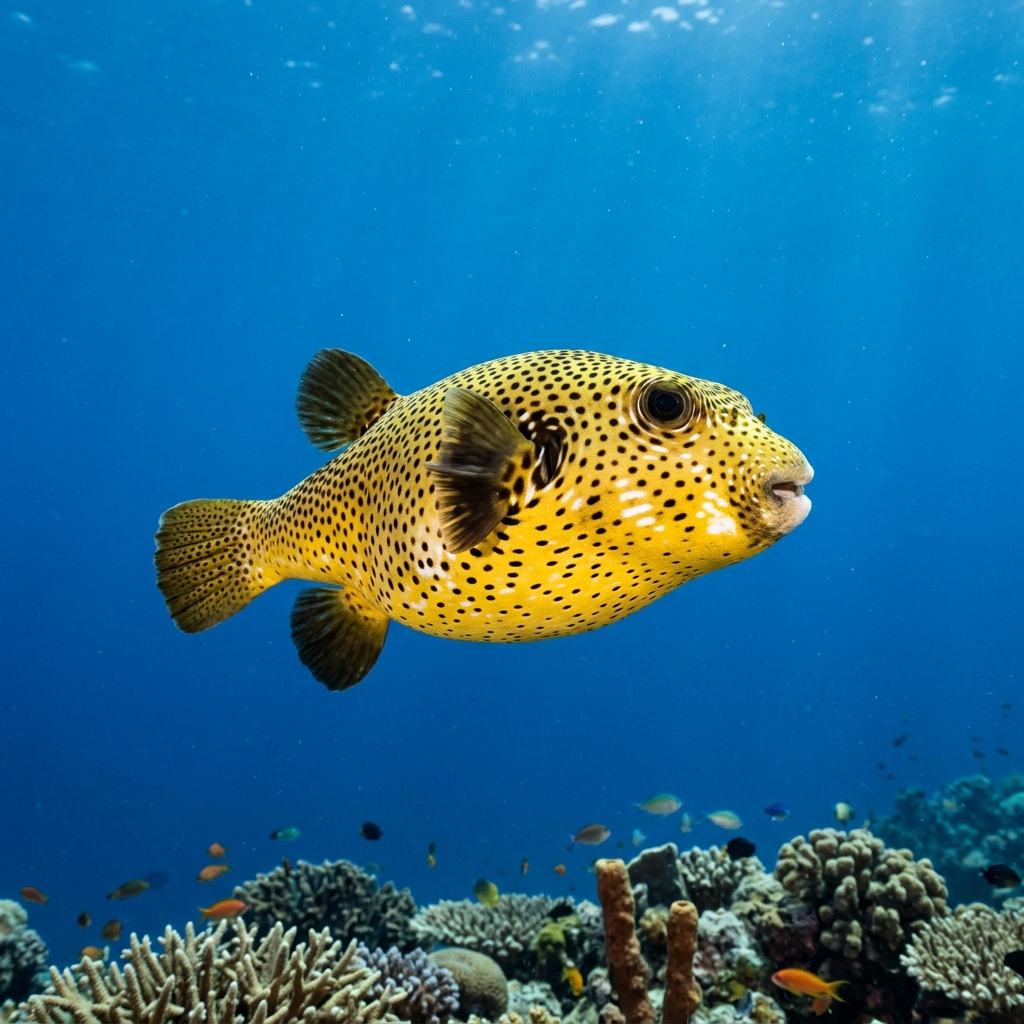
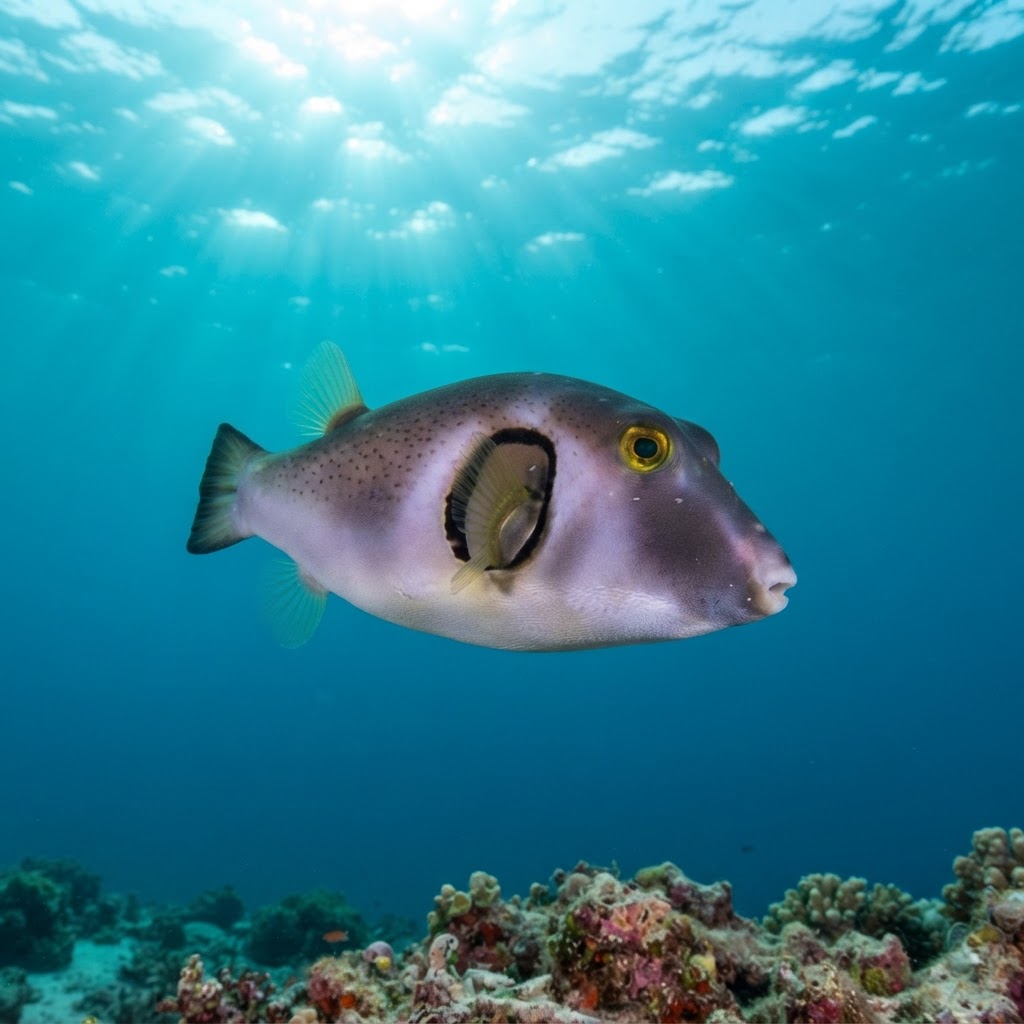
A stout, rounded body around 18 cm long with sandy to olive-brown skin and a distinctive dark ring encircling the eye region, which gives this puffer its name. It has the classic pufferfish shape: no scales, small fins set close to the body, and a blunt beak-like mouth built for crunching hard-shelled prey. Look for it hovering low over reef and rocky rubble rather than out in open water.
Divers typically find it moving slowly and low over rocky reef and weedy rubble, picking at the bottom rather than schooling or patrolling open water. It is not especially flighty and will often let a diver get a reasonably close look before easing away, though it is logged as uncommon rather than common at most sites, so a sighting takes a bit of searching.
Like other pufferfish, it can inflate its body by gulping water when threatened, turning itself into a much harder mouthful for any predator that gets too curious.
Sightings are spread through the year with no clear seasonal peak in the data, which fits its cool-water niche of roughly 14.8 to 21.5°C. Treat it as a year-round possibility on South Australian and Western Australian temperate dives rather than a species tied to one season.
This is a South Australian speciality, most commonly logged around sites in South Australia itself, with a secondary presence in Western Australia. All confirmed sightings so far come from Australian temperate reefs rather than tropical ones, so this is one to look for on cool-water dives rather than coral reef trips.
Mapping where Ringed Pufferfish is logged…
It is most reliably found on temperate reef dives in South Australia, with additional sightings logged in Western Australia. Outside Australia it has not been recorded by divers in the current data.
There is no strong seasonal pattern in the sightings, so it can turn up year-round. It sticks to cool water in the roughly 14.8 to 21.5°C range typical of South Australian temperate reefs.
They are not aggressive, but like other pufferfish they carry a potent toxin in their tissues as a defence against predators. Divers should observe without touching and avoid cornering or handling one.
Look for a rounded, roughly 18 cm brownish body with no scales and a dark ring marking around the eye. It is usually seen hovering or resting low over rocky reef or rubble rather than swimming in open water.
They reach around 18 cm in length, a modest size that keeps them tucked close to reef structure rather than out in the open.
It shares the classic pufferfish trick of inflating its body with water when threatened, instantly becoming a far tougher target for predators to swallow.
Site and sighting data is aggregated from diver logs, iNaturalist and GBIF. For taxonomy and conservation status:
Valentini Pufferfish
2,830 sites