Pseudalutarius nasicornis
A small, uncommon filefish logged mostly in Maluku, Indonesia, in warm 22-29C reef water. Here's how to spot one and where to look.
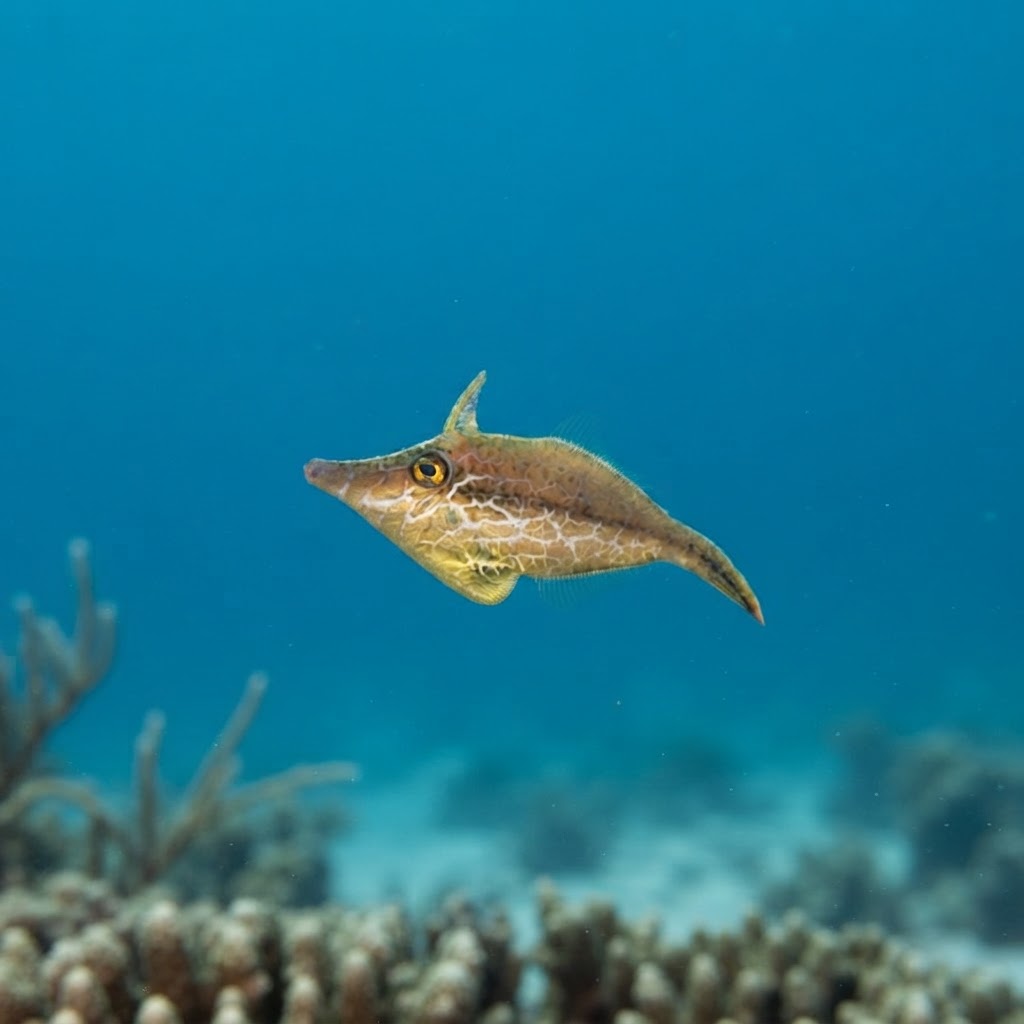
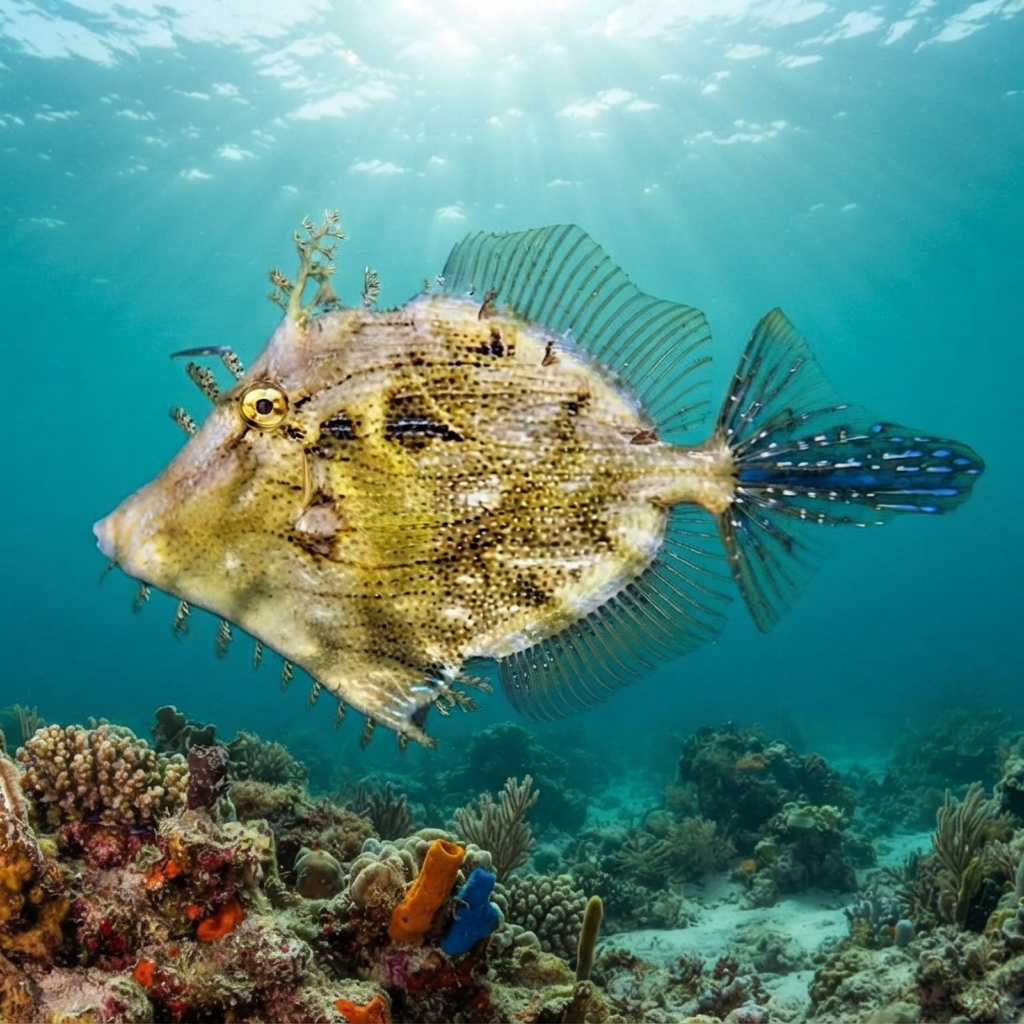
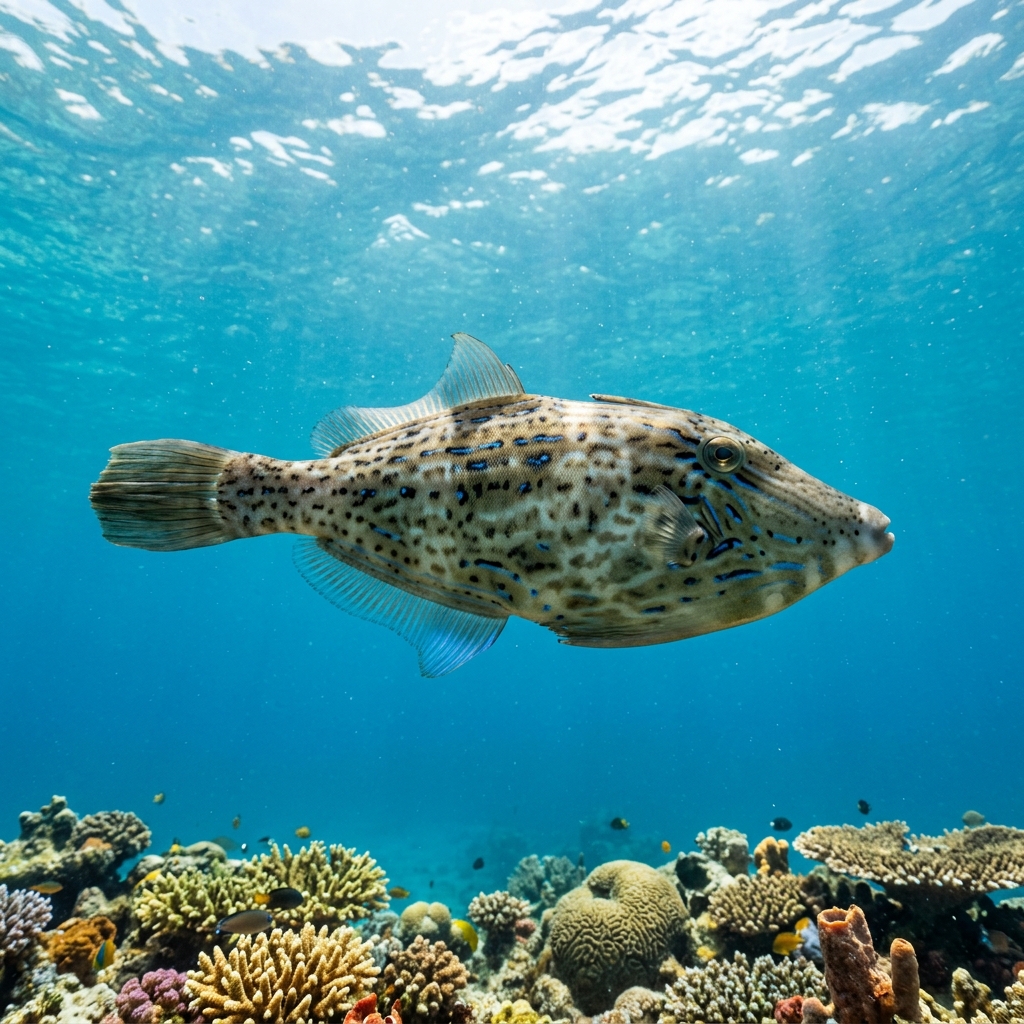
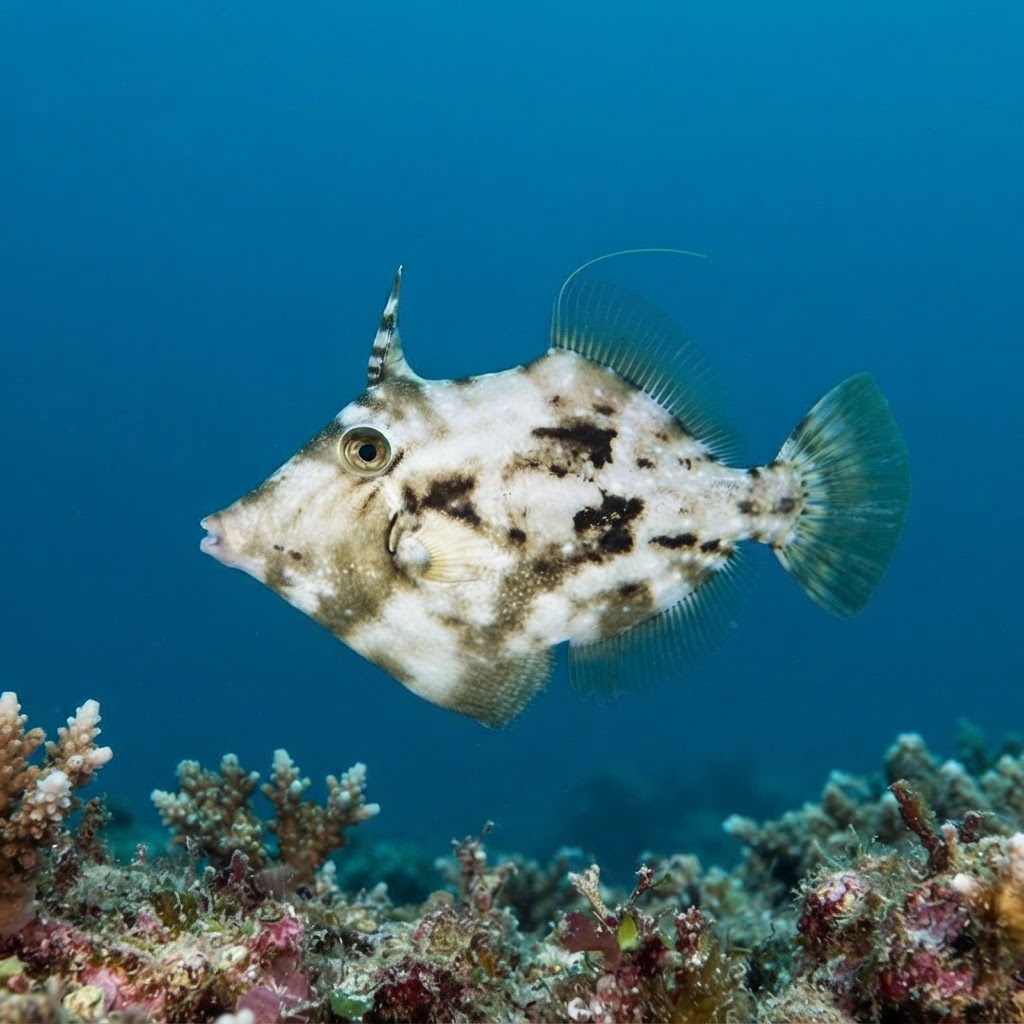
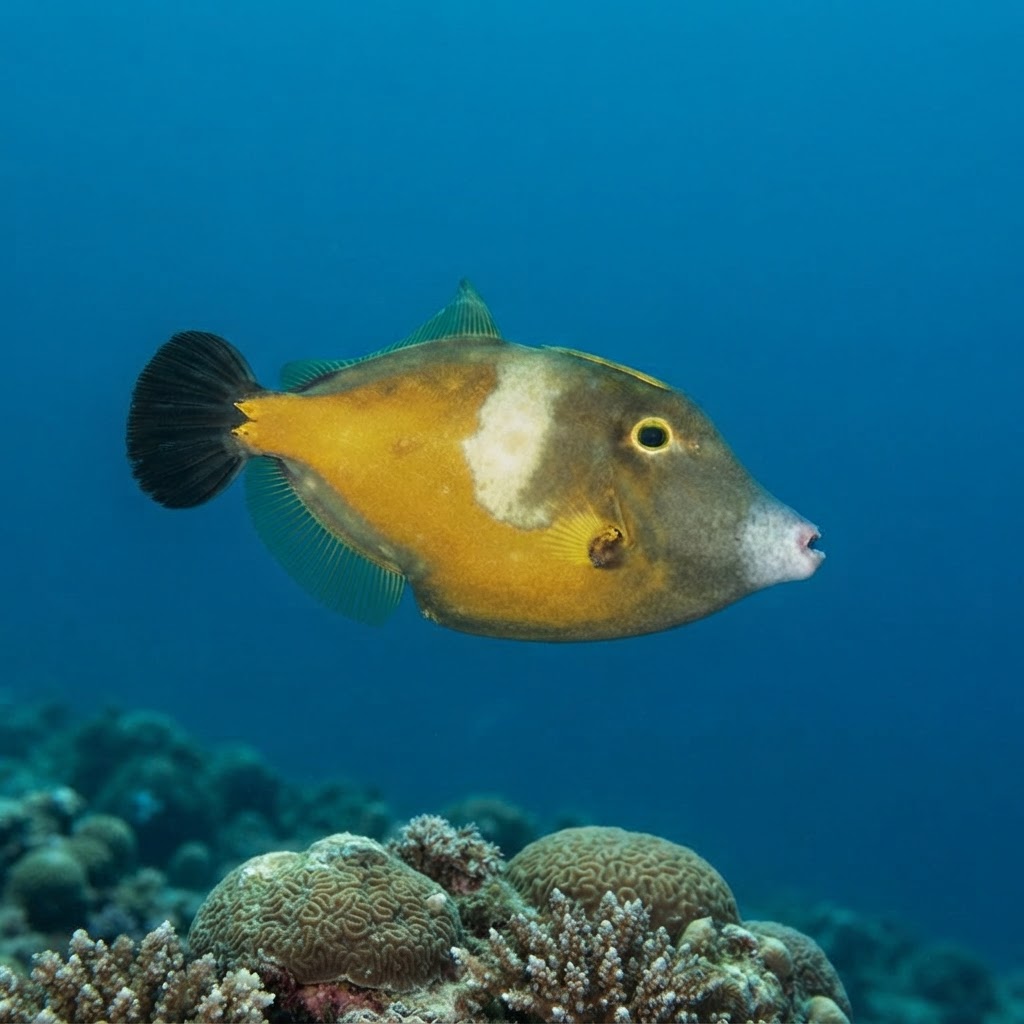
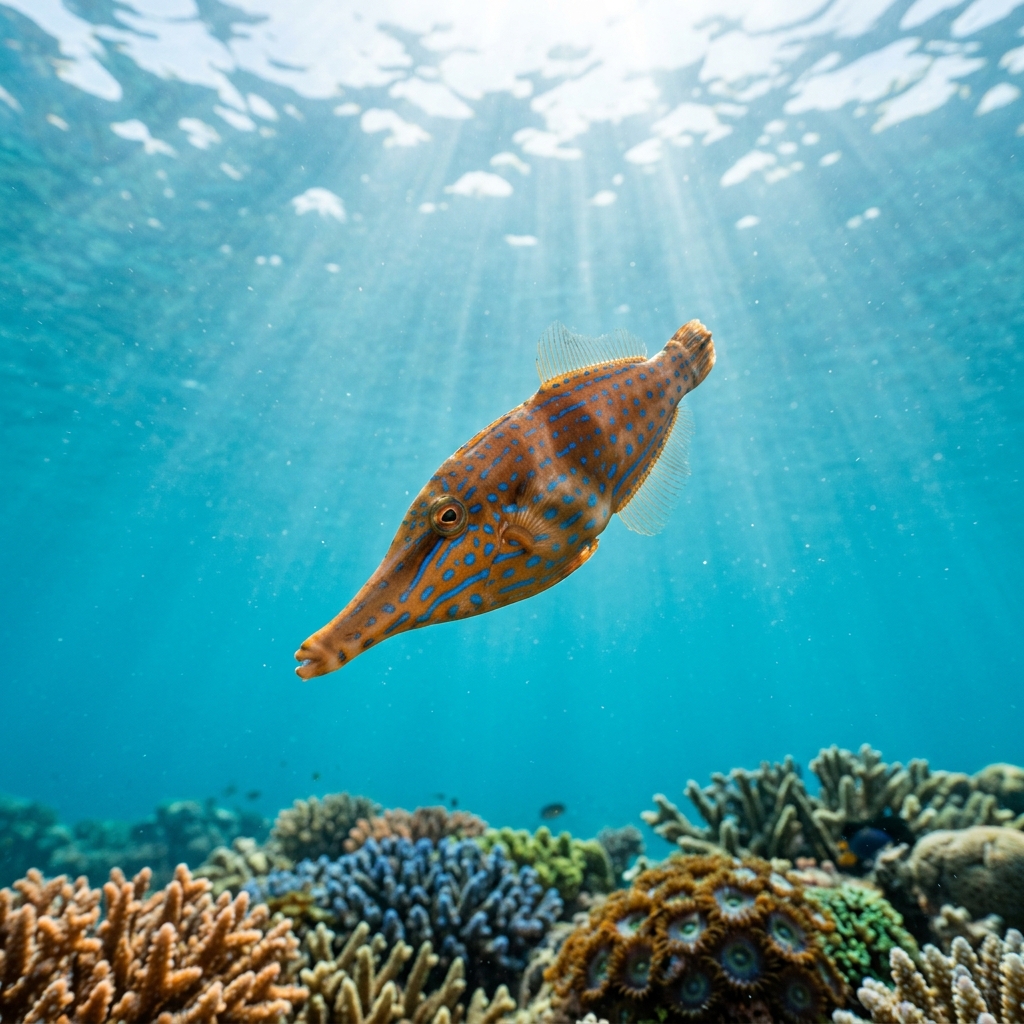
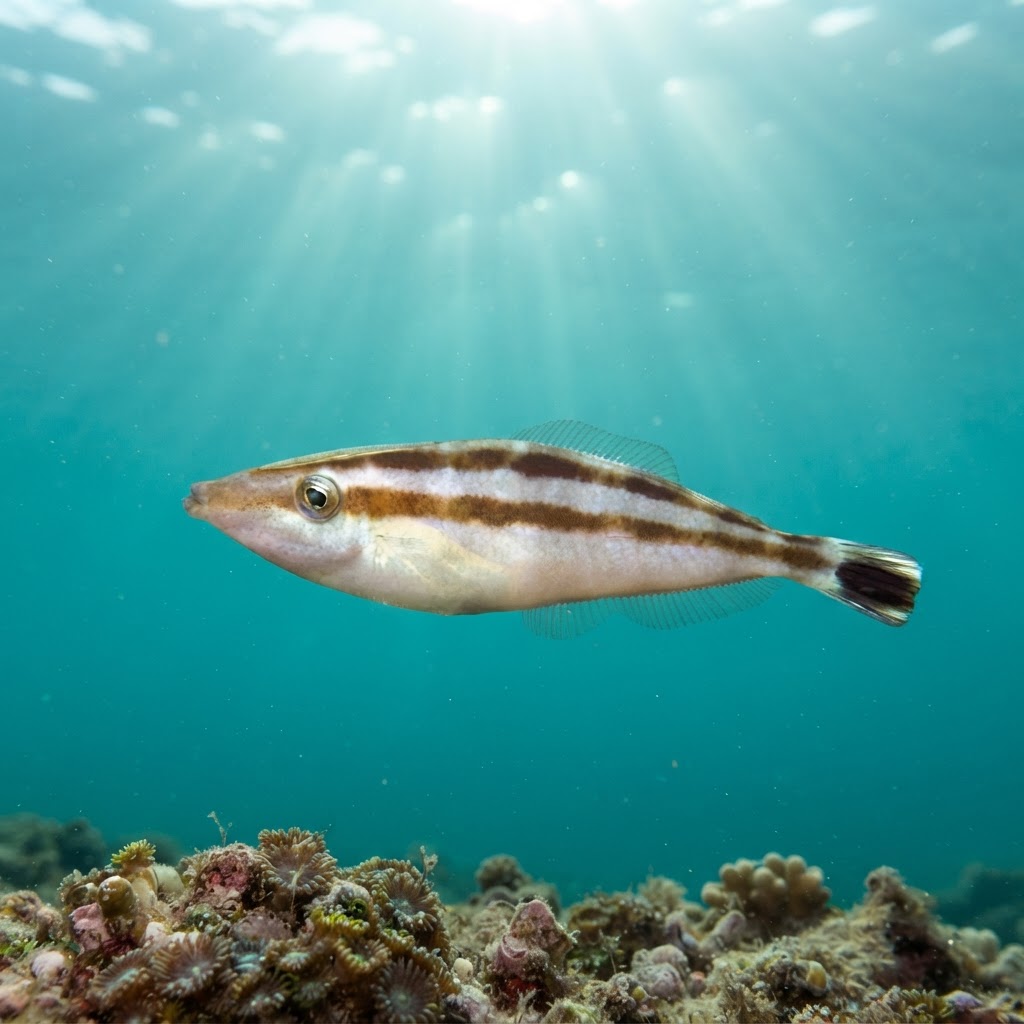
A small, slender filefish that tops out around 13 cm, easy to overlook against rubble or weedy reef. Look for the elongated, pointed snout that gives it its name, a compressed oval body, and a single slim dorsal spine tucked just behind the eyes. Colouration tends toward muted browns and greys with faint mottling, helping it blend into low-relief bottom rather than stand out on open coral.
Divers typically find it hovering low over rubble, sand patches, or weedy substrate rather than out in open water, moving with the slow, hesitant hover typical of filefish. It's not a fish that reacts dramatically to divers, it tends to just drift or freeze in place, relying on its slim profile and dull colouring to stay unnoticed. Look for it during a slow, methodical scan of the bottom rather than while cruising past a reef wall.
Like other filefish, it can lock itself into crevices using an erectile dorsal spine, wedging itself in place so predators (and curious divers) can't easily pull it out.
No clear seasonal pattern shows up in the sighting data, so treat it as a year-round possibility. Observed water temperatures run 22.4 to 29.0C, comfortable across the diving calendar on Indonesian reefs.
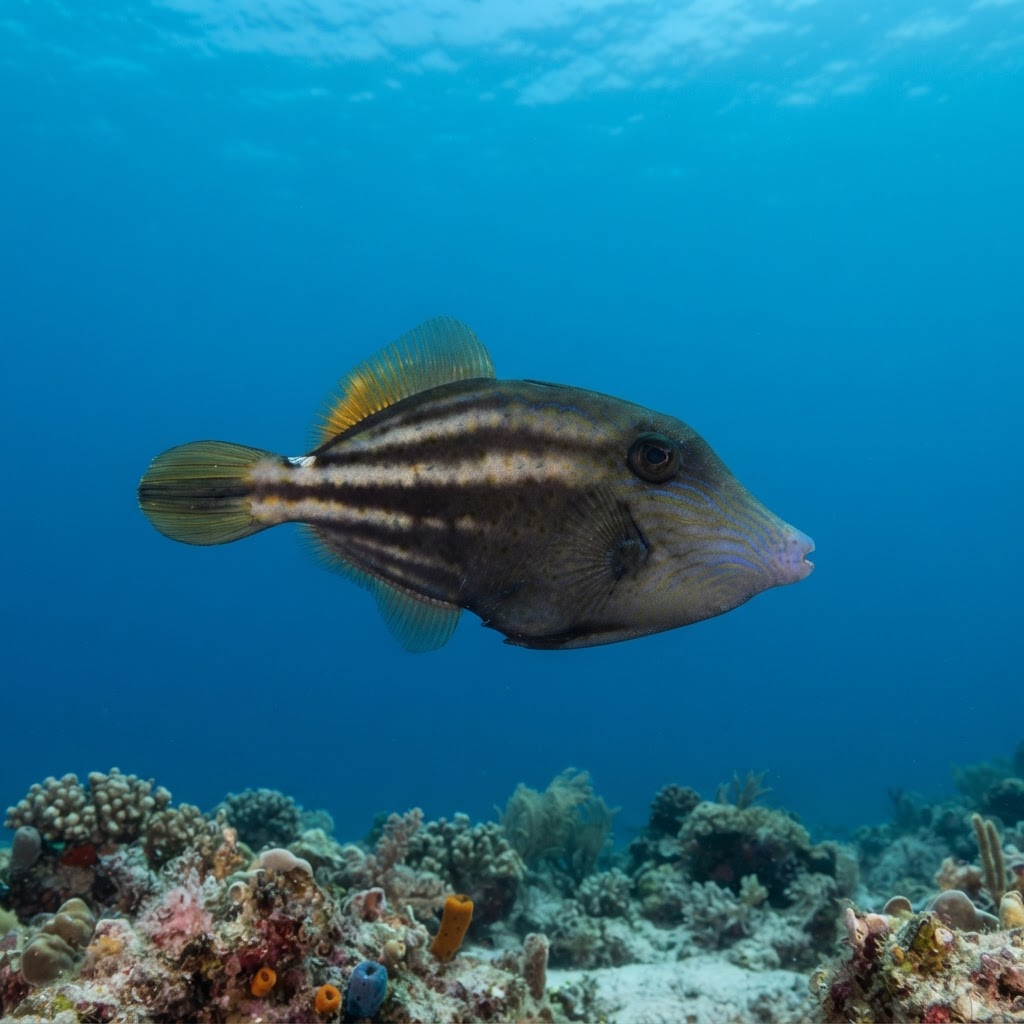
Reef neighbours a diver could mistake it for. Use the identification notes above to tell them apart.
Nearly every logged sighting comes from Indonesia, and within the country Maluku is by far the strongest region, well ahead of Sulawesi and Bali. If you're specifically hunting this species, Maluku dive sites are the most consistent bet, though even there divers rate it uncommon rather than a sure thing.
Mapping where Rhinoceros Leatherjacket is logged…
It's most reliably logged in Maluku, Indonesia, with smaller numbers of sightings from Sulawesi and Bali. Outside Indonesia it doesn't show up in current diver sighting data.
There's no detected seasonal pattern, so it can turn up any month. Water temperatures where it's been logged range from 22.4 to 29.0C, typical of Indonesian reefs year-round.
Look for a small filefish, around 13 cm, with a pointed snout, a compressed body, and muted brown-grey mottling. It's usually found hovering low over rubble or sand rather than out on open coral.
They're small, typically reaching around 13 cm in length, making them easy to miss unless you're scanning the substrate closely.
No, they pose no danger to divers. They're small, slow-moving, and not aggressive.
Like other filefish, it can raise a locking dorsal spine to wedge itself into crevices, making it hard for predators to dislodge once it's tucked in.
Site and sighting data is aggregated from diver logs, iNaturalist and GBIF. For taxonomy and conservation status:
Orangespotted Filefish
836 sites