Rhinolithodes wosnessenskii
Cold-water crab with a horn-like nose bump, most reliably found in the chilly dive sites of British Columbia.
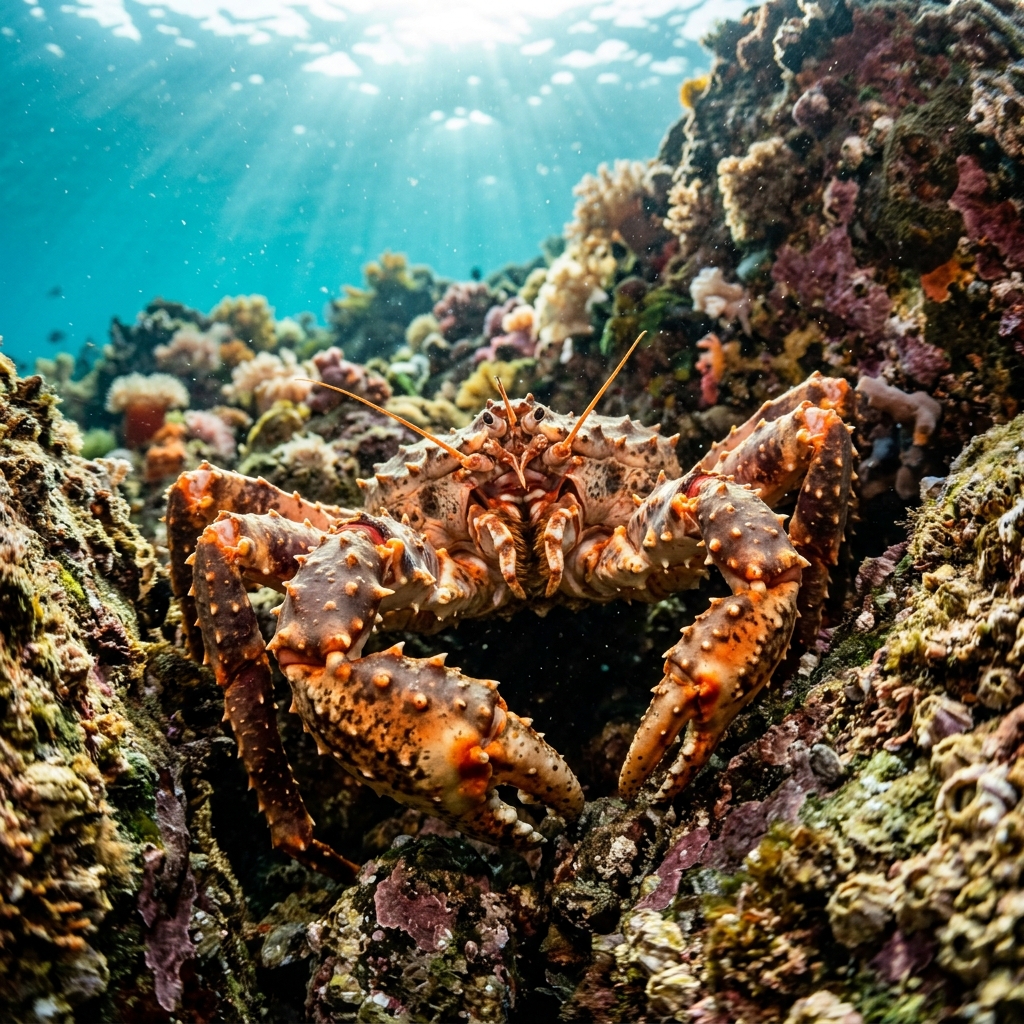
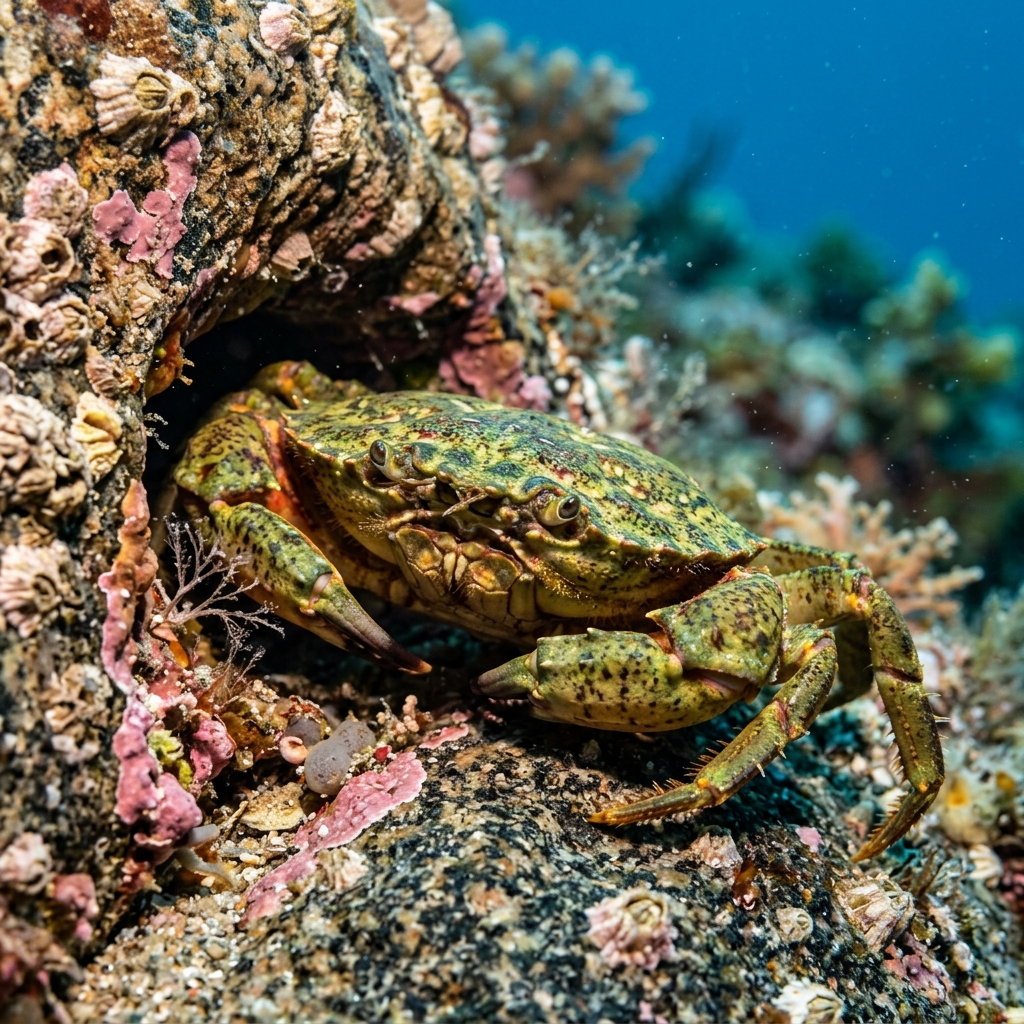
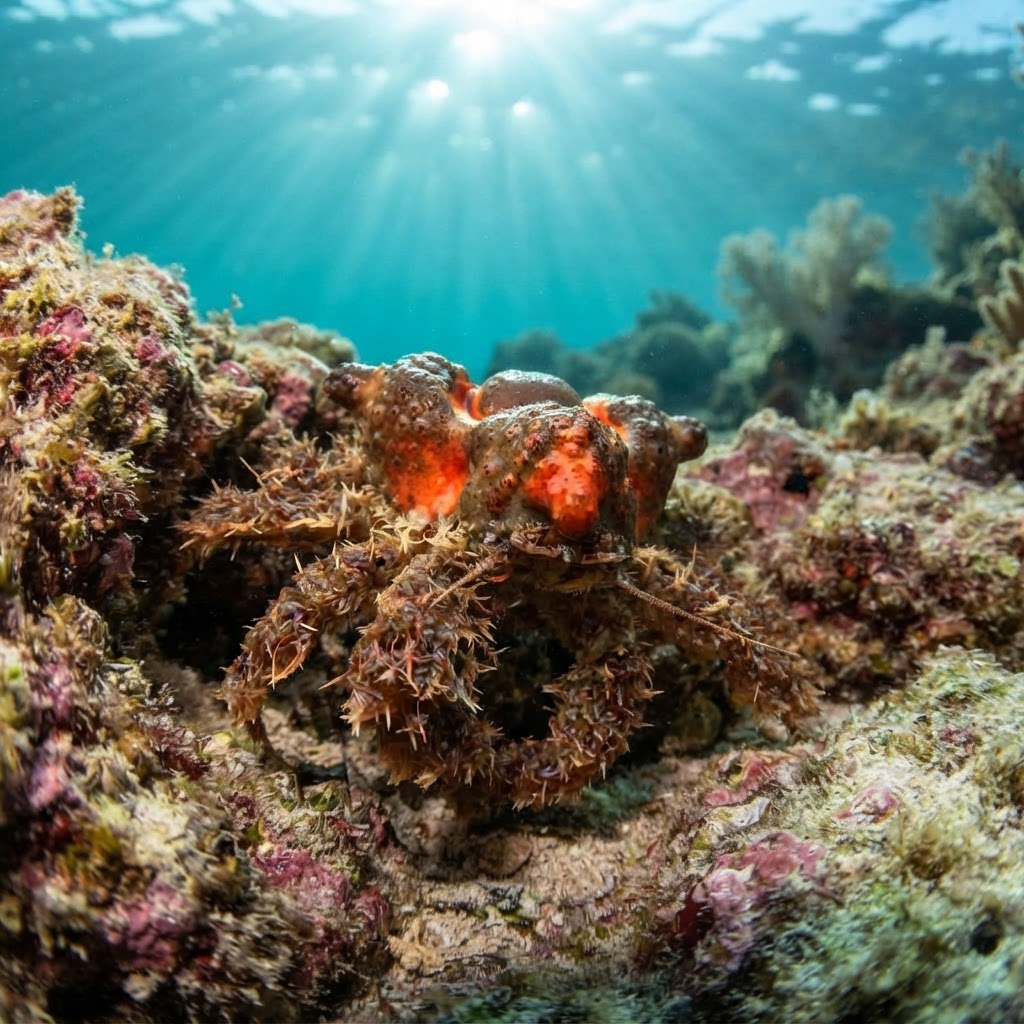
Look for a squat, mottled reddish-brown to pinkish crab with a distinctive pointed, upturned rostrum (the horn-like projection between the eyes) that gives this species its name. The shell is bumpy and spiny rather than smooth, helping it blend into rocky, encrusted surfaces. It tends to sit tucked against rock or under ledges rather than out in the open, so divers usually spot the horn-shaped snout first before the rest of the body registers.
Divers typically find this crab wedged into rocky crevices or tucked under ledges on cold, current-swept reefs, moving slowly and staying put rather than scuttling off when approached. It's logged as uncommon to rare at most sites, so encounters tend to be a case of spotting one motionless against encrusted rock rather than watching active foraging.
The upturned, horn-like rostrum isn't just decorative: it's a useful field mark that separates this species from the many other lumpy, camouflaged crabs sharing the same cold rocky reefs.
Sightings don't show a clear seasonal pattern, and given this crab sits in a narrow cold-water niche of roughly 7.5 to 13.5 C, it appears to be present through the year rather than tied to a particular season.
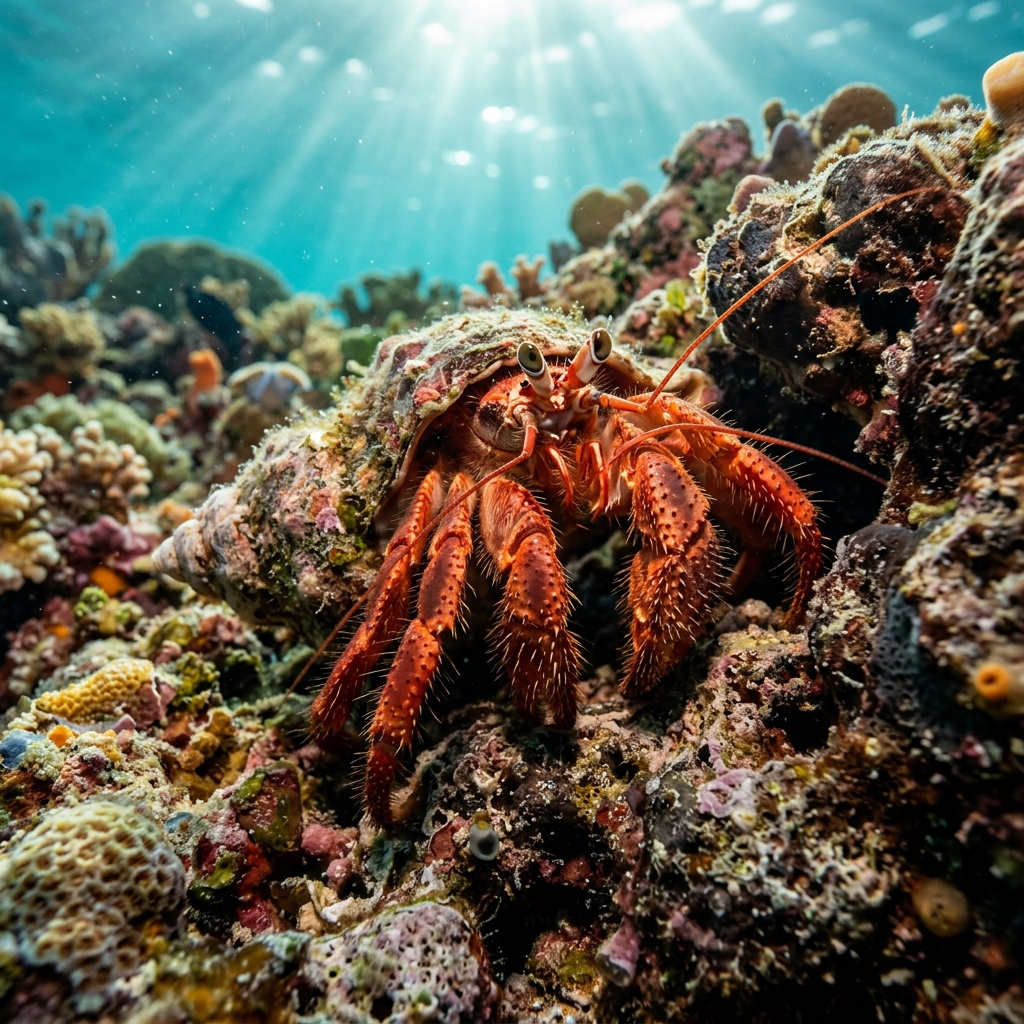
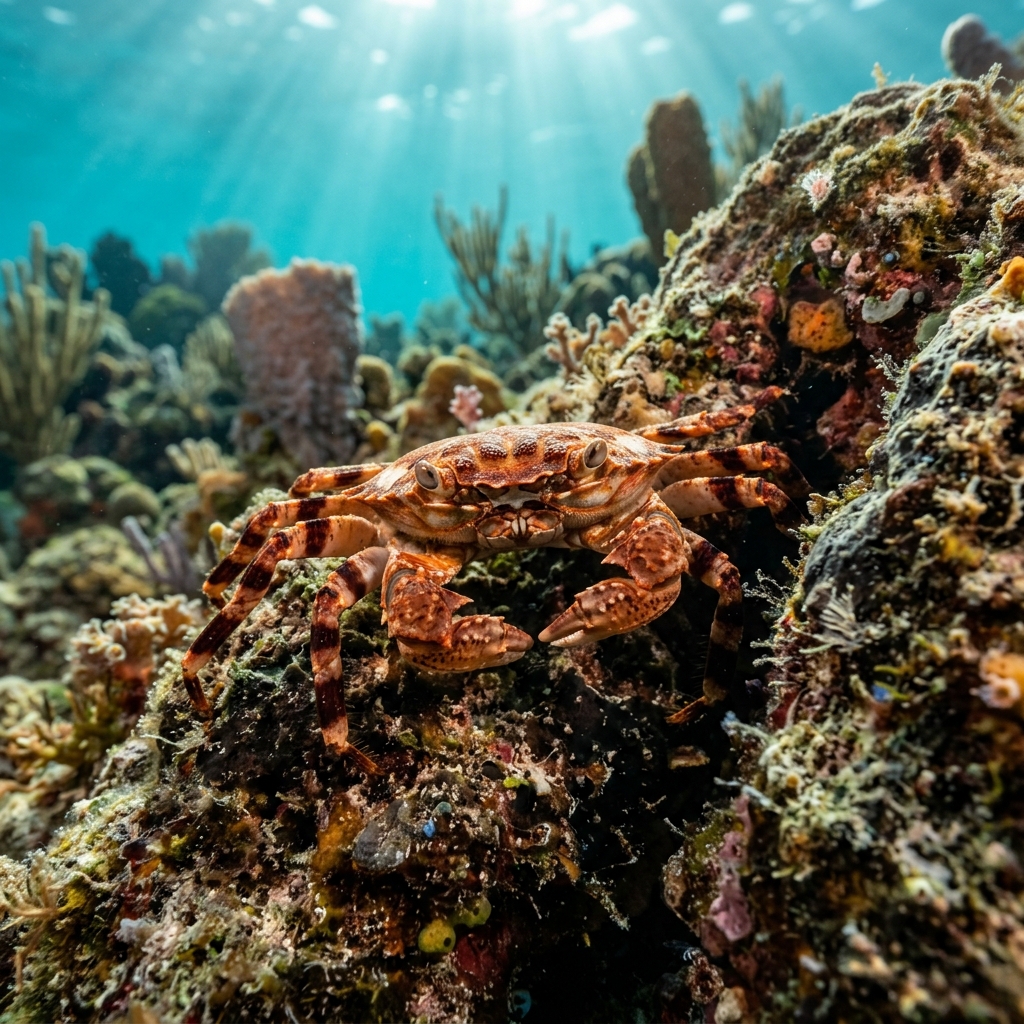
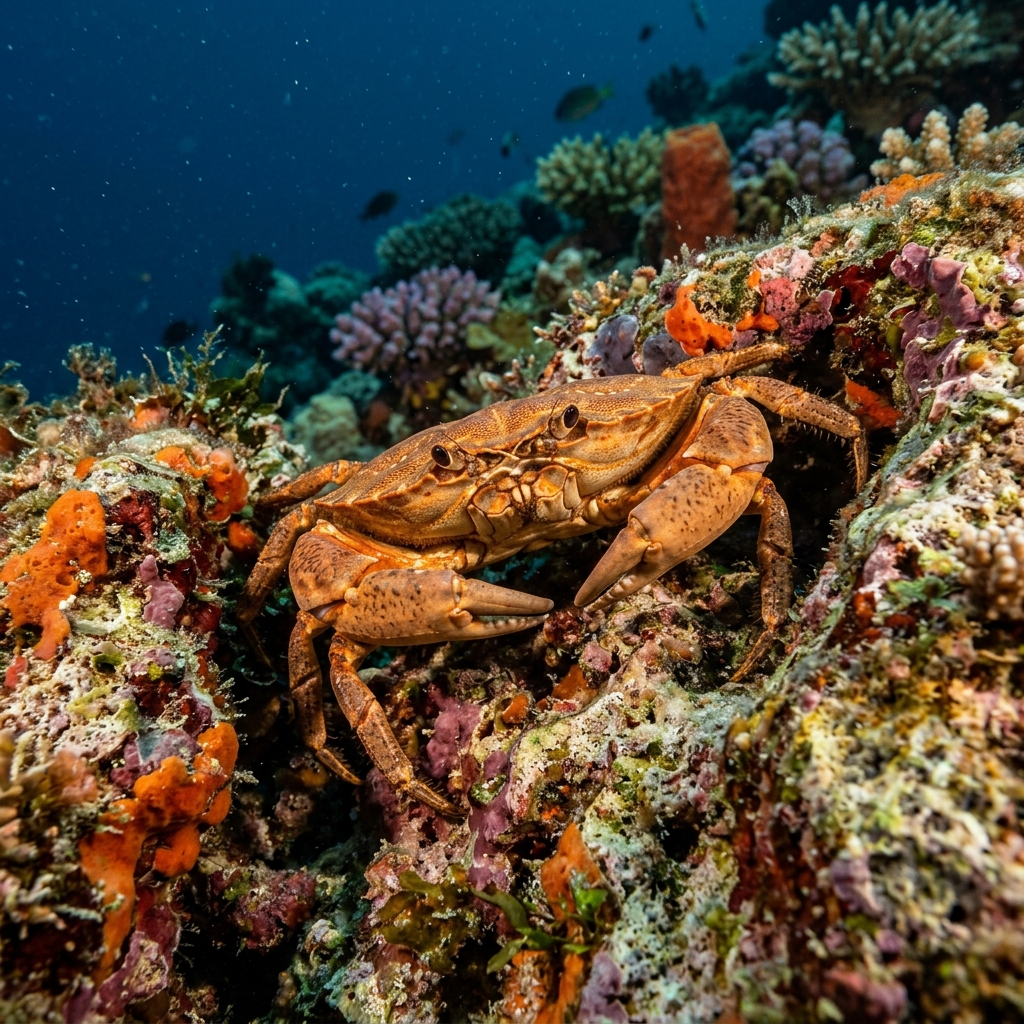
Reef neighbours a diver could mistake it for. Use the identification notes above to tell them apart.
This one is very much a British Columbia species, with the strong majority of logged sightings coming from Canadian dive sites there. A smaller number of sightings extend south into Alaska, but British Columbia is clearly the reliable place to look.
Mapping where Rhinoceros Crab is logged…
British Columbia, Canada is by far the most reliable place, with sightings logged at numerous sites there. A few sightings also come from Alaska, United States.
There's no strong seasonal signal in the sightings, and its cold-water temperature range suggests it stays put year-round rather than appearing only in certain months.
Check for a mottled reddish-brown, spiny-shelled crab with a pointed, upturned horn-like snout between the eyes. It usually sits tucked into rocky crevices rather than out in the open.
No, they pose no danger to divers. They're slow-moving, tucked into rocky crevices, and have no reason to interact with passing divers.
Its most notable feature is the horn-like rostrum projecting from its face, which gives the species its common name and is the easiest way to pick it out among other cold-water crabs.
Site and sighting data is aggregated from diver logs, iNaturalist and GBIF. For taxonomy and conservation status:
European Green Crab
2,469 sites