Rhamphocottus richardsonii
Spot the quirky grunt sculpin in cold Pacific waters off British Columbia and the US Pacific Coast. Here's where to look and how to recognise it.
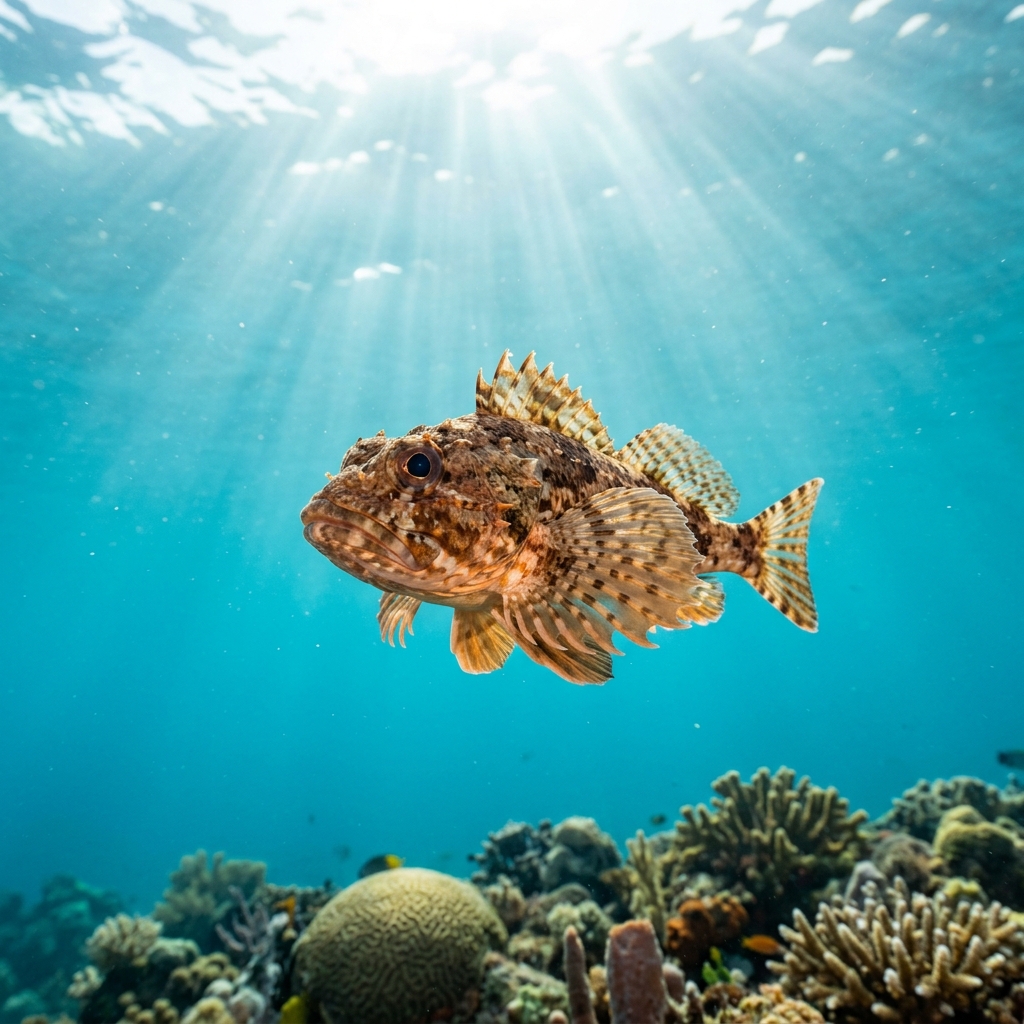
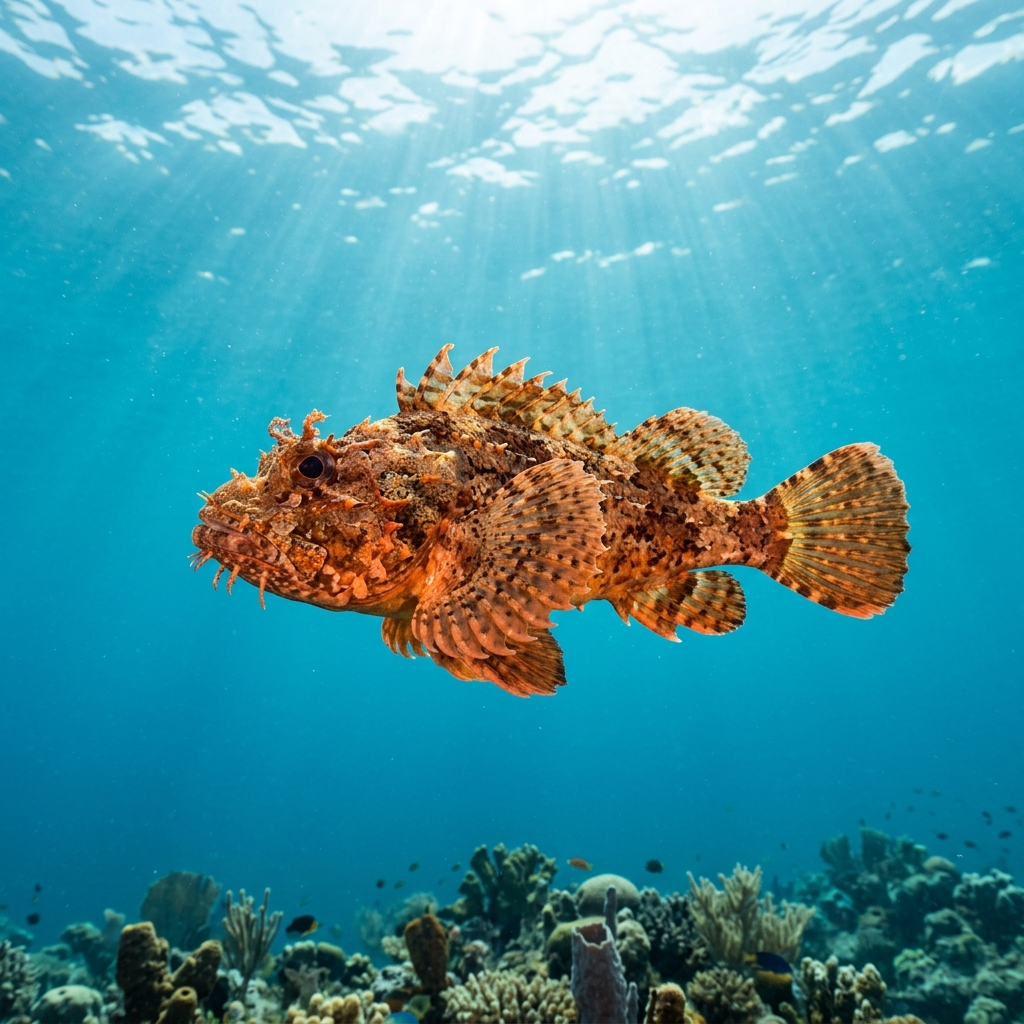
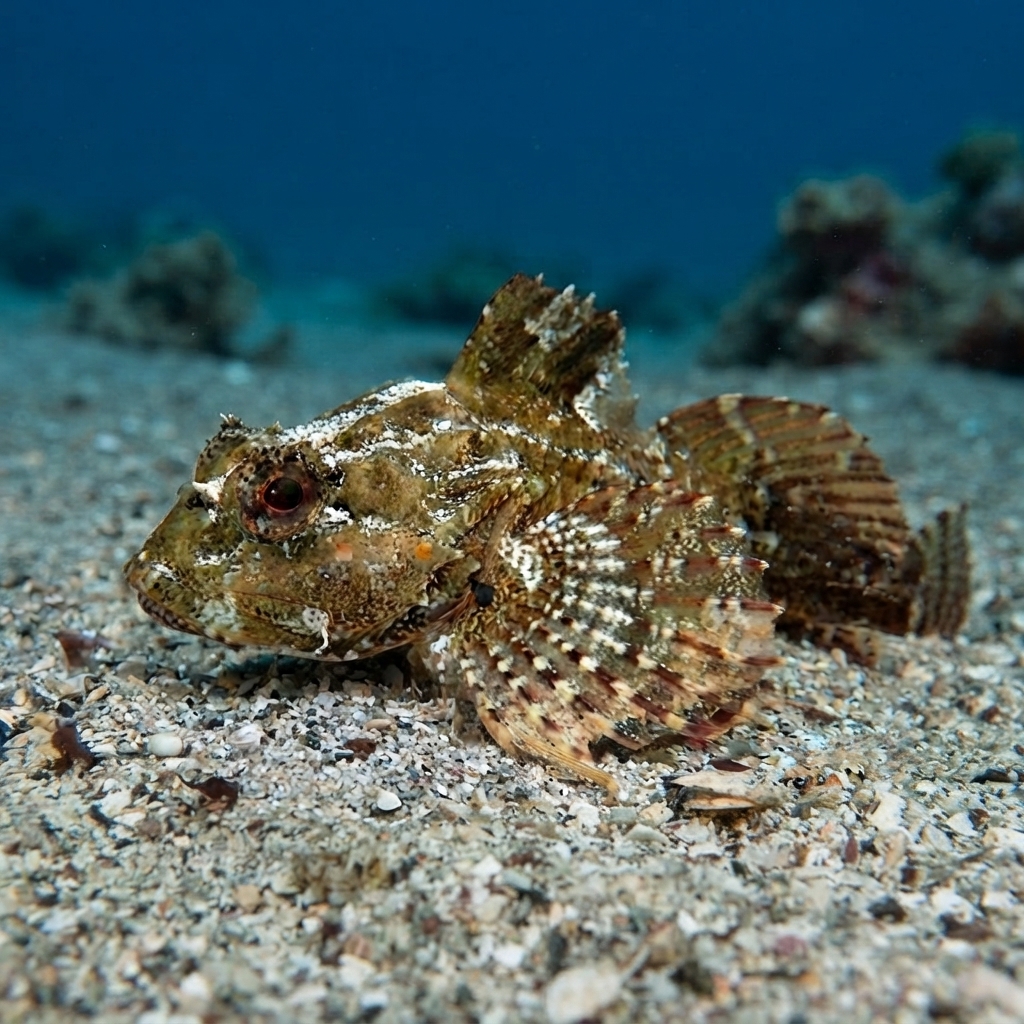
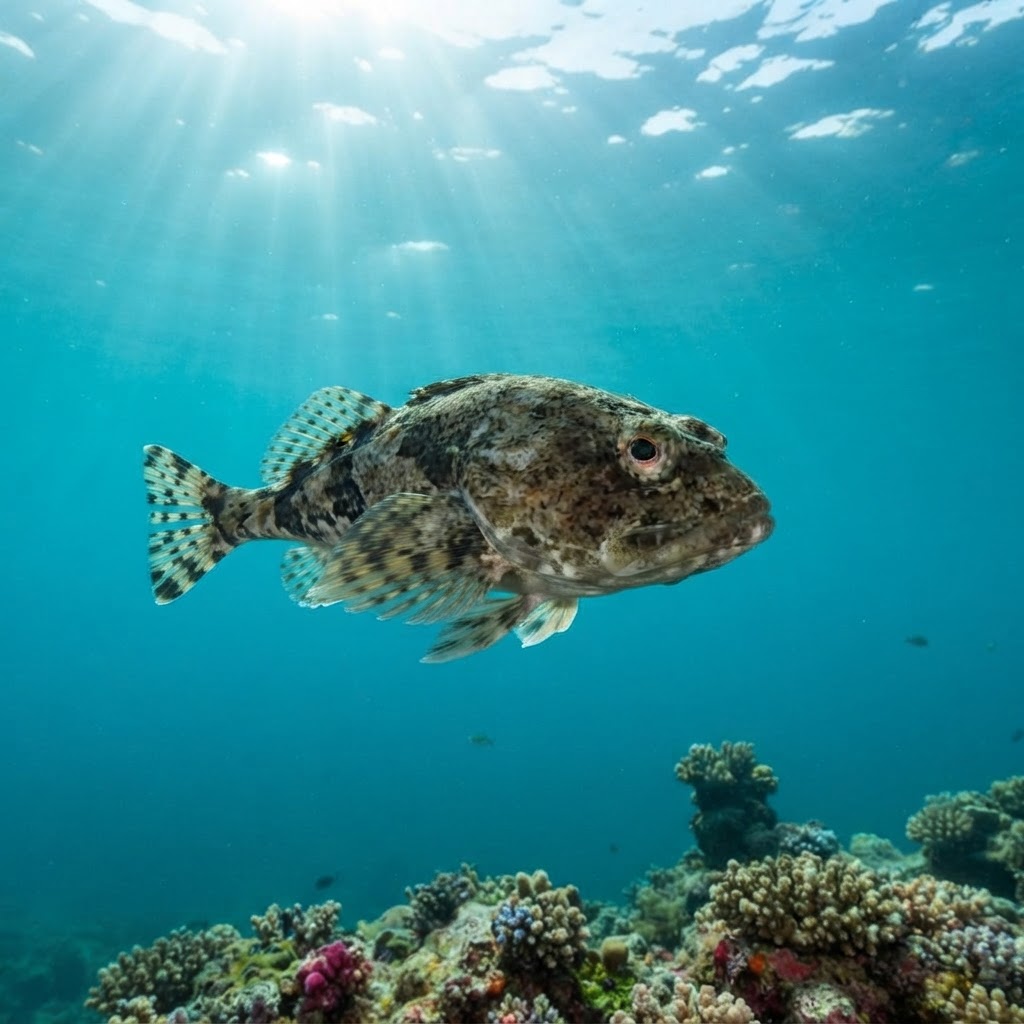
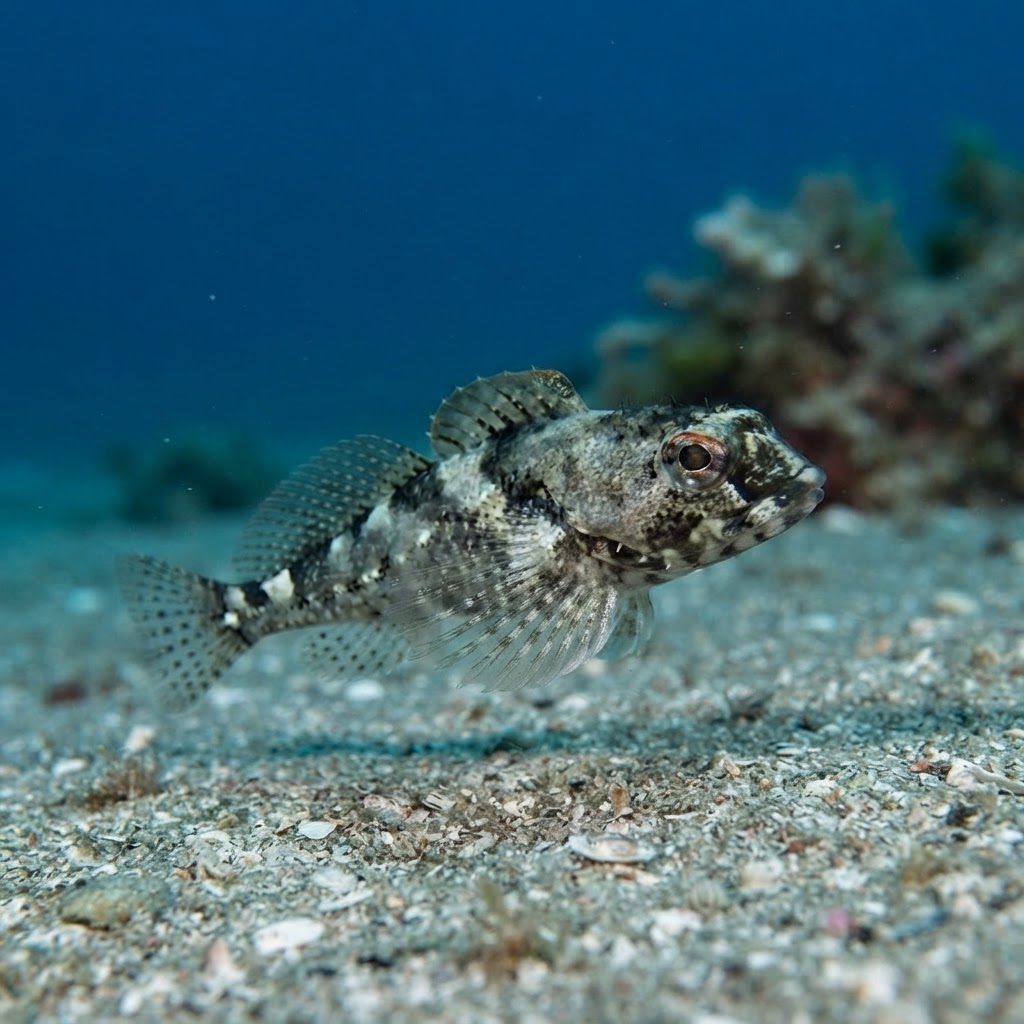
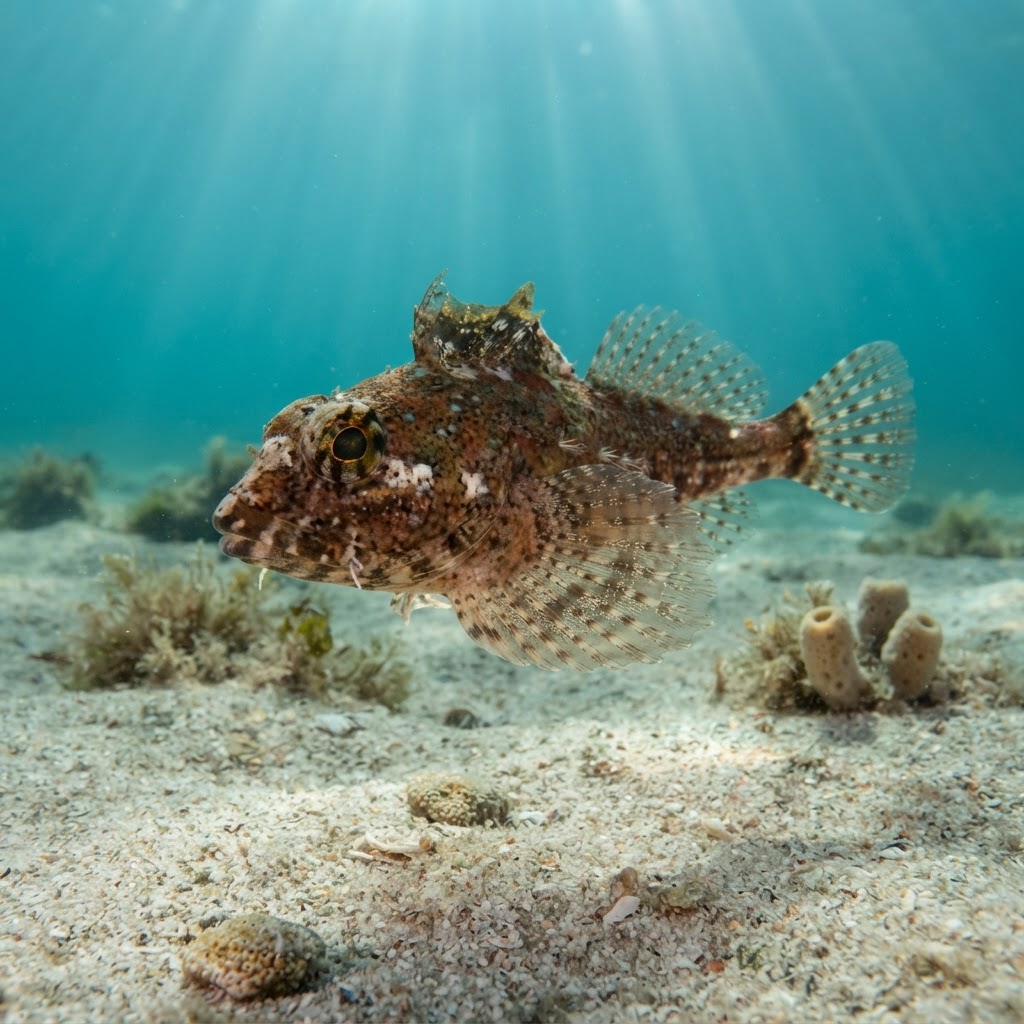
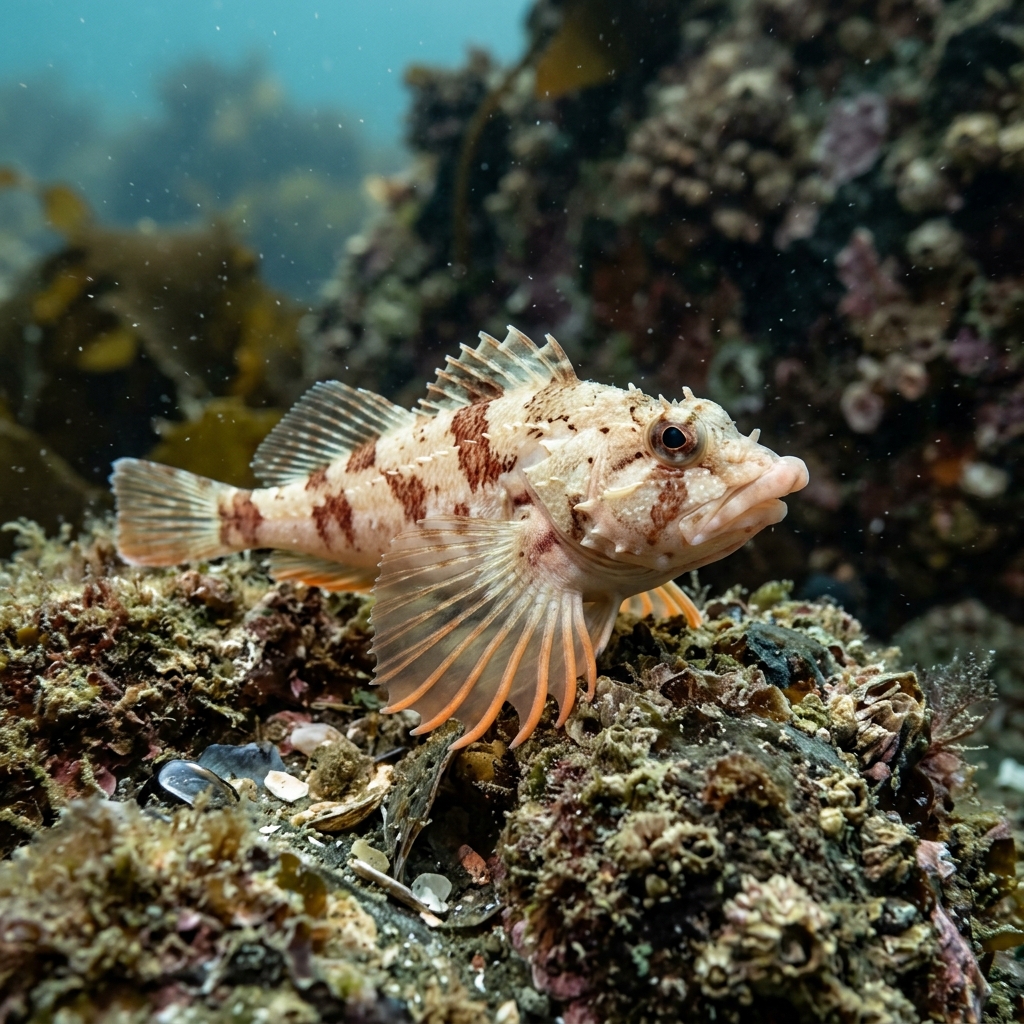
A comically oversized head relative to a stubby, tapering body is the first thing that registers underwater. The body is pale cream or tan with irregular brown blotches and bars, and the snout is noticeably elongated and upturned, giving it a pig-like profile unlike almost anything else on a Pacific reef. The large, fan-like pectoral fins (the broad, wing-like fins on its sides) are used to prop the fish upright on the substrate rather than for swimming. Adults are small enough to sit comfortably in a cupped hand.
Grunt sculpin are typically found resting motionless on rocky or shell-covered substrate, using their stiff pectoral fins to prop themselves upright like tiny tripods. They tend to shelter in barnacle shells, crevices, and rocky rubble, and can be surprisingly reluctant to move even when a diver approaches closely. When disturbed, they propel themselves in short, jerky hops rather than swimming smoothly away.
Females actively chase males and herd them into empty barnacle shells for spawning, after which the male is trapped inside by the female guarding the entrance until the eggs hatch. This role-reversal in courtship is one of the more unusual reproductive strategies among Pacific fish.
Sighting data does not show a concentrated season, so this species can be considered year-round. It occupies cold water between roughly 7 and 16 °C, which matches the persistent cold-water conditions of British Columbia and the Pacific Northwest coast throughout the year.
Grunt sculpin are most logged along the British Columbia Coast, which accounts for the vast majority of recorded sightings, making it by far the strongest region to target. Smaller numbers of observations come from the US Pacific Coast. A single record exists from China, though British Columbia remains the clear priority destination.
Mapping where Grunt Sculpin is logged…
The British Columbia Coast is by far the best place to look, with sightings spread across a large number of sites in cold Pacific waters. The US Pacific Coast also has records. Look for rocky reefs, shell debris, and areas with barnacle growth where they like to shelter.
No strong seasonal peak has been detected in the sighting data, so they can be encountered year-round. They favour cold water in the 7 to 16 °C range, which is a near-constant feature of their British Columbia and Pacific Northwest habitat regardless of season.
Look for the disproportionately large head and distinctly upturned snout, which make it unlike any other small fish on a cold Pacific reef. The brown and cream blotched pattern, tiny size, and habit of sitting propped up on its pectoral fins rather than hovering all confirm the ID.
Grunt sculpin are small fish, typically reaching around 8 to 9 centimetres in length as adults. Underwater they appear compact and rounded, roughly the size of a large marble or small walnut when curled against the substrate.
Their courtship reverses the usual roles: females chase males and force them into empty barnacle shells to fertilise eggs, then stand guard at the entrance, keeping the male inside until hatching is complete. It is a striking example of female-driven mate selection and forced paternal care.
Site and sighting data is aggregated from diver logs, iNaturalist and GBIF. For taxonomy and conservation status:
Shorthorn Sculpin
228 sites