Reticulidia halgerda
Spot the Chocolate Mango Nudibranch in warm 26-29 °C waters. Most sightings logged in Luzon and the Visayas, Philippines. ID tips inside.
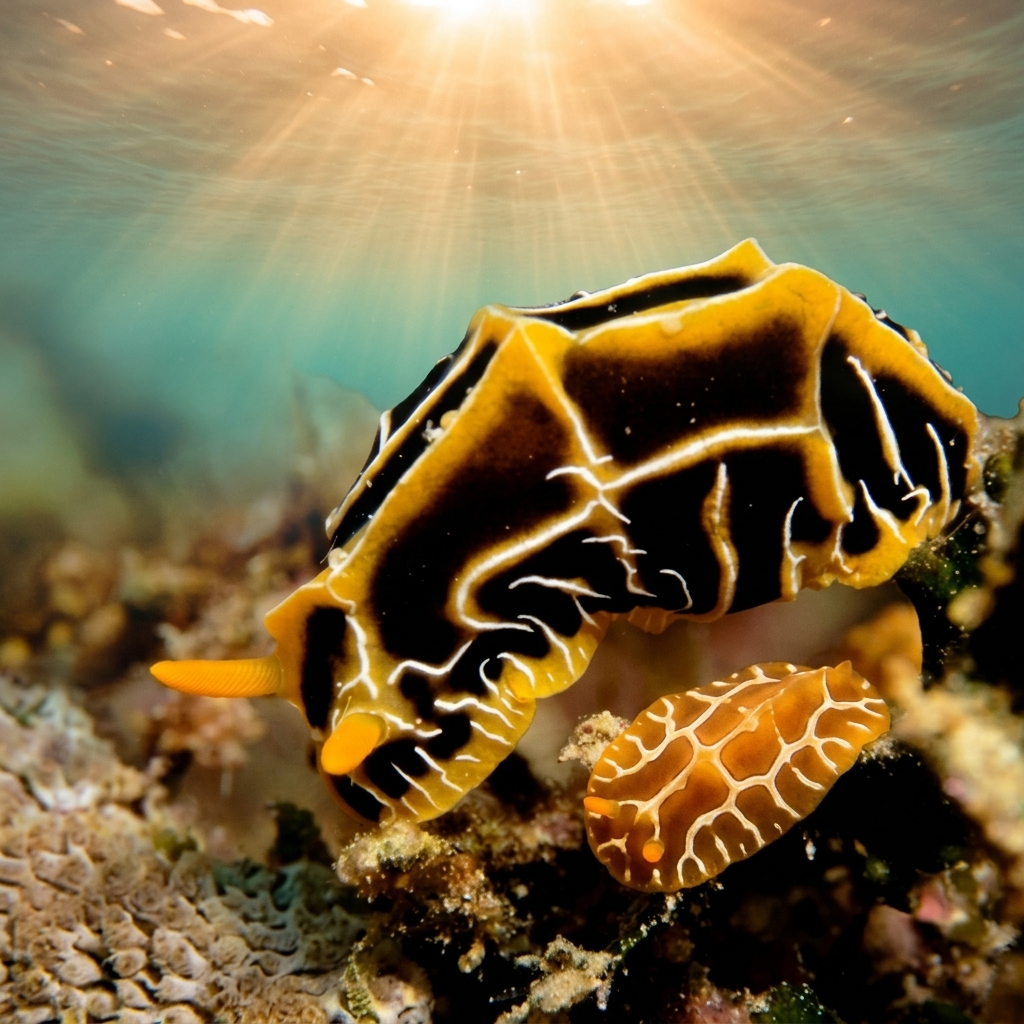
A small, flattened phyllidiid (a group of nudibranchs with a firm, tubercled body rather than flowing cerata) with a warm orange-brown to mango-toned dorsal surface crossed by a pale reticulated network of cream or white ridges. The pattern looks a bit like a tiled mosaic when viewed from above, and the contrasting colours make it stand out against dark reef substrate despite its modest size. Look for the characteristically stiff, warty body profile that distinguishes phyllidiids from the softer, branch-bodied nudibranchs.
Like most phyllidiids, it is typically spotted moving slowly across hard coral, rock, or rubble while feeding on sponges. It tends to ignore divers entirely, continuing its methodical crawl rather than retreating. Sightings are more frequent on reef walls and rubble slopes during daylight dives, where its patterned body is easier to pick out with a torch.
Phyllidiids absorb toxic compounds from the sponges they eat and concentrate them in their own skin, making the Chocolate Mango Nudibranch chemically unpalatable to most predators. That bright colouration is a direct advertisement of this defence.
No clear seasonal peak has emerged from the sighting data, so this species is treated as present year-round. It sits comfortably in the 26.5 to 29.4 °C band typical of tropical Indo-Pacific reefs, meaning any time you are diving those waters is as good as any other.
Reef neighbours a diver could mistake it for. Use the identification notes above to tell them apart.
The overwhelming majority of sightings come from the Philippines, particularly Luzon and the North, with the Visayas East and North region adding a healthy secondary cluster. Outside the Philippines, Taveuni and Viti Levu in Fiji account for the next largest group of records, and a small number of observations have come from Sipadan and East Sabah in Malaysia and around Nouméa in New Caledonia.
Mapping where Chocolate Mango Nudibranch is logged…
The Philippines is by far the best place to look, with Luzon and the Visayas producing the most logged sightings. Fiji, particularly around Taveuni and Viti Levu, is the next most reliable destination. Smaller numbers have also been recorded at Sipadan in Malaysia and near Nouméa in New Caledonia.
There is no confirmed seasonal window in the sighting records, so dives year-round can turn one up. It lives in warm tropical water between roughly 26 and 29 °C, which means the main factor is simply being in the right region and searching carefully on rubble and reef slopes.
Look for a small, stiff-bodied nudibranch with a warm orange-brown dorsal surface crossed by a pale reticulated (net-like) ridge pattern. The firm, warty body shape instantly marks it as a phyllidiid rather than a soft-bodied species. The warm mango tones combined with the pale mosaic network are the key field marks.
No, they pose no risk to divers. Like other phyllidiid nudibranchs they carry toxins absorbed from their sponge diet, but these are a defence against predators and present no hazard during a normal dive observation.
Its warm orange and cream patterning is classic aposematic colouration, a visual warning to potential predators. Phyllidiid nudibranchs feed on toxic sponges and sequester those compounds in their own tissues, so the bright pattern honestly signals that this animal tastes awful and is best left alone.
Site and sighting data is aggregated from diver logs, iNaturalist and GBIF. For taxonomy and conservation status:
Blue Dragon
3,163 sites