Mauritia maculifera
Uncommon but findable on Hawaii reefs year-round, this glossy 7cm cowrie hides by day in 22.6 to 28.6C water.
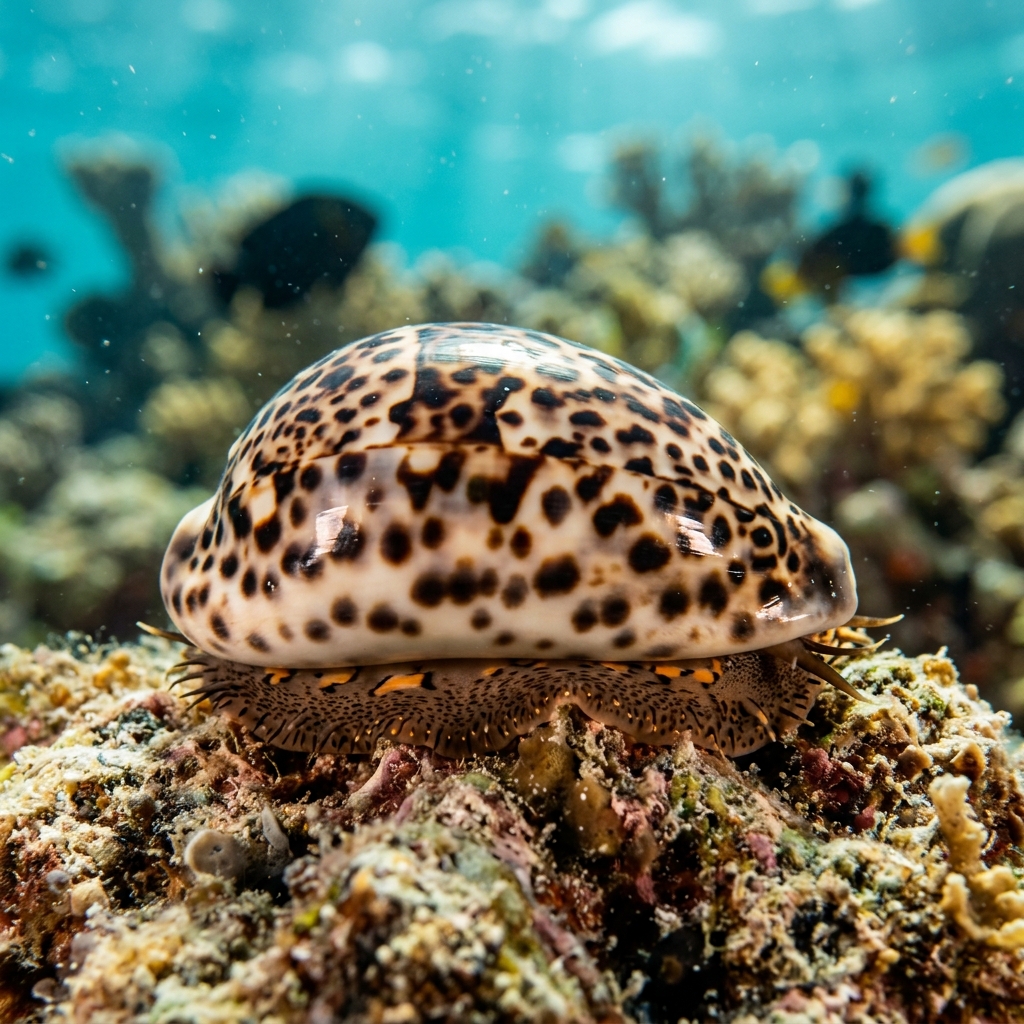
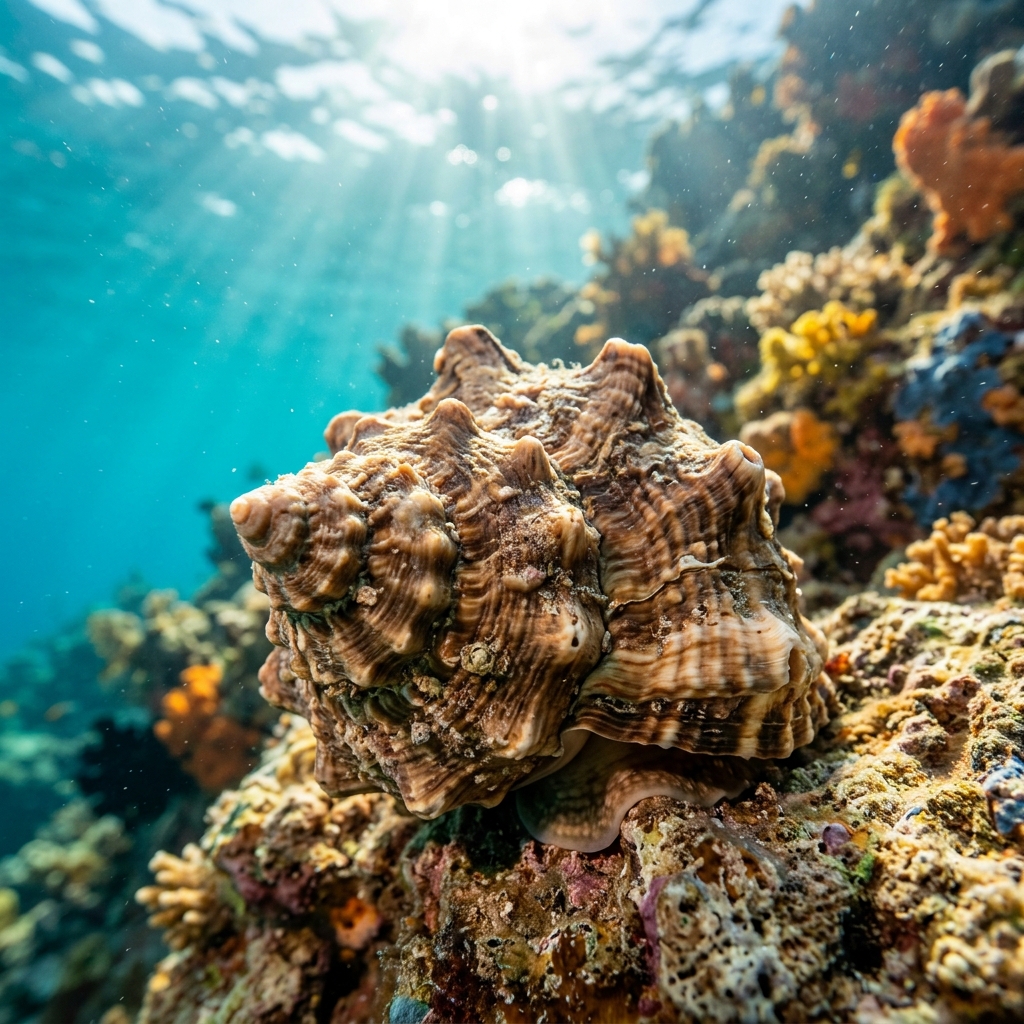
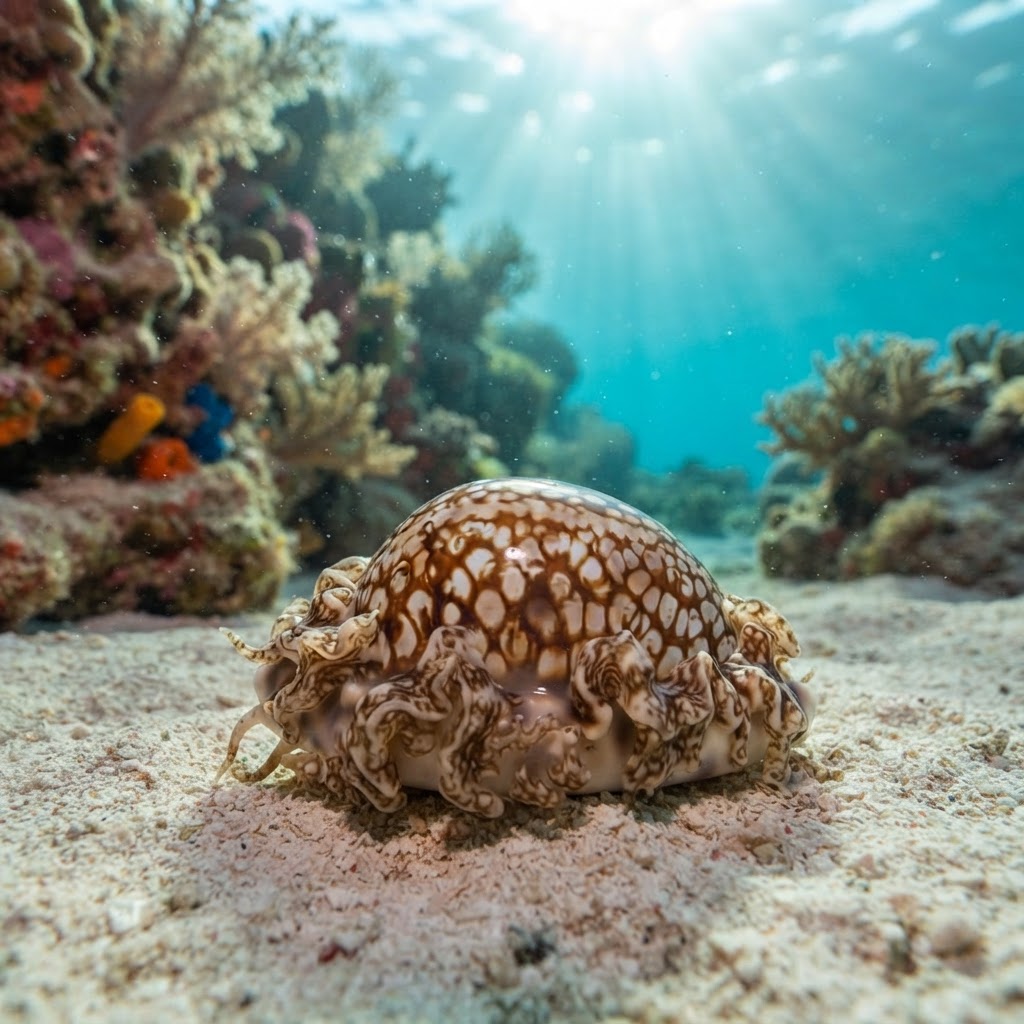
Look for a smooth, glossy oval shell around 7cm long with a reticulated (net-like) pattern of tan and brown blotches across the back. The shell has the classic cowrie shape, domed on top with a narrow ridged slit running along the flat underside where the mantle folds in. Most divers spot it tucked against rock or rubble rather than out in the open, since the mantle often withdraws when disturbed, leaving just the bare polished shell visible.
Expect a slow-moving, mostly nocturnal encounter: this cowrie tends to sit tucked under ledges or in crevices by day and becomes more active after dark, grazing over rock and rubble surfaces. It is not skittish so much as just slow and inconspicuous, and most divers who log it describe finding it rather than watching it do much beyond crawling and retracting its mantle when a light passes over it.
Like other cowries, it feeds by extending its mantle up and over the shell during quiet periods, which is actually what keeps that glossy, unworn shine on the shell surface, since the mantle protects it from abrasion and fouling growth.
No clear seasonal pattern shows up in the sighting data, and water temperatures of 22.6 to 28.6C sit within a comfortable year-round range for it, so any month diving Hawaii gives you a fair shot.
This one is very much a Hawaii speciality among logged sightings, with divers finding it across sites throughout the islands. It has not turned up with any real frequency outside Hawaii in diver observation data, so if you want to tick this cowrie, Hawaiian reefs are the place to plan around.
Mapping where Reticulated Cowrie is logged…
Hawaii is by far the strongest place to find it, with sightings logged across reef sites throughout the islands. It shows up far less reliably anywhere else, so Hawaiian dive trips are your best bet for this species.
There is no strong seasonal signal in the data, and it tolerates a wide temperature range of roughly 22.6 to 28.6C, so it is realistic to look for year-round rather than during any particular season.
Check for a glossy, domed oval shell about 7cm long with a mottled, net-like pattern of tan and brown across the back and a narrow ridged opening underneath. It is usually found tucked into crevices or rubble rather than crawling in the open.
Around 7cm at typical adult size, making it a small, easy-to-miss find that rewards divers who slow down and check ledges and rubble patches closely.
Most sites where it has been logged rate it as uncommon, with a smaller number reporting it as rare and only a couple calling it common, so treat any sighting as a real highlight rather than something guaranteed.
Site and sighting data is aggregated from diver logs, iNaturalist and GBIF. For taxonomy and conservation status:
Elysia Timida
573 sites