Micrometrus aurora
Small, silvery, and easy to miss: Reef Surfperch turns up as an uncommon find on California dive sites in water as cool as 12.9°C.
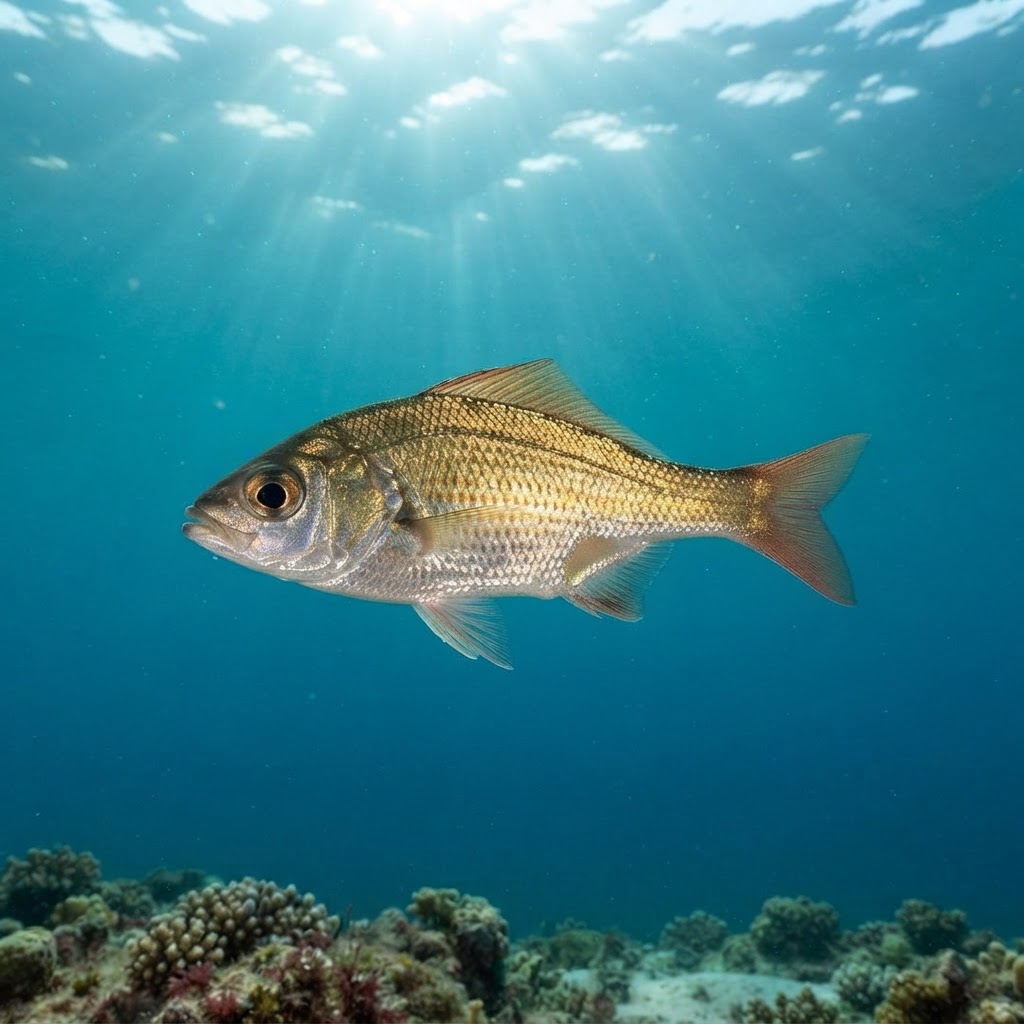
A slim, silvery-grey fish around 13 cm long with a deep, laterally compressed body typical of surfperches. Look for faint vertical bars along the flanks and a small mouth set low on a pointed head. It moves in short, quick bursts rather than gliding, usually holding close to rock or kelp structure rather than swimming in open water.
Divers find it holding position around rocky outcrops and kelp holdfasts, picking at small invertebrates rather than schooling in open water. It's not a fish that approaches divers or reacts much to a light passing over it, so a slow look along the rock face is more productive than chasing it. Expect brief, darting movement between cover rather than a long, calm hover.
Like other members of the surfperch family, this species is thought to give birth to live young rather than laying eggs, a trait shared across embiotocids that sets them apart from most reef fish divers photograph.
Sightings don't show a clear seasonal pattern, and with a water-temperature niche of 12.9 to 17.8°C it fits the cool water California divers get most of the year, so plan around good visibility rather than a specific month.
Logged sightings so far come from California, in the United States, where it turns up on rocky reef and kelp habitat rather than tropical coral. It is not yet documented elsewhere, so California is the place to look for it.
Mapping where Reef Surfperch is logged…
The only confirmed sightings so far are from California, United States, on rocky reef and kelp sites rather than tropical coral reef.
There isn't a detected season for this species, and it sits comfortably in cool water from around 13 to 18°C, so it can turn up on California dives across the year.
Look for a small silvery fish, about 13 cm, with a deep flattened body and faint vertical bars, holding close to rocky structure or kelp rather than swimming in the open.
They're small, typically reaching around 13 cm in length, so they're easy to overlook against rocky reef backgrounds.
They belong to the surfperch family, most of which give birth to live young instead of laying eggs, an unusual reproductive strategy for a reef-associated fish.
Site and sighting data is aggregated from diver logs, iNaturalist and GBIF. For taxonomy and conservation status:
Meagre
1,159 sites