Doryteuthis opalescens
Spot opalescent inshore squid along the Pacific Coast and British Columbia in cool 8-15 °C waters. Night dives and spawning season offer your best chances.
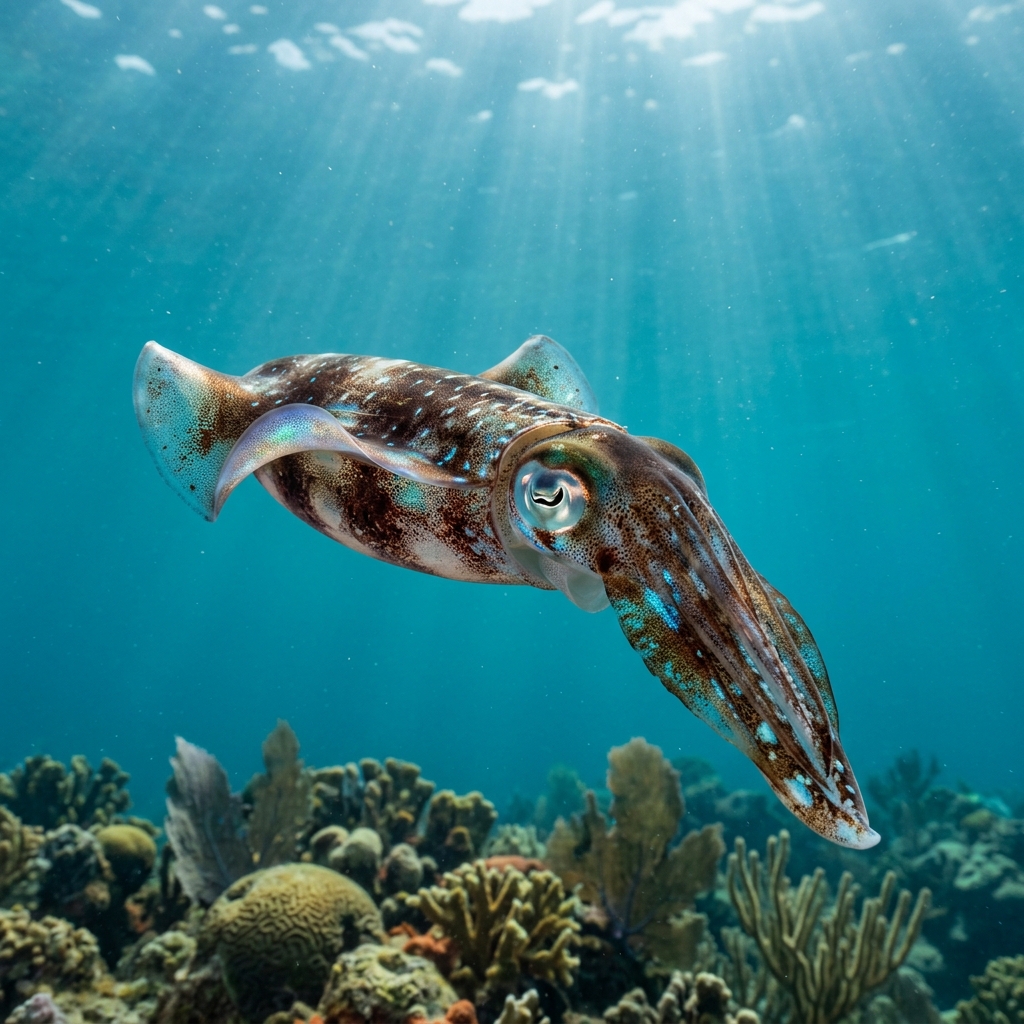
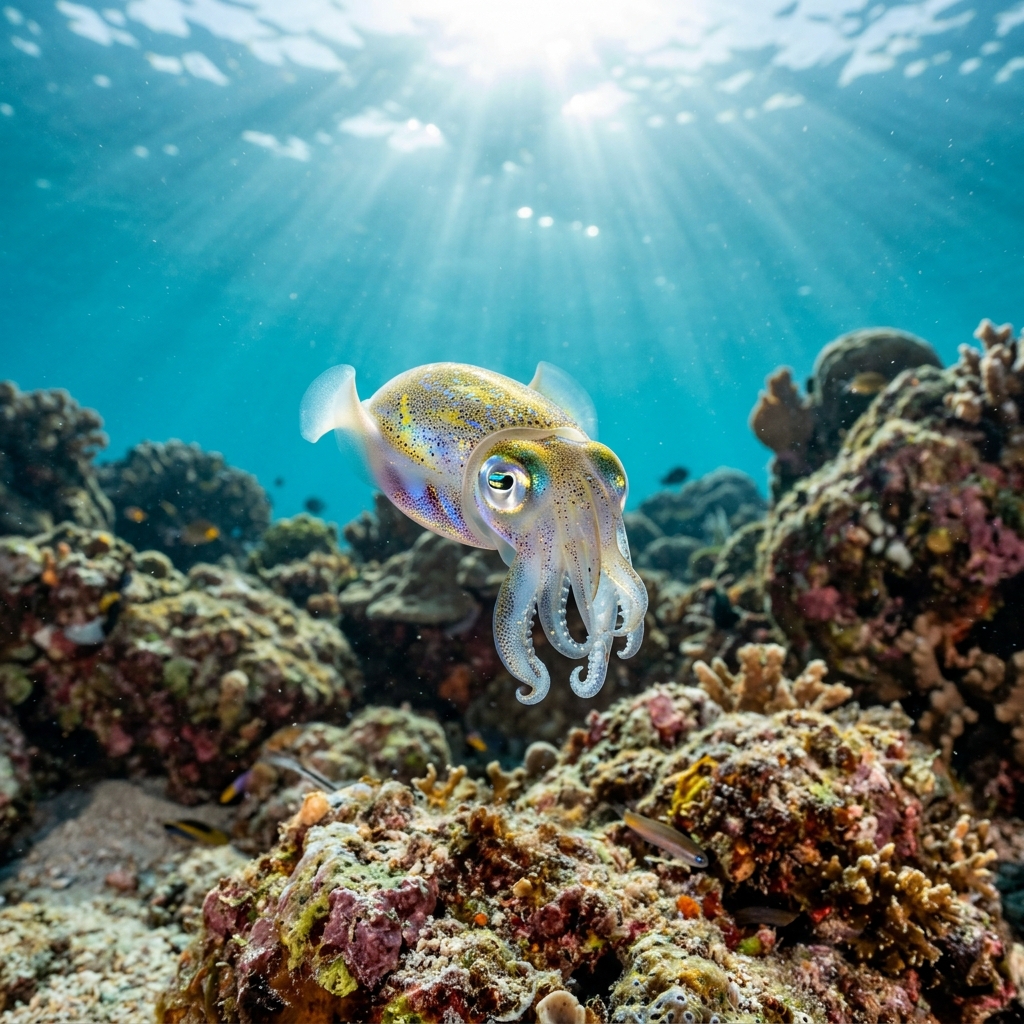
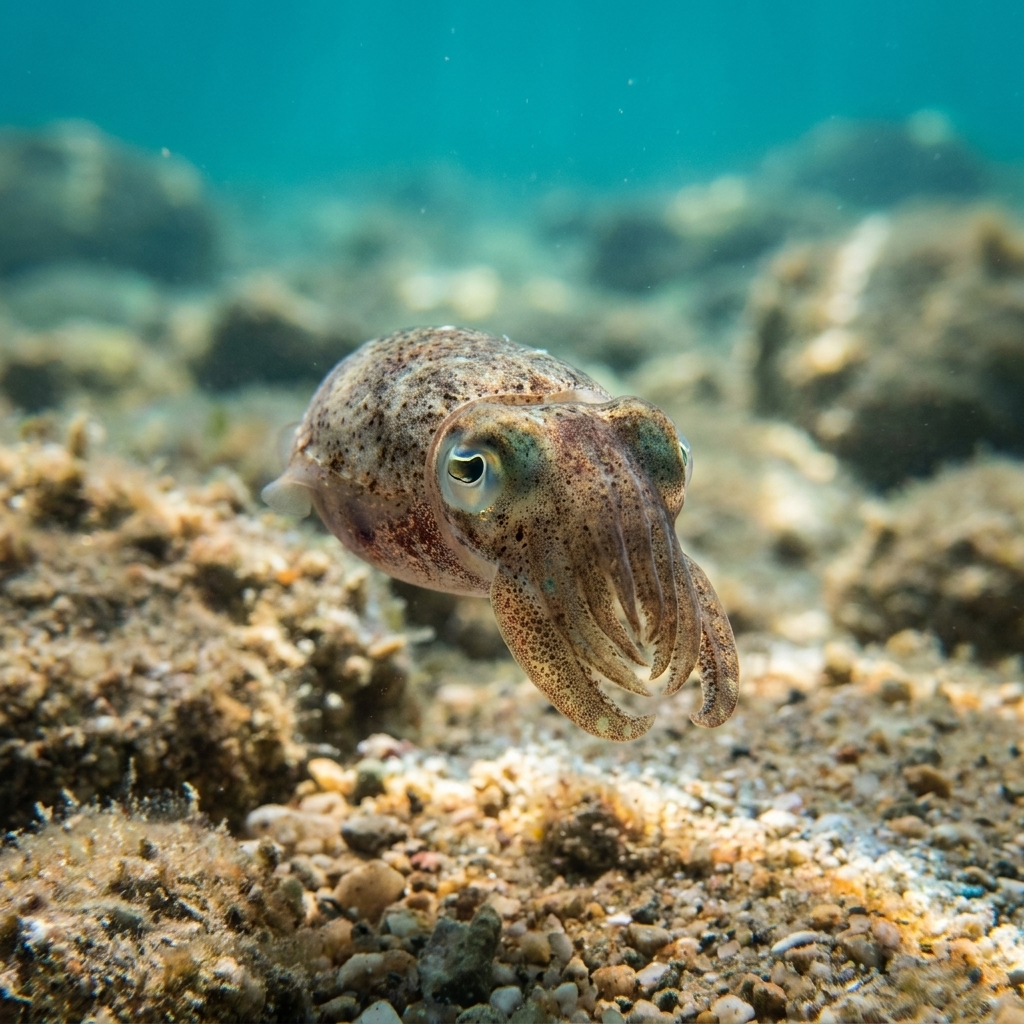
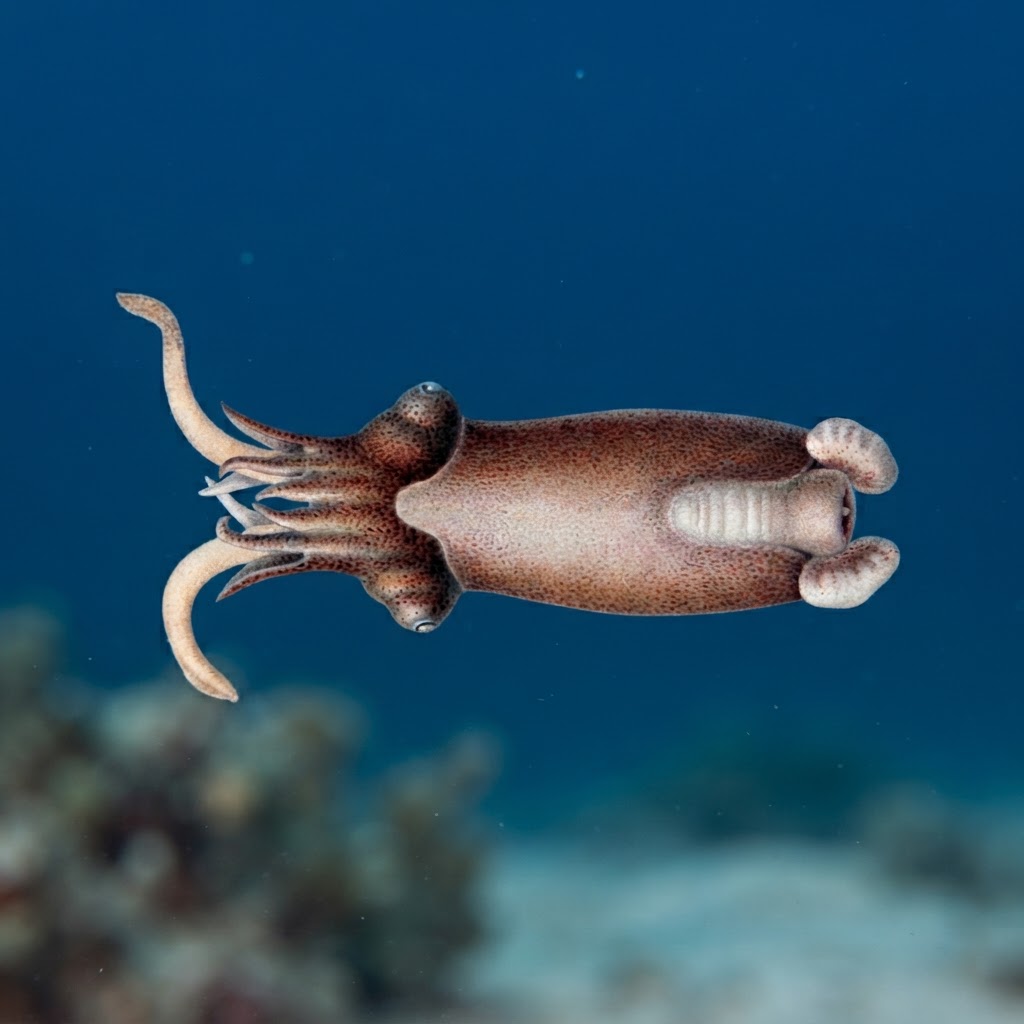
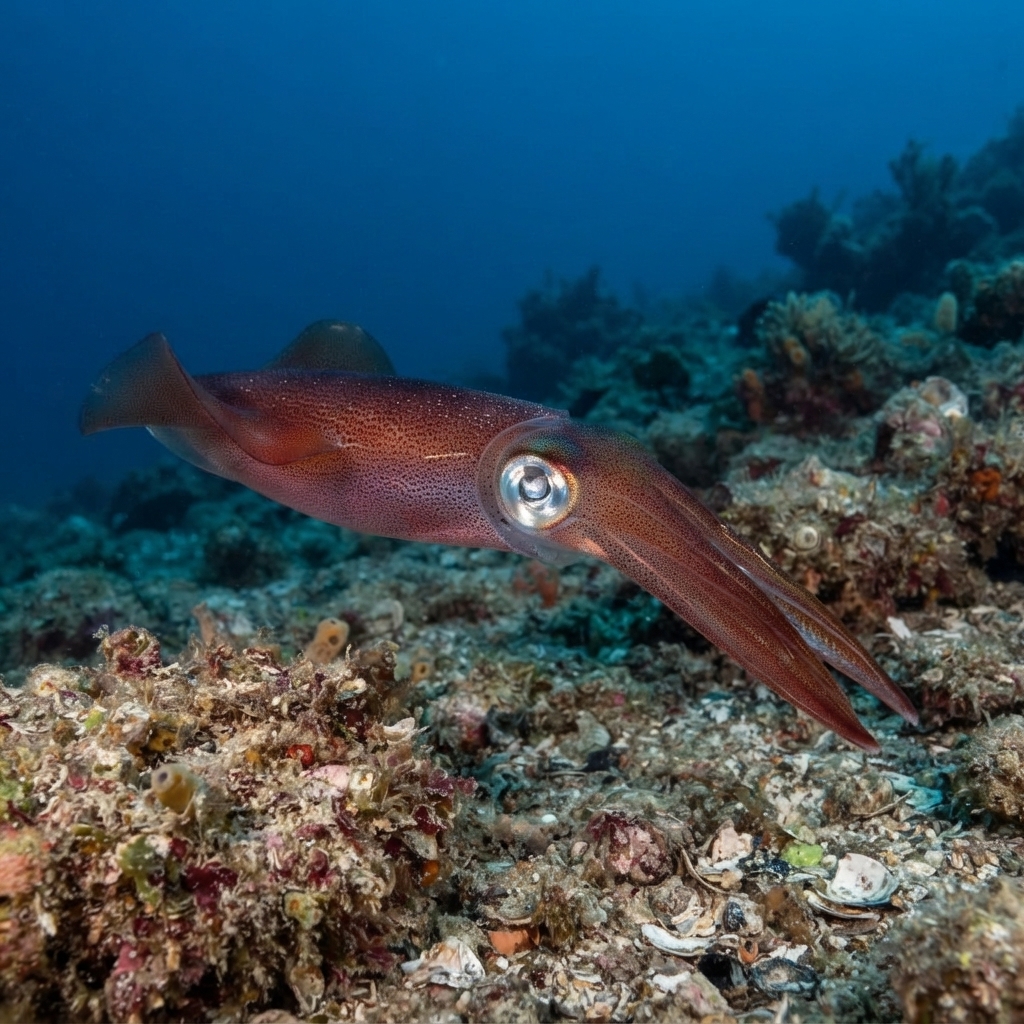
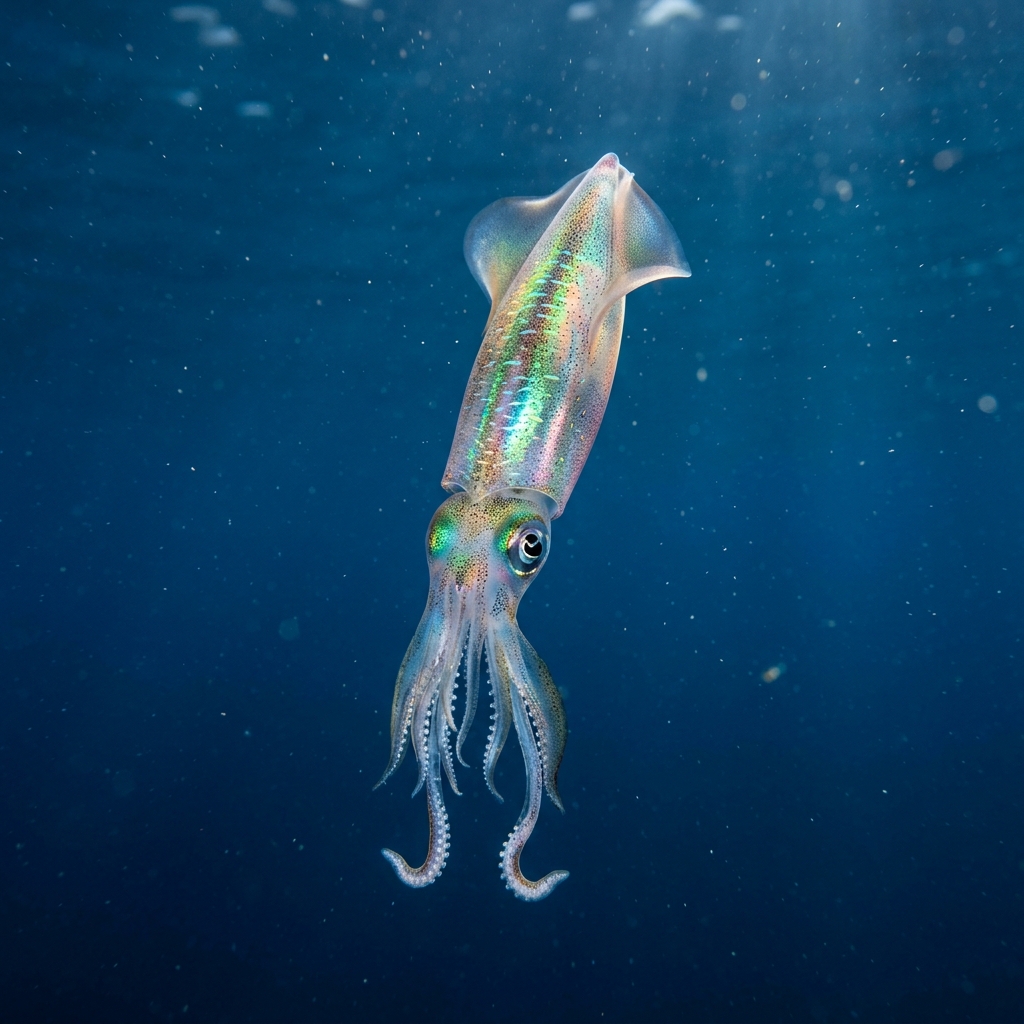
A slender, torpedo-shaped squid reaching around 13 cm, with a semi-transparent body that pulses with iridescent blues, purples, and oranges as chromatophores (pigment cells) fire in rapid waves. The fins run roughly half the mantle length and taper to a pointed tip, giving the body a distinctly arrow-like silhouette. Look for the vivid opalescent shimmer along the mantle, that shifting, jewel-like sheen is the single most reliable field mark in the water.
Opalescent inshore squid are curious but quick to bolt, they may hover just at the edge of visibility and edge closer if you stay still and avoid flashing a torch directly at them. Night dives are consistently the most productive, as these squid are far more active after dark. During spawning aggregations they become dramatically more visible and engaged with one another, displaying rapid colour pulses and mantle posturing as part of courtship.
During spawning, females deposit clusters of white, finger-like egg capsules on the seafloor, and aggregations can involve enormous numbers of individuals, these mass gatherings are among the most spectacular invertebrate events on the northeast Pacific coast.
In the Northern Hemisphere, sightings concentrate from October through July, suggesting a broad cool-season window rather than a narrow peak. Summer months show the thinnest coverage, so plan accordingly if diving on the Pacific Coast or in British Columbia.
Reef neighbours a diver could mistake it for. Use the identification notes above to tell them apart.
Most sightings come from the Pacific Coast of the United States and the British Columbia coast of Canada, which together account for the large majority of logged encounters. Nova Scotia and the Bay of Fundy add a significant Atlantic presence, while a smaller number of records exist along the coast of southern Brazil. The species has also been logged in small numbers in the British Virgin Islands and Mexico.
Mapping where Opalescent Inshore Squid is logged…
The strongest diving presence is along the Pacific Coast of the United States and the British Columbia coast of Canada. Nova Scotia and the Bay of Fundy offer Atlantic encounters, and smaller numbers of sightings come from southern Brazil and the British Virgin Islands.
Sightings in the Northern Hemisphere concentrate between October and July, so the cooler months outside of high summer give you the best odds. Night dives within that window are particularly productive, as the squid are most active after dark.
Look for a small, slender squid about 13 cm long with a pointed, arrow-shaped body and a striking iridescent shimmer, blues, purples, and oranges rippling across the mantle. That opalescent colour-play, combined with the tapered fin shape, separates it from most other squid you'll encounter in its range.
They typically reach around 13 cm in mantle length, roughly the size of a large finger. In the water they look compact and agile rather than large, which can make them easy to overlook against open-water backgrounds.
Females lay clusters of white, elongated egg capsules directly on the seafloor, often in large communal aggregations. During these events, squid display rapid chromatophore colour pulses as courtship signals, making spawning dives some of the most visually dynamic cephalopod encounters on the Pacific Coast.
Site and sighting data is aggregated from diver logs, iNaturalist and GBIF. For taxonomy and conservation status:
Inshore Squid
390 sites