Ozius truncatus
A rare find for divers, this dark reef crab turns up most often on cool-water dives in South Australia and Western Australia.
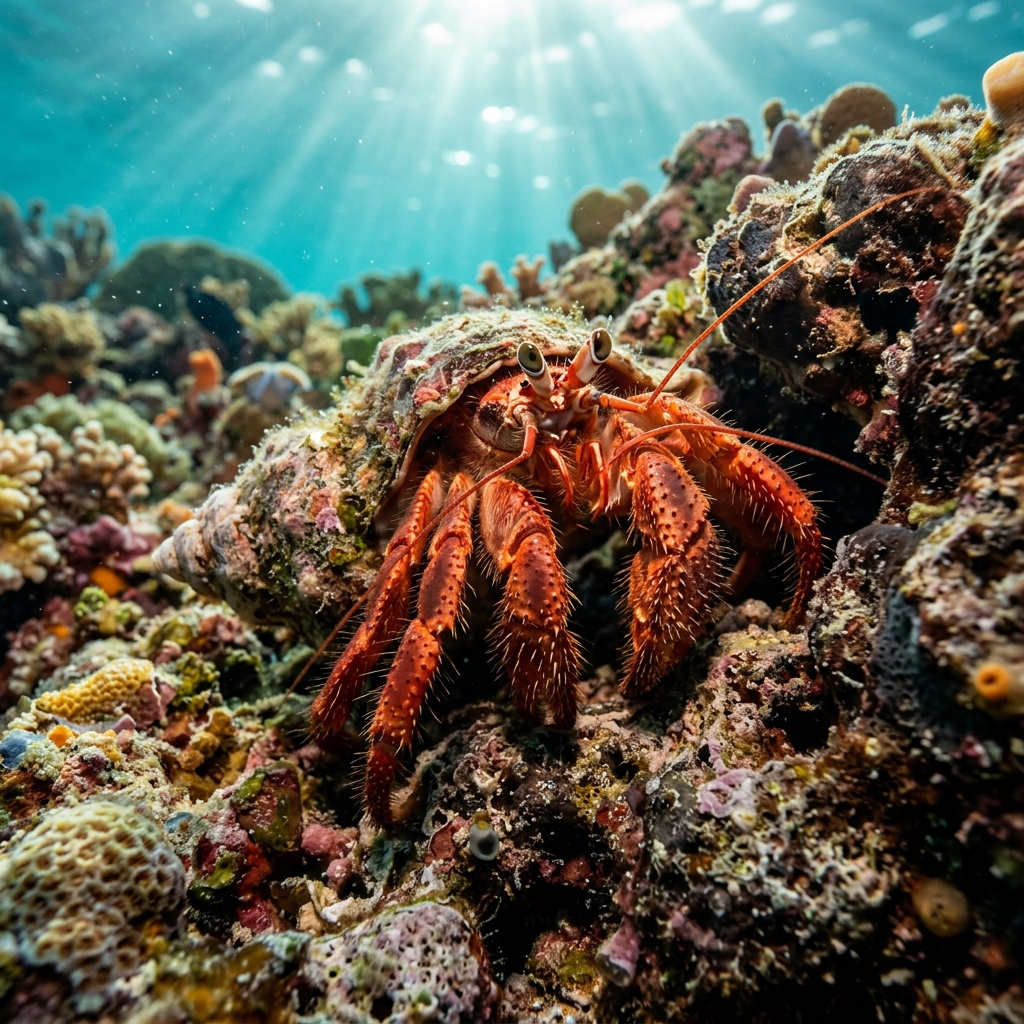
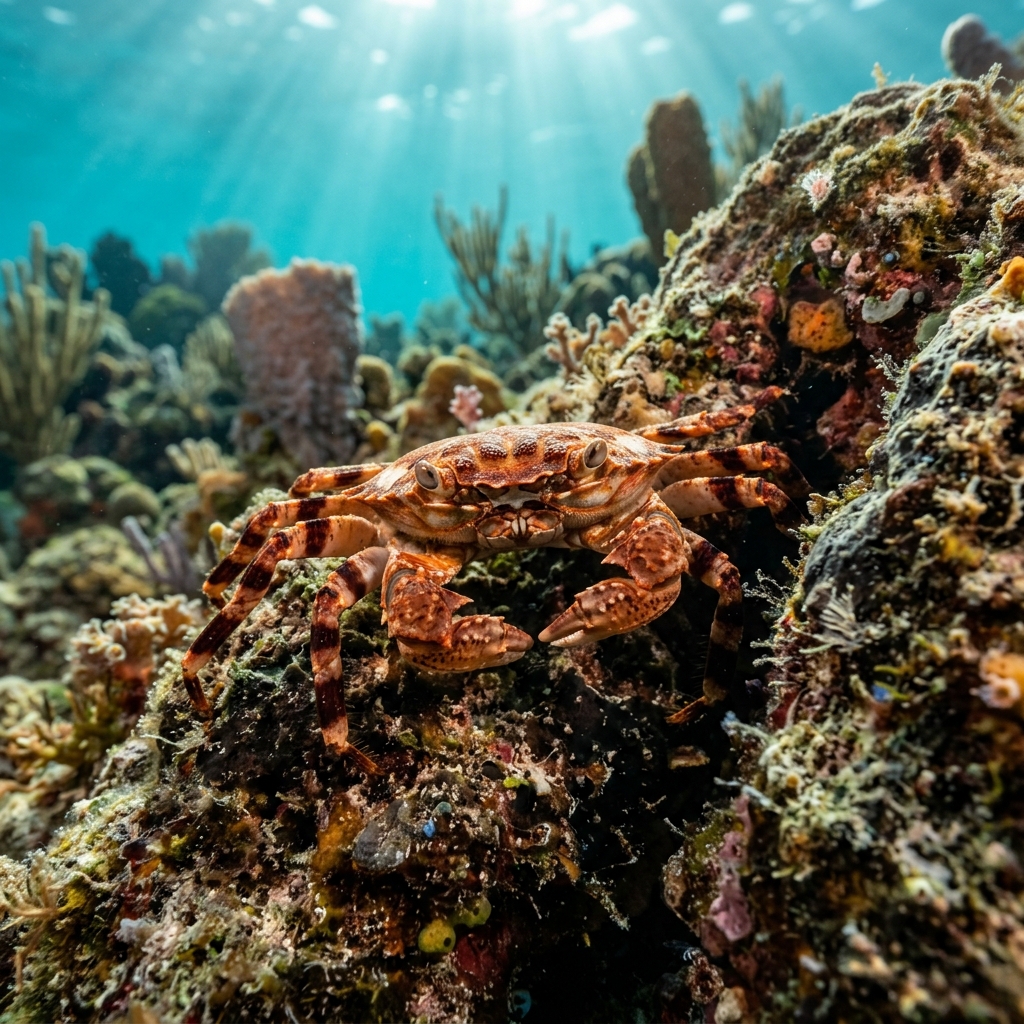
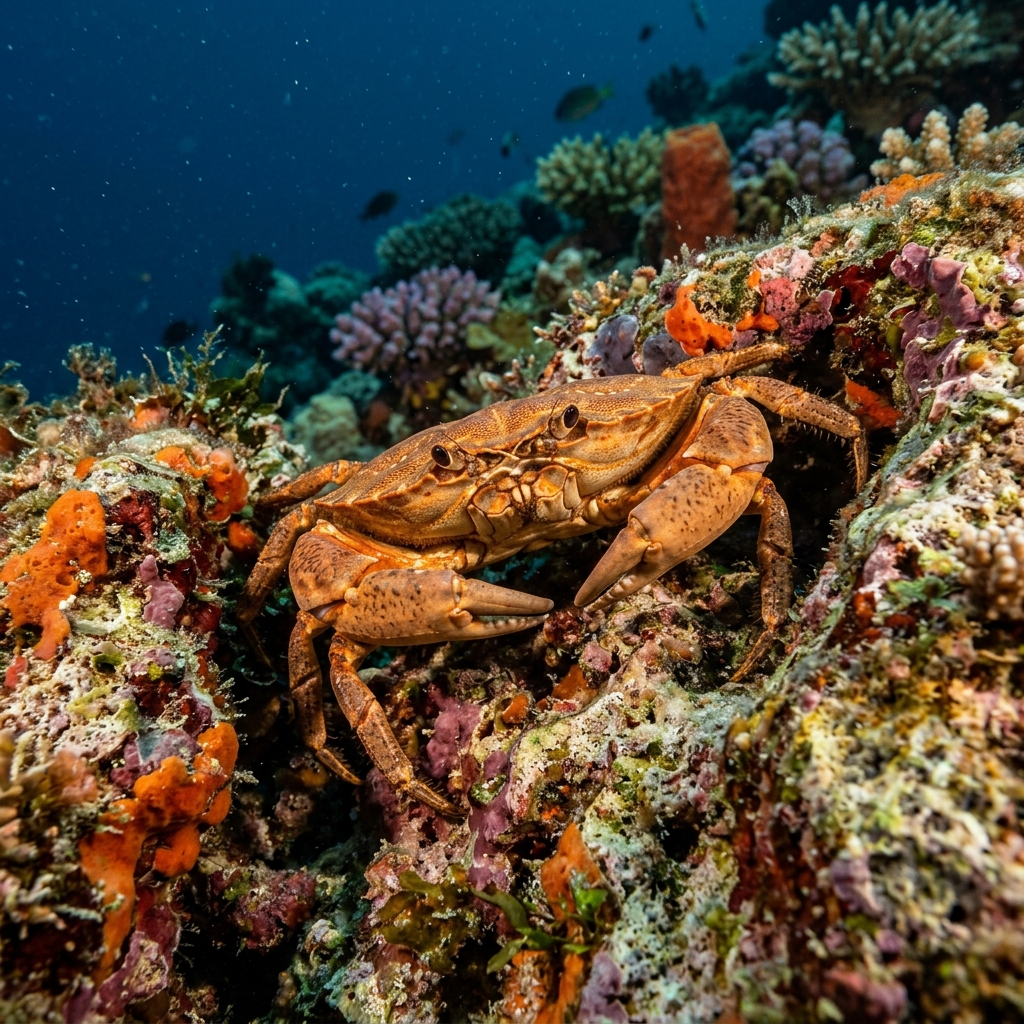
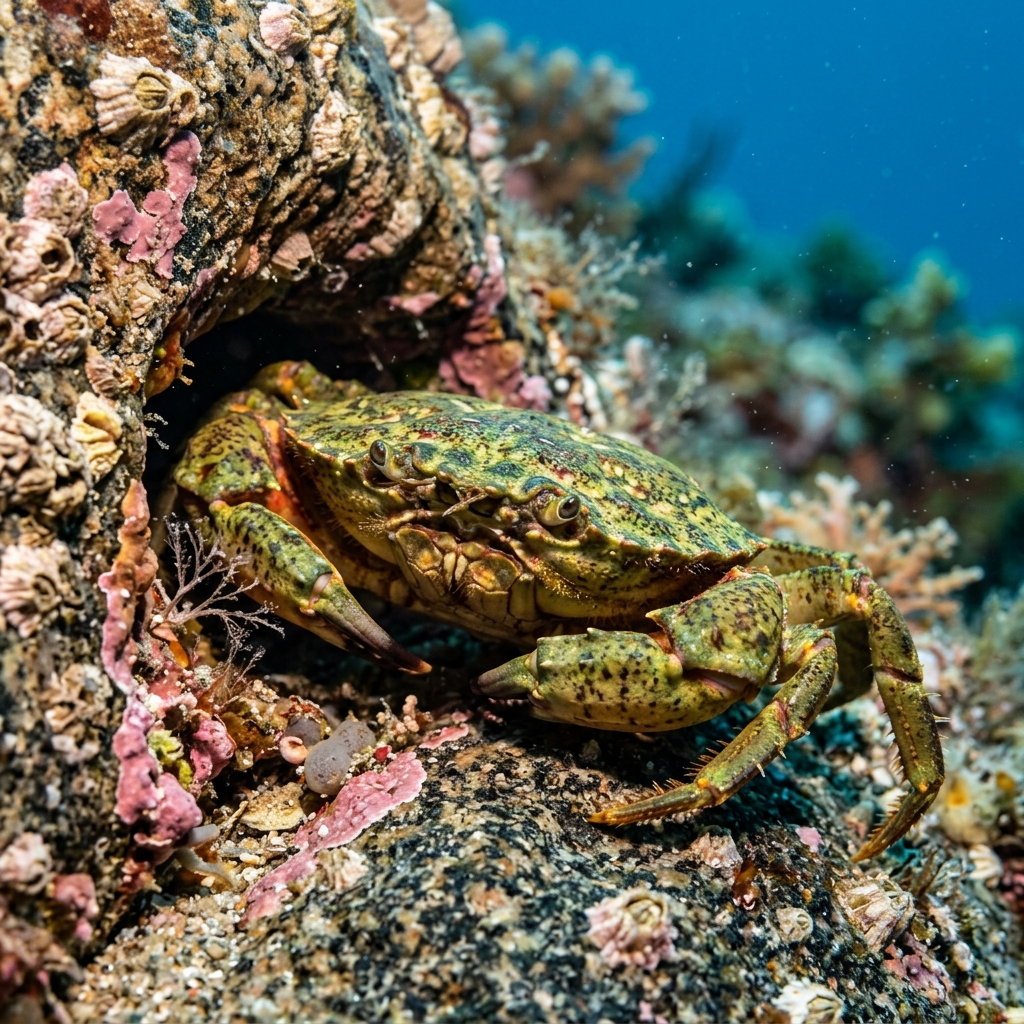
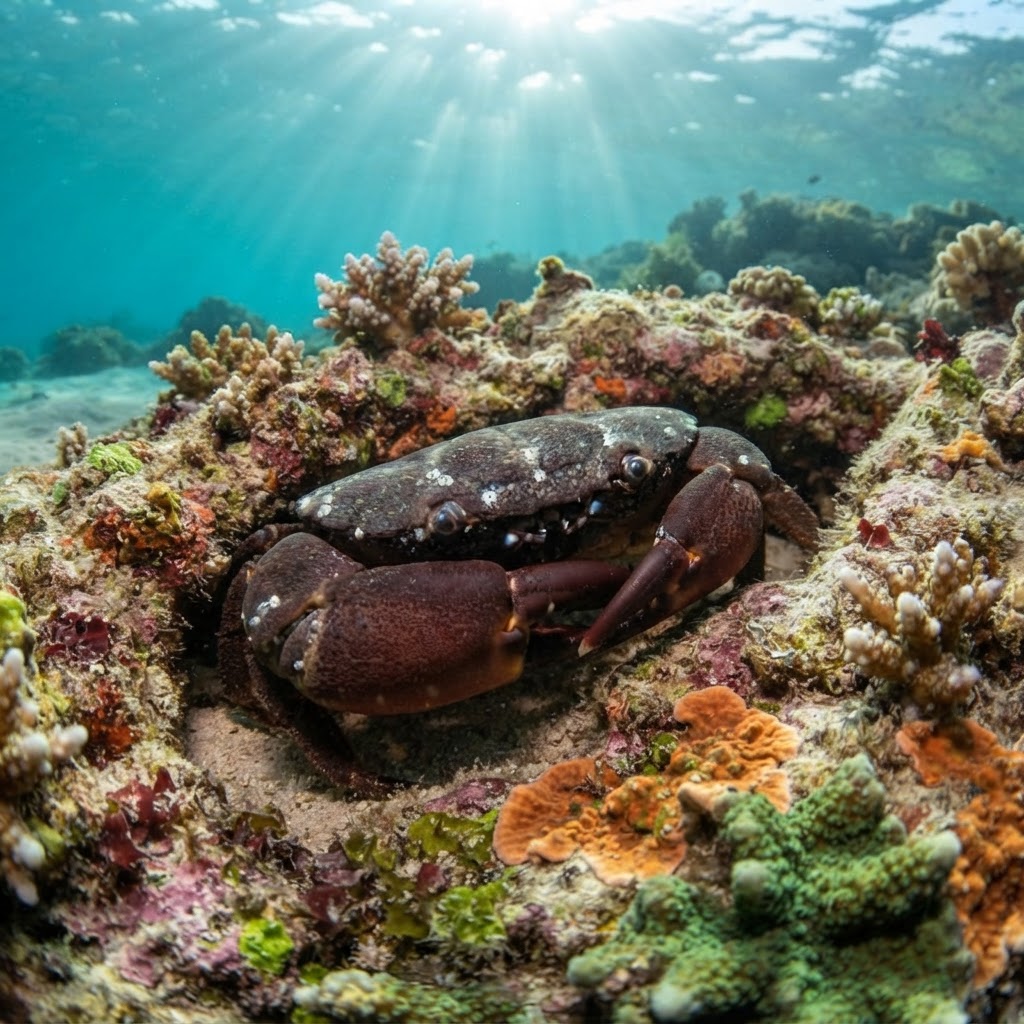
A stocky, thick-shelled crab with a smooth, rounded carapace, usually dark brown to blackish and easy to miss against rock and rubble. The claws are heavy and blunt rather than slender, built for crushing rather than speed, and the body sits low and wedged into crevices rather than out in the open. There is no bright colour pattern to key on here, so divers tend to spot it by shape and posture more than by markings.
Divers mostly find it wedged into cracks, under rock ledges or tucked among rubble rather than out crossing open reef, which fits its low sighting frequency at most sites. It is not a fast mover and tends to hold its position or retreat deeper into a crevice rather than bolt when a diver's torch passes over it. Most logs describe single individuals rather than groups, so a sighting is usually a one-off rather than a cluster.
Its heavy, blunt claws are built for crushing shelled prey like small molluscs and barnacles rather than for the delicate picking claws seen on many reef crabs, which is part of why it favours rocky crevice habitat over open sand or coral.
Sightings show no clear seasonal pattern, and with a water-temperature range of roughly 15.7 to 21.7C it seems to sit comfortably through the cooler part of the year on southern Australian reefs, so divers report it across the seasons rather than in one narrow window.
Most reliably logged in Australia, with South Australia the strongest region, followed by Western Australia and New South Wales. This is a temperate, rocky-reef species rather than a tropical one, so look for it tucked into crevices and under ledges on cooler southern Australian coastlines rather than on coral reef.
Mapping where Reef Crab is logged…
Australia is the main place divers log it, with South Australia the strongest region and Western Australia and New South Wales also producing regular sightings on rocky reef.
There is no strong season in the sighting data, and its comfortable range of roughly 15.7 to 21.7C suggests it can be found year-round on southern Australian rocky reefs.
Look for a dark, thick-shelled crab with a rounded carapace and heavy, blunt claws wedged into a rock crevice or ledge rather than out in open water. It lacks bright markings, so shape, colour and hiding behaviour are the main clues.
Exact size data is not confirmed for this species, but it has a stocky, medium-bodied build typical of rocky-reef crabs in the Oziidae family rather than a large or particularly small species.
No, they are not considered dangerous to divers. They are shy, crevice-dwelling crabs that retreat rather than confront, so there is no real risk beyond a pinch if handled carelessly.
Its claws are notably heavy and blunt compared with many reef crabs, an adaptation for crushing shelled prey like small snails and barnacles rather than delicate picking or filtering.
Site and sighting data is aggregated from diver logs, iNaturalist and GBIF. For taxonomy and conservation status:
European Green Crab
2,469 sites