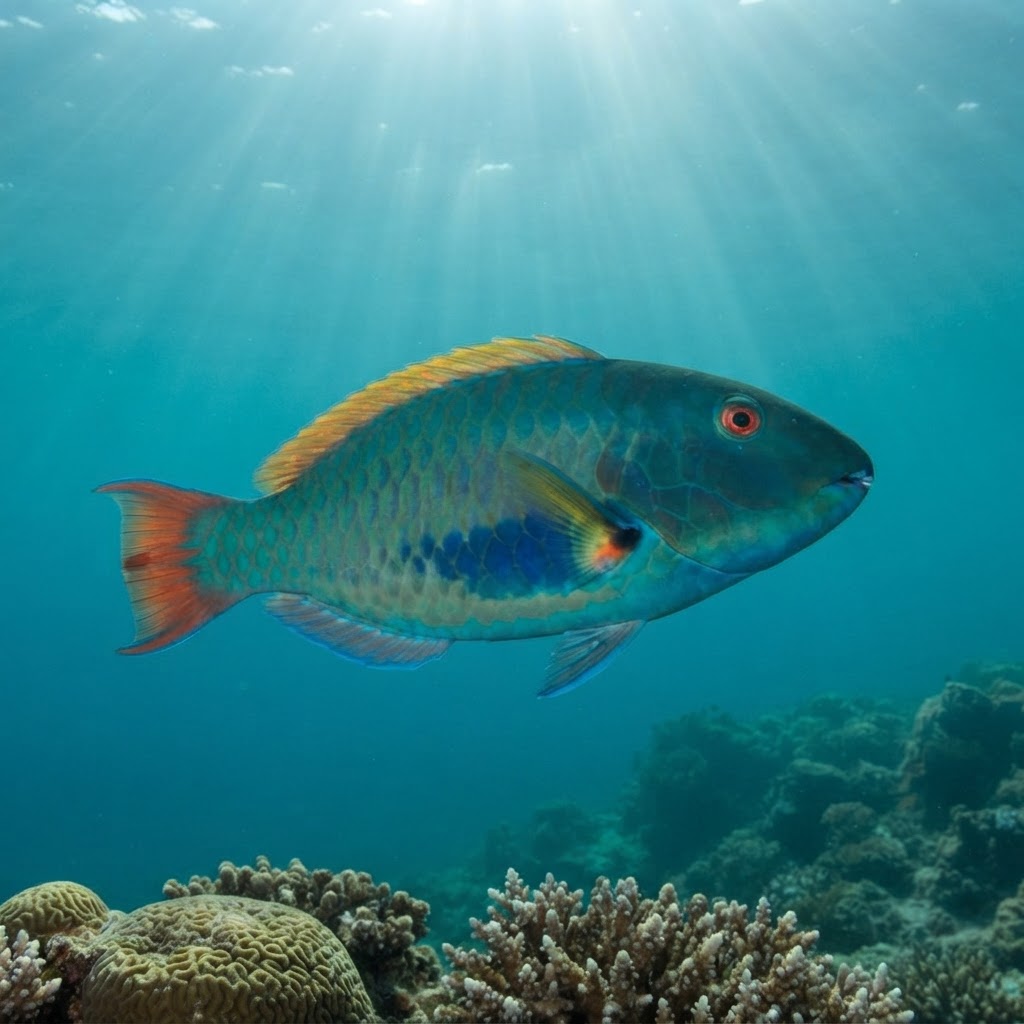
Sparisoma chrysopterum
Uncommon but reliable on reefs from Florida to Bonaire, this dusky parrotfish grazes warm reef flats year-round in 26.5-28.3C water.
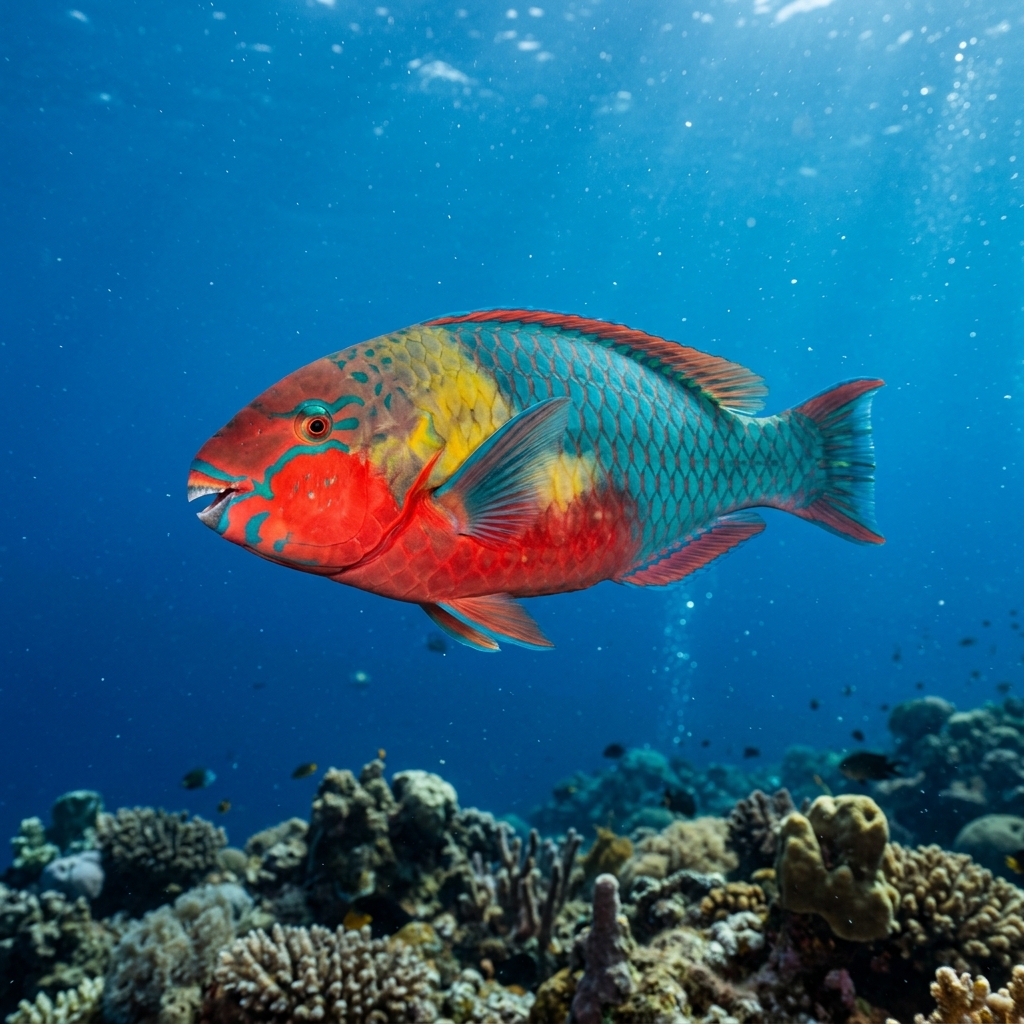
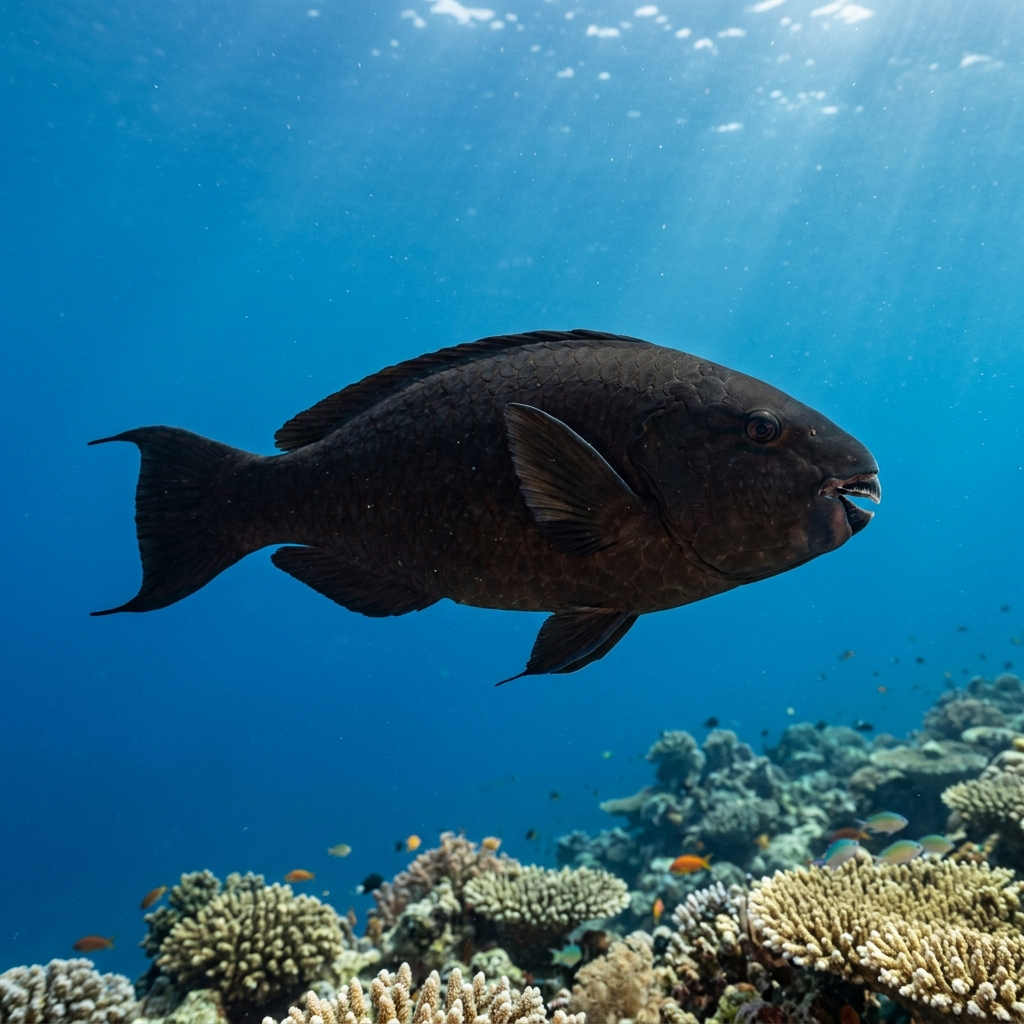
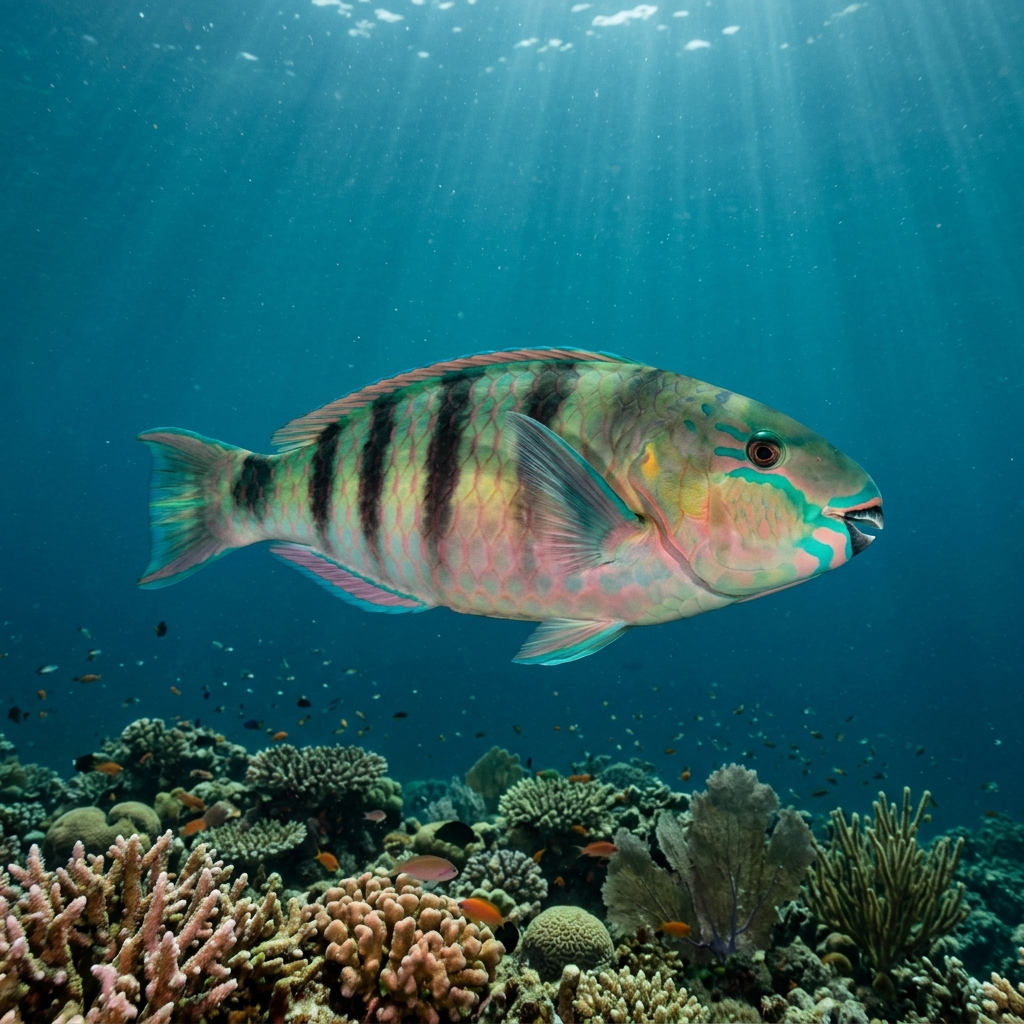
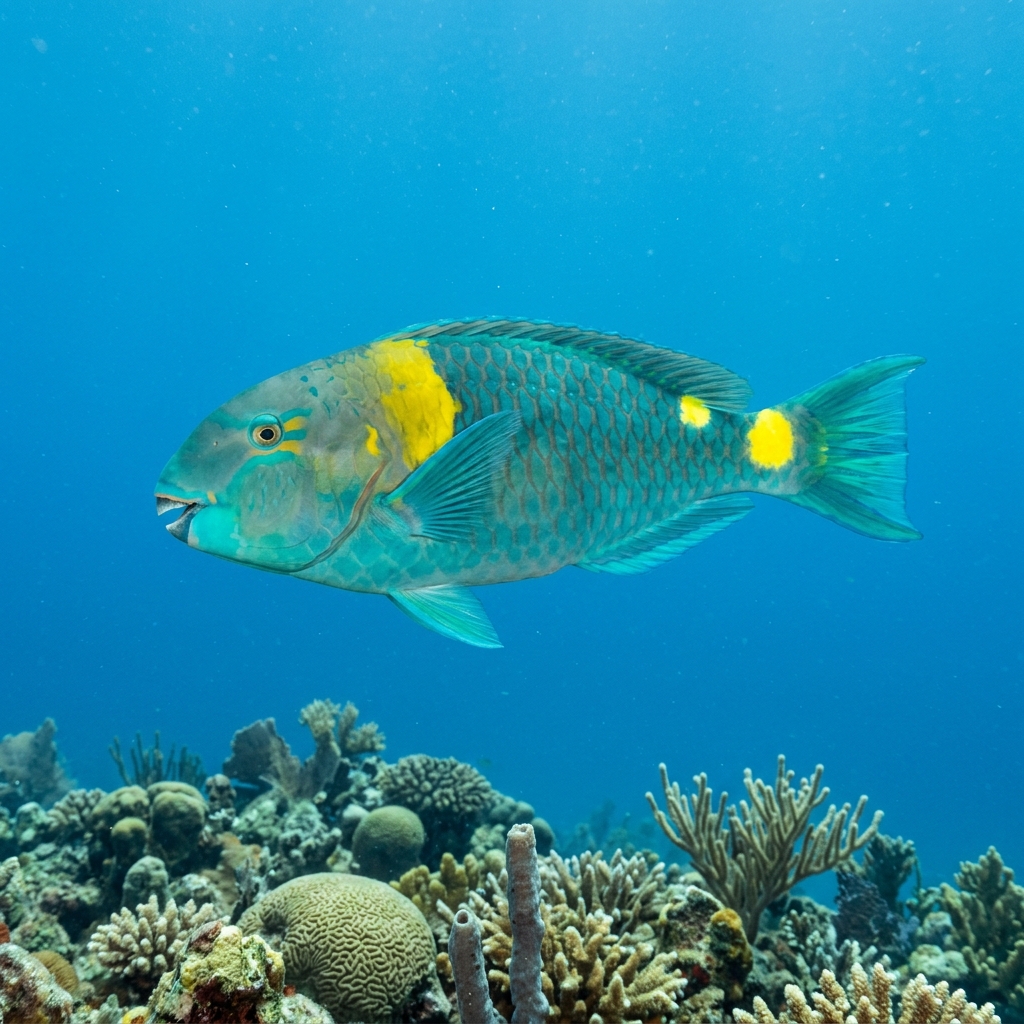
Look for a stocky, blunt-headed parrotfish around 32 cm long, mottled in dusky greys and browns rather than the bright blues and greens of many reef parrotfish. The tail often carries a rusty red or orange wash, which is the easiest field mark against the drab body. It has the fused, beak-like teeth typical of parrotfish, used for scraping algae off rock and dead coral rather than biting live coral.
Divers usually spot it alone or loosely associating with other parrotfish, grazing slowly over reef flats and rubble zones where algae grows on dead coral and rock. It tends to keep a cautious distance rather than approach divers, drifting off into cover if you close in too fast. Sightings lean toward shallower reef sections within its 1 to 15 metre depth range, where light and algae growth are both strongest.
Like other parrotfish, it grazes algae off reef rock and dead coral with fused beak-like teeth, and the sand-like waste it produces from grinding that material down is a real contributor to reef sediment.
No clear seasonal pattern shows up in the sighting data, and its comfort range of 26.5 to 28.3C matches Caribbean reef temperatures year-round, so any month works for a dive trip aimed at seeing one.
Most consistently logged in Florida in the United States, the Bay Islands of Honduras, and around Willemstad and the south coast of Curacao. Also a steady find in Belize's Ambergris Caye, Guadeloupe's Basse-Terre, the Bahamas around New Providence, Bonaire, and Cayman Brac in the Cayman Islands, making it a Caribbean-wide, if uncommon, sighting.
Mapping where Redtail Parrotfish is logged…
Best chances are in the Caribbean and western Atlantic: Florida in the United States, Honduras's Bay Islands, Curacao's south coast, Belize, Guadeloupe, the Bahamas, Bonaire, and the Cayman Islands all have regular sightings.
There's no strong seasonal pattern in the sightings, and it favours reefs sitting between 26.5 and 28.3C, so it's a year-round target on tropical Caribbean dives rather than a seasonal one.
Watch for a stocky, roughly 32 cm parrotfish with a mottled grey-brown body and a reddish or orange-tinged tail, grazing slowly over reef rock rather than swimming in open water.
They typically reach around 32 cm in length, making them a mid-sized reef parrotfish rather than one of the larger Caribbean species.
No, they pose no threat to divers. They're herbivores focused on grazing algae off rock and dead coral, and will typically move away rather than approach.
No. Juveniles show a simpler reddish-brown mottling, initial-phase adults stay duller and blotchy, and terminal-phase males turn more grey-green with a brighter red-tinged tail.
Site and sighting data is aggregated from diver logs, iNaturalist and GBIF. For taxonomy and conservation status:
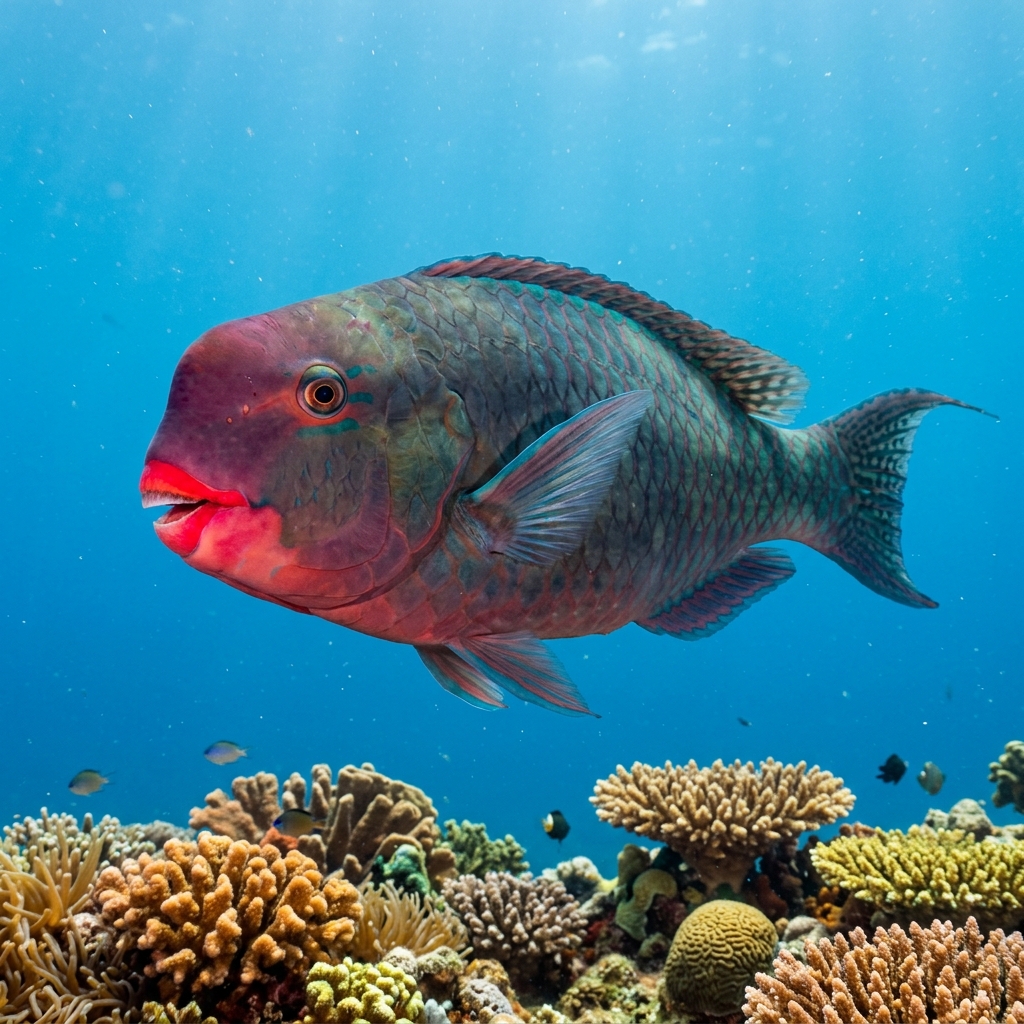
Redlip Parrotfish
2,789 sites