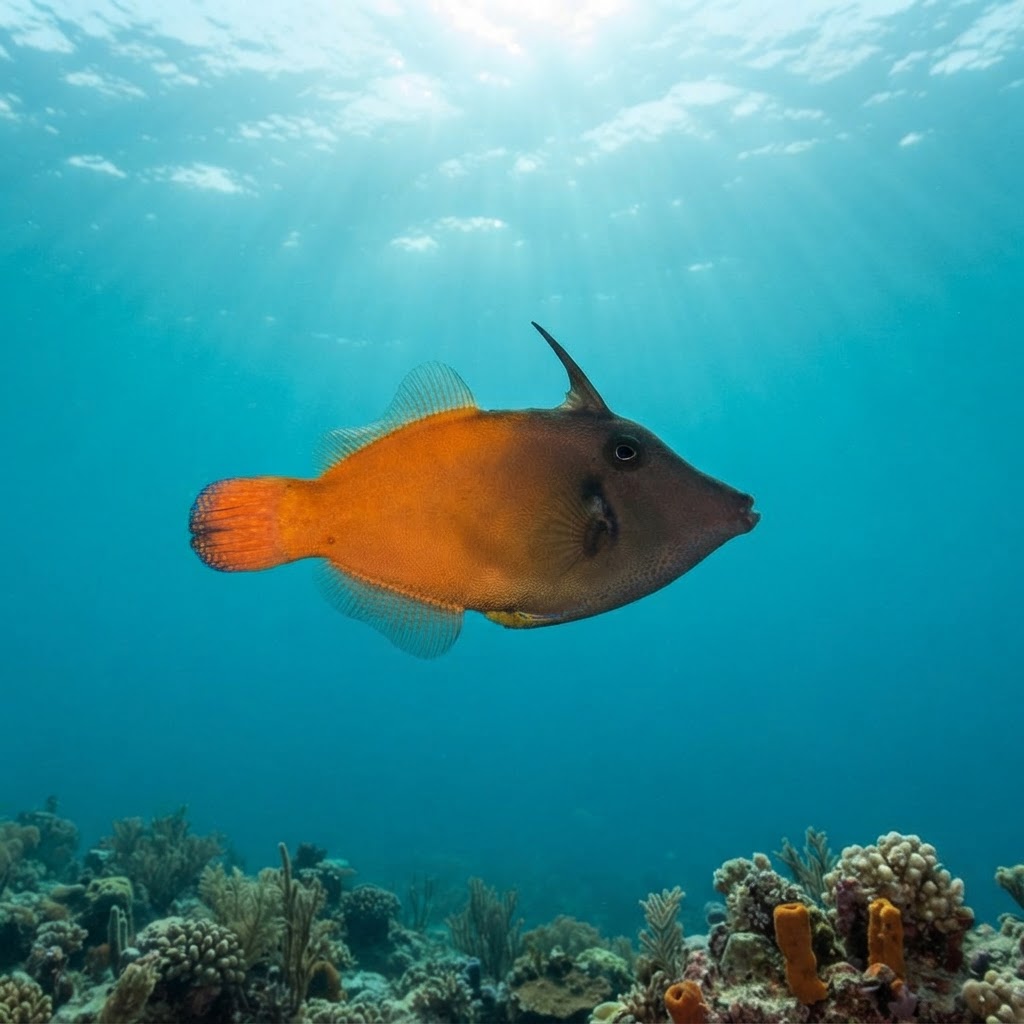
Pervagor melanocephalus
Small orange-red filefish common on reefs in the Visayas, Philippines and Queensland, comfortable in 25-29C water year-round.
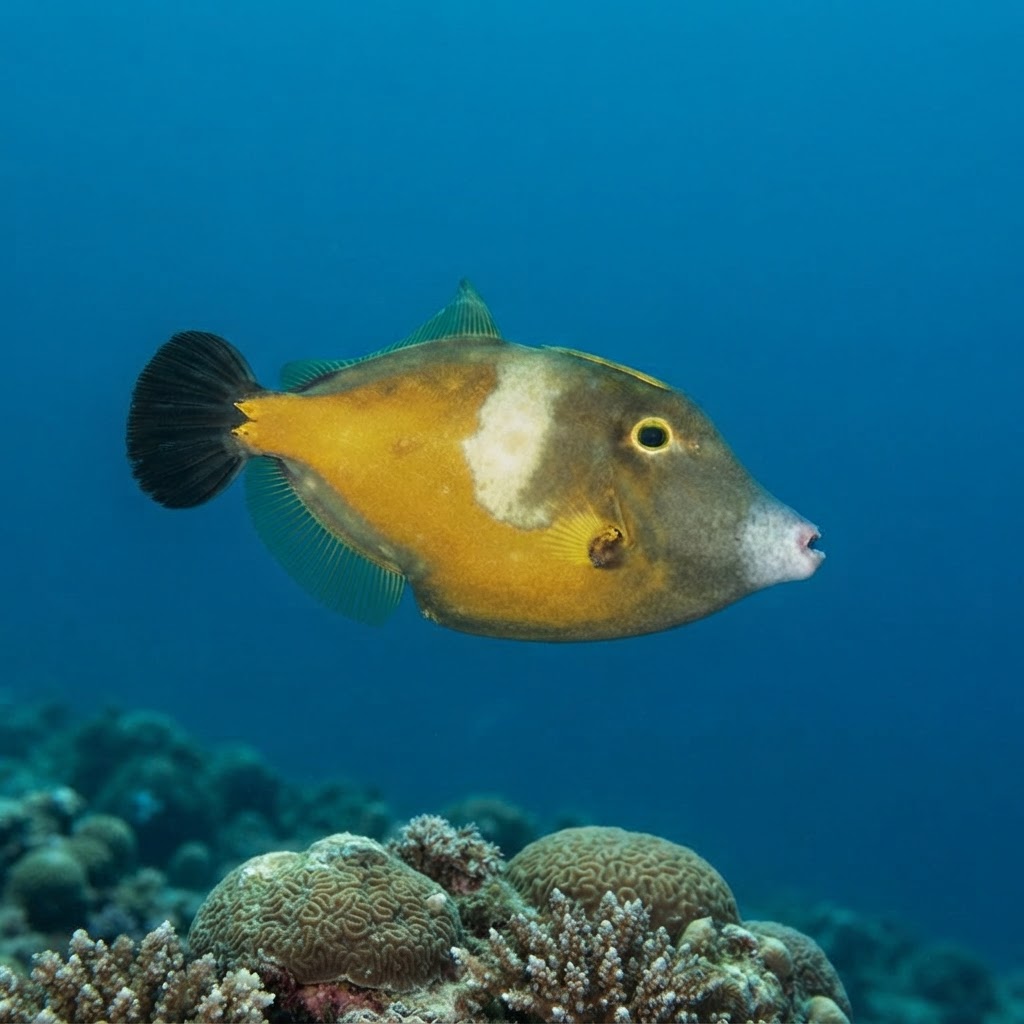
A small, deep-bodied fish barely longer than your hand, with a compressed, almost oval profile typical of filefish. Look for a bright orange-red body paired with a blackish-brown patch covering the head and upper back, a combination that makes it easy to pick out against pale coral rubble. It swims with slow, deliberate fin strokes rather than darting, often angled nose-down as it inspects the reef.
Usually spotted hovering alone or in loose pairs just above rubble patches and low coral growth, picking at small invertebrates and algae. It tends to hold its ground rather than bolt when divers approach, drifting sideways behind a coral head if pressed, which makes it an easy, unhurried subject for a closer look. Most sightings are on daytime dives over reef flats and gentle slopes rather than in open water.
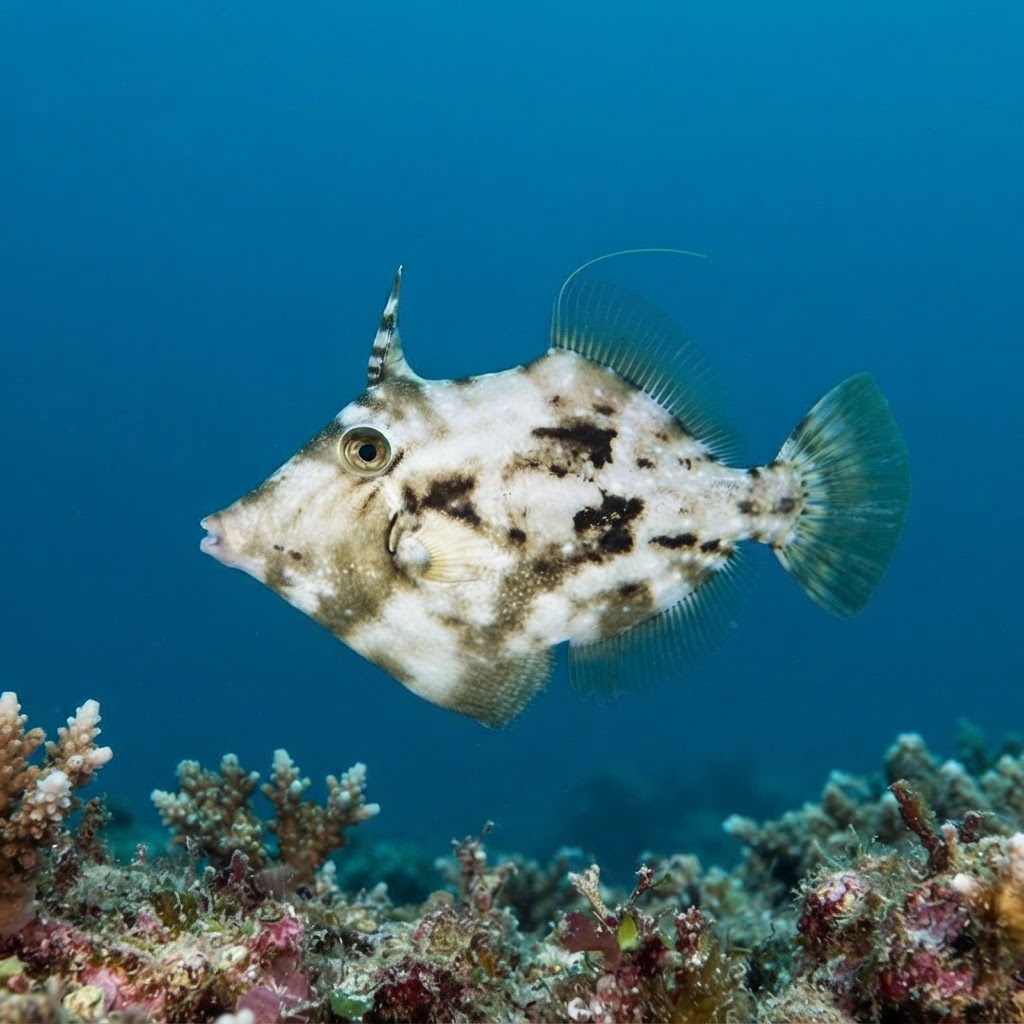
Like other filefish, it can lock itself into crevices for protection by raising a small dorsal spine that wedges against the sides of a hiding spot, making it hard for a predator to pull out.
Sightings show no clear seasonal pattern, and with a comfortable range of roughly 25 to 29C this is a year-round find on tropical reefs in its range.
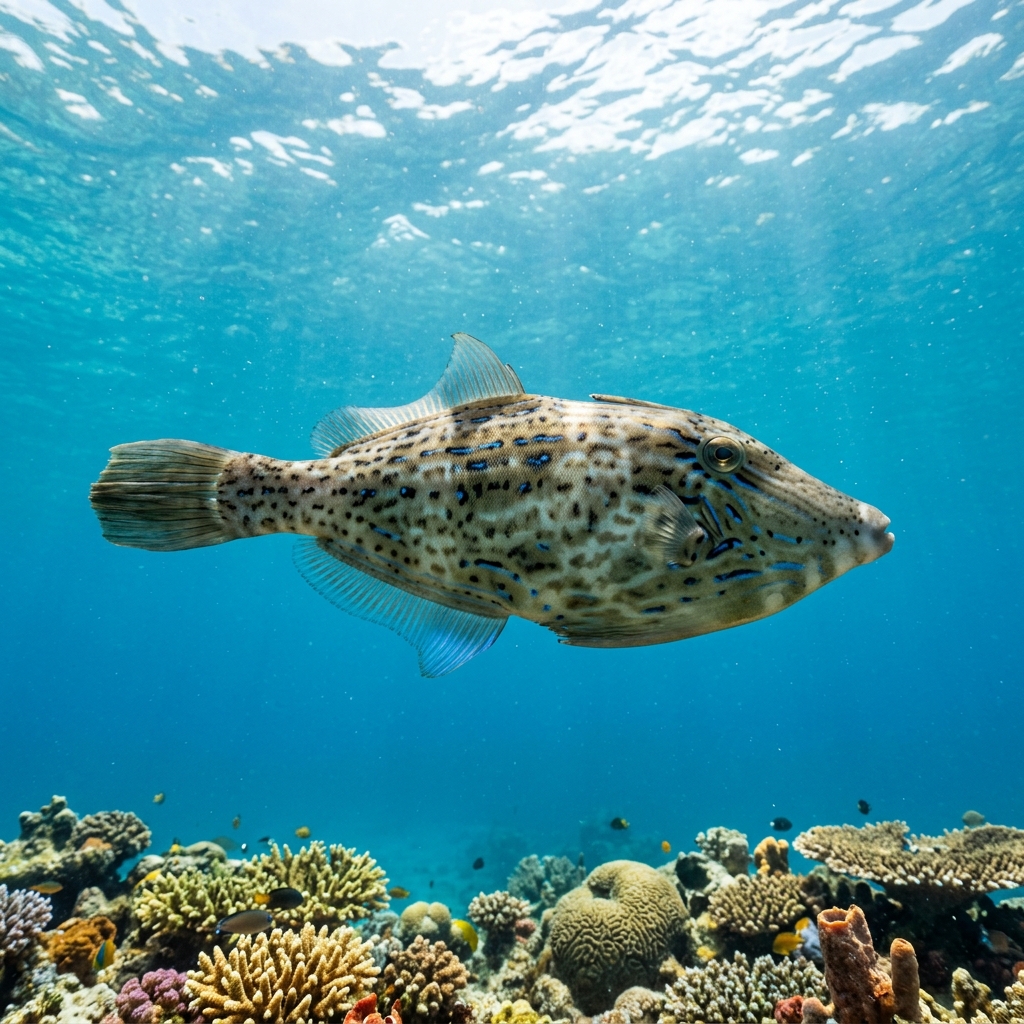
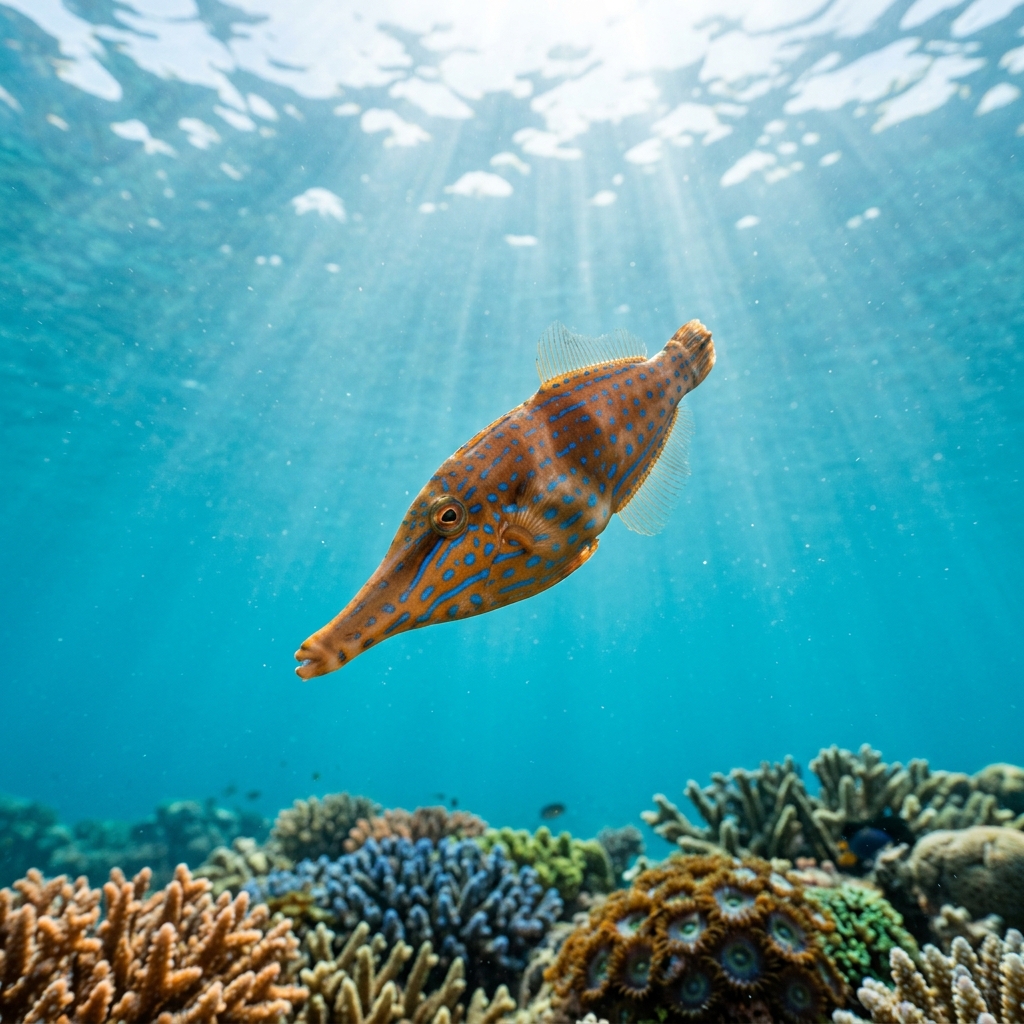
Reef neighbours a diver could mistake it for. Use the identification notes above to tell them apart.
Most reliably logged in the Visayas region of the Philippines, where it turns up as a common sighting across a wide spread of sites, with a smaller but steady presence in Queensland, Australia. Divers doing reef and rubble-slope dives in these areas have the best odds of a sighting.
Mapping where Redtail Filefish is logged…
The Visayas region of the Philippines is the most consistent spot, with common sightings across many local reefs. Queensland, Australia also has a reliable, if smaller, population.
There is no strong seasonal pattern in sightings, so any time of year works. It favours water between about 25 and 29C, which covers most of the diving season in its range.
Look for a small, deep-bodied fish with an orange-red body and a dark brownish-black patch over the head and back. It swims slowly and often hovers nose-down near rubble and low coral.
They stay small, reaching around 11cm in length, which is about the size of your palm.
No, they pose no danger to divers and are typically calm, slow-moving fish that will simply drift away if you get too close.
It can wedge itself into reef crevices using a locking dorsal spine, which anchors it in place so predators struggle to pull it out.
Site and sighting data is aggregated from diver logs, iNaturalist and GBIF. For taxonomy and conservation status:
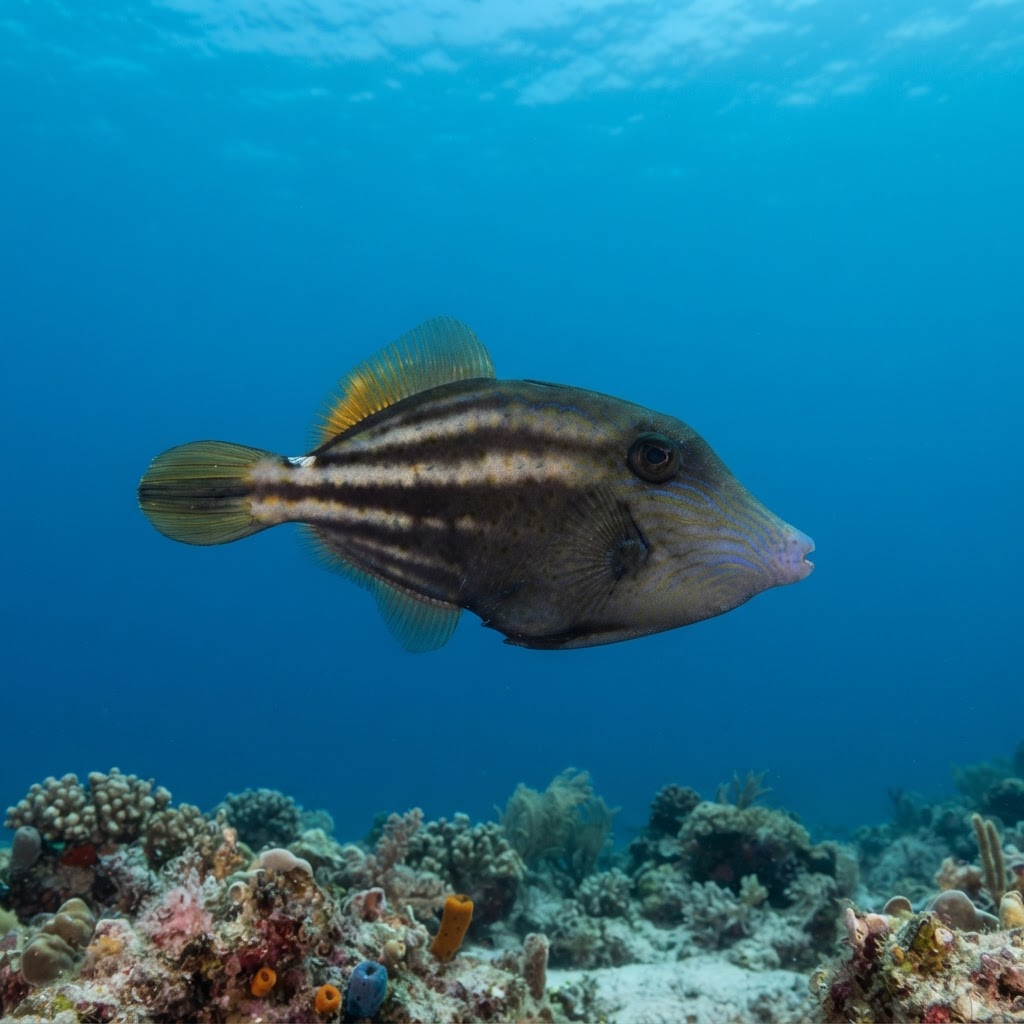
Orangespotted Filefish
836 sites