Labroides rubrolabiatus
A small, uncommon cleaner fish logged mostly around Rarotonga, Cook Islands, working reef stations year-round in warm 25-29C water.
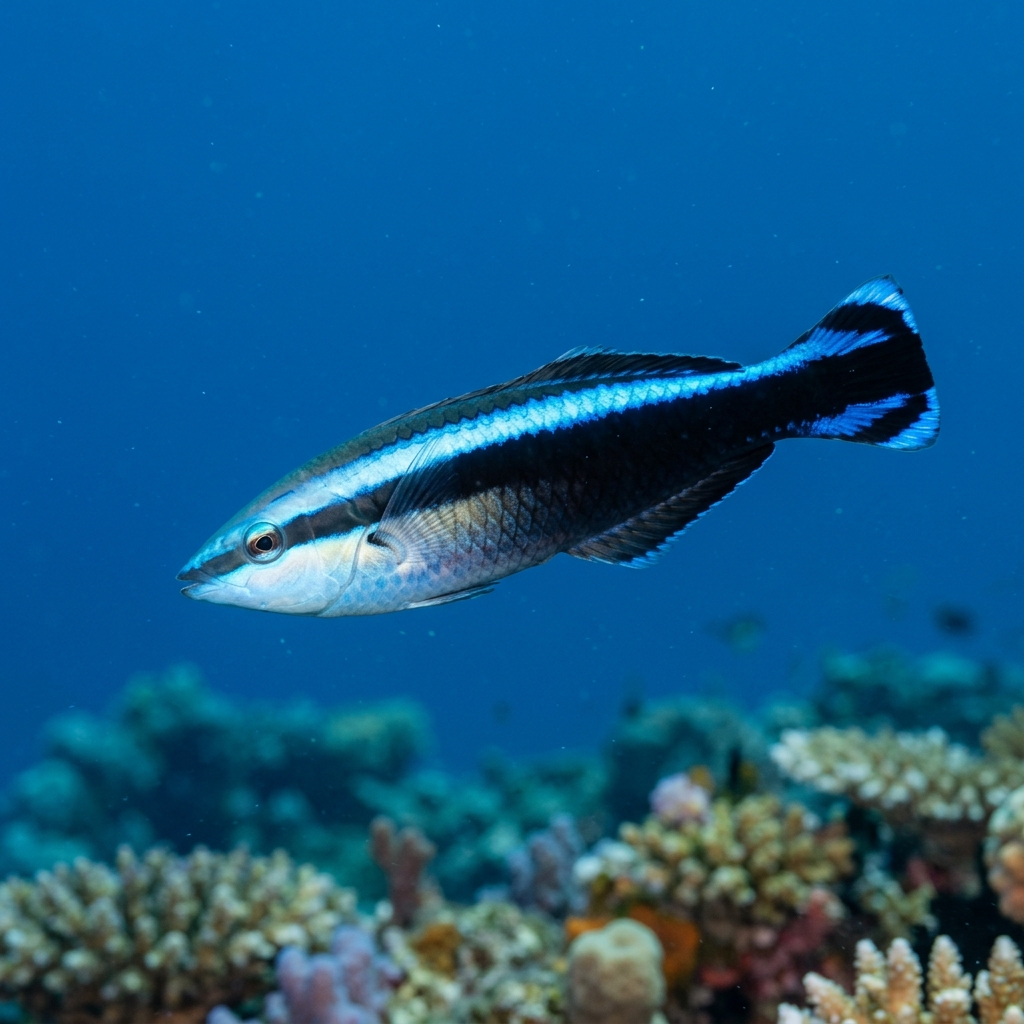
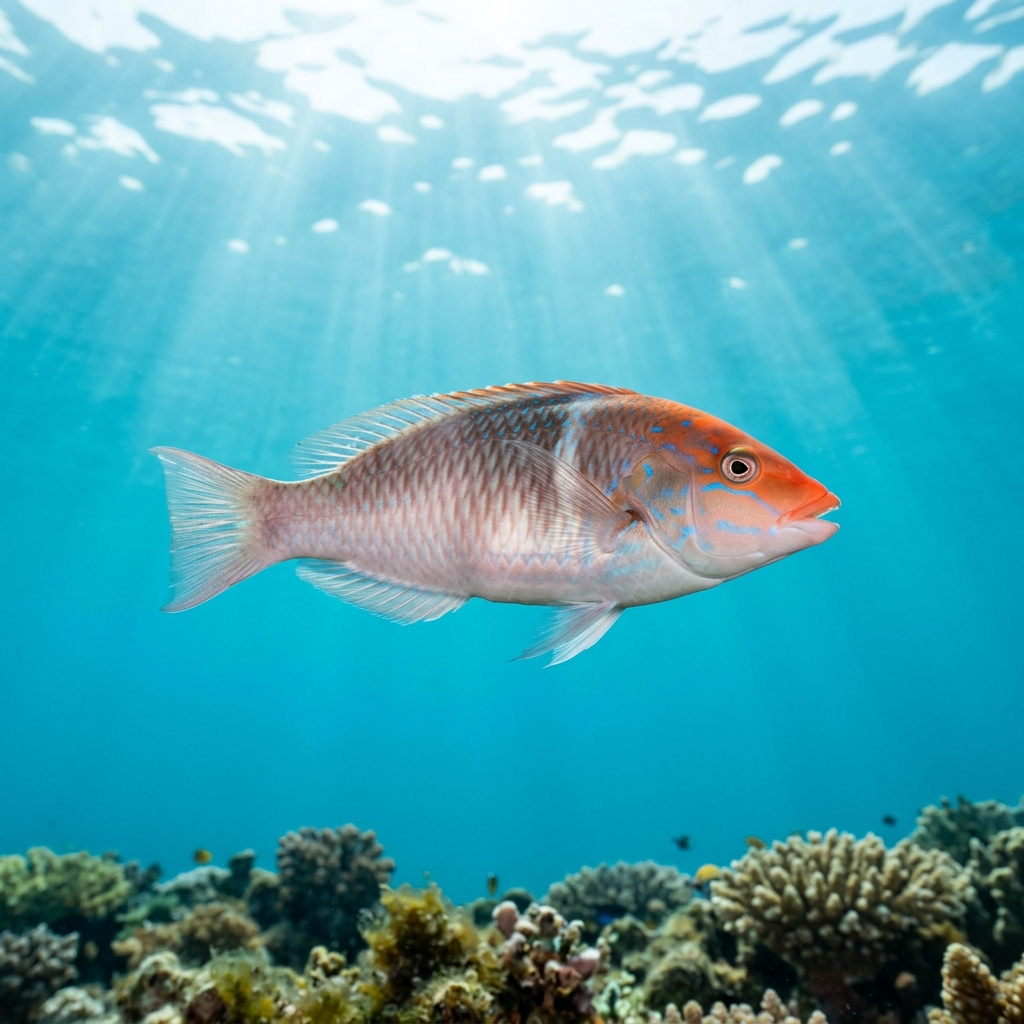
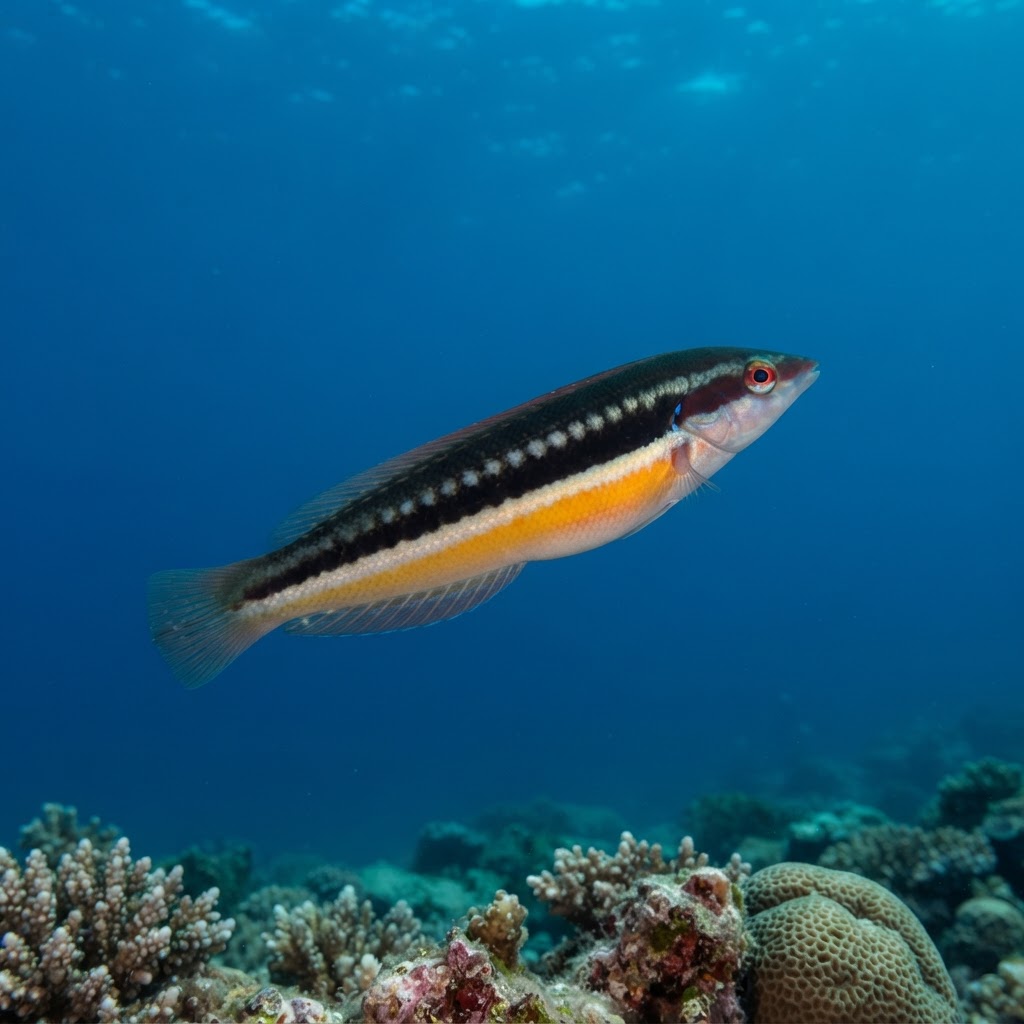
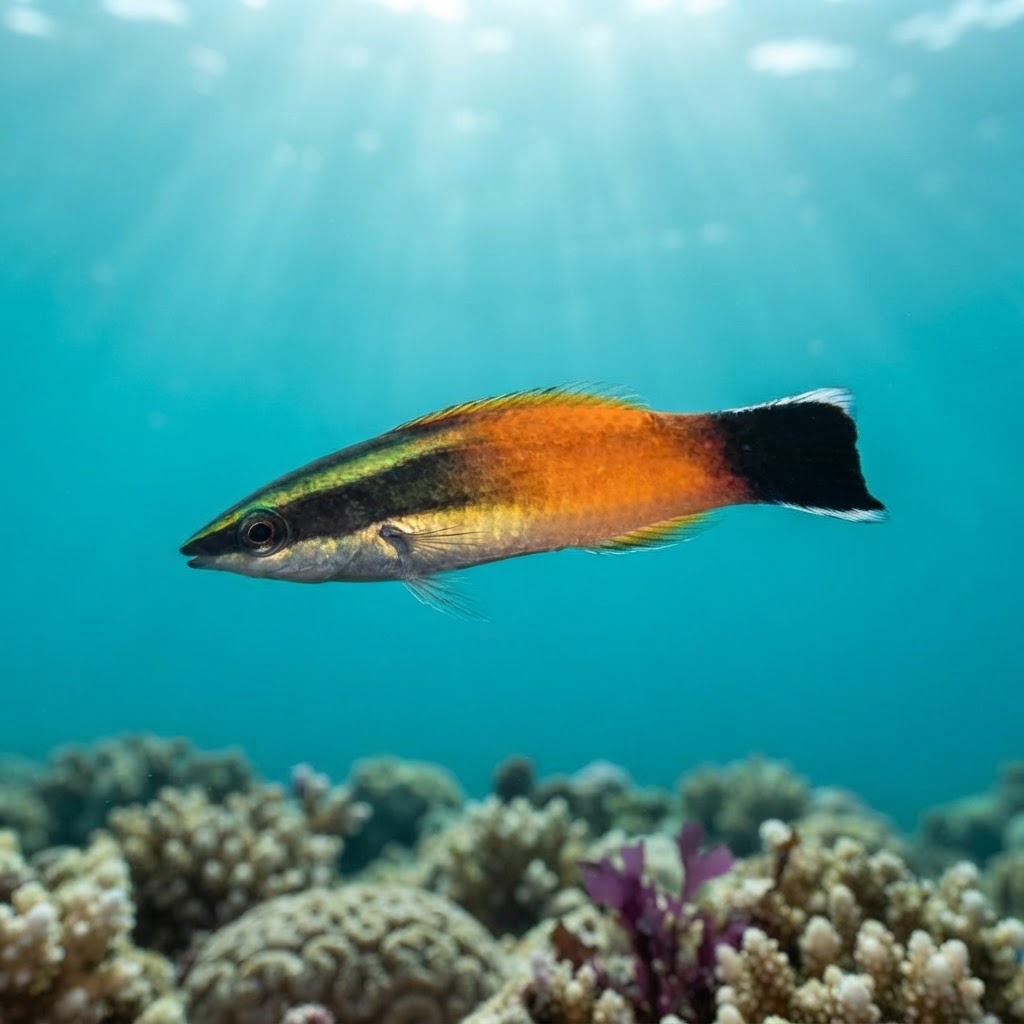
A slim, torpedo-shaped little wrasse topping out around 6 cm, with a dark blue-black body and a noticeably red-tinged mouth that gives it its name. Look for a fine, pale stripe running along the flank, which is more obvious the closer you get to a cleaning station. It moves in short, hovering bursts rather than swimming straight, often pausing nose-up as it waits for clients.
Divers usually spot it working a set cleaning station, picking parasites and dead tissue off other fish that queue up or hover nearby to be serviced. It is unbothered by divers at a reasonable distance but will dart back to its station rather than follow you off the reef. Sightings are logged as uncommon even at sites where it is present, so it takes a patient, slow look at reef structure to pick one out.
Cleaner wrasses like this one run cleaning stations that other reef fish return to repeatedly, and some species groups even change sex within their social hierarchy if the dominant individual is lost.
No clear seasonal pattern shows up in the sightings, and its comfort range of 25.1 to 29.0C matches these tropical reefs year-round, so any month works for a dive trip aimed at finding it.
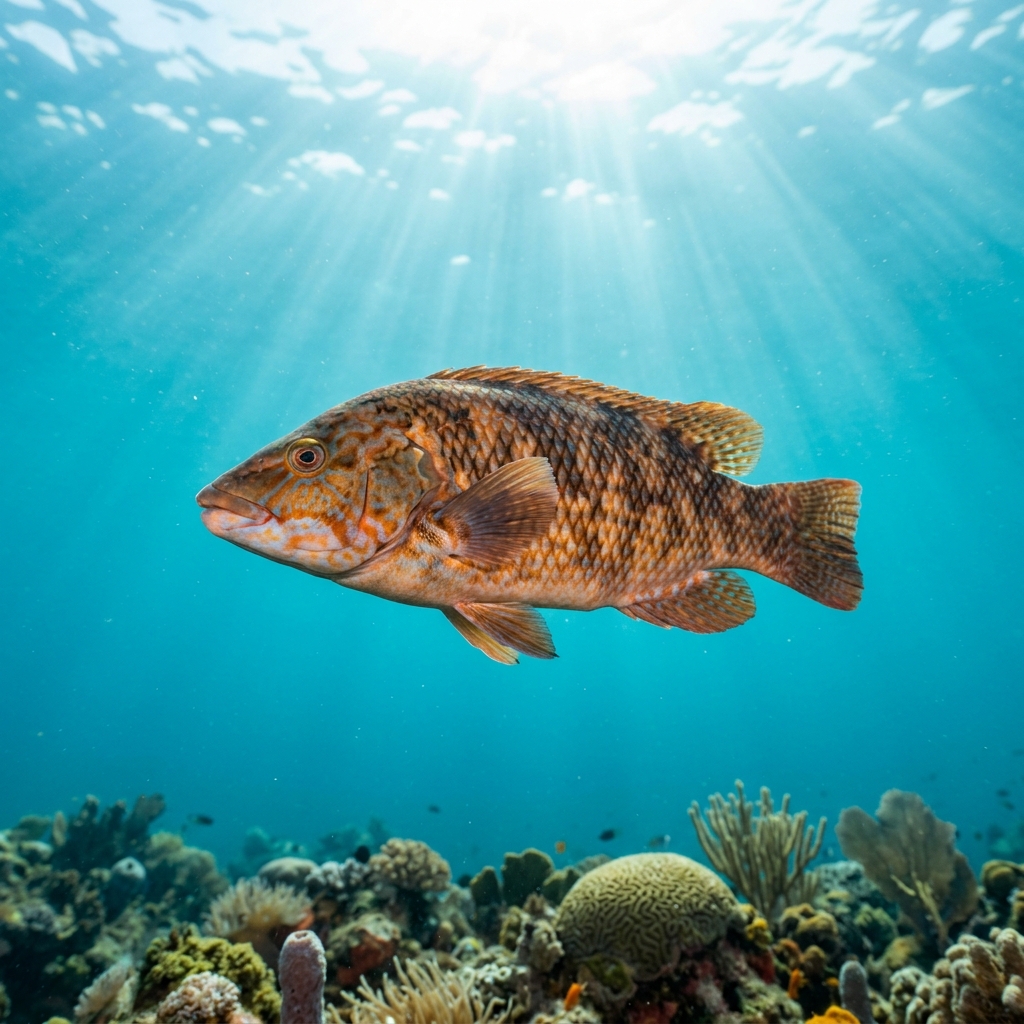
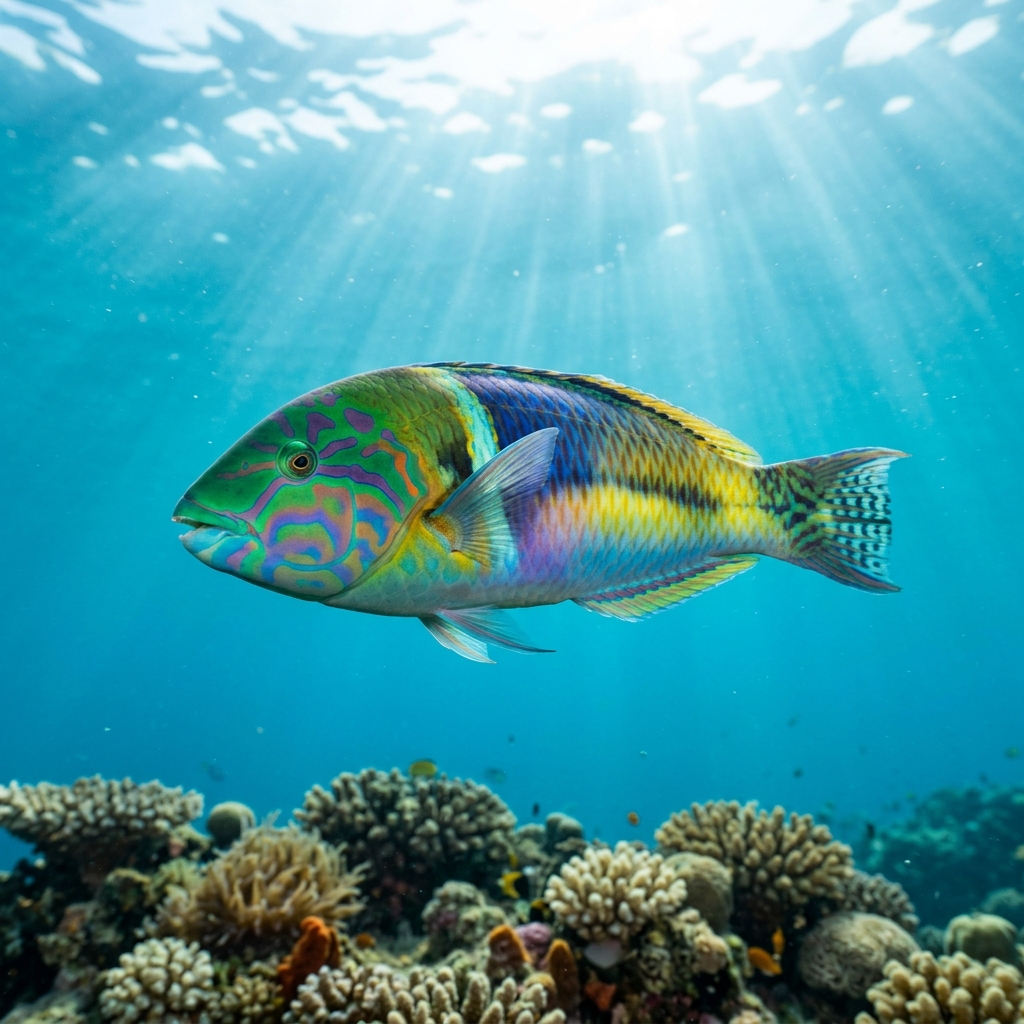
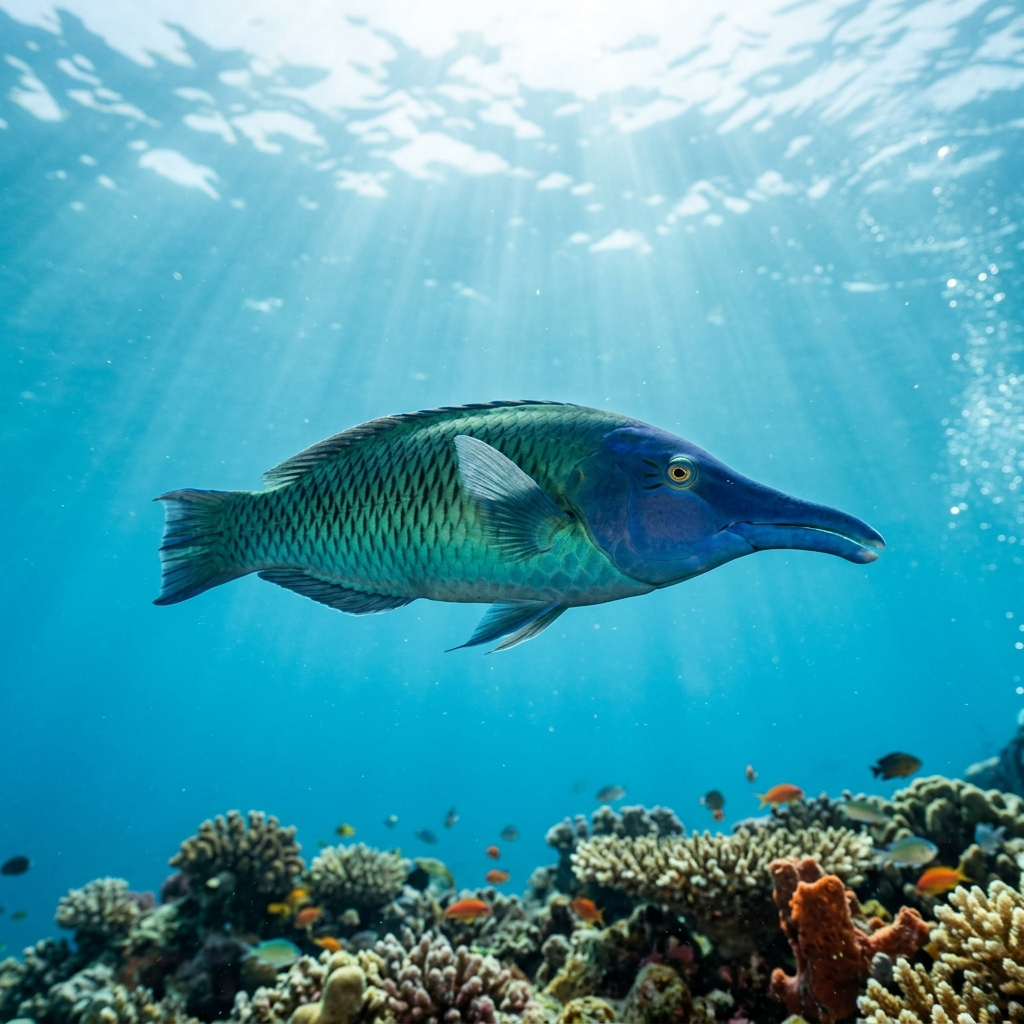
Reef neighbours a diver could mistake it for. Use the identification notes above to tell them apart.
Rarotonga in the Cook Islands is by far the most reliable spot to find this species, with a strong spread of logged sites there. It also turns up in the Society Islands of French Polynesia, though less frequently, so the wider Cook Islands and French Polynesian reef systems are your best bet in the South Pacific.
Mapping where Redlip Cleaner Wrasse is logged…
Rarotonga in the Cook Islands is the most consistent place to find it, with additional sightings around the Society Islands in French Polynesia. Outside these South Pacific regions it is rarely logged.
There is no strong seasonal signal in the sighting data, and the species sits comfortably in 25 to 29C water year-round, so it can be found on any month's dive trip to the Cook Islands or French Polynesia.
Look for a small, slender fish around 6 cm long with a dark blue-black body, a faint pale side stripe, and reddish lips. It hovers near cleaning stations rather than swimming freely across open reef.
They stay small, typically reaching about 6 cm as adults, so they are easy to overlook against reef structure unless you are watching a cleaning station closely.
It runs a cleaning station where other reef fish stop by to have parasites and dead skin picked off, a service relationship that keeps client fish coming back to the same spot repeatedly.
Site and sighting data is aggregated from diver logs, iNaturalist and GBIF. For taxonomy and conservation status:
Bird Wrasse
3,632 sites