Cirrhilabrus rubripinnis
Redfin Wrasse turns up on Luzon reefs in the Philippines, an uncommon find in warm 28-29C water year-round.
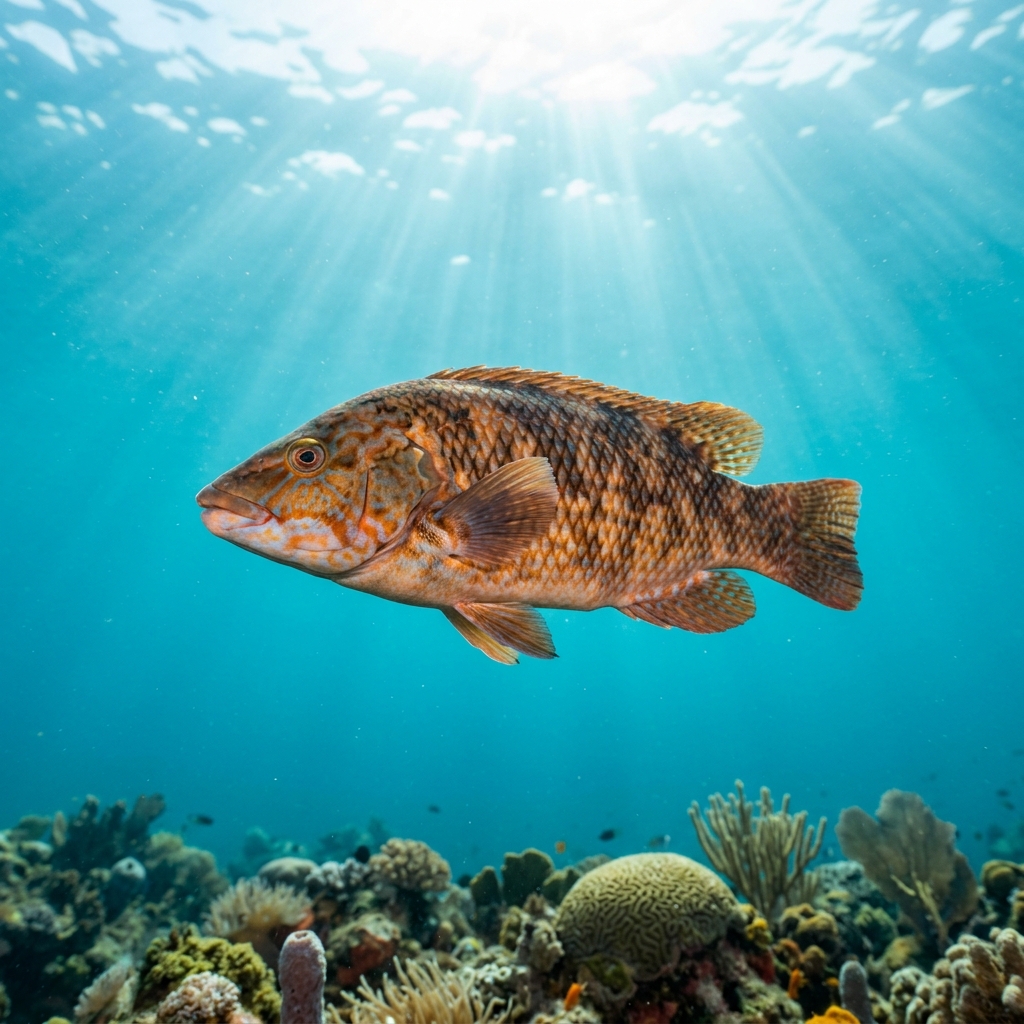
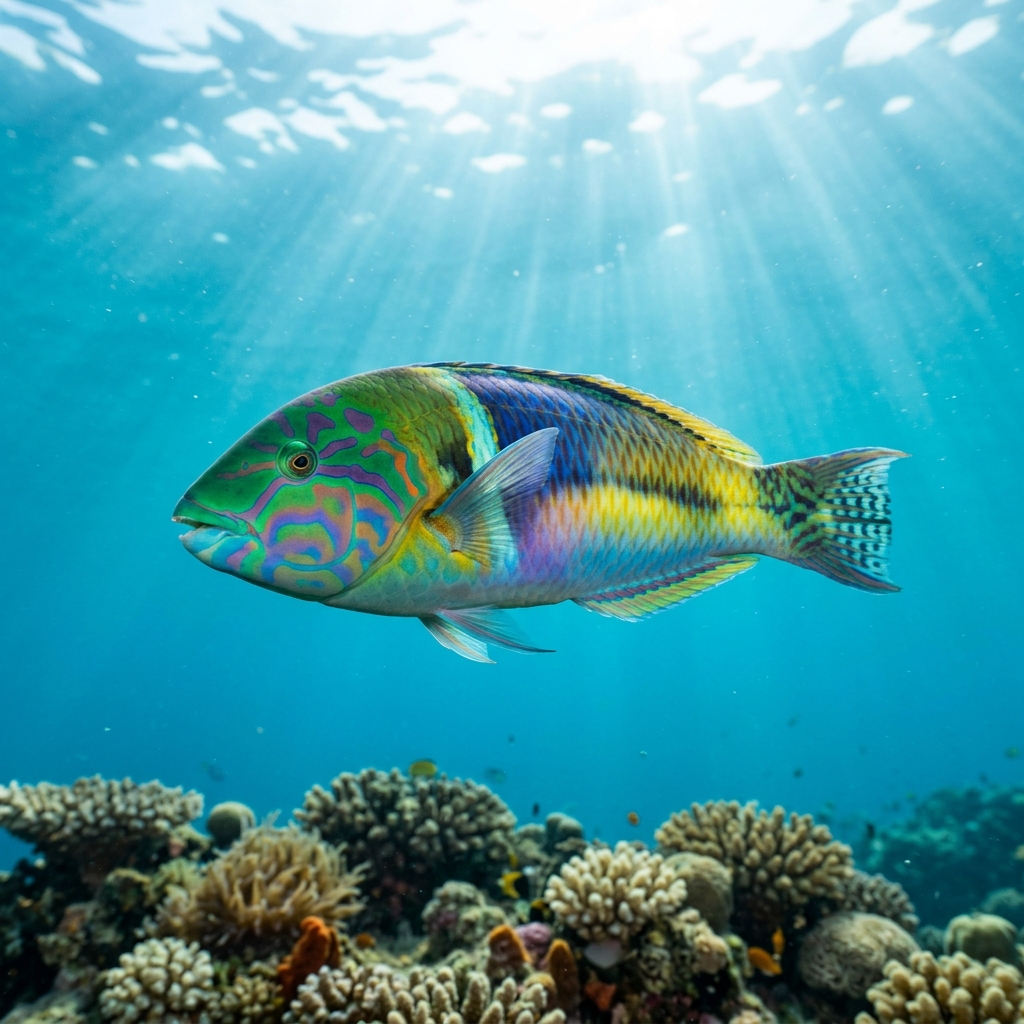
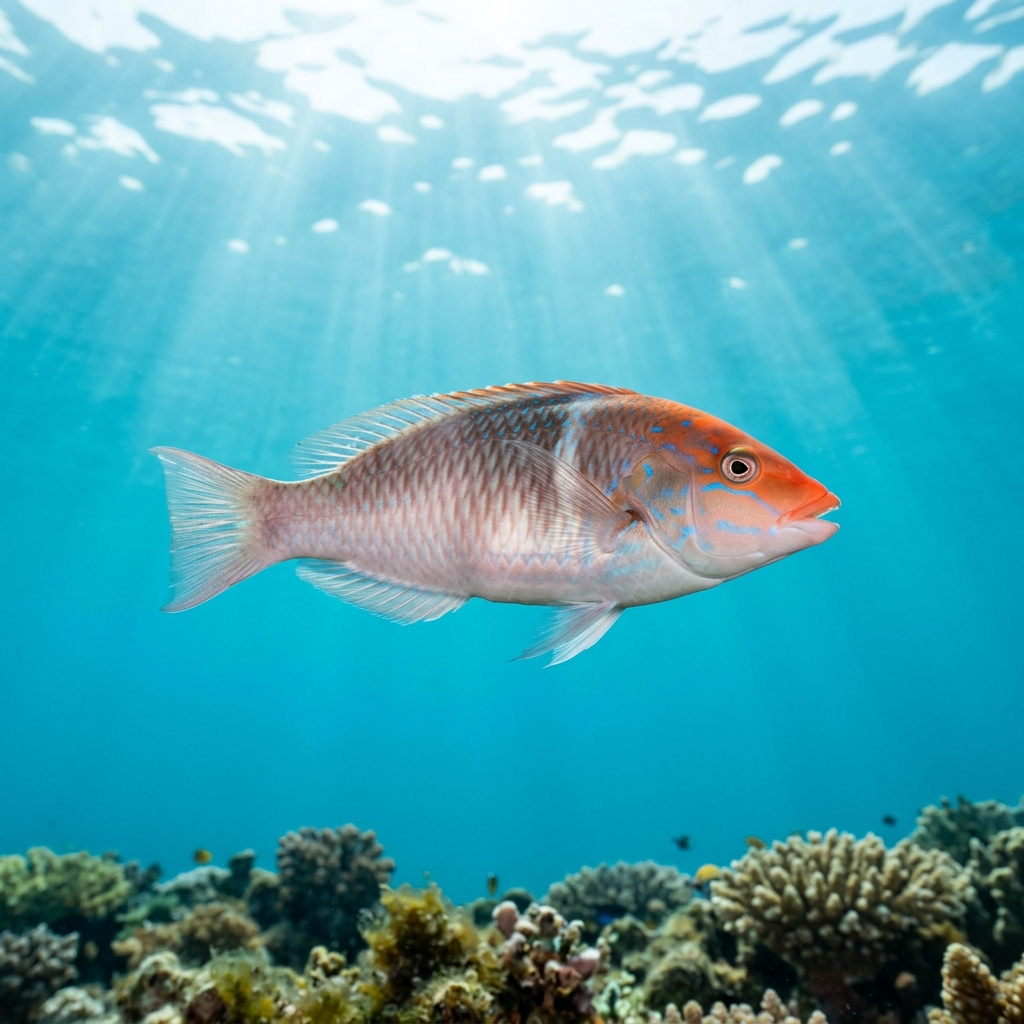
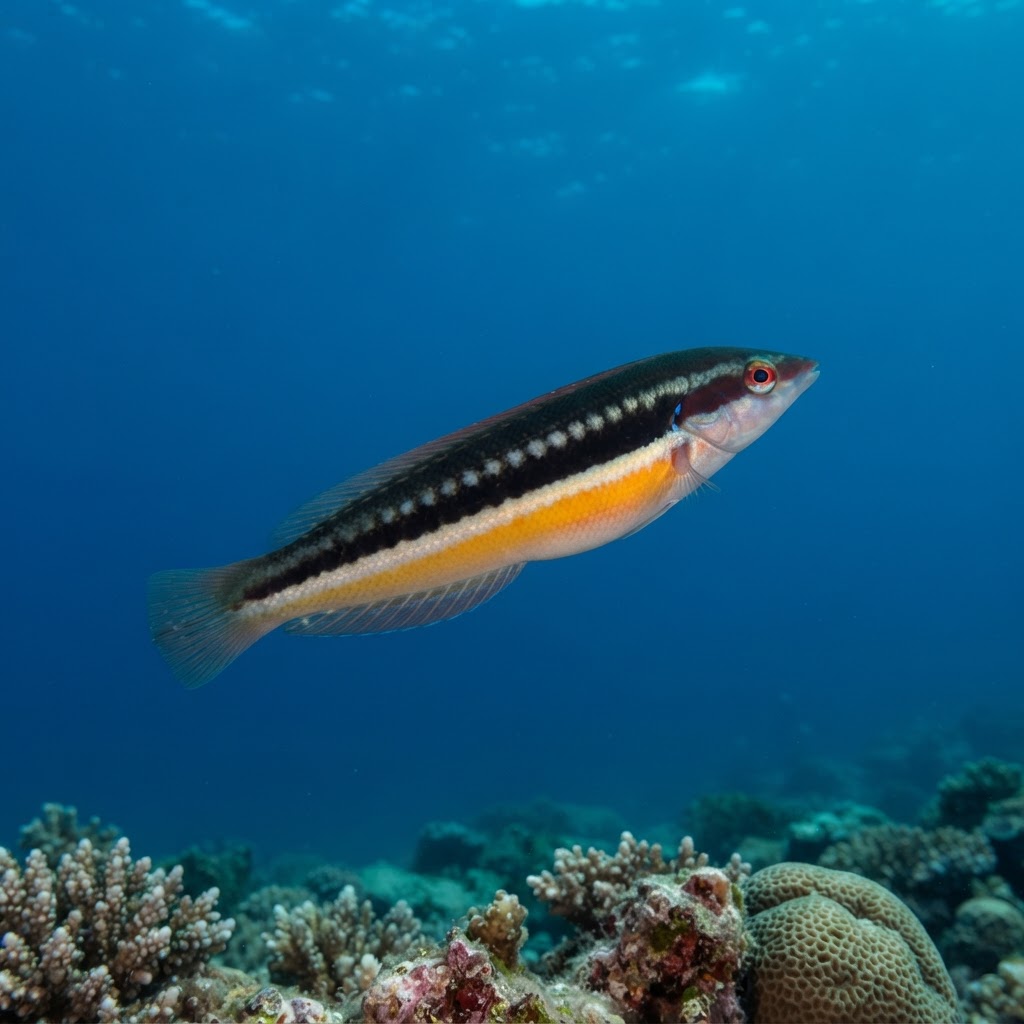
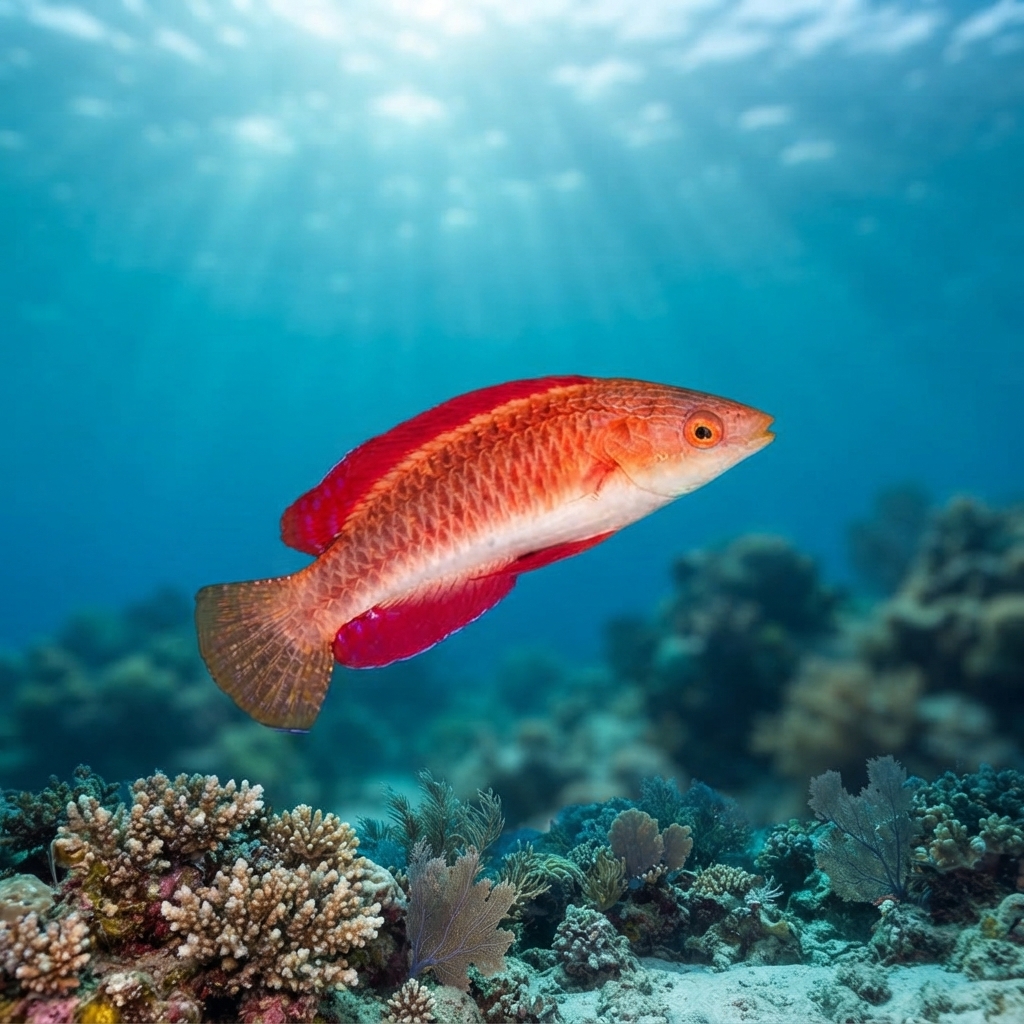
A tiny fairy wrasse at around 6 cm, built slim and torpedo-shaped for darting between coral heads. Look for the reddish tint concentrated in the fins, set against a body that shifts from pale to deeper hues depending on the light. Its small size and quick, low-hovering swim style over rubble and coral bases are the main giveaways underwater.
Divers log this one as uncommon even at the sites where it does show up, so spotting it takes a slow, patient scan of coral rubble and low reef structure rather than open water. Like other fairy wrasses it tends to hover just above the substrate in small bursts, darting for cover rather than approaching divers. Expect close-focus, methodical looking rather than a chance encounter while cruising past.
Fairy wrasses in this genus are known for males flashing brighter colour during courtship displays, a detail worth watching for if you find a small group rather than a lone fish.
Water where it's been recorded sits in a narrow 28.0 to 29.1C band, consistent with year-round tropical conditions, and there is not enough seasonal data to point to a particular month or window. Treat it as a year-round possibility on Luzon's reefs rather than a seasonal target.
Every logged sighting of this fish so far comes from the Philippines, with Luzon standing out as the region where divers most reliably encounter it. Outside Luzon, coverage is thin, so it currently reads as a Philippines specialty rather than a fish with a wide known range.
Mapping where Redfin Wrasse is logged…
All current sightings come from the Philippines, concentrated on Luzon. It has not yet been logged in other countries, so Luzon is the reliable place to look for it.
There isn't a detected season for this fish; recorded water temperatures stay in a warm 28.0 to 29.1C range, consistent with year-round tropical conditions on Luzon's reefs.
Look for a very small wrasse, about 6 cm, with a slender body and reddish colour concentrated in the fins. It hovers low over coral rubble in short darting movements rather than swimming in open water.
They stay small, reaching only around 6 cm as adults, which is typical for fairy wrasses in this genus.
They're logged as uncommon even at the handful of sites where divers have found them, so seeing one usually takes a slow, deliberate search of rubble and low reef structure rather than a casual pass.
Site and sighting data is aggregated from diver logs, iNaturalist and GBIF. For taxonomy and conservation status:
Bird Wrasse
3,632 sites