Bodianus dictynna
A small reef wrasse most reliably found across Sulawesi and Raja Ampat, thriving year-round in 24-29C water.
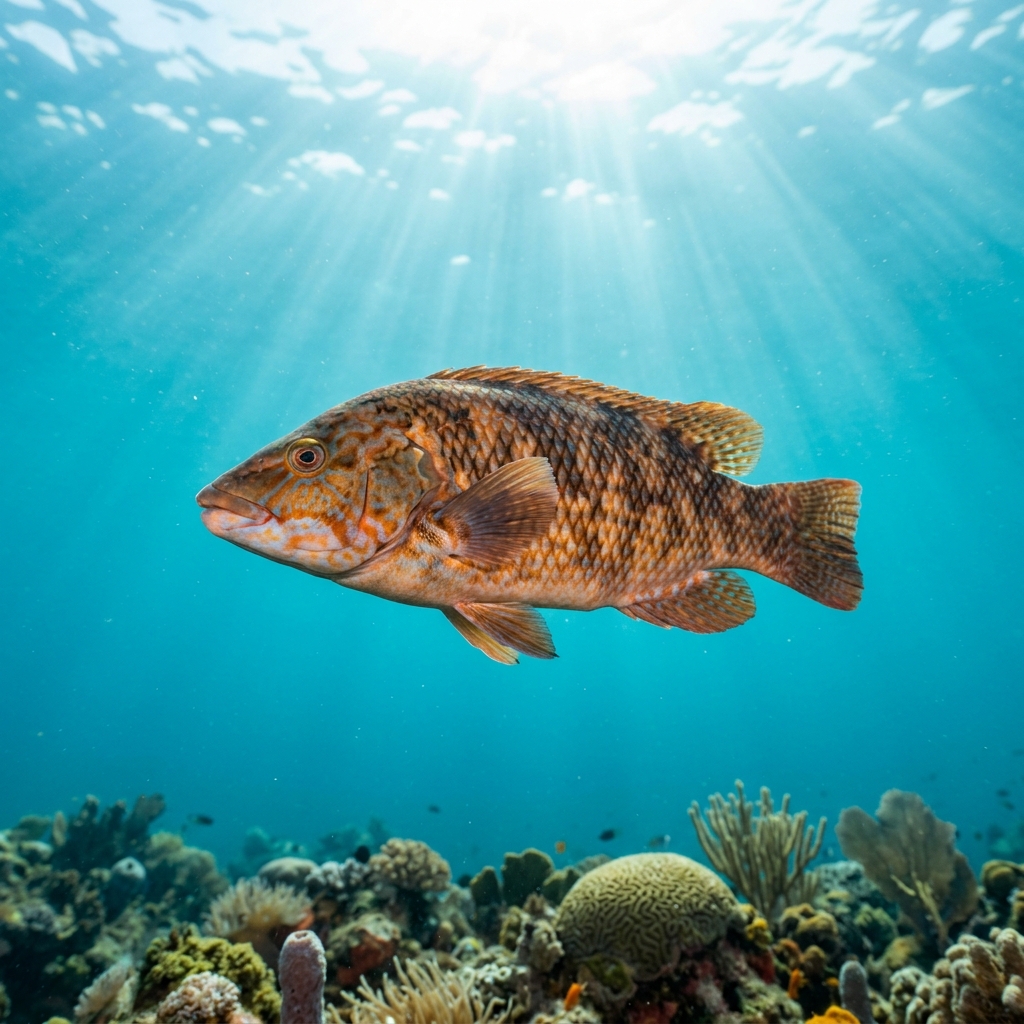
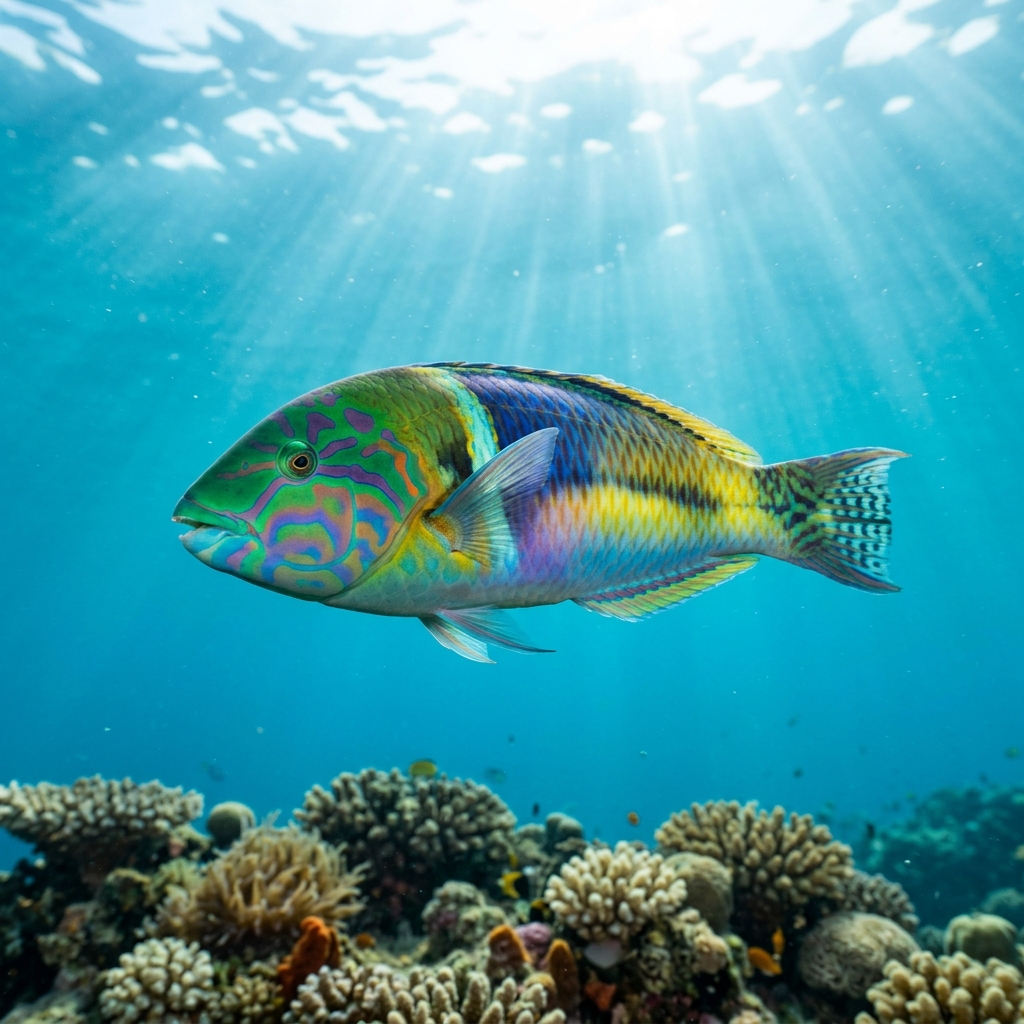
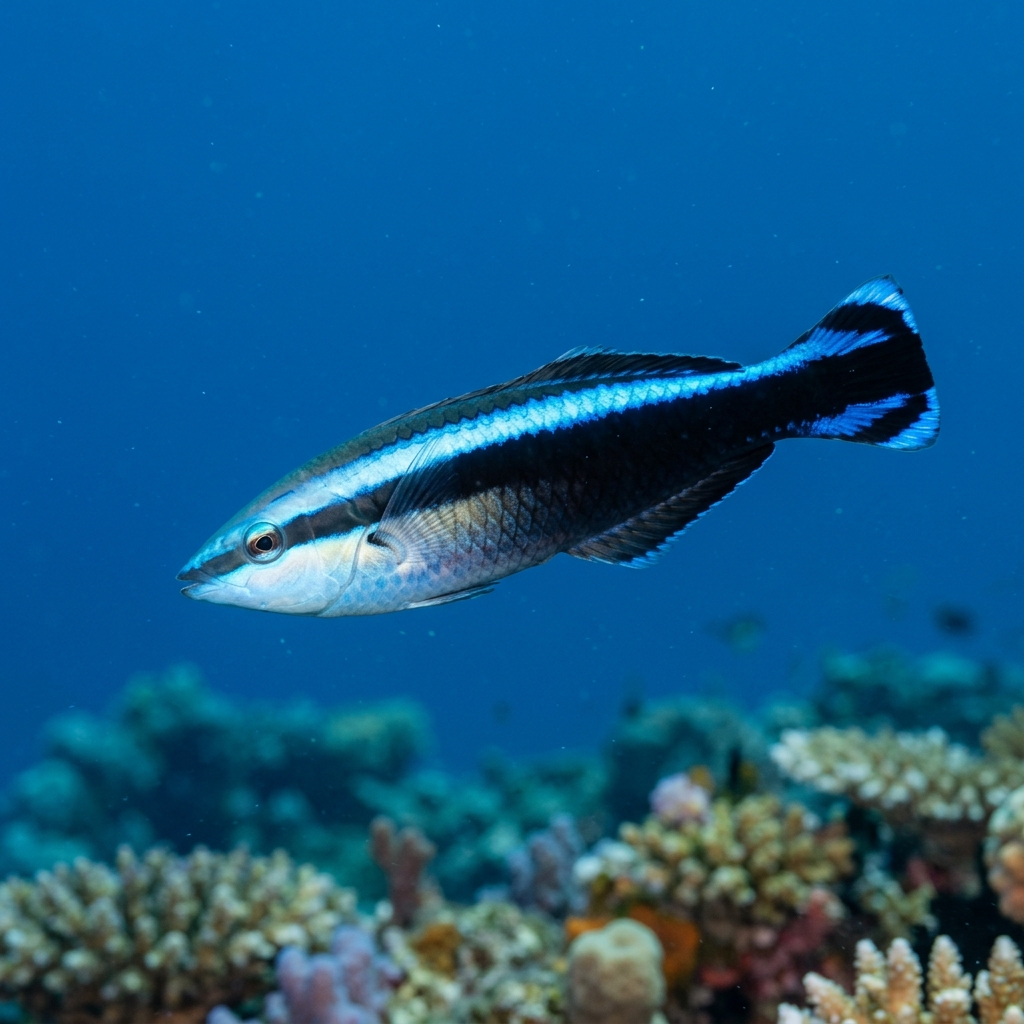
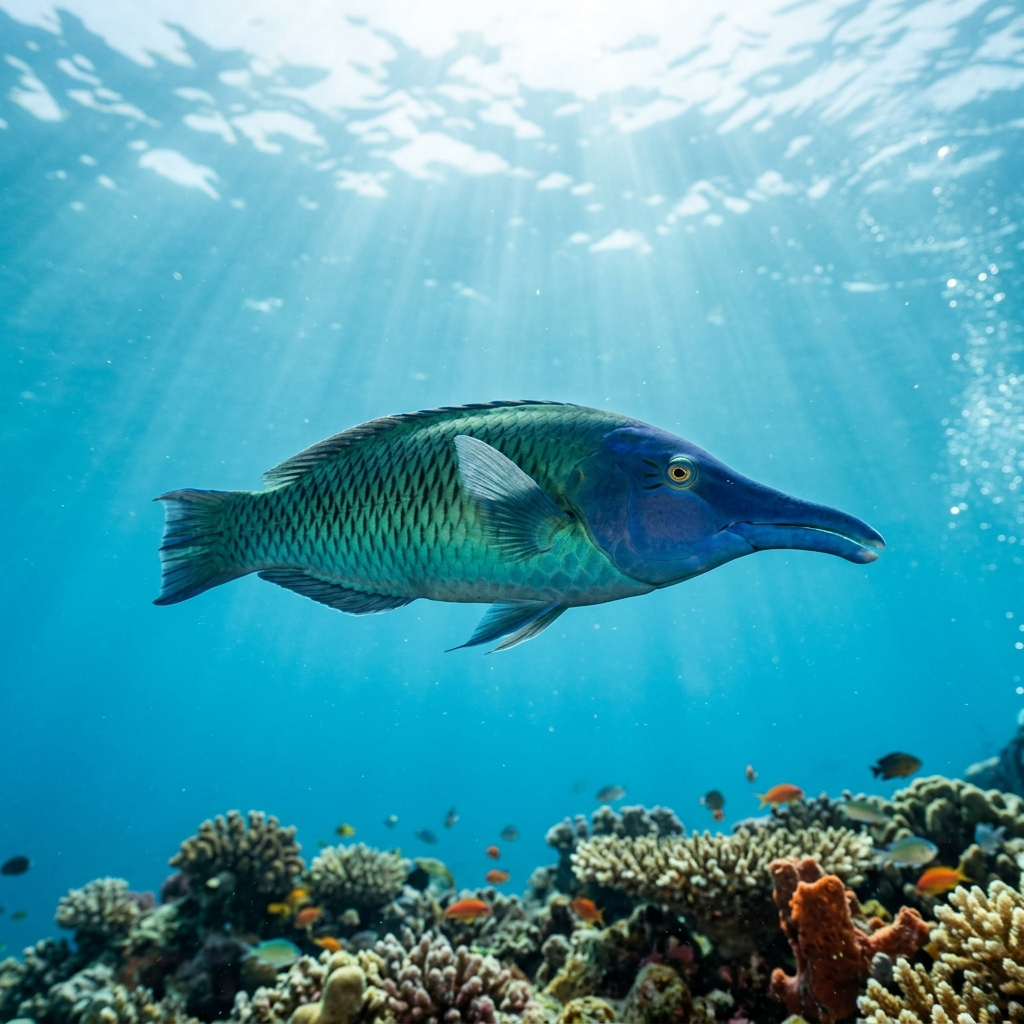
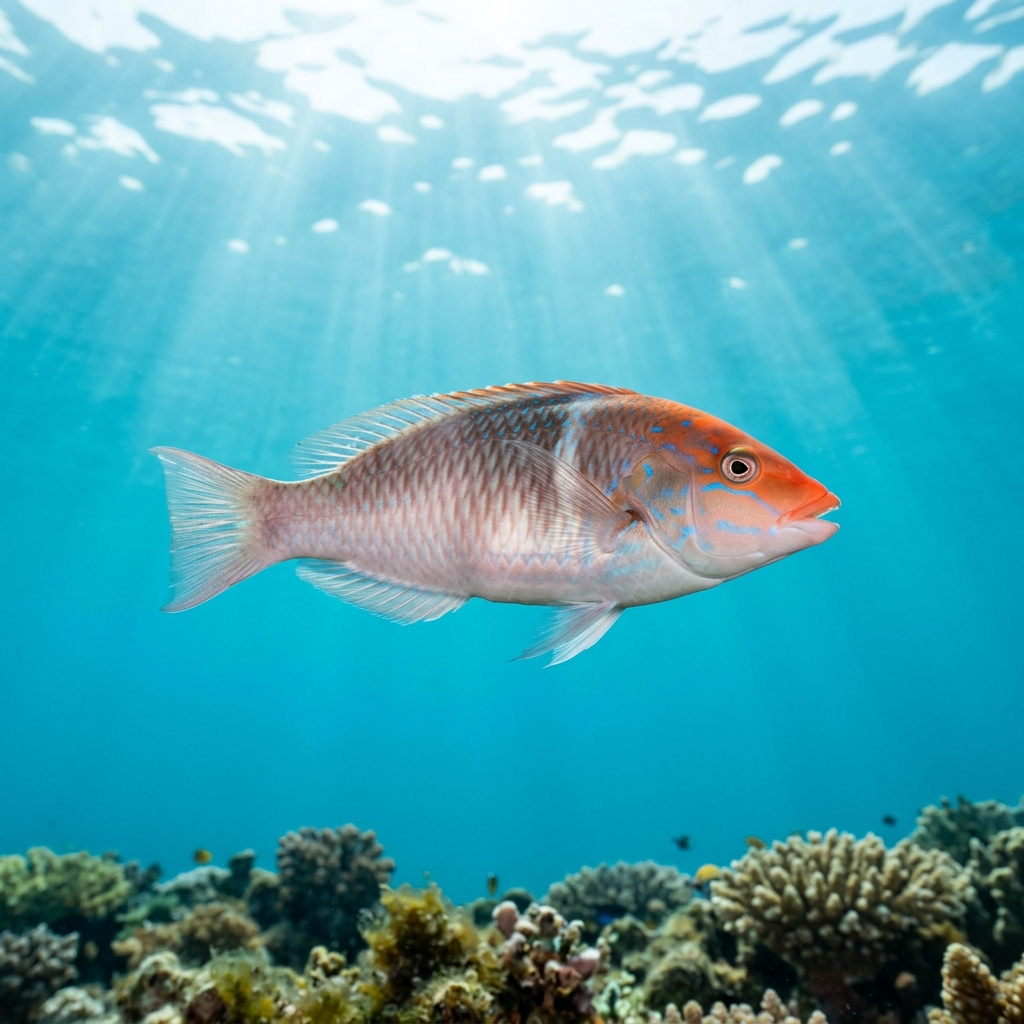
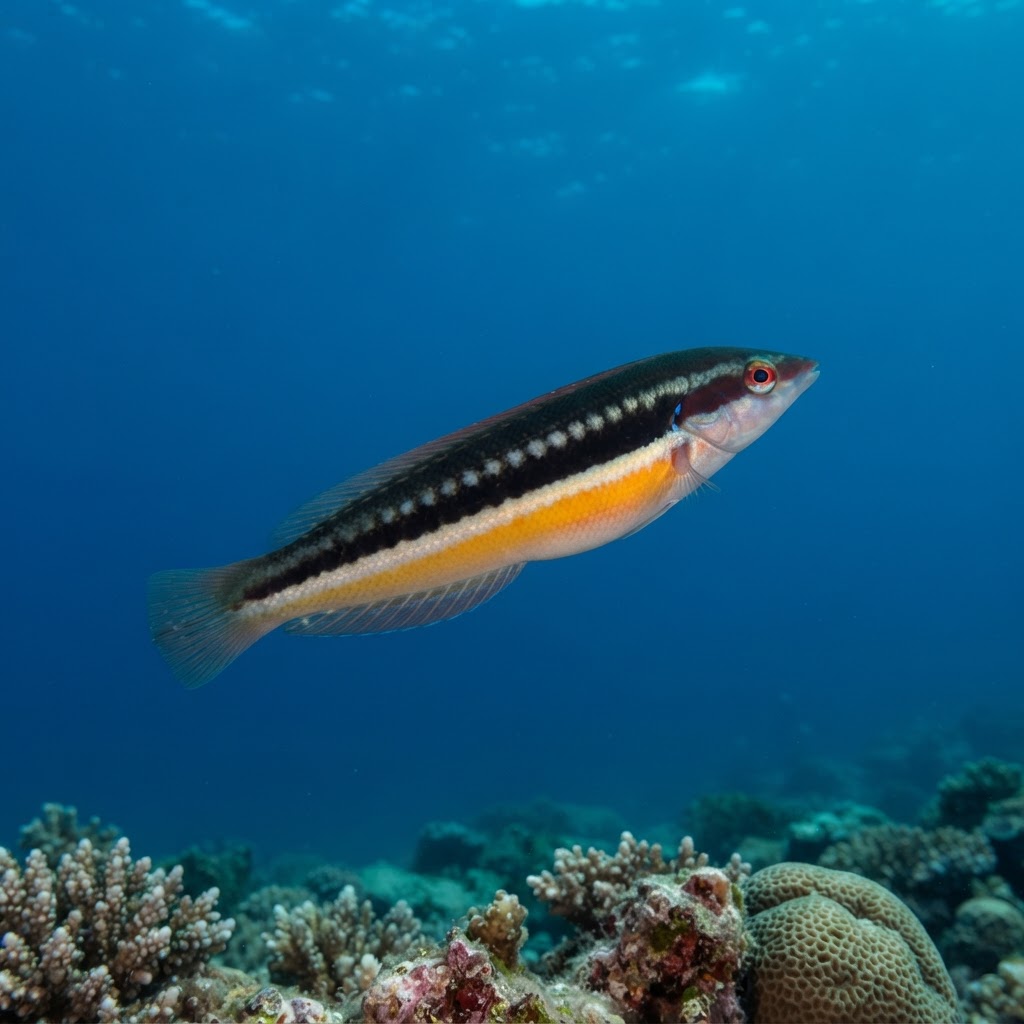
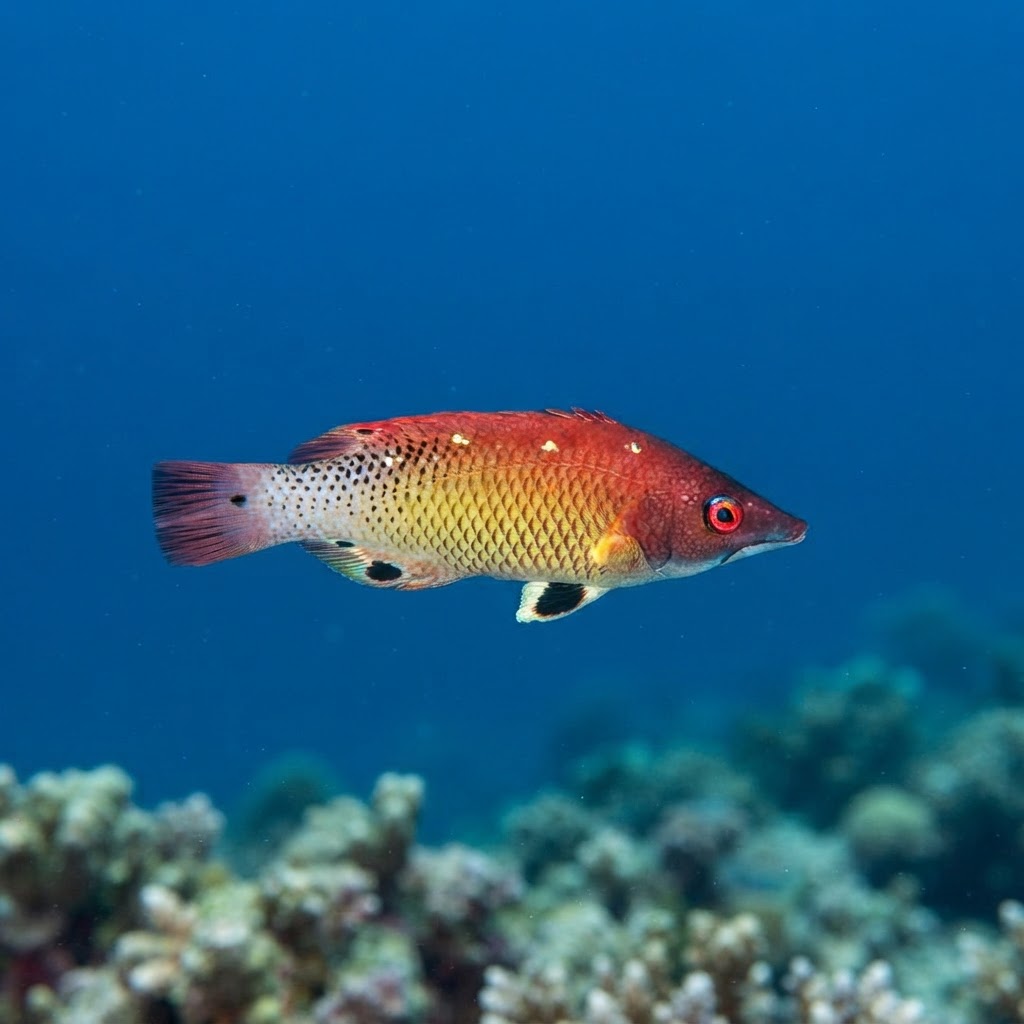
A small, slender wrasse reaching only about 9 cm, easy to overlook against reef rubble. Look for a pale to whitish body with a reddish-orange wash concentrated around the dorsal fin, which gives this species its name. Its shape is typical elongated wrasse: pointed snout, single long dorsal fin, and a darting swim style rather than a slow cruise.
Divers usually spot this hogfish picking around low reef structure and rubble patches, hunting small invertebrates rather than schooling in the open. It tends to stay close to cover and moves in quick, short bursts rather than holding still for a photo, so most sightings are logged as uncommon rather than common. Look for it in the same kind of nooks and crevices where you'd check for shrimps or small blennies.
Like many hogfish in the genus Bodianus, it forages by picking small invertebrates off the reef surface and rubble, making it a small but steady predator in the reef's clean-up crew rather than a filter or plankton feeder.
No clear seasonal pattern shows up in the data, so treat this as a year-round sighting on tropical reefs. It sits comfortably in water between 24.1 and 28.9C, a range that holds steady across its Indo-Pacific range for most of the year.
This one is most reliably logged across the Visayas in the Philippines and Sulawesi in Indonesia, with strong numbers also coming out of Raja Ampat. Palau's Rock Islands and Bali add further reliable sightings, and it also turns up on reefs in Taiwan around Green Island, plus scattered records from Timor-Leste, Australia and Fiji.
Mapping where Redfin Hogfish is logged…
Best odds are in the Philippines' Visayas region and Indonesia's Sulawesi, both strong hotspots in the data. Raja Ampat, Bali, and Palau's Rock Islands are also solid bets, with occasional sightings in Taiwan, Timor-Leste, Australia and Fiji.
There's no strong seasonal pattern, so it's a year-round sighting on tropical reefs. It favours water between about 24 and 29C, which covers most of the diving calendar across its Indo-Pacific range.
Check for a small, slender wrasse around 9 cm with a pale body and a reddish tint concentrated around the dorsal fin. It moves in quick darts near rubble and reef crevices rather than swimming openly in the water column.
They stay small, typically around 9 cm, so they're easy to miss unless you're looking closely at reef rubble and crevices.
No. This is a small, harmless reef wrasse that poses no threat to divers and generally keeps its distance.
They're carnivores that pick small invertebrates off the reef surface and rubble, hunting in short bursts around crevices rather than grazing in the open.
Site and sighting data is aggregated from diver logs, iNaturalist and GBIF. For taxonomy and conservation status:
Bird Wrasses
3,632 sites