Thalassoma genivittatum
A common reef fish around Saint-Leu and Grand Baie, easy to spot in warm 23-29C water year-round.
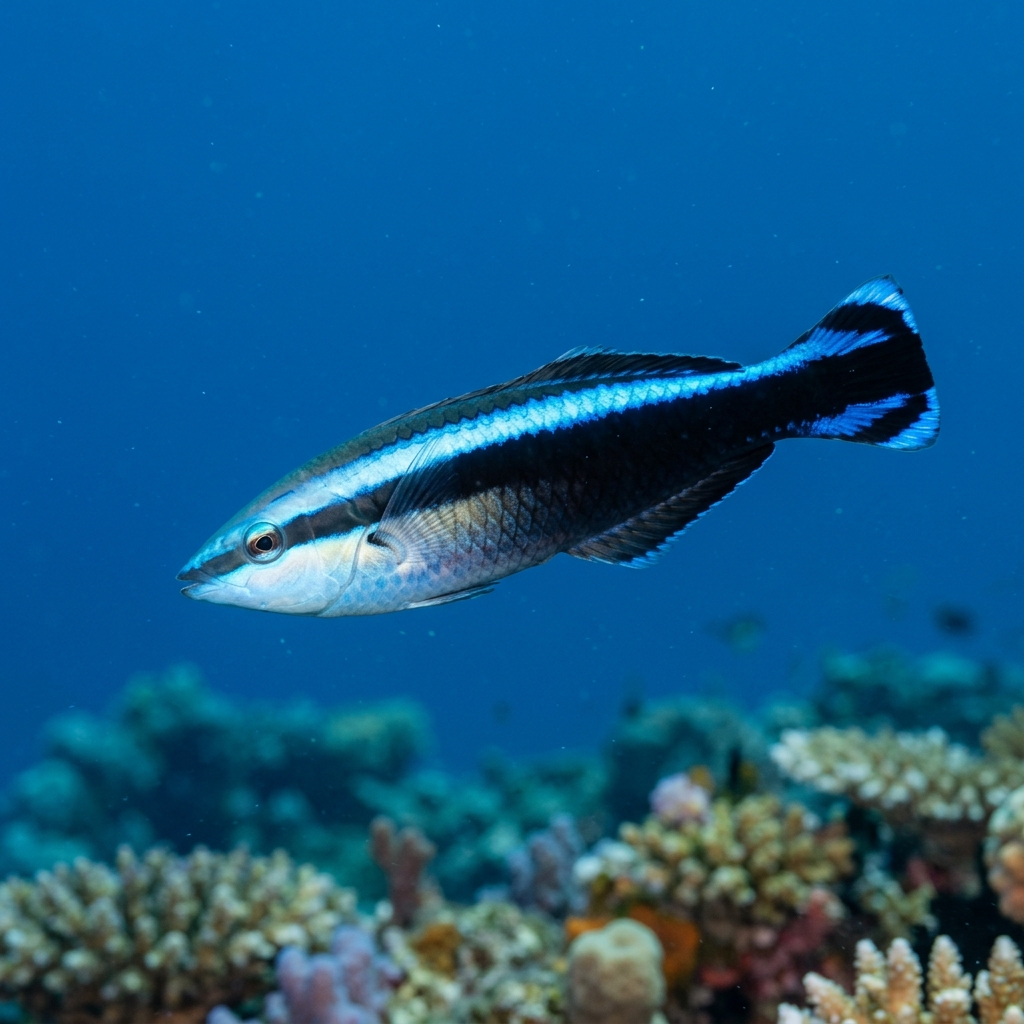
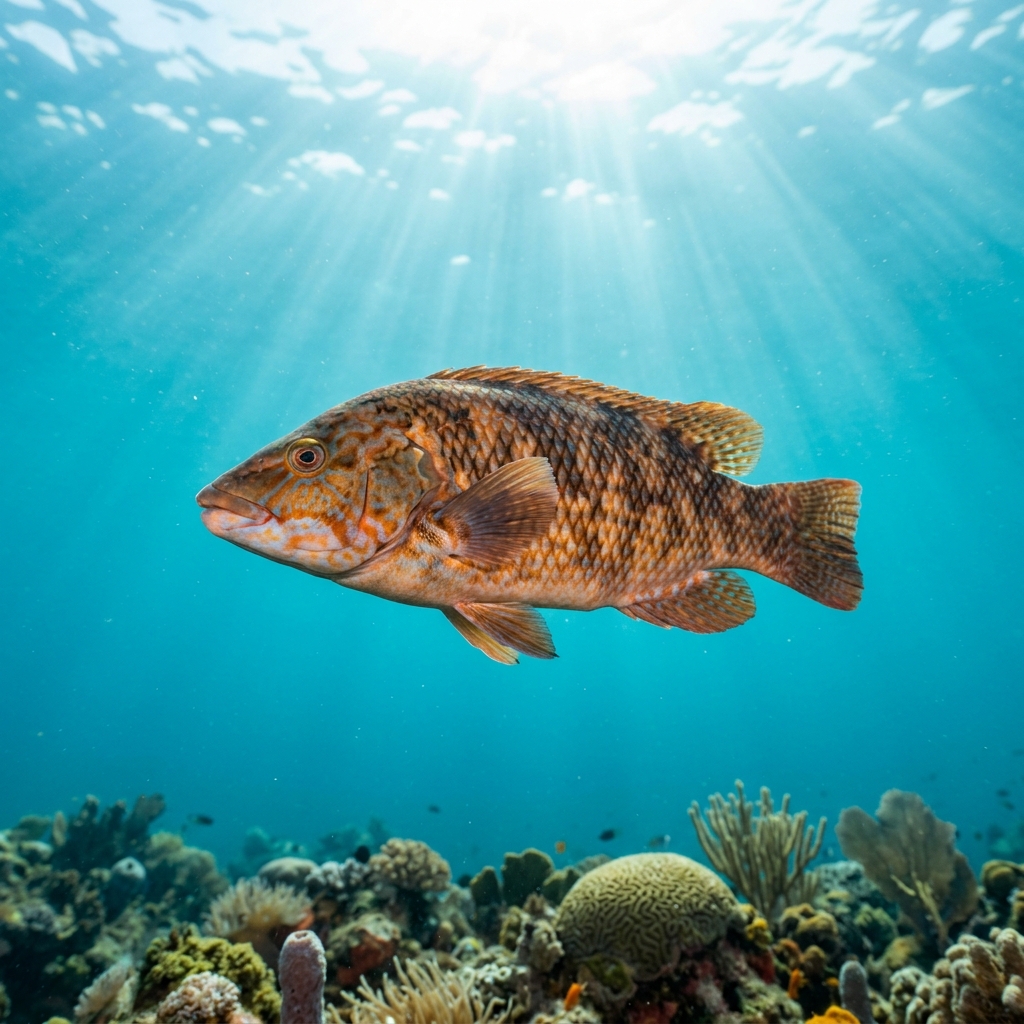
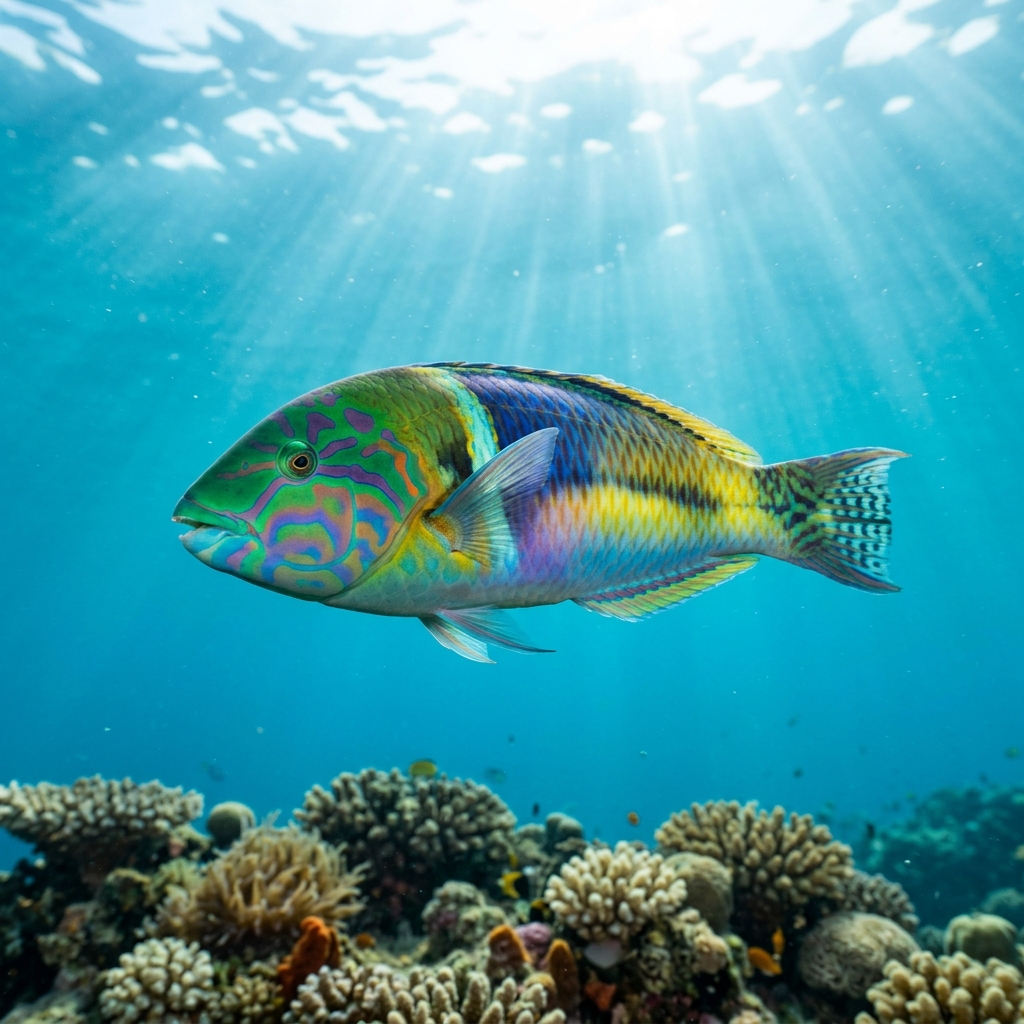
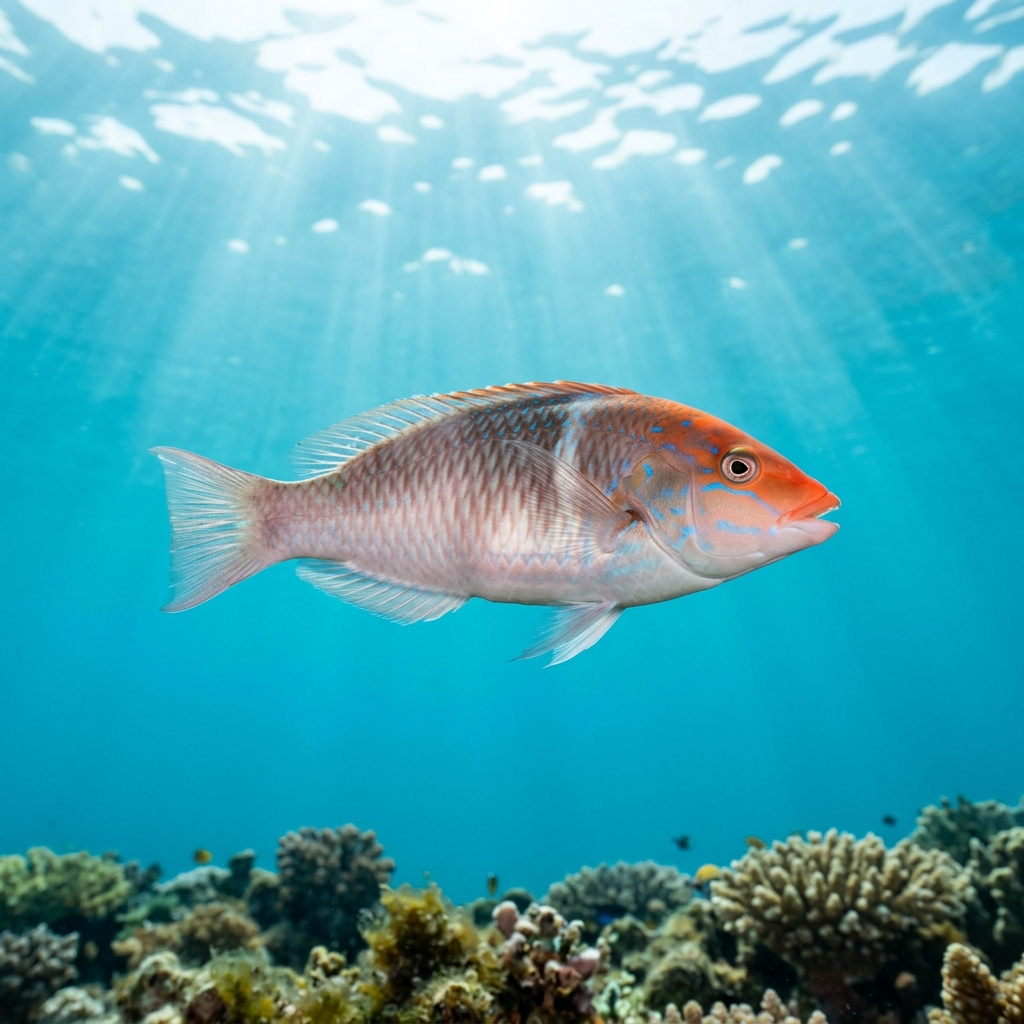
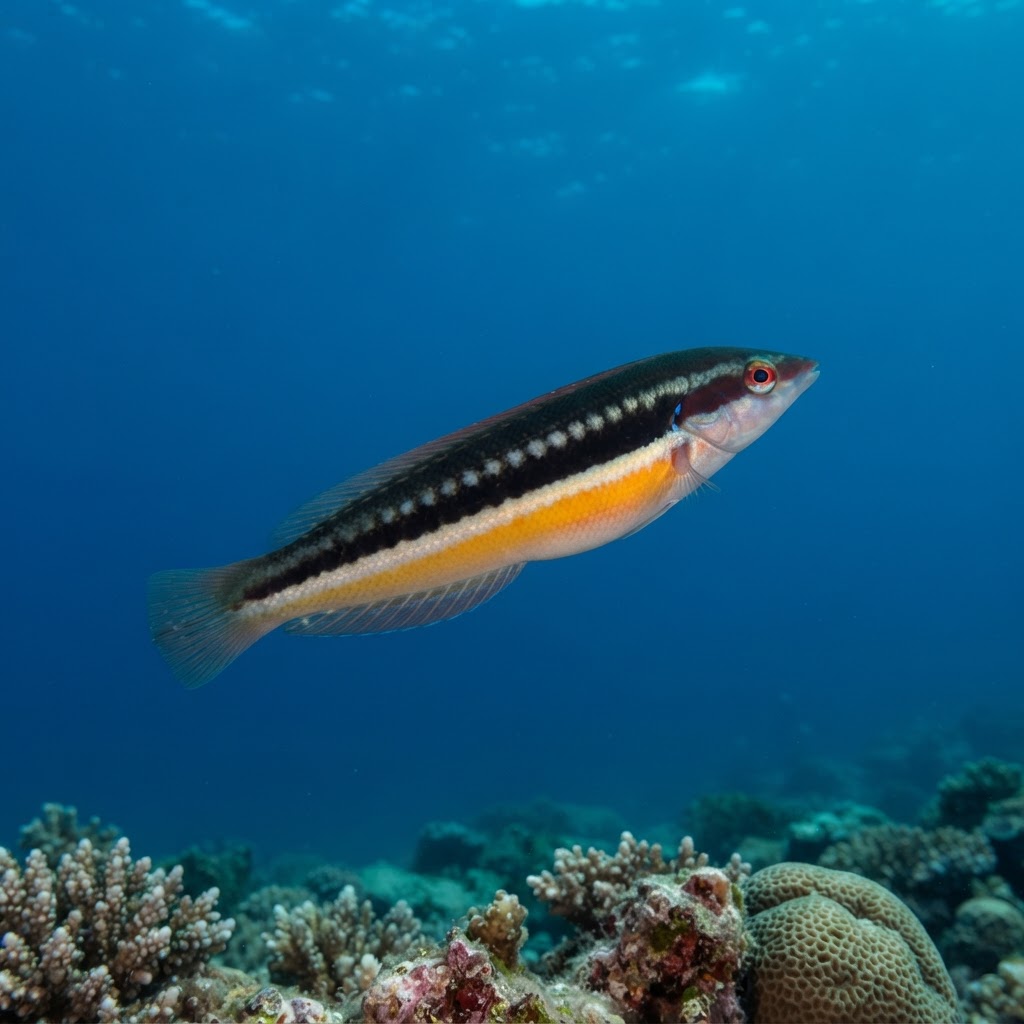
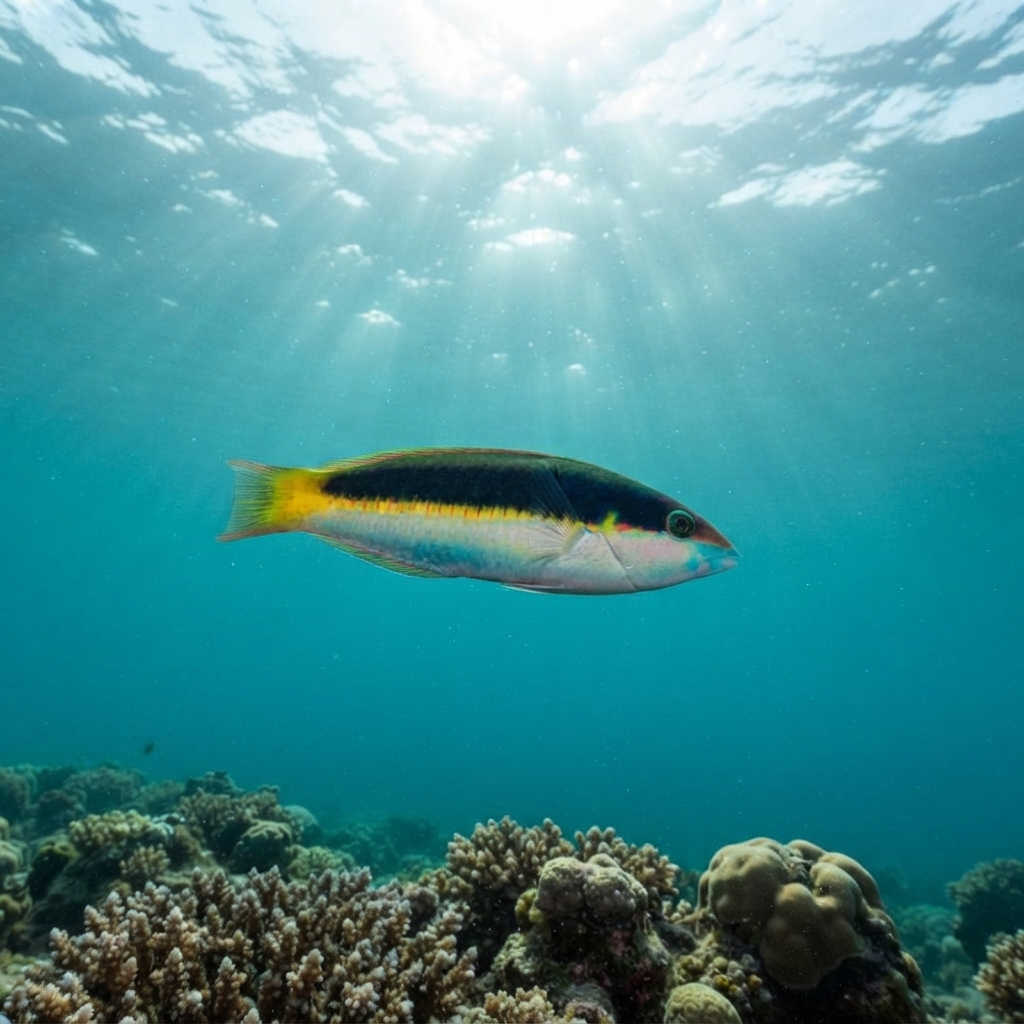
A slim, torpedo-shaped wrasse that tops out around 14 cm, so it reads as a small, fast-moving fish darting over the reef rather than cruising it. Look for the reddish-pink patch on the cheek that gives it its name, set against a greenish to pale body with faint striping along the flanks. It swims with the quick, jerky pectoral-fin strokes typical of Thalassoma wrasses, often in loose groups just above the coral.
Expect to see it picking around coral heads and rubble patches in the shallows, often solo or in small loose groups rather than tight schools. It is not shy but is quick, darting between cover rather than holding still for a photo, and divers most often log it during daytime reef dives at the sites above.
Like other Thalassoma wrasses it likely changes colour and sex as it matures, so the fish you see may not match a textbook photo depending on its life stage.
No clear seasonal pattern shows up in the sighting data, so treat this as a year-round fish. It sits comfortably in water from about 23 to 29C, which covers Mauritius and Reunion's reefs for most of the year.
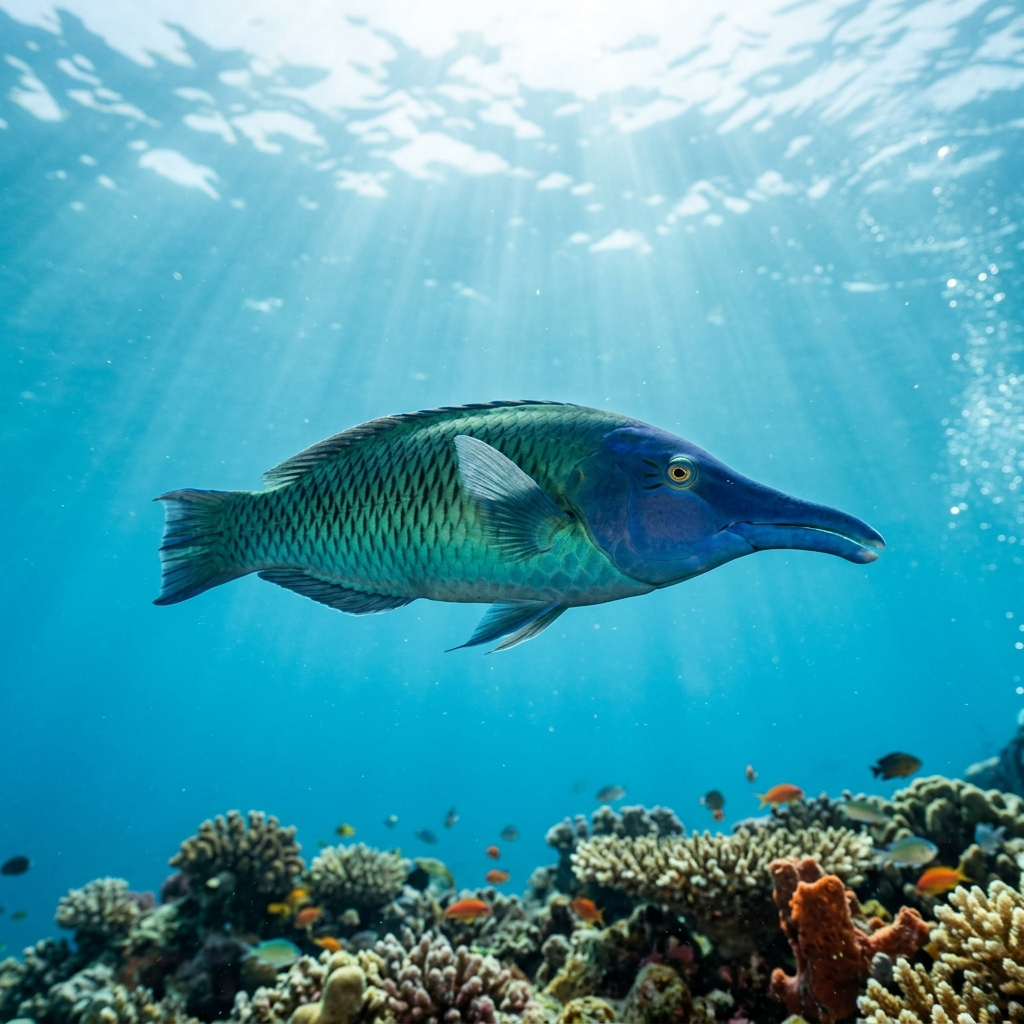
Reef neighbours a diver could mistake it for. Use the identification notes above to tell them apart.
Most reliably logged in Mauritius and Reunion, with strong numbers around Saint-Leu and Saint-Paul on Reunion, and Grand Baie, Trou aux Biches, and Flic-en-Flac in Mauritius. A handful of sightings also come from South Africa, but the western Indian Ocean around these two islands is where divers consistently run into it.
Mapping where Redcheek Wrasse is logged…
Mauritius and Reunion are the strongholds, with the best odds around Saint-Leu, Saint-Paul, Grand Baie, and Trou aux Biches. It has also turned up on a handful of South African sites.
There is no strong season in the data, so it is a fair year-round sighting on Mauritius and Reunion reefs, where the water stays in a comfortable 23 to 29C range.
Look for a small, slender wrasse around 14 cm with a distinct reddish cheek patch and a greenish body, moving quickly over coral in short bursts rather than gliding.
They are a small reef wrasse, typically reaching around 14 cm, so they are easy to overlook among bigger reef fish.
No, they pose no risk to divers and simply go about their business on the reef while you dive past.
Site and sighting data is aggregated from diver logs, iNaturalist and GBIF. For taxonomy and conservation status:
Bird Wrasse
3,632 sites