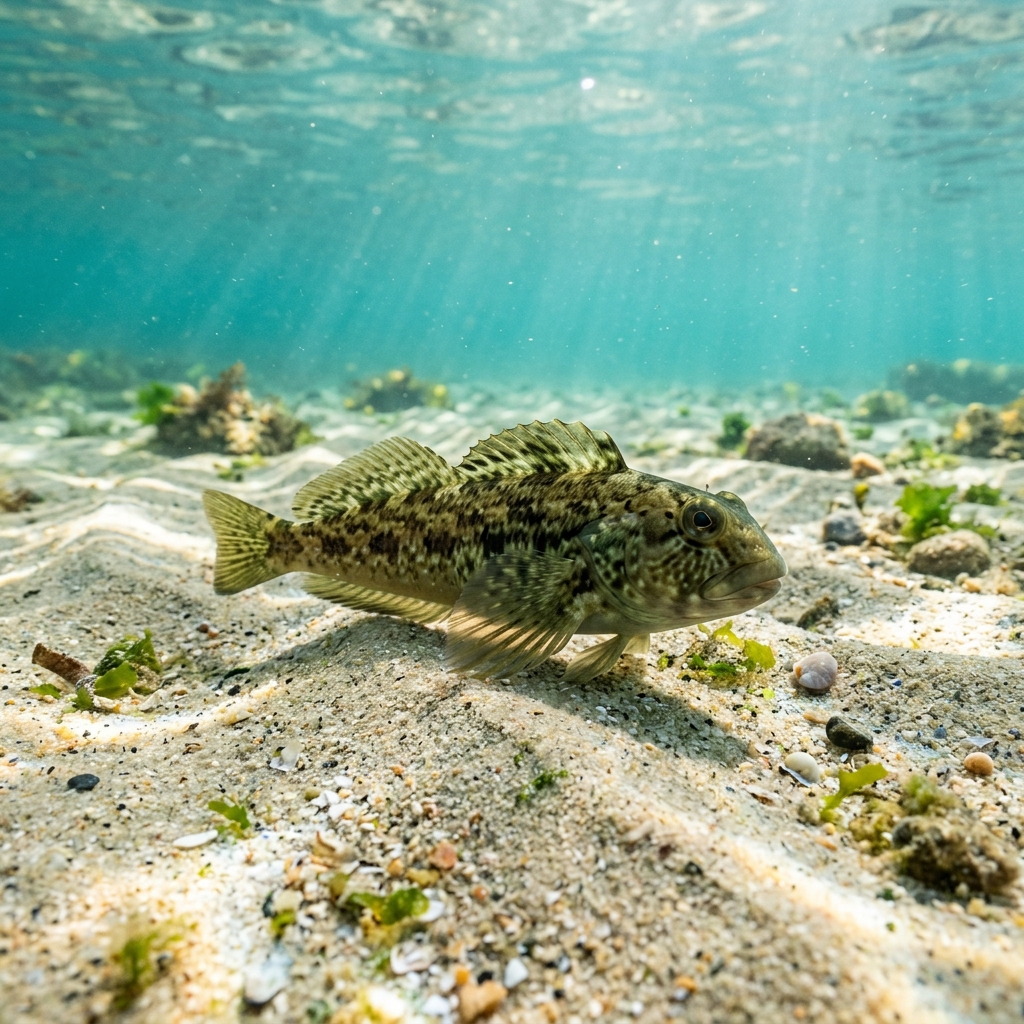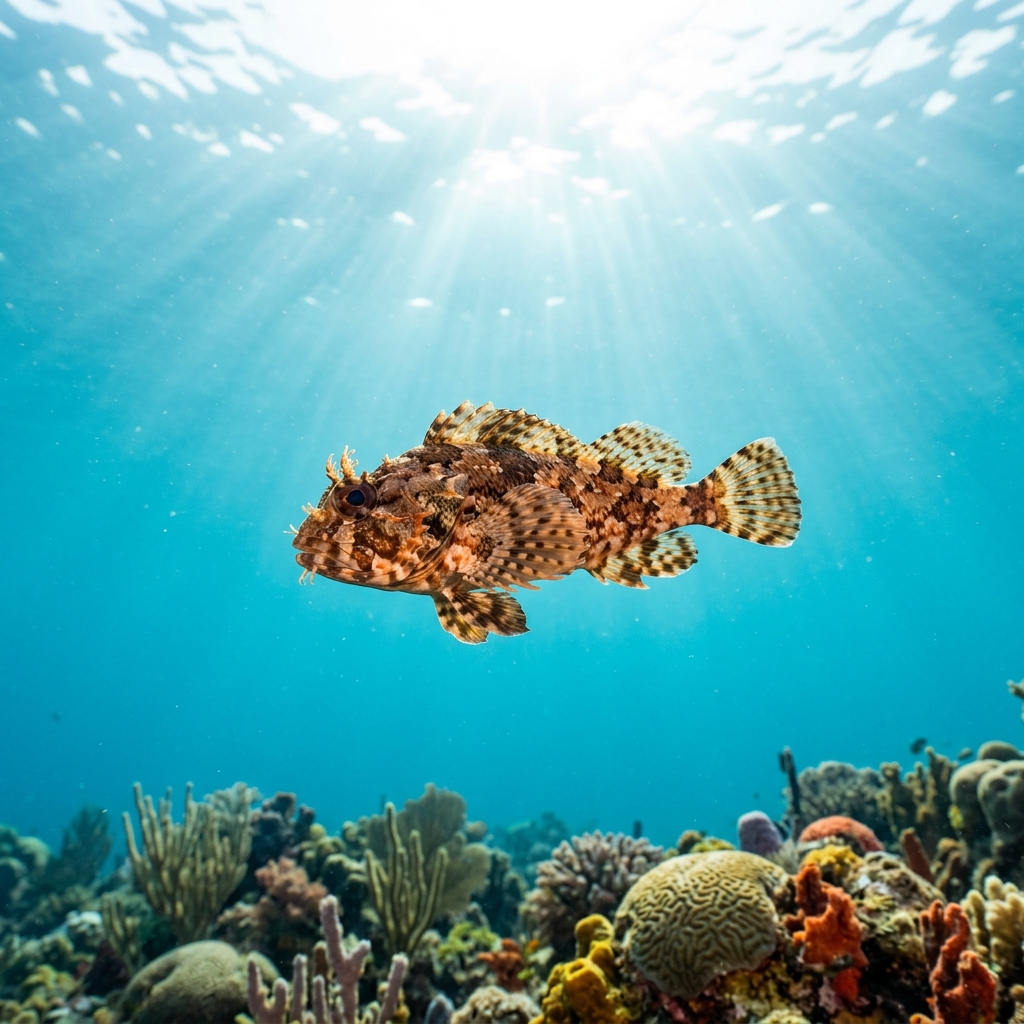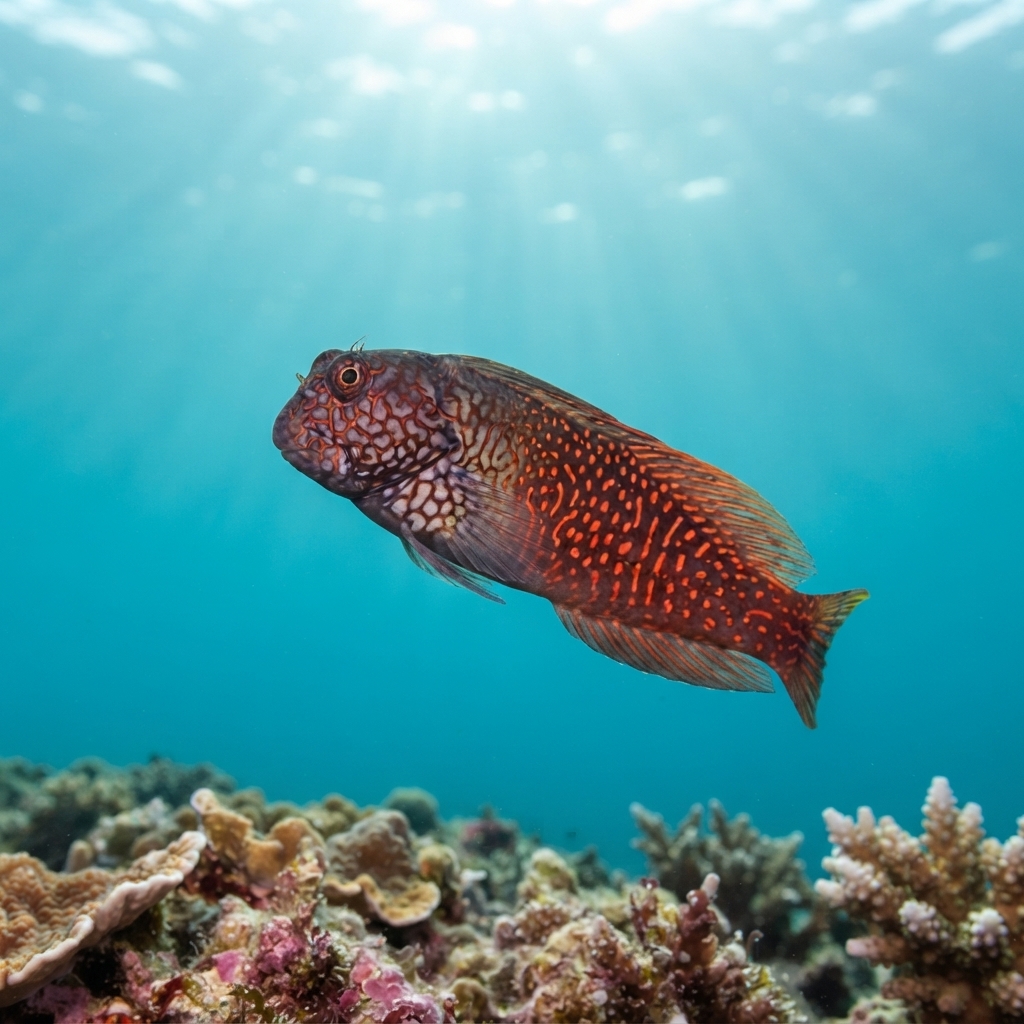
Cirripectes stigmaticus
Tiny reef blenny common in Efate, Vanuatu and Queensland reefs at 26-29C, easy to miss unless you look into holes.
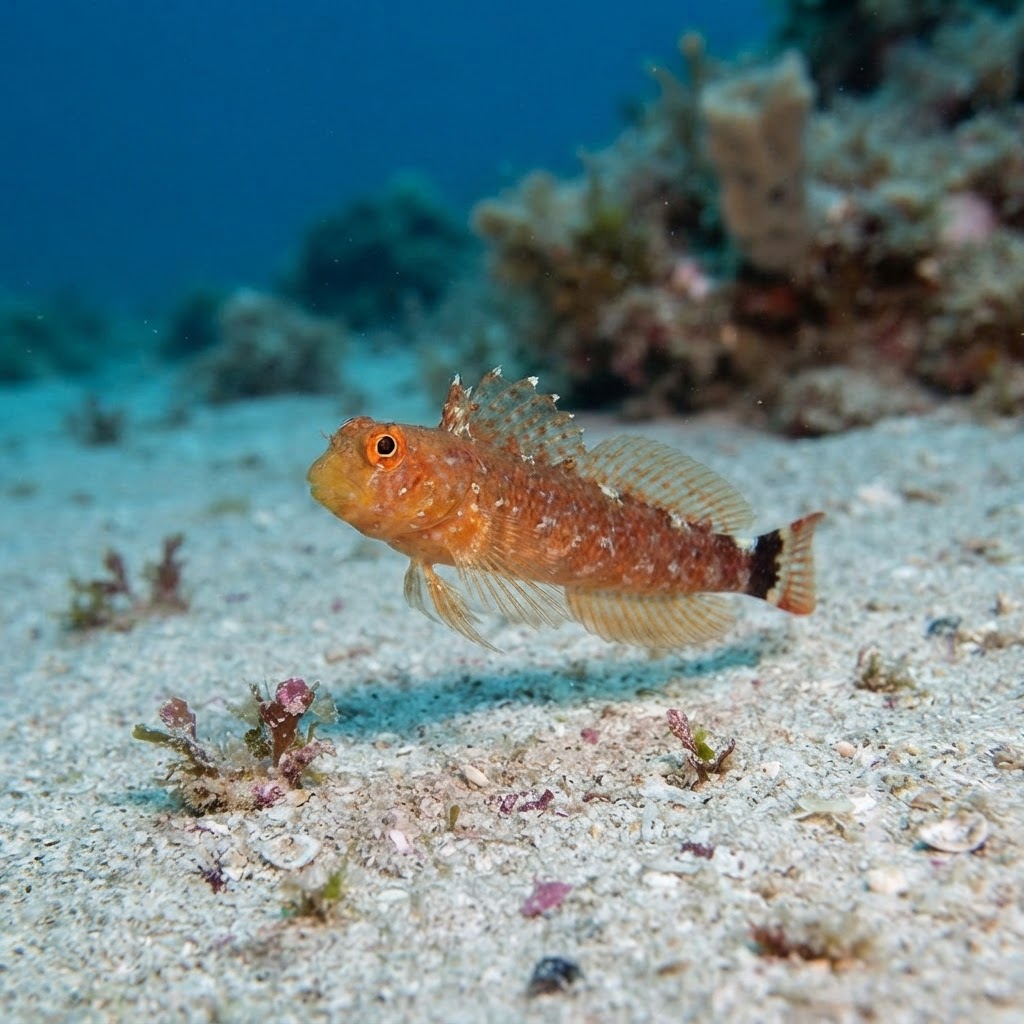
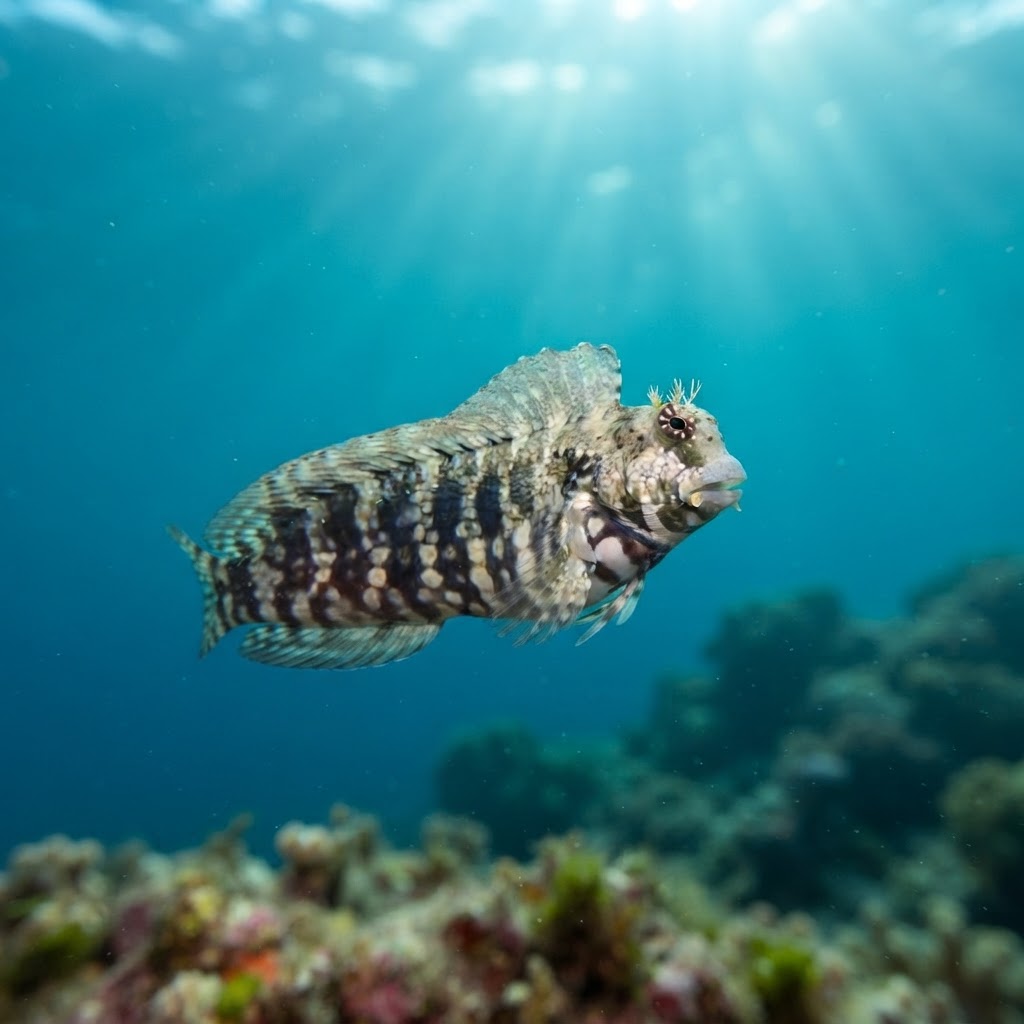
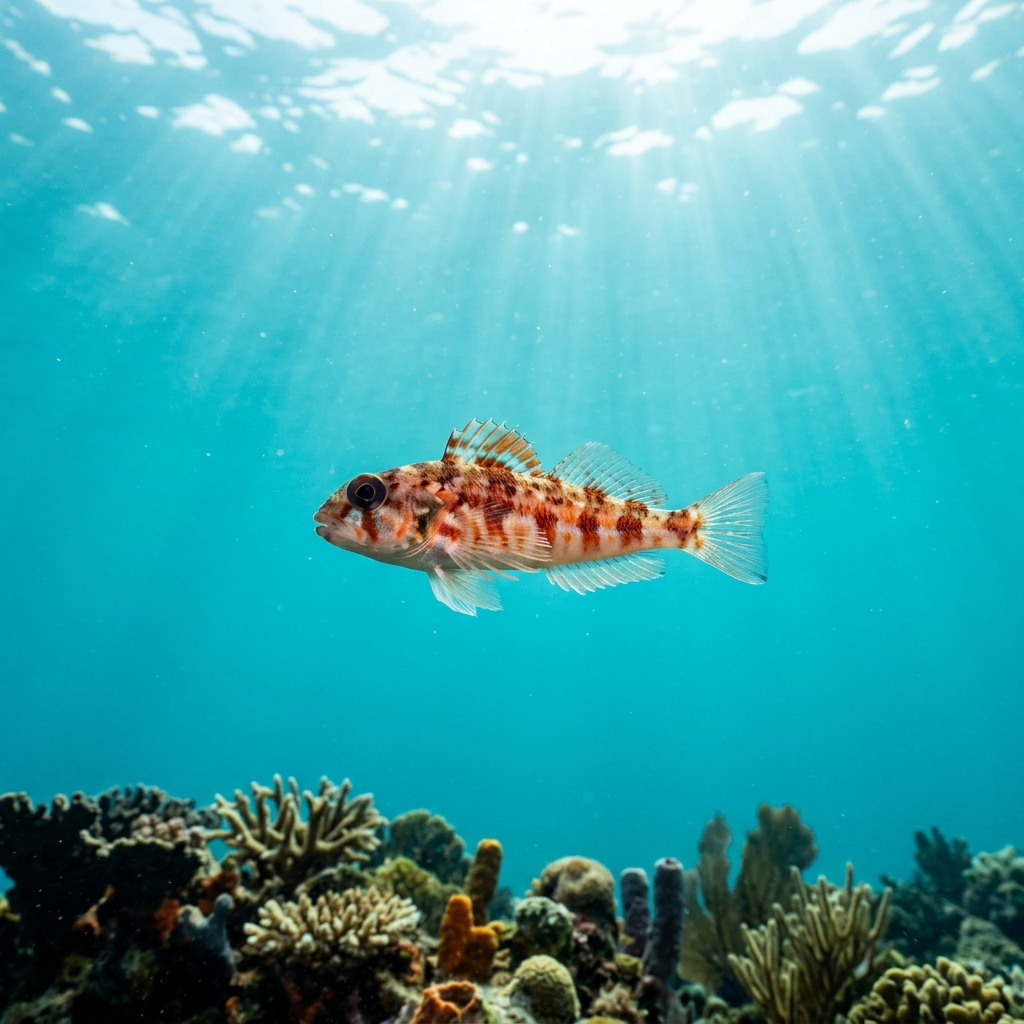
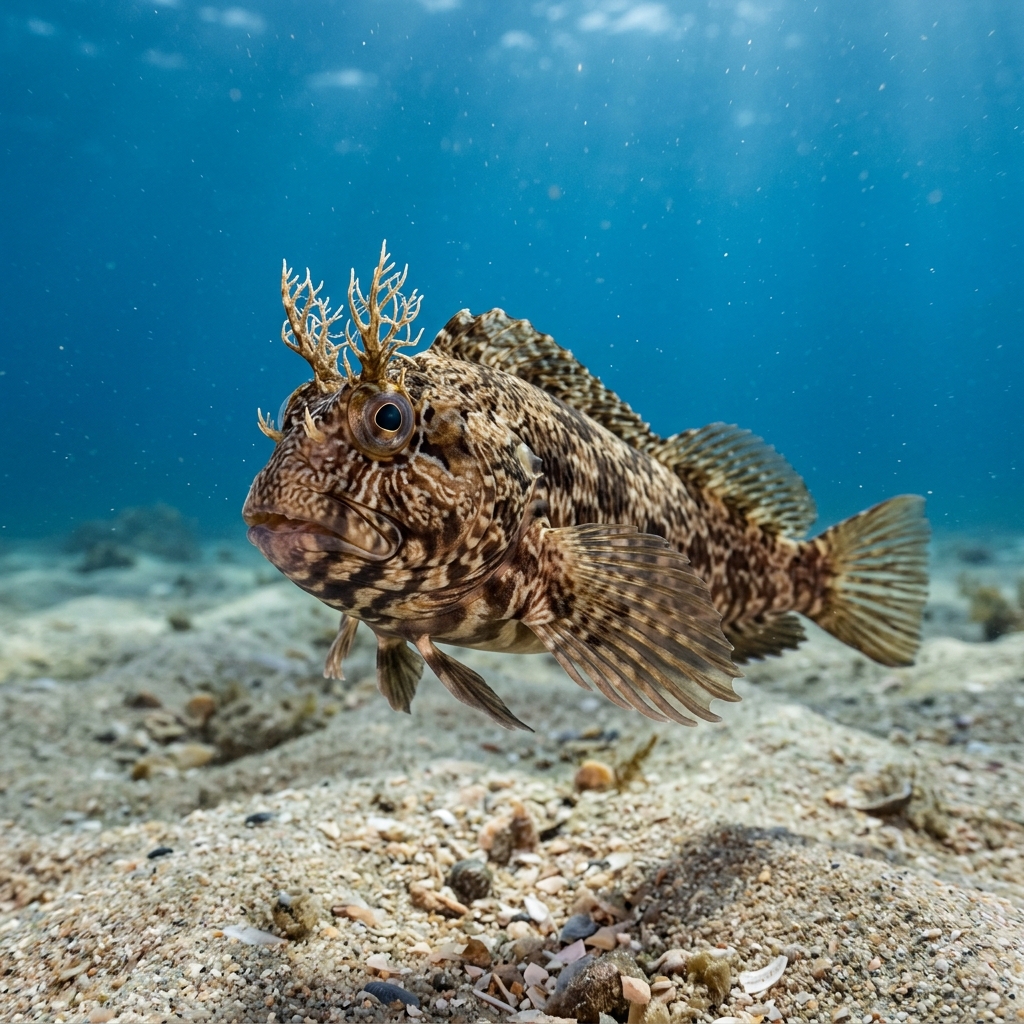
A small, stubby-bodied fish at just 7 cm, usually seen with only its head poking out of a hole or crevice in the reef. Body colour is dark brown to blackish with fine red to orange streaks radiating across the head and upper body, giving it its name. Look for the blunt face and prominent eyes rather than the whole body, since it rarely swims far from cover.
Spends most of its time wedged into a hole, crevice, or dead coral head, with just its face visible, so divers tend to spot it by scanning close rather than swimming past. It is generally unbothered by a diver hovering nearby, though it will duck fully back into its burrow if you get too close or move fast. Most sightings come from shallower reef flats and coral rubble zones where these gaps are common.
Like other combtooth blennies, it uses comb-shaped teeth to graze algae and detritus directly off the reef surface, making it one of the reef's small-scale lawnmowers.
No clear seasonal pattern shows up in the data, so treat it as a year-round sighting. It sits comfortably in water from about 25.7 to 29.3C, the kind of steady tropical range these reefs hold most months.
Reef neighbours a diver could mistake it for. Use the identification notes above to tell them apart.
Most reliably logged around Efate in Vanuatu and on reefs in Queensland, Australia, with strong showings too around Taveuni in Fiji and Dili in Timor-Leste. Sightings also come from Sulawesi and Lomaiviti, so it turns up across a wide swathe of the Indo-Pacific for divers who take time to check rubble and coral heads closely.
Mapping where Red-streaked Blenny is logged…
It shows up most often around Efate in Vanuatu and on Queensland's reefs in Australia, with good numbers also around Taveuni in Fiji and Dili in Timor-Leste. It has also been logged in Sulawesi, Indonesia.
There is no strong seasonal pattern in sightings, so it is considered a year-round find. It favours warm reef water between about 25.7 and 29.3C, which holds steady across most months on these tropical reefs.
Look for a small, 7 cm fish peeking out of a crevice or coral hole rather than swimming openly. Its dark brown to black body carries fine red to orange streaks across the head, which is the easiest feature to spot at close range.
They stay small, reaching around 7 cm in length, which along with their habit of hiding in holes makes them easy to overlook on a reef.
No, they pose no danger to divers. They are shy, hole-dwelling fish that retreat into cover rather than confront anything approaching.
They use comb-like teeth to graze algae and organic detritus straight off rock and coral surfaces, playing a small part in keeping reef surfaces clear of algal growth.
Site and sighting data is aggregated from diver logs, iNaturalist and GBIF. For taxonomy and conservation status:
Rusty Blenny
2,605 sites