Sargocentron rubrum
Red-and-white striped reef fish hiding in Koh Tao caves and Cyprus overhangs, spotted year-round in 25-29C water.
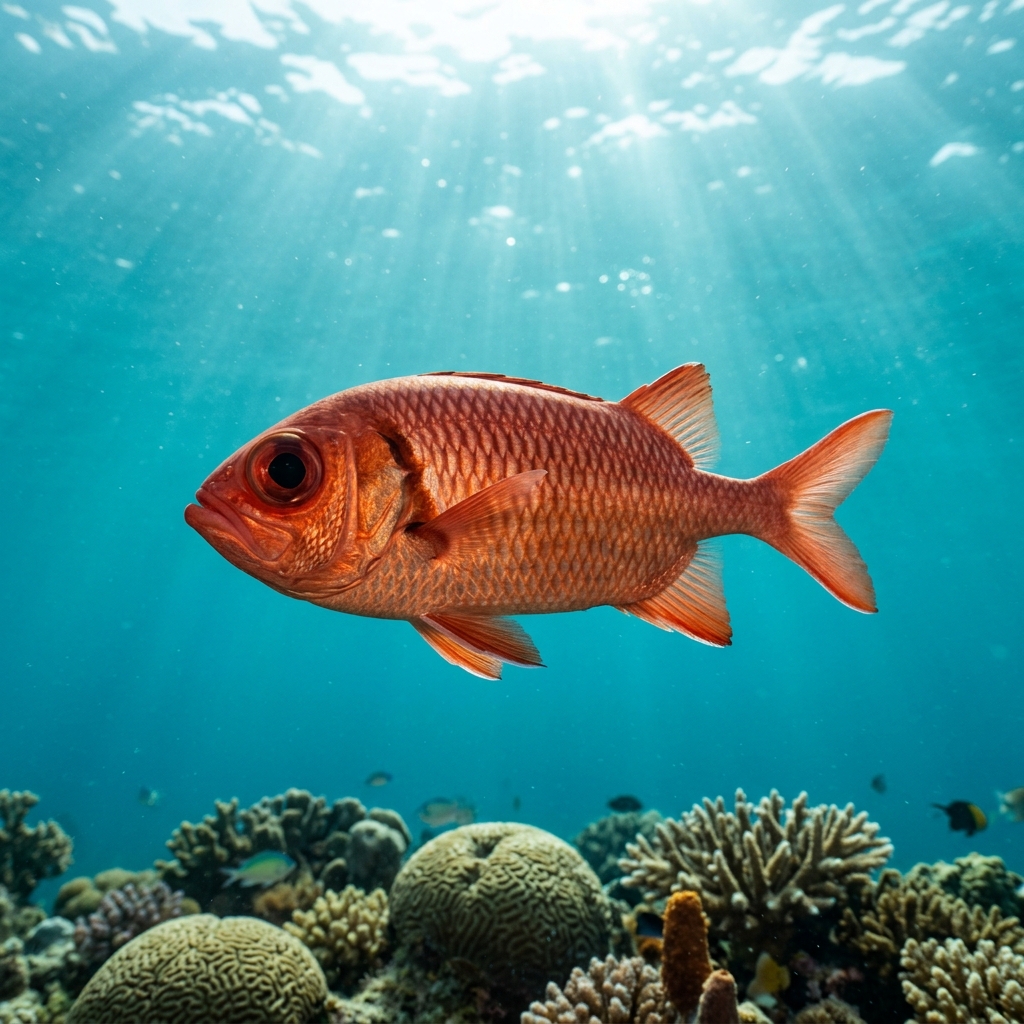
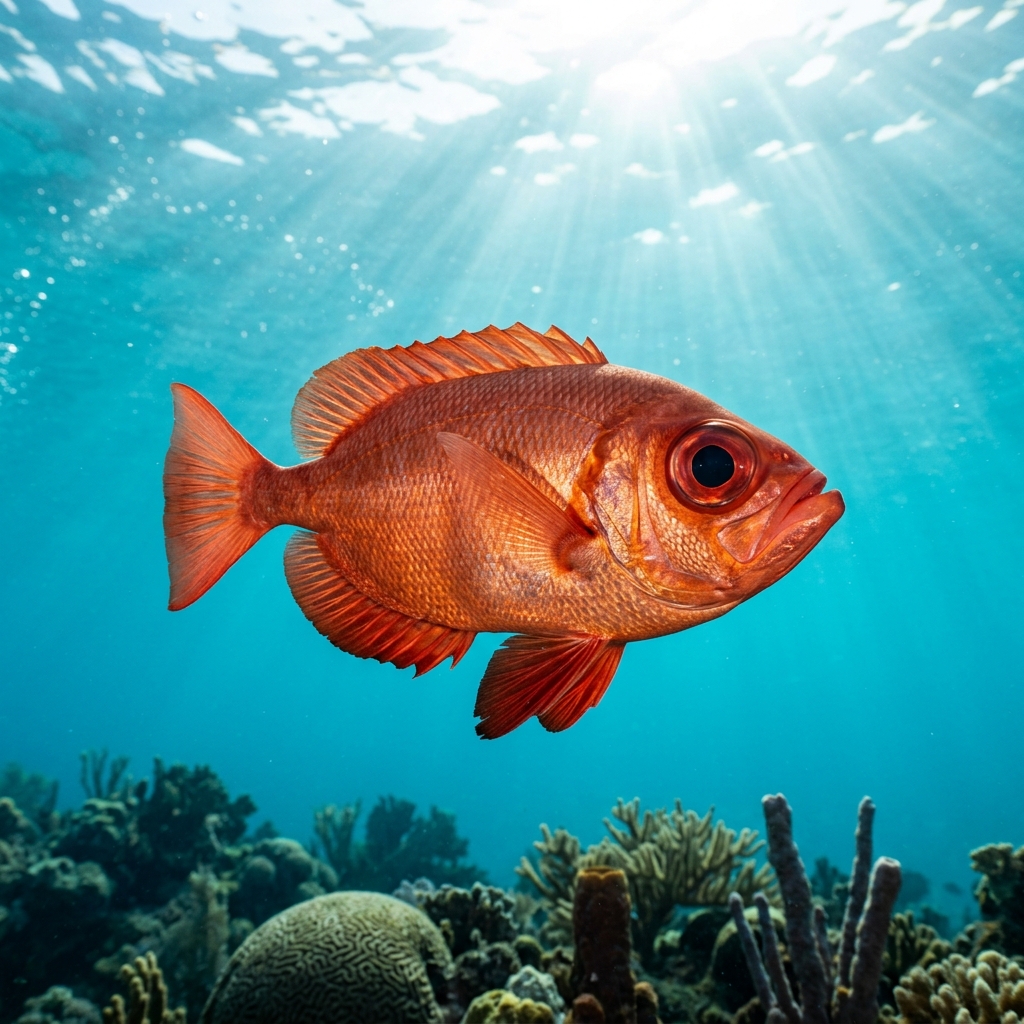
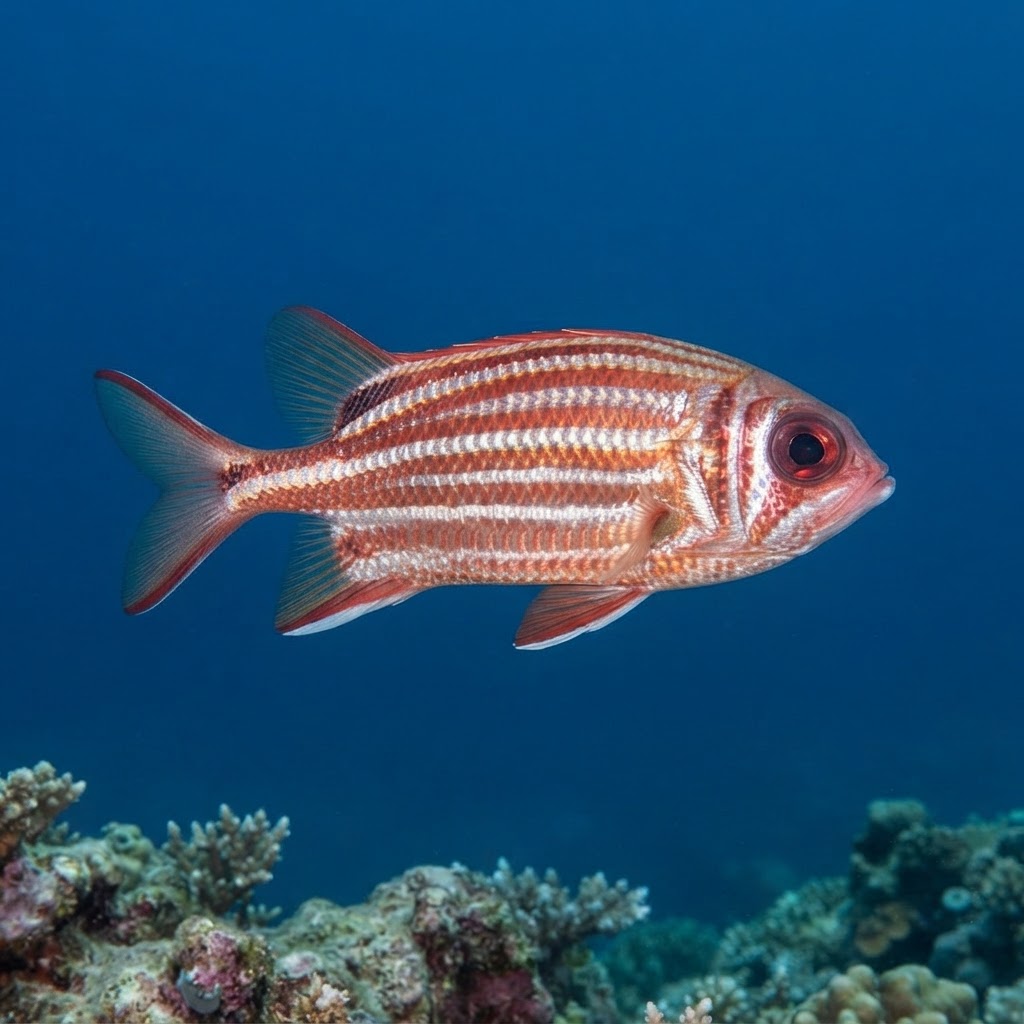
Bright red body with thin white horizontal stripes running nose to tail, growing to around 22 cm. Large, dark, glassy eyes give it away as a nocturnal reef fish, and it often hovers head-down or tucked into a crevice rather than swimming openly. Its dorsal fin carries a sharp spine near the front, and the tail is deeply forked, giving it a quick, darting escape when disturbed.
Spend daylight hours tucked under ledges, in caves, and inside reef crevices, often in small loose groups with other soldierfish or squirrelfish. They become more active and visible at dusk and after dark as they move out to hunt, and most divers encounter them by peering into overhangs on day dives rather than watching them cruise the open reef. They generally hold their position and let divers approach fairly close before backing further into cover.
Those big eyes are a night-feeding adaptation: soldierfish are most active after dark, hunting small crustaceans and other invertebrates over the reef while sheltering in holes through the day.
No clear seasonal pattern shows up in the data, and with a comfortable range of 25 to 29C it's a year-round fish on the reefs where it lives. Dive it whenever conditions suit the region, rather than planning around a season.
Most reliably logged on reefs in Malaysia, especially Peninsular Malaysia's east coast, and in strong numbers around Koh Tao in Thailand. It also turns up consistently across the eastern Mediterranean, with regular sightings in Ayia Napa and Protaras in Cyprus, and along Turkey's Antalya and Turquoise coasts, plus Crete and the Dodecanese in Greece.
Mapping where Red Soldierfish is logged…
They're most consistently seen in Malaysia, particularly along Peninsular Malaysia's east coast, and around Koh Tao in Thailand. The eastern Mediterranean is also reliable, with sightings around Ayia Napa and Protaras in Cyprus, Antalya and the Turquoise Coast in Turkey, and Crete and the Dodecanese in Greece.
There's no strong seasonal pattern in sightings, and the species sits comfortably in 25 to 29C water year-round, so it's a fish you can look for on any dive trip to its range rather than a specific month.
Look for a red body with thin white stripes, large dark eyes, and a forked tail, usually seen tucked under a ledge or in a crevice rather than out in the open. It grows to about 22 cm and often shares its hiding spot with other soldierfish or squirrelfish.
They typically reach around 22 cm in length, a modest size that fits their habit of squeezing into small reef crevices and cave mouths during the day.
No, they're not considered dangerous to divers. They tend to retreat into cover rather than confront anything approaching, though like other soldierfish they carry a sharp spine on the dorsal fin that's best avoided if handling reef life.
Their oversized eyes are built for low light, since they're primarily active at night when they leave their daytime hiding spots to hunt small crustaceans and invertebrates over the reef.
Site and sighting data is aggregated from diver logs, iNaturalist and GBIF. For taxonomy and conservation status:
Soldierfish
3,612 sites