Stethojulis bandanensis
Small, fast, and easy to overlook: here's where and when to find red shoulder wrasse, from the Society Islands to the Visayas.
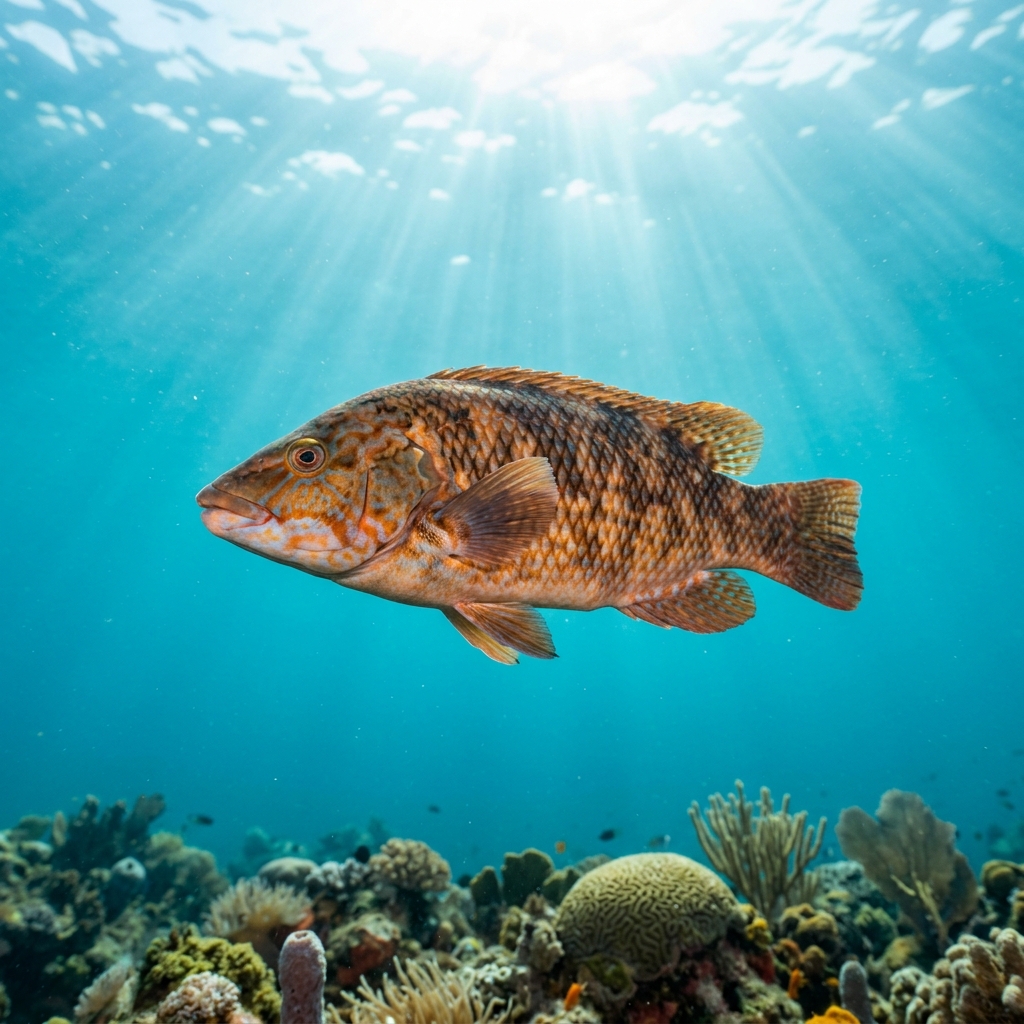
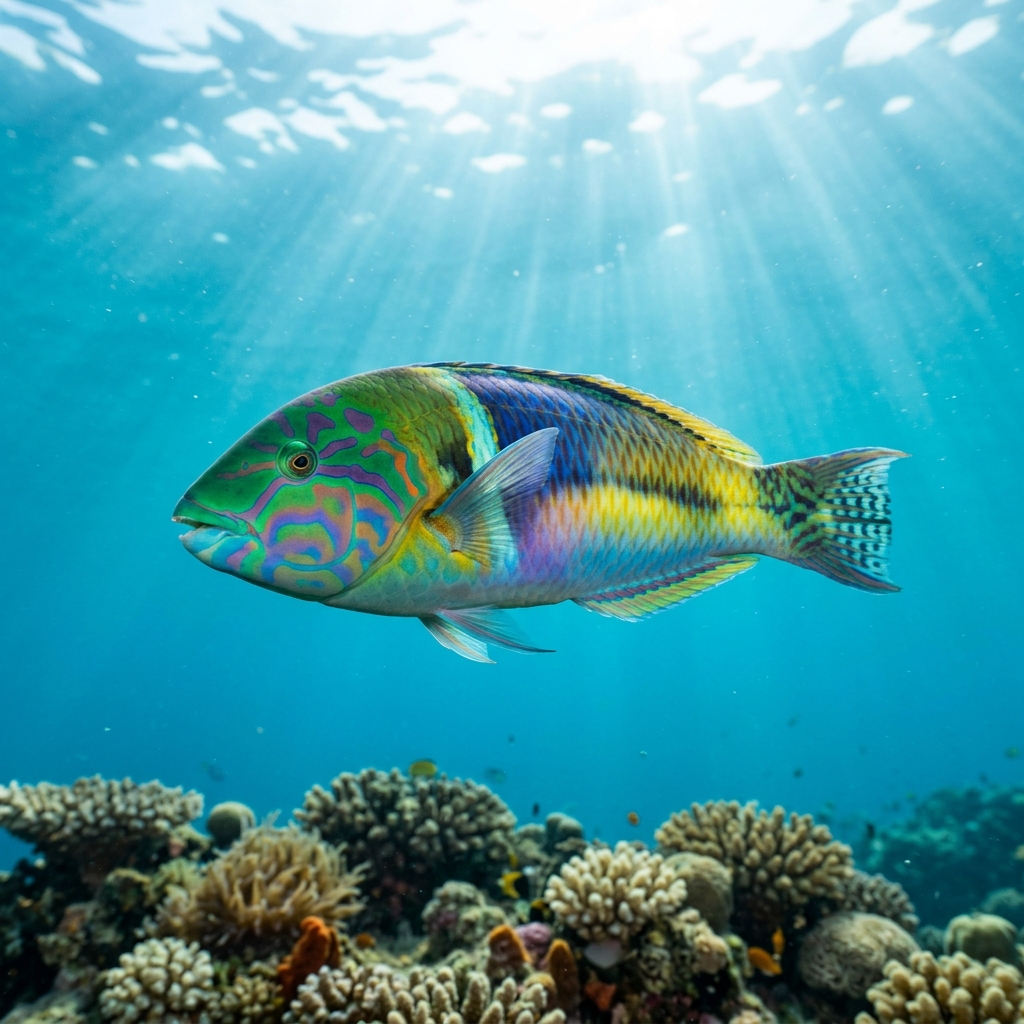
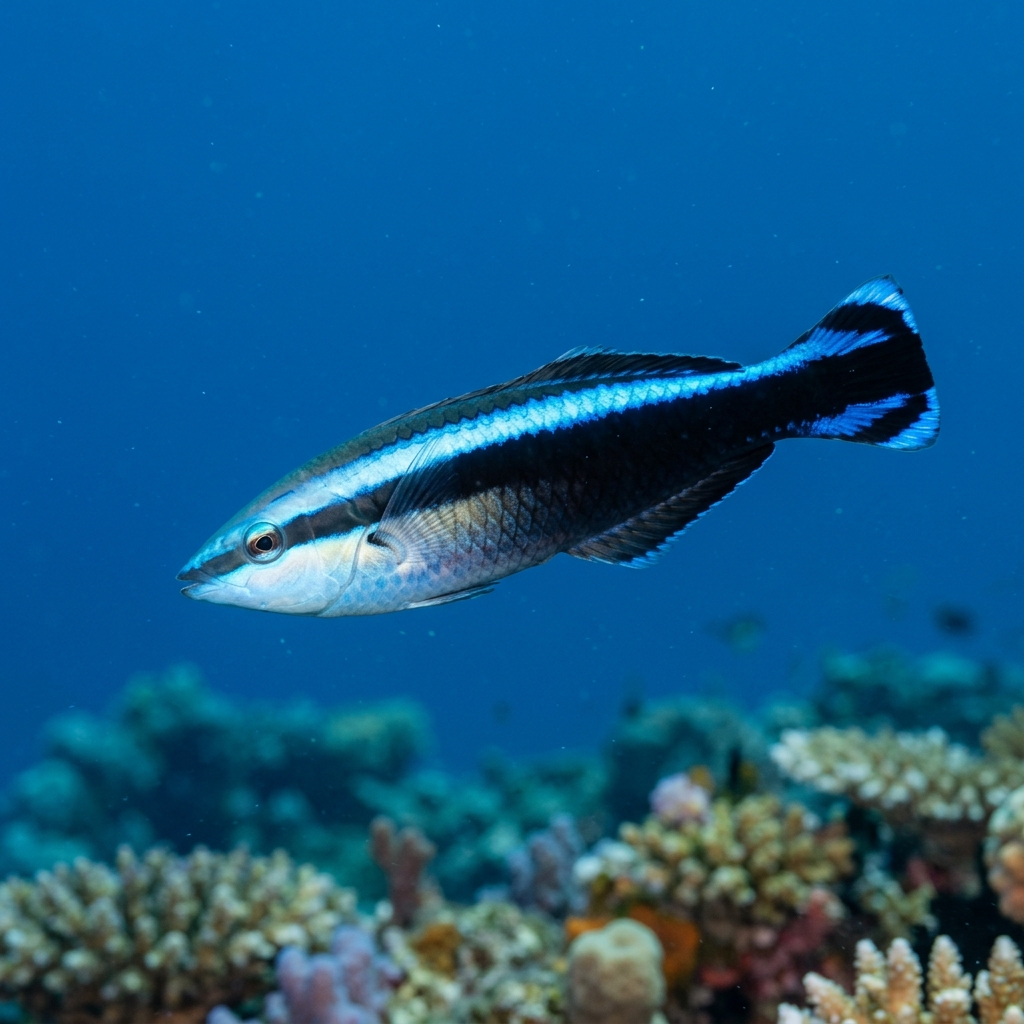
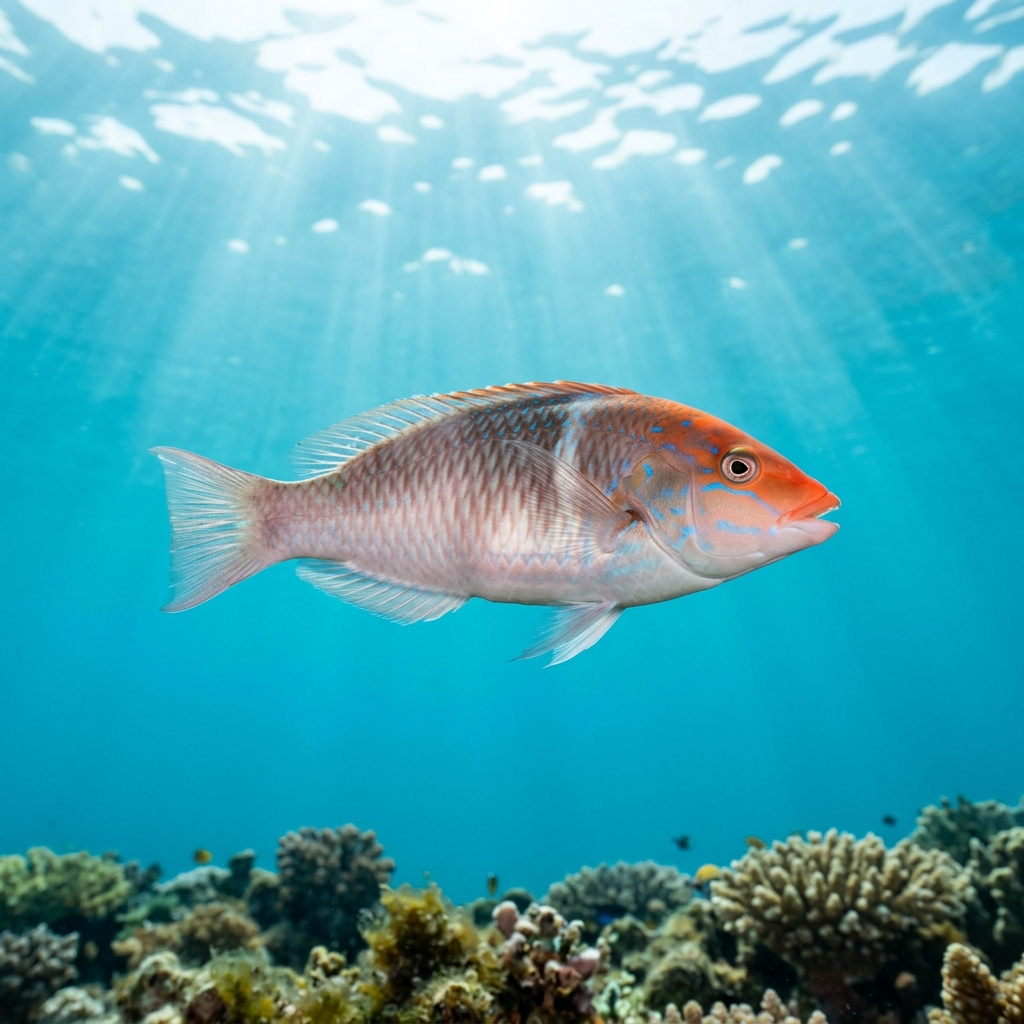
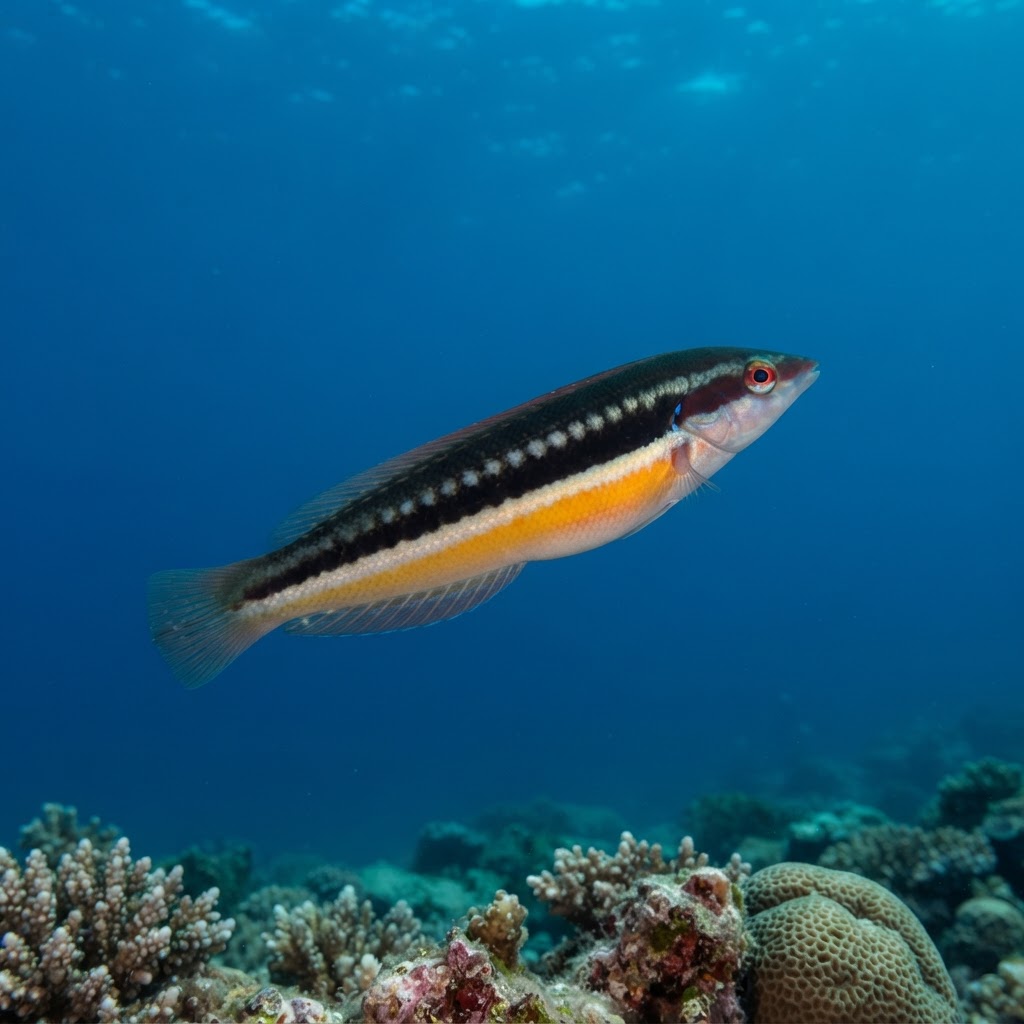
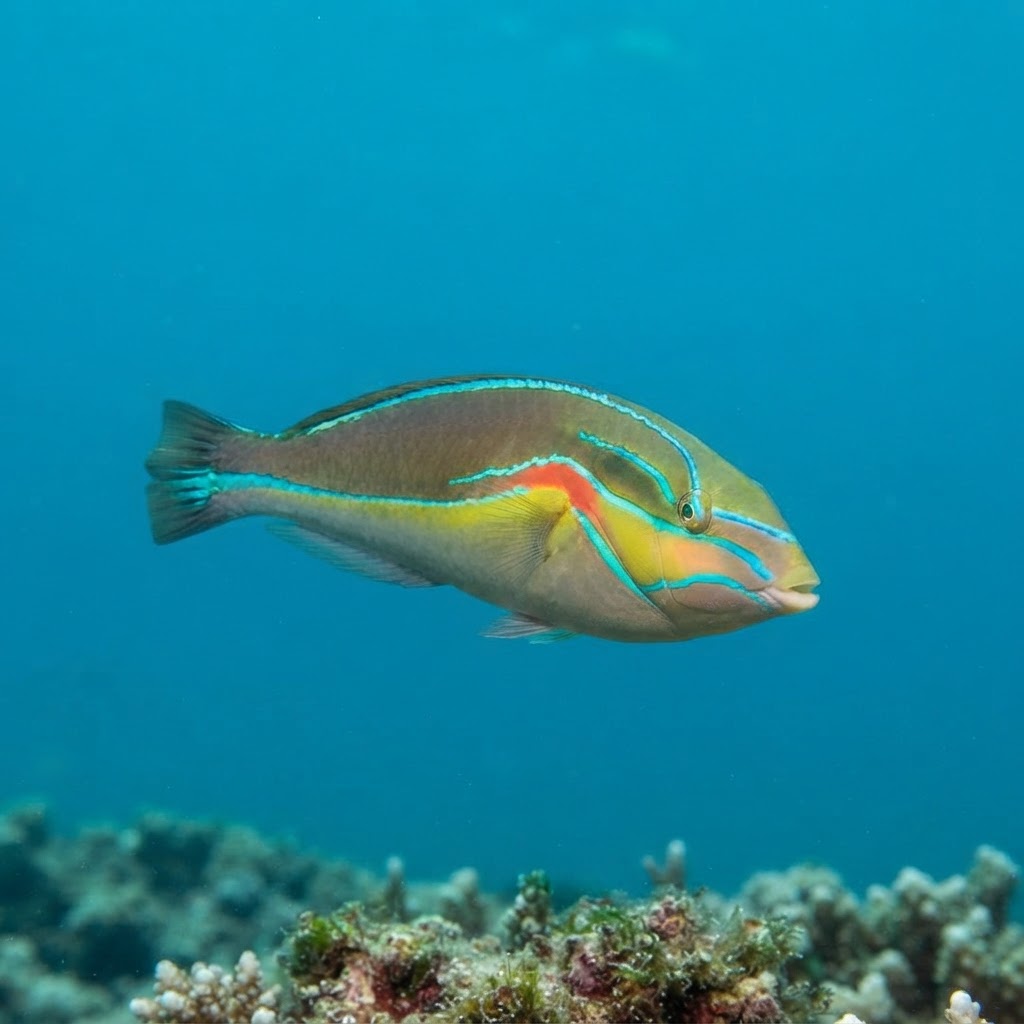
A small, torpedo-shaped wrasse, about 10 cm, that darts across the reef in quick bursts rather than swimming smoothly. Look for pale blue horizontal stripes along a greenish body and the diagnostic patch of orange-red just behind the head that gives it its name. It rarely holds still, which combined with its size makes it easy to miss unless you slow down and scan the shallows.
Expect quick, jerky movements low over the reef and in shallow rubble or sand patches, usually by itself or loosely mixing with other small wrasses rather than in tight schools. It pays divers little attention and won't hold a pose for a photo, so patience helps more than a slow approach. Most sightings come from shallower depths within the 0 to 30 m range, where light and food are both plentiful.
Like many wrasses, it likely shifts colour and pattern between juvenile and adult stages as part of a broader group-living, sex-changing life history typical of the family, though the specific pattern for this species isn't well documented for divers to key on.
No clear seasonal pattern shows up in sighting data, and with a comfortable range of roughly 24.5 to 29.3 C it holds year-round on the tropical reefs where it lives. Any month works across its Indo-Pacific range.
Most reliably logged in French Polynesia, especially around the Society Islands, and a strong presence across Australia in both Western Australia and Queensland. It also turns up consistently in the Philippines, particularly the Visayas, and shows up well in Indonesia's Nusa Tenggara and Sulawesi, plus Rarotonga in the Cook Islands.
Mapping where Red Shoulder Wrasse is logged…
The Society Islands in French Polynesia are the most reliable spot, alongside Western Australia, Queensland, and the Visayas in the Philippines. Nusa Tenggara and Sulawesi in Indonesia and Rarotonga in the Cook Islands also produce regular sightings.
There's no strong seasonal pattern in the data, and it tolerates a wide temperature range of about 24.5 to 29.3 C, so it's present on reefs throughout the year.
Look for a small, fast-moving wrasse around 10 cm with pale blue stripes on a greenish body and a distinctive orange-red patch behind the head. It moves in quick darts rather than gliding, usually low over sand or reef rubble.
They stay small, typically around 10 cm as adults, making them one of the more overlooked fish on a reef unless you're looking closely at the substrate.
No. They pose no threat to divers and simply go about their business darting around the reef, generally ignoring divers entirely.
Site and sighting data is aggregated from diver logs, iNaturalist and GBIF. For taxonomy and conservation status:
Bird Wrasses
3,632 sites