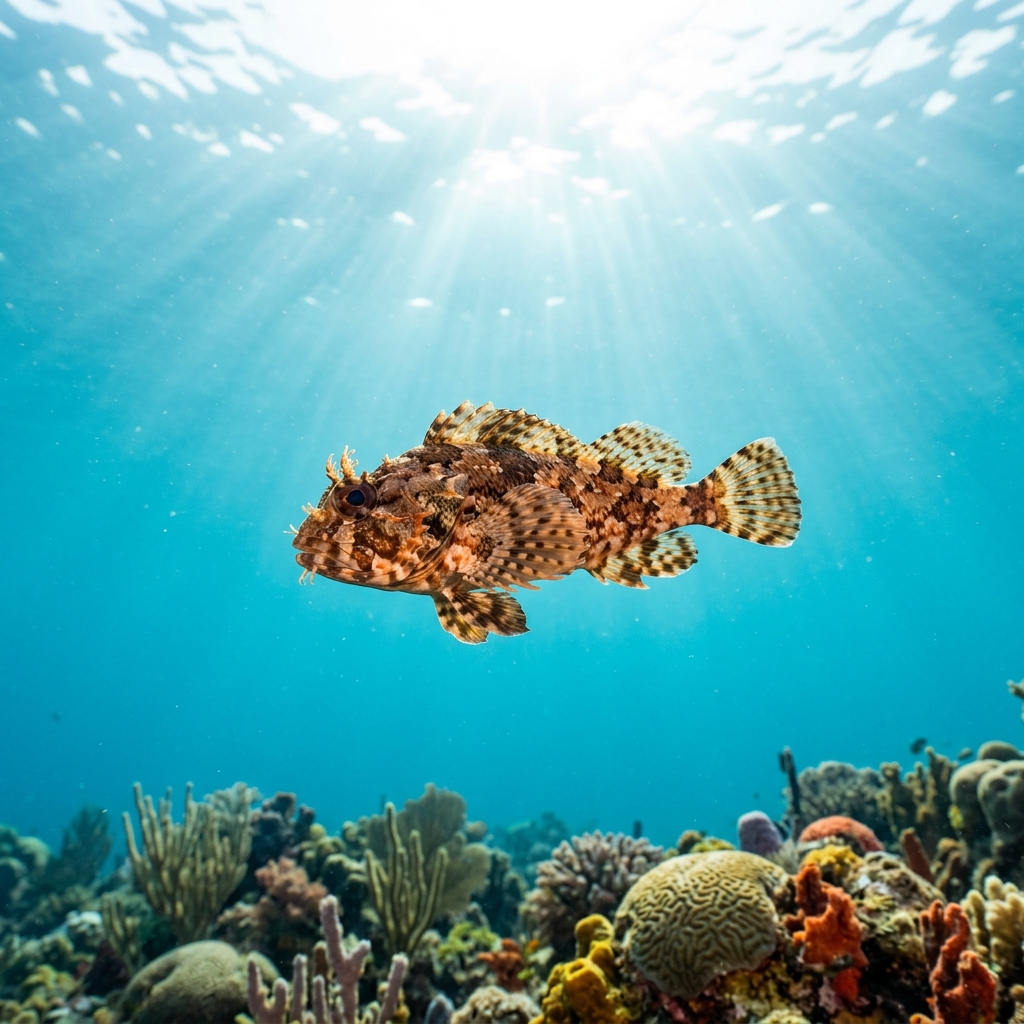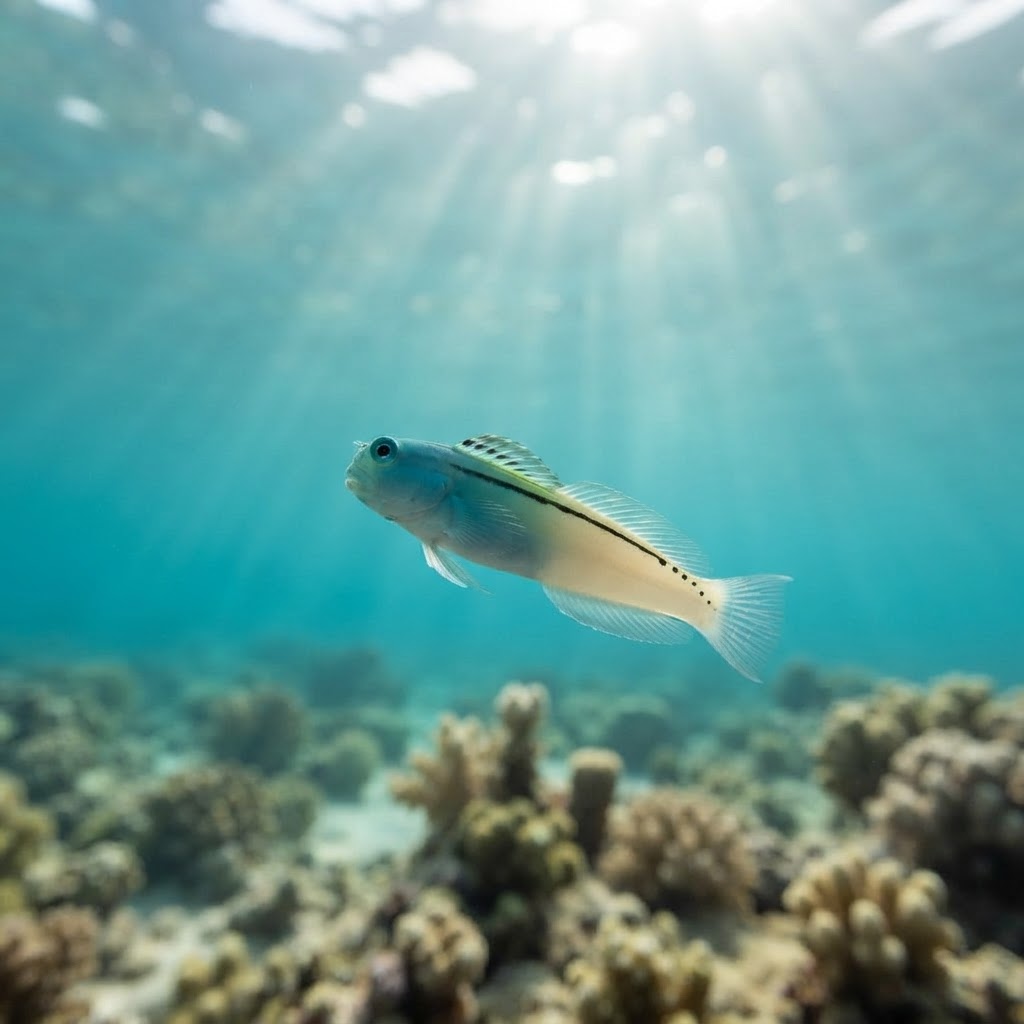
Ecsenius gravieri
A 6cm mimic that copies a venomous fangblenny, most reliably found around Aqaba, Eilat and South Sinai year-round in 25-29C water.
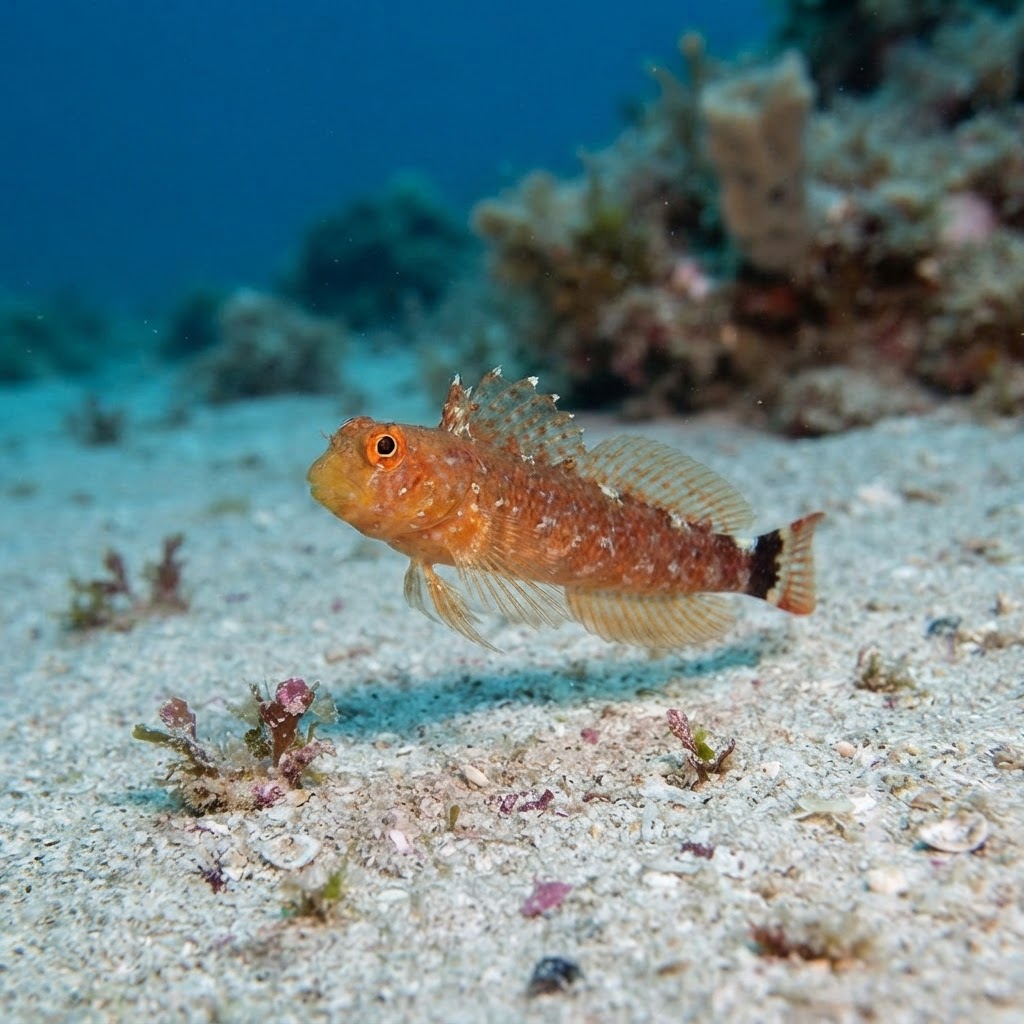
Small blenny at just 6 cm, with a dark blue-black body and a pale, almost blueish head that fades into the darker torso. It sits low against the reef, propped on its pectoral fins rather than swimming freely, and darts into a hole the moment it feels threatened. The colouring is a close copy of the venomous Red Sea fangblenny, which is exactly the point.
Look for it perched on coral rubble or dead reef structure rather than out in open water, often near cover it can dart into. It is not a fast swimmer and tends to hold its ground until a diver gets close, then slips into a crevice rather than bolting across the reef. Most sightings come from slow, close-focus looks at the substrate rather than mid-water scanning.
Its whole look is borrowed: it mimics the colour pattern of the venomous Red Sea fangblenny closely enough that other reef fish, and divers, often mistake one for the other, which is thought to buy it some protection from predators.
No clear seasonal pattern shows up in the data, and with water sitting between roughly 25 and 29 C year-round in its core range, it is a fish you can look for on any dive, any month.
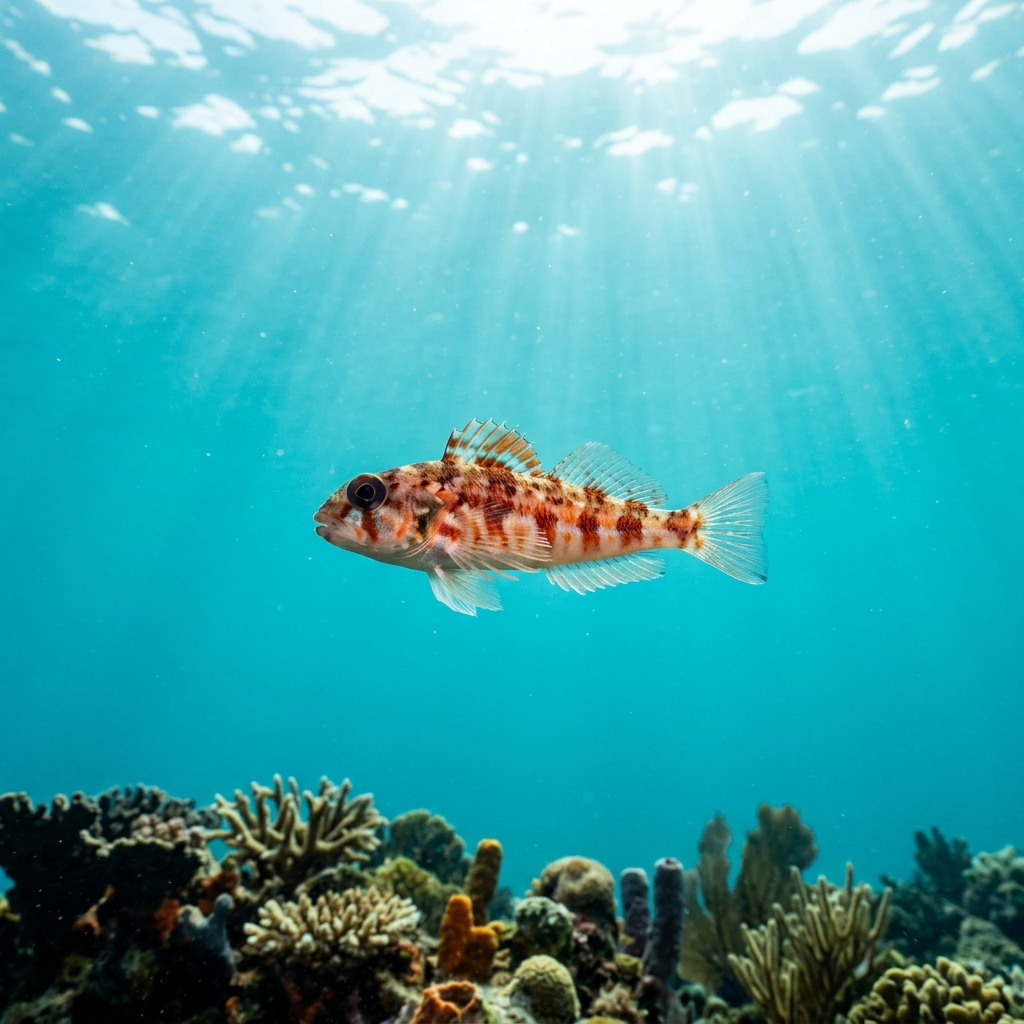
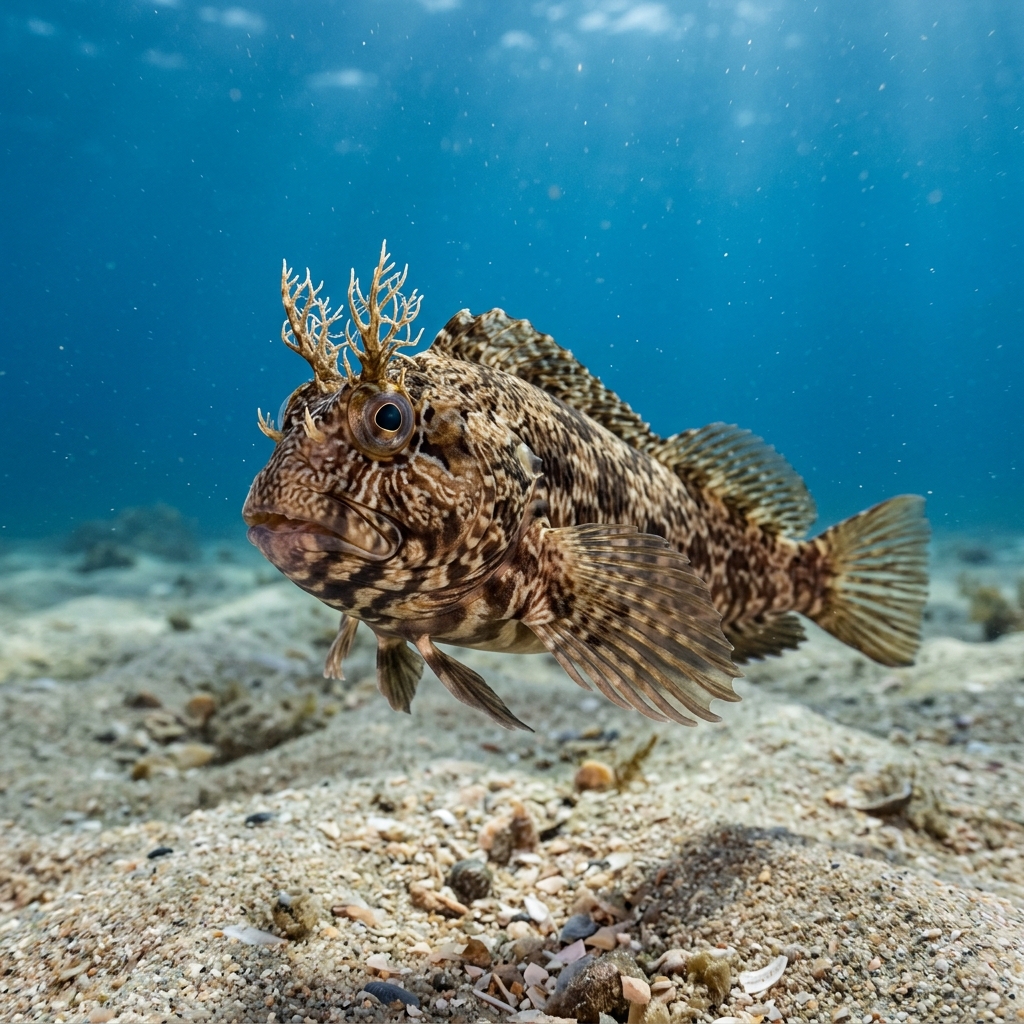
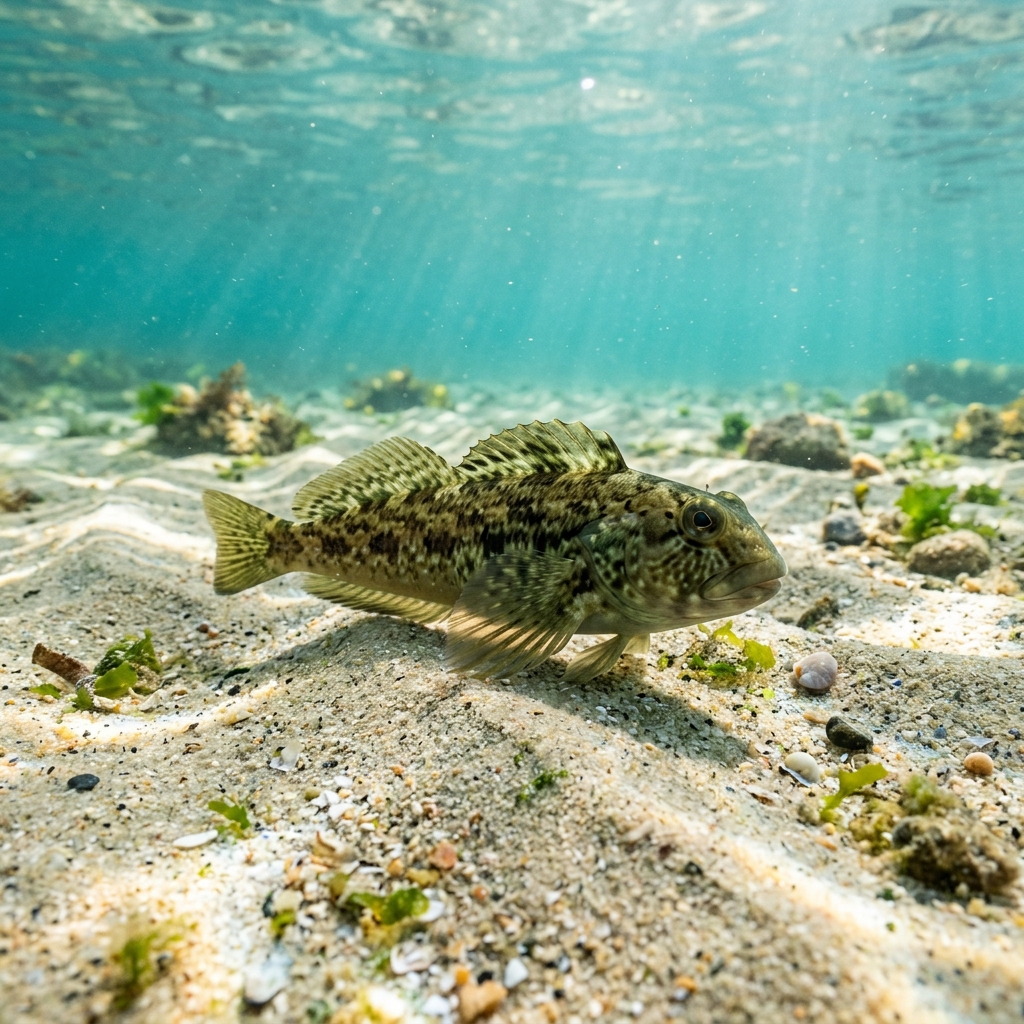
Reef neighbours a diver could mistake it for. Use the identification notes above to tell them apart.
Most reliably logged in the Gulf of Aqaba, with strong numbers around Aqaba in Jordan and Eilat in Israel, plus a solid presence through South Sinai in Egypt. Smaller numbers turn up further south in Marsa Alam and the Red Sea Riviera, and it has also been recorded at Sudan's Central Reefs.
Mapping where Red Sea Mimic Blenny is logged…
It is most commonly logged in the Gulf of Aqaba, particularly around Aqaba, Jordan and Eilat, Israel, with a solid presence across South Sinai in Egypt too. Smaller numbers appear further south at Marsa Alam and even down into Sudan's Central Reefs.
There is no strong seasonal pattern in sightings, and it lives in water that stays a comfortable 25 to 29 C most of the year, so divers spot it across all seasons rather than in one particular window.
Look for a tiny fish, around 6 cm, with a dark blue-black body and a paler head, perched on rubble or dead coral rather than swimming in open water. It relies on stillness and a quick retreat into a crevice rather than fleeing across the reef.
They stay small, topping out at around 6 cm, so they are easy to miss unless you are looking closely at rubble patches and dead coral.
It copies the colour pattern of the venomous Red Sea fangblenny so closely that predators, and other fish, tend to treat it with the same caution, giving it a defensive advantage without needing venom of its own.
Site and sighting data is aggregated from diver logs, iNaturalist and GBIF. For taxonomy and conservation status:
Rusty Blenny
2,605 sites