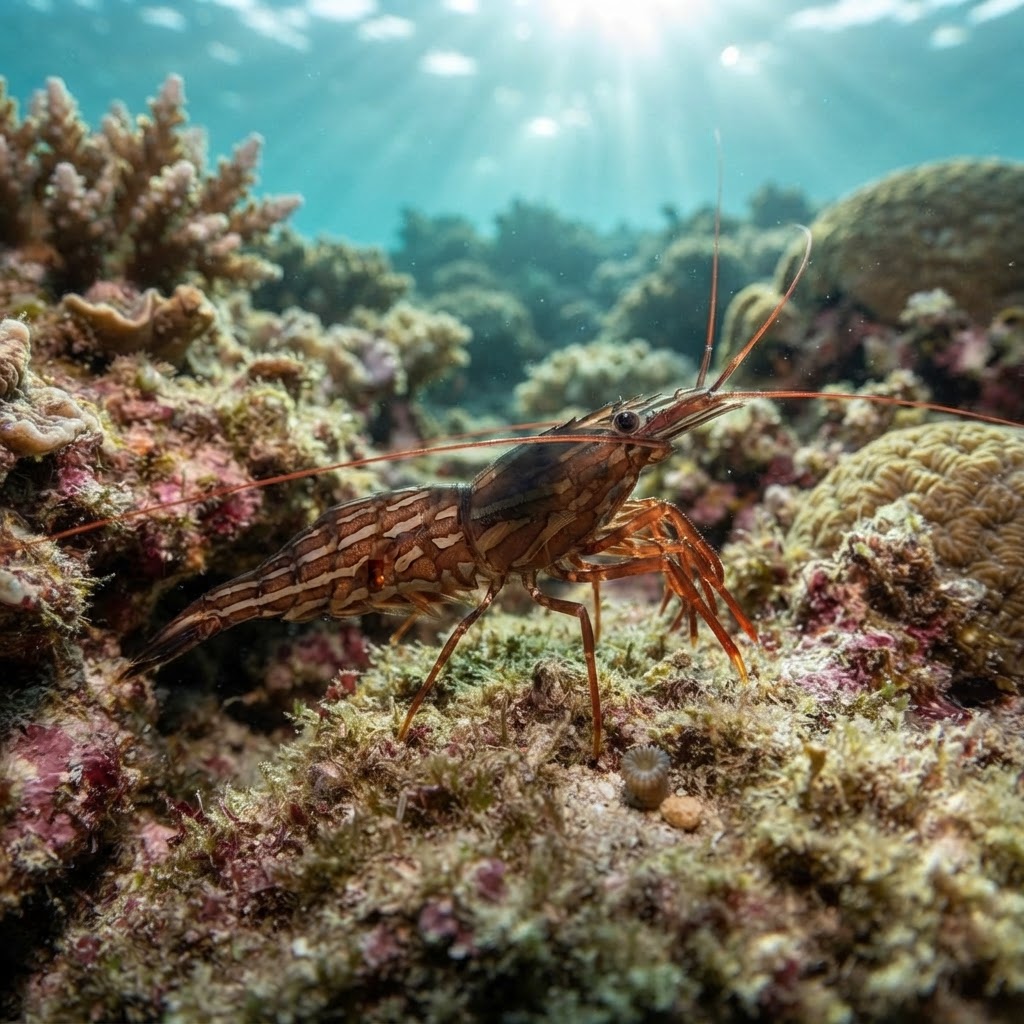
Lysmata californica
Red translucent shrimp with white stripes, rare but reliable in California kelp forests at 12 to 19 C, seen year-round.
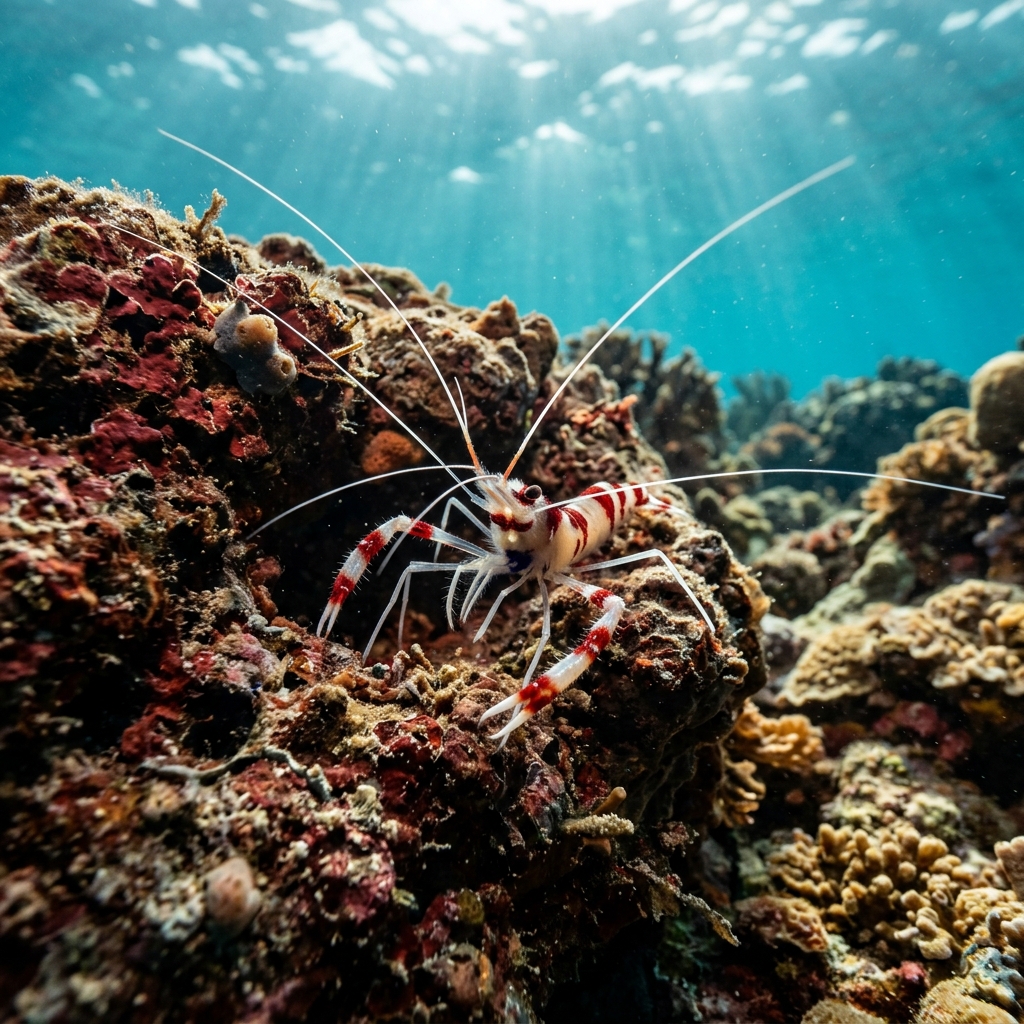
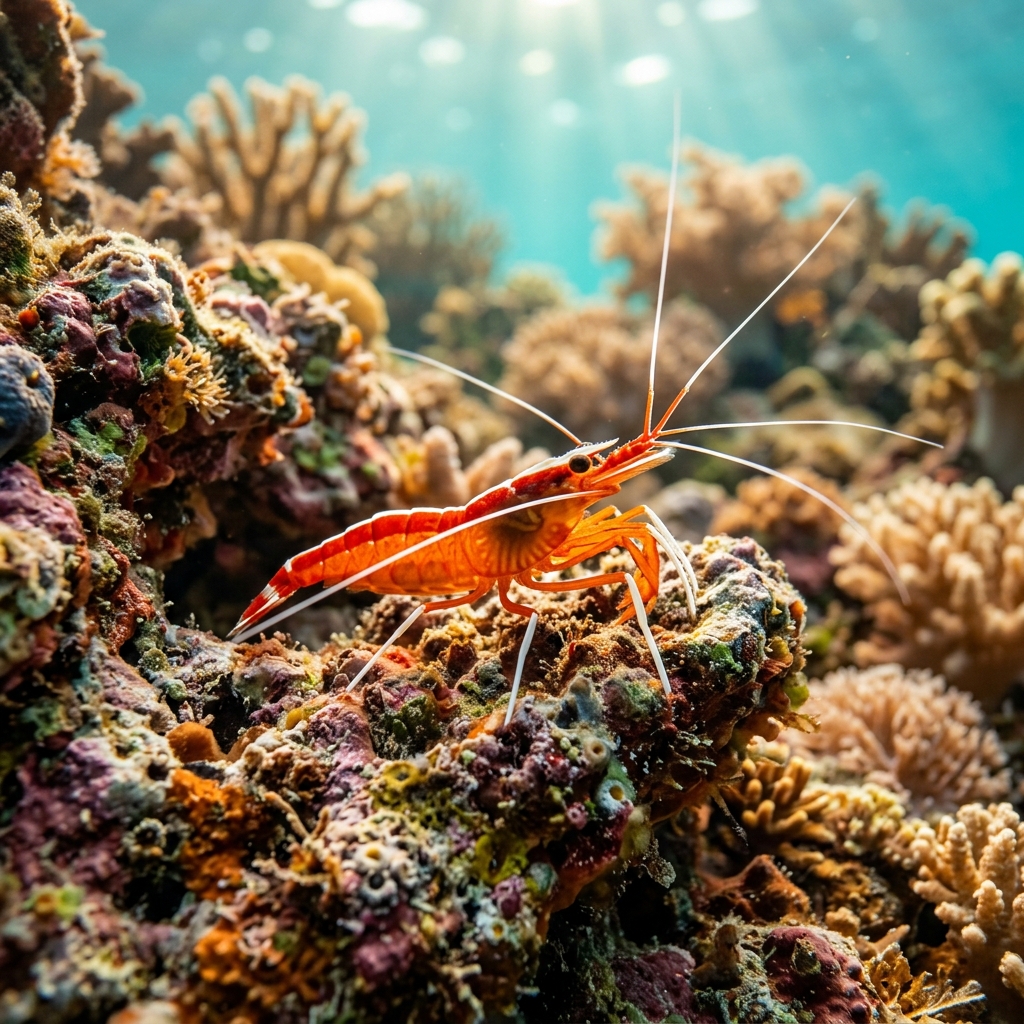
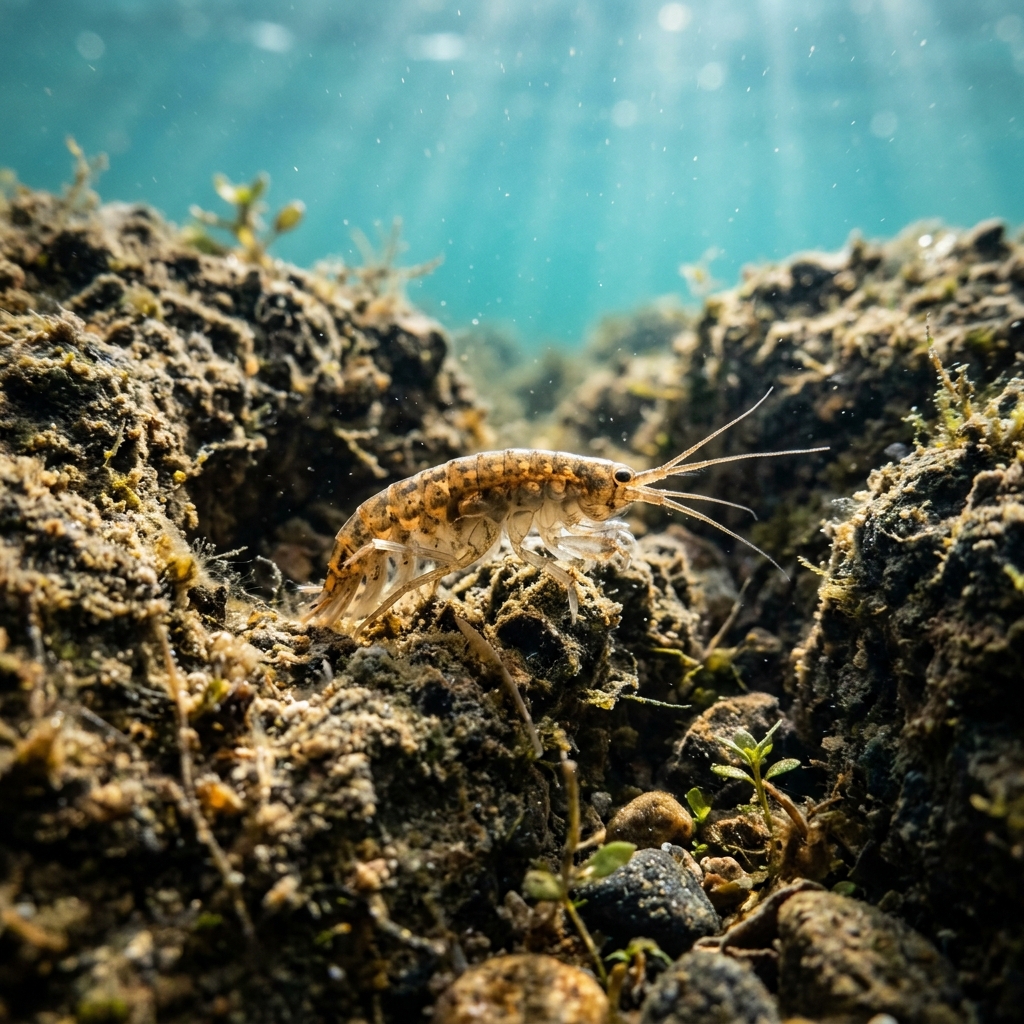
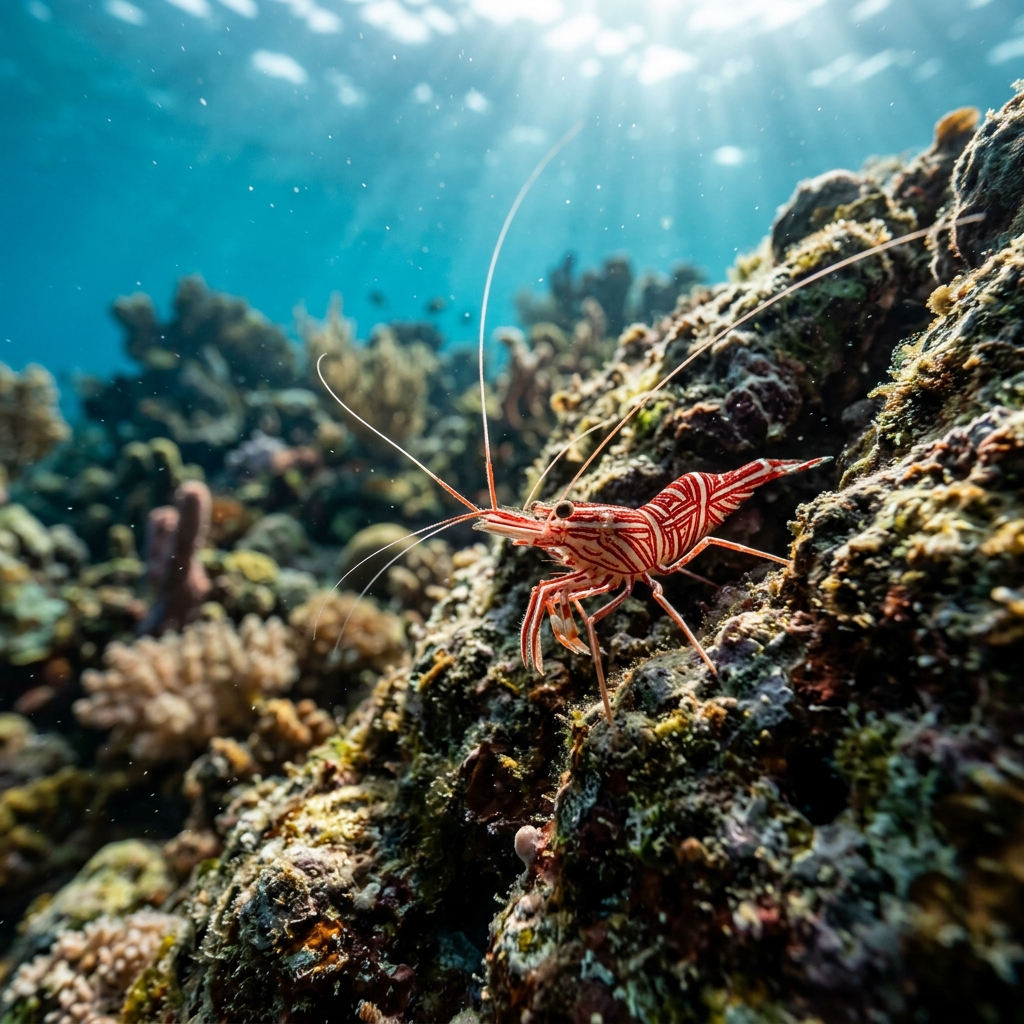
Small shrimp, around 5 cm, with a translucent red to maroon body broken by bold white stripes running head to tail and long white antennae. Look for it tucked into rock crevices or under ledges rather than out in the open, often with only the antennae showing first. The long, thin walking legs and see-through body give it away against the darker rock.
Divers typically find these tucked into crevices, under rock ledges or among kelp holdfasts during the day, staying close to cover rather than sitting out in open view. They're not skittish so much as just hard to spot, small and well camouflaged against dark rock, so slow, careful scanning with a torch into cracks and overhangs is the usual way to turn one up.
Like other Lysmata shrimp, this species is a simultaneous hermaphrodite, meaning individuals carry both male and female reproductive function at once, an unusual setup among reef invertebrates.
No clear seasonal pattern shows up in the data, and the observed temperature range of 12.3 to 18.9 C spans most of the diving year on the California coast, so treat it as a year-round possibility rather than a seasonal target.
Most reliably logged along the California coast in the United States, where it turns up in rocky reef and kelp forest habitat, with a smaller presence around North Island, New Zealand. California sites make up the bulk of confirmed sightings, so that's the region to target if you want a real shot at one.
Mapping where Red Rock Shrimp is logged…
California is by far the strongest region, with sightings logged across rocky reef and kelp forest sites along the coast. A smaller number of records come from North Island, New Zealand.
There's no strong seasonal pattern in the sighting data, and the species tolerates a fairly wide temperature range, so it's realistic to look for one on any dive in its range rather than planning around a specific month.
Look for a small, translucent red shrimp with clean white stripes running along its body and long white antennae, usually spotted tucked into a crevice or under a rock ledge rather than out swimming.
They stay small, typically around 5 cm long, which along with their crevice-hiding habit makes them easy to miss without a careful, close look at the reef.
No. They pose no threat to divers and will simply retreat further into their crevice if disturbed.
They're simultaneous hermaphrodites, functioning as both male and female at the same time, a trait shared with several other Lysmata cleaner shrimp species.
Site and sighting data is aggregated from diver logs, iNaturalist and GBIF. For taxonomy and conservation status:
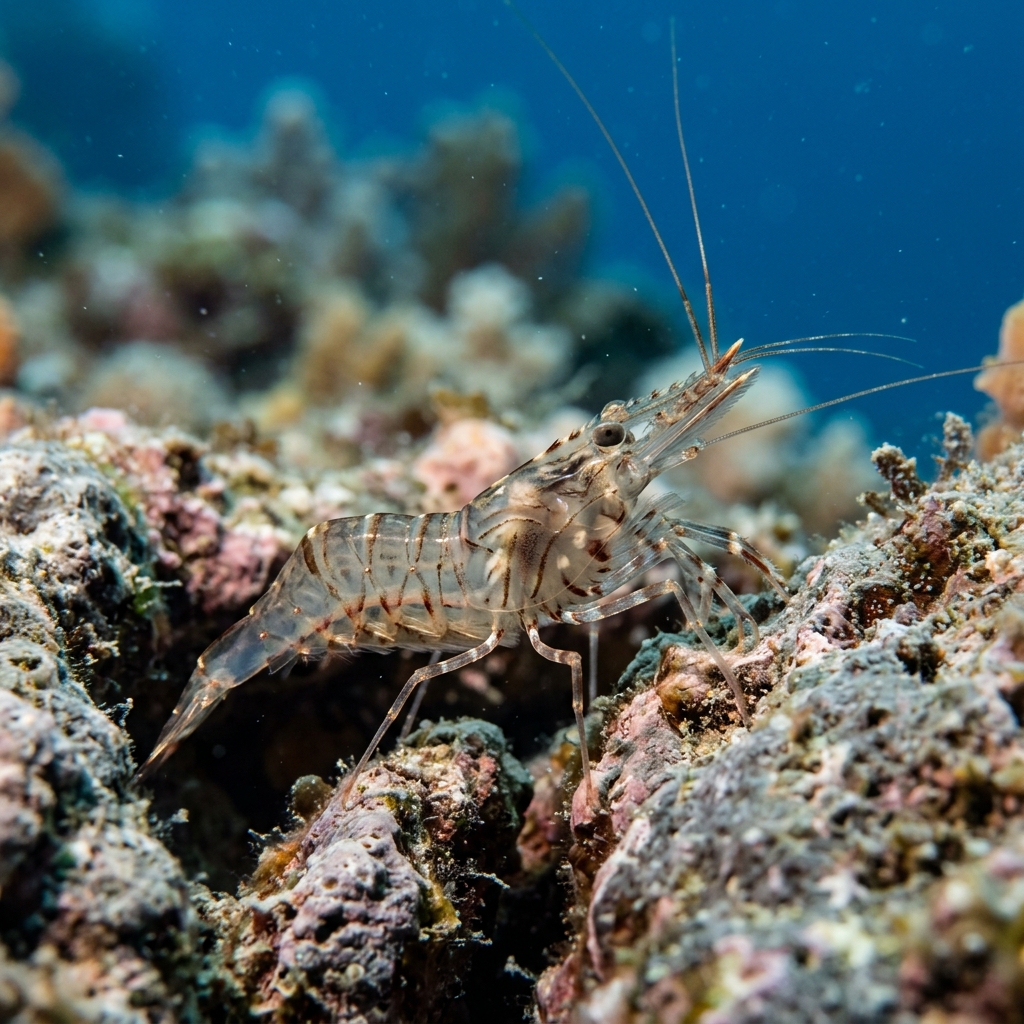
Rockpool Prawn
2,179 sites