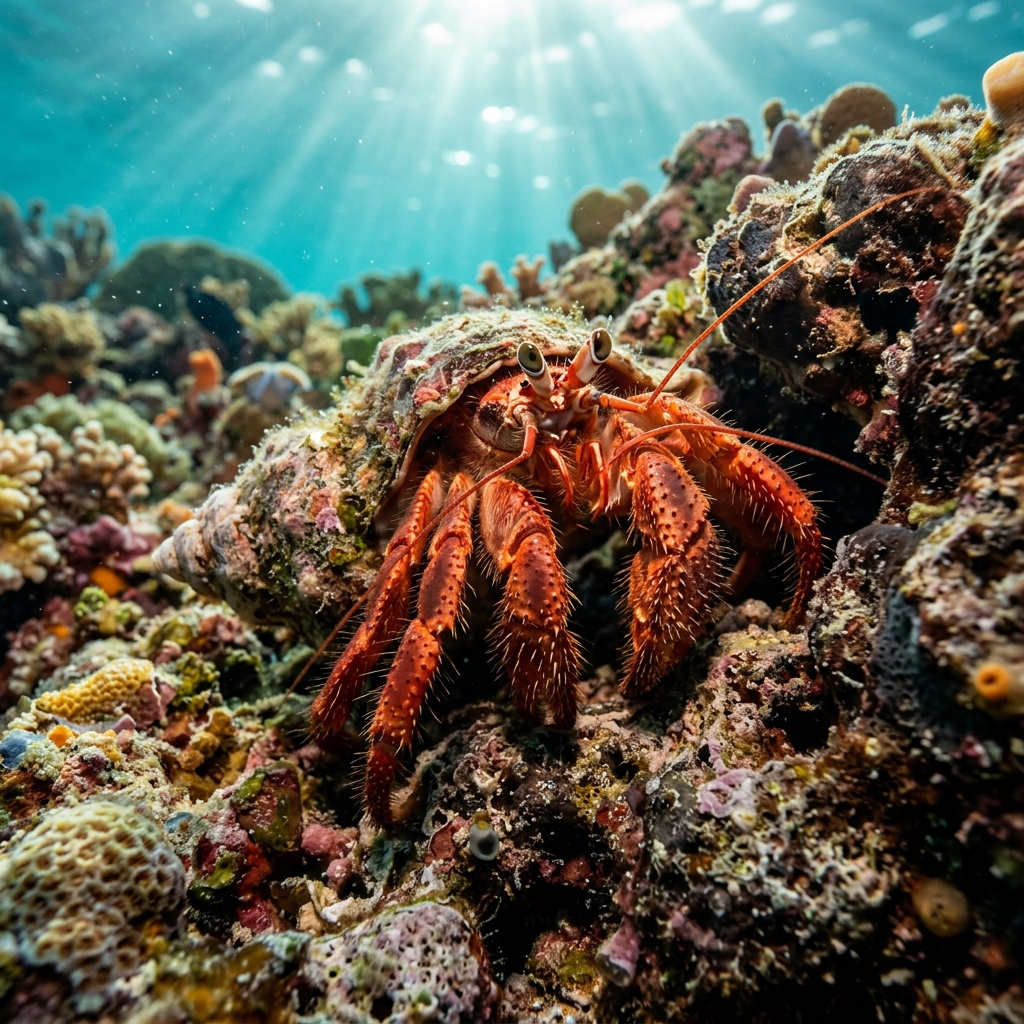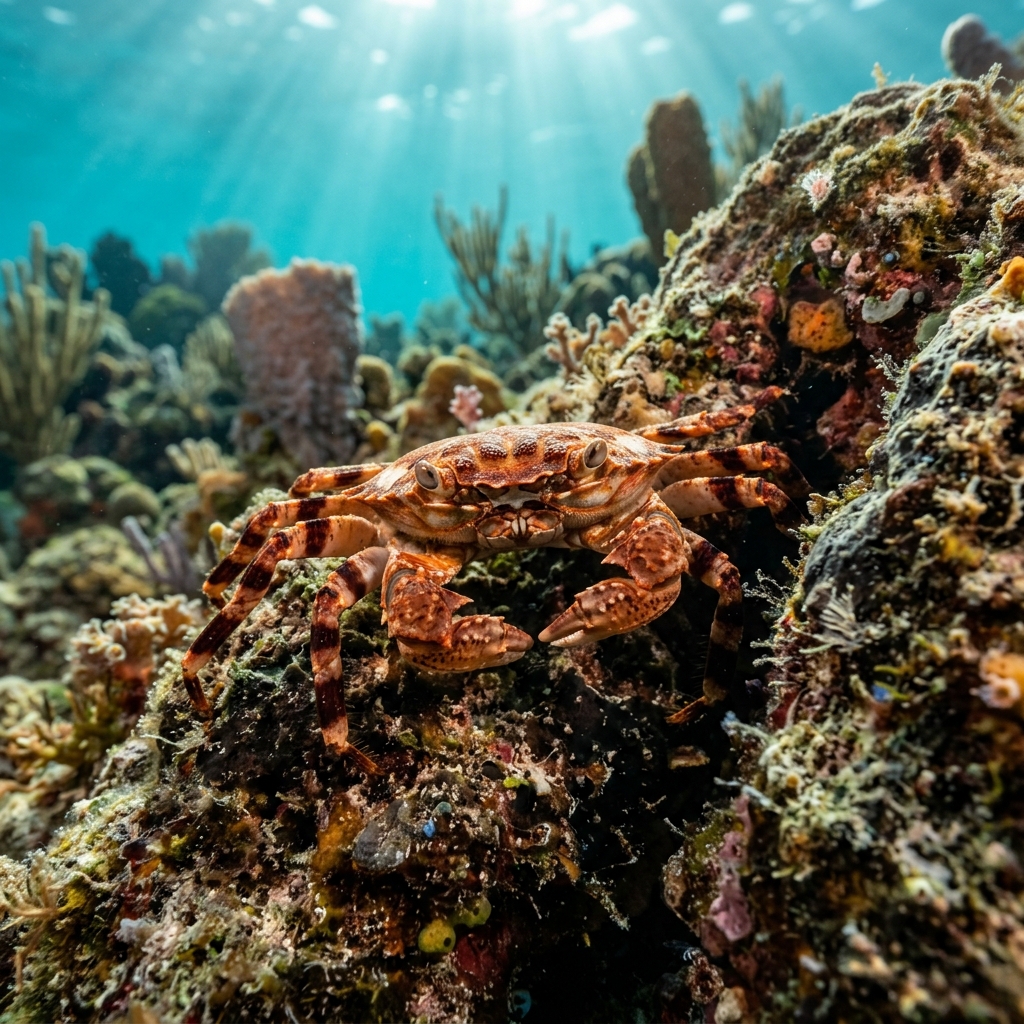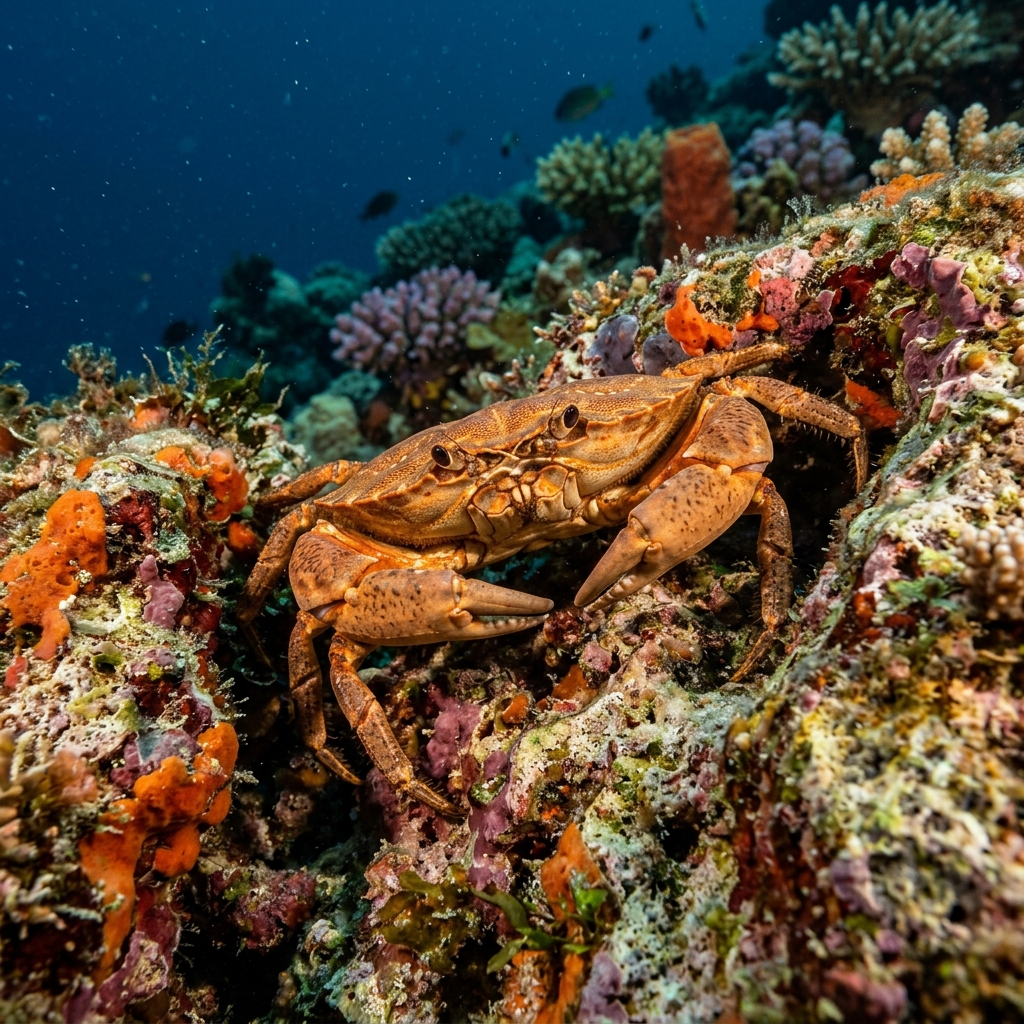
Cancer productus
Brick-red crabs with black-tipped claws turn up on cool British Columbia and Pacific Northwest dives year-round, often tucked under ledges at 8.5-14.5C.
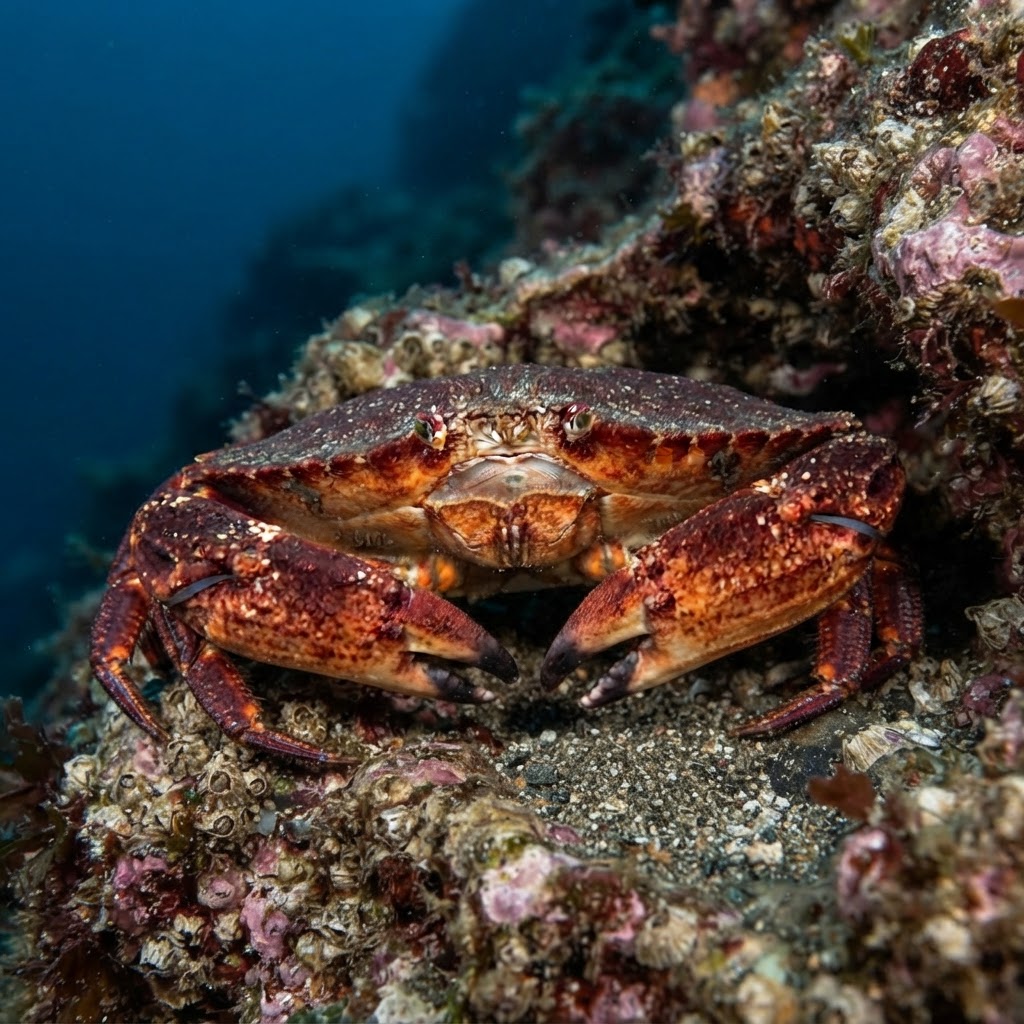
Look for a broad, brick-red to purplish-red carapace with a fan-shaped outline and black tips on both claws, the single most reliable ID mark. It grows to around 14 cm across the shell, chunky enough to stand out against grey rock and gravel. The claws themselves are noticeably heavy and rounded compared with the slender pincers of most reef crabs, built for crushing rather than picking.
Divers most often find it wedged under rocky ledges, in crevices, or half-buried in gravel and sand on the seafloor, usually alone rather than in groups. It tends to hold its ground or shuffle backward into cover rather than bolt when a diver approaches, and it is most active scavenging and hunting small prey after dark or in low light. Most logs describe it as an uncommon to common sighting rather than something you'll see on every dive.
It is a capable predator as well as a scavenger, using those heavy black-tipped claws to crack open barnacles and even smaller crabs, including its own molted shells.
Sightings show no clear seasonal pattern, so treat it as a year-round find. It sits comfortably in cold water between about 8.5 and 14.5C, which matches the Pacific Northwest's temperature range for most of the year.
This is a Pacific coast crab through and through, most commonly logged in British Columbia, Canada, and across the Pacific Northwest region of the United States. Divers also find it with some regularity in California, and it turns up occasionally as far north as Alaska.
Mapping where Red Rock Crab is logged…
British Columbia in Canada is the strongest area, followed by the Pacific Northwest region of the United States. California and Alaska also produce sightings, though less frequently.
There is no strong seasonal pattern in the sighting data, so it can be found year-round in its cold-water range, which sits between about 8.5 and 14.5C.
Check for a fan-shaped brick-red to purplish shell up to about 14 cm across, paired with claws that have distinct black tips. Its heavy, rounded pincers set it apart from thinner-clawed reef crabs.
They typically reach around 14 cm across the shell, making them one of the larger crabs a diver will encounter along rocky Pacific coastlines.
No, they pose no real danger to divers. They may pinch if handled directly, so it is best to leave them undisturbed under their ledges and in their crevices.
Its thick, black-tipped claws are strong enough to crush barnacles and smaller crabs, including molted shells of its own kind, making it as much a hunter as a scavenger.
Site and sighting data is aggregated from diver logs, iNaturalist and GBIF. For taxonomy and conservation status:
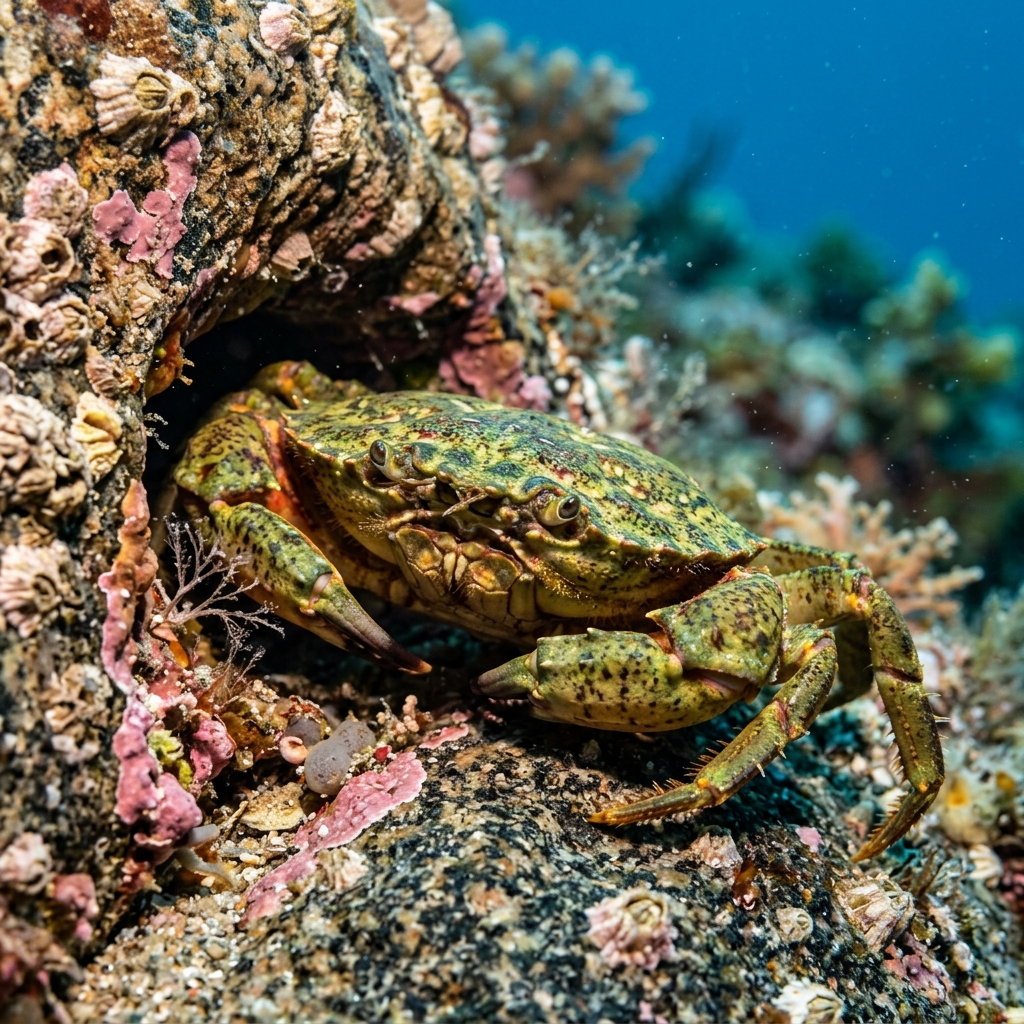
European Green Crab
2,469 sites