Mullus barbatus
Rusty-pink bottom feeder with barbels, most reliably spotted in Catalonia and the Ionian Islands in cool 13-16C water.
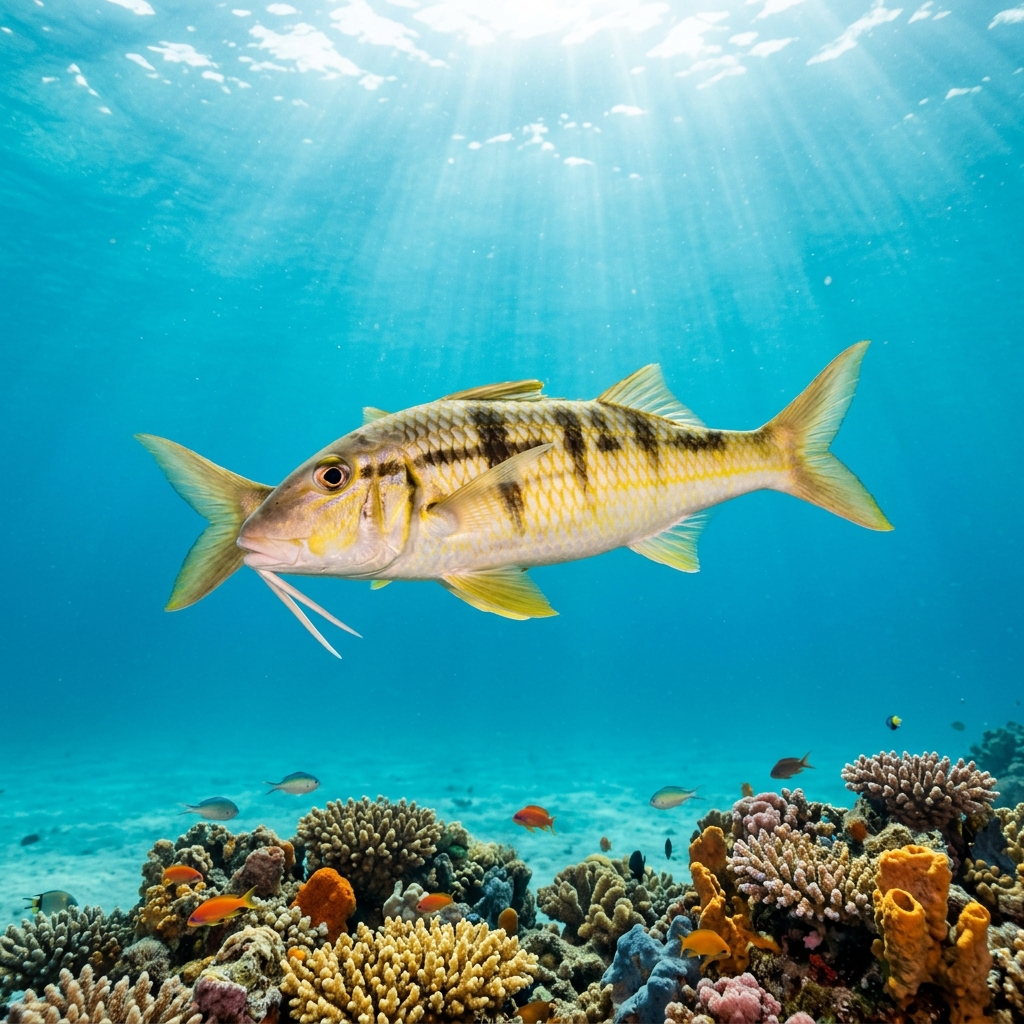
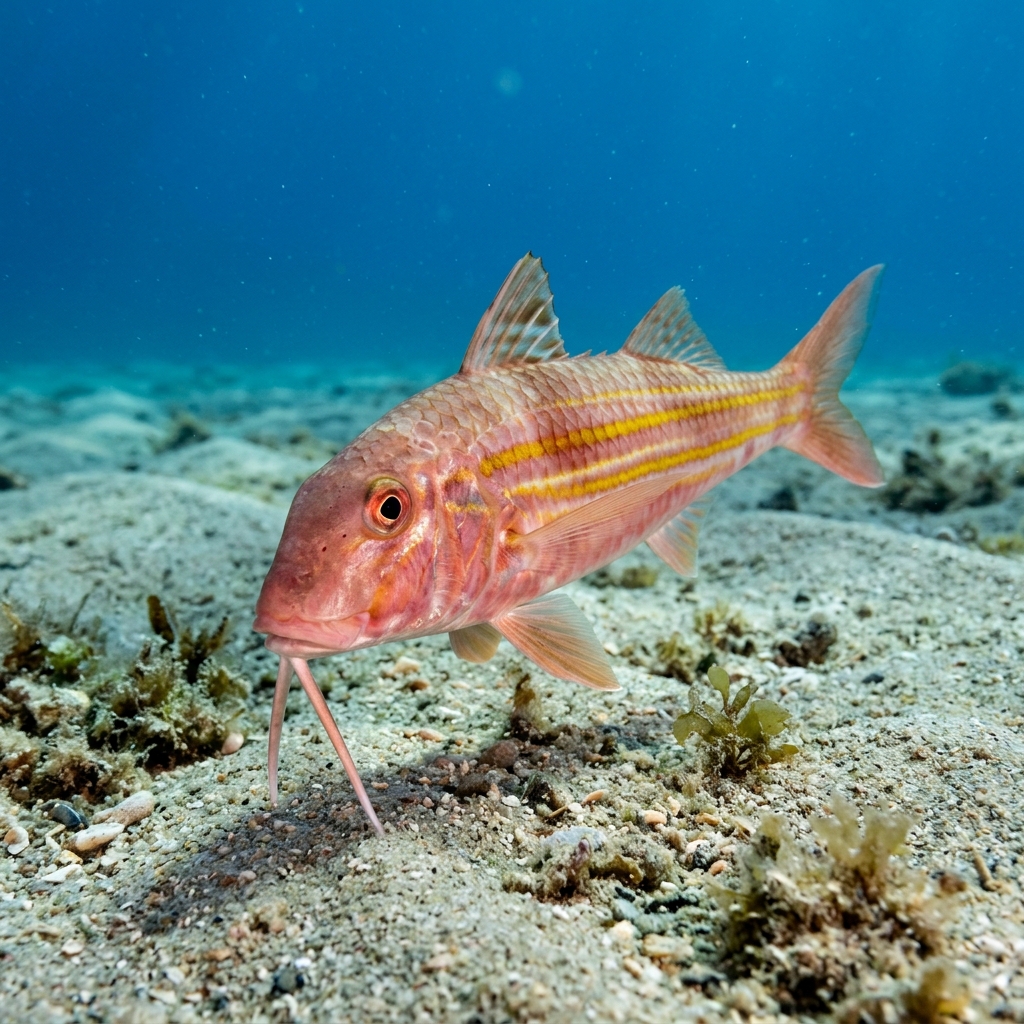
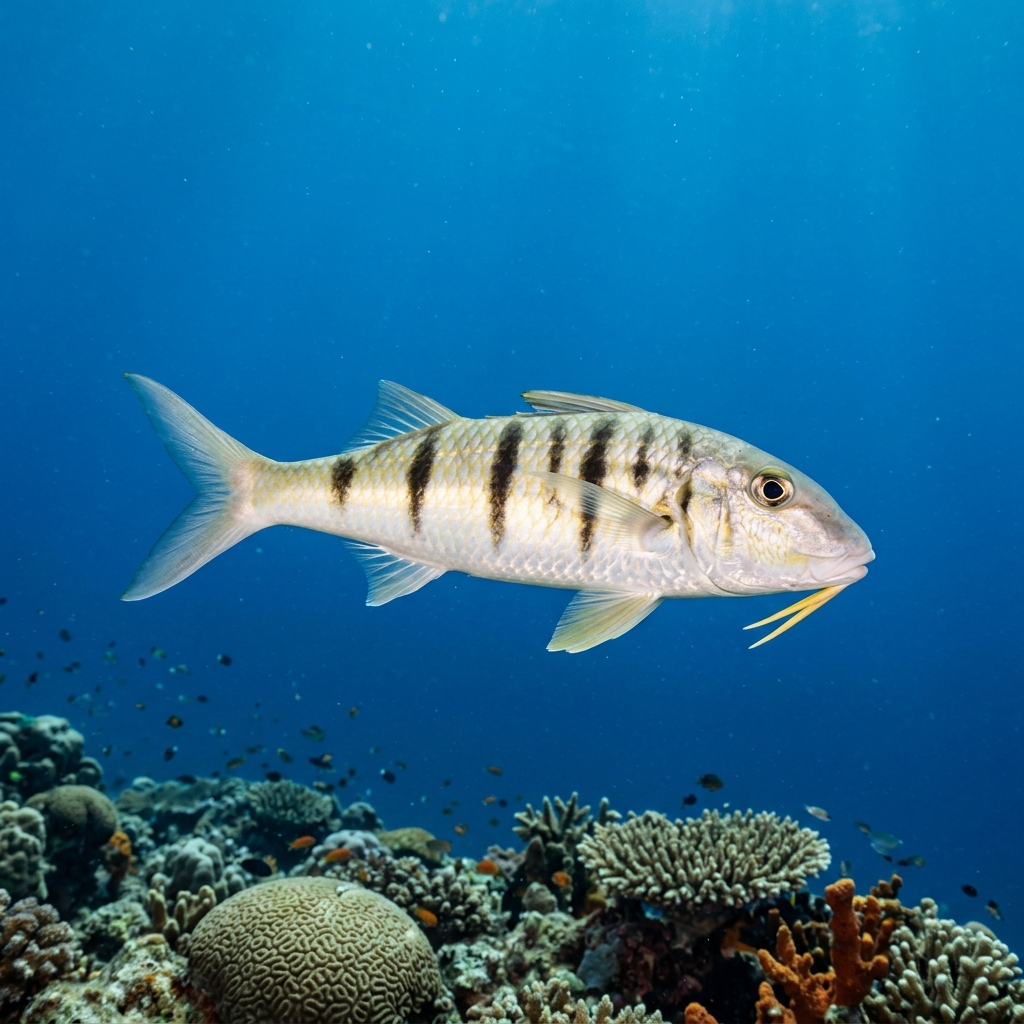
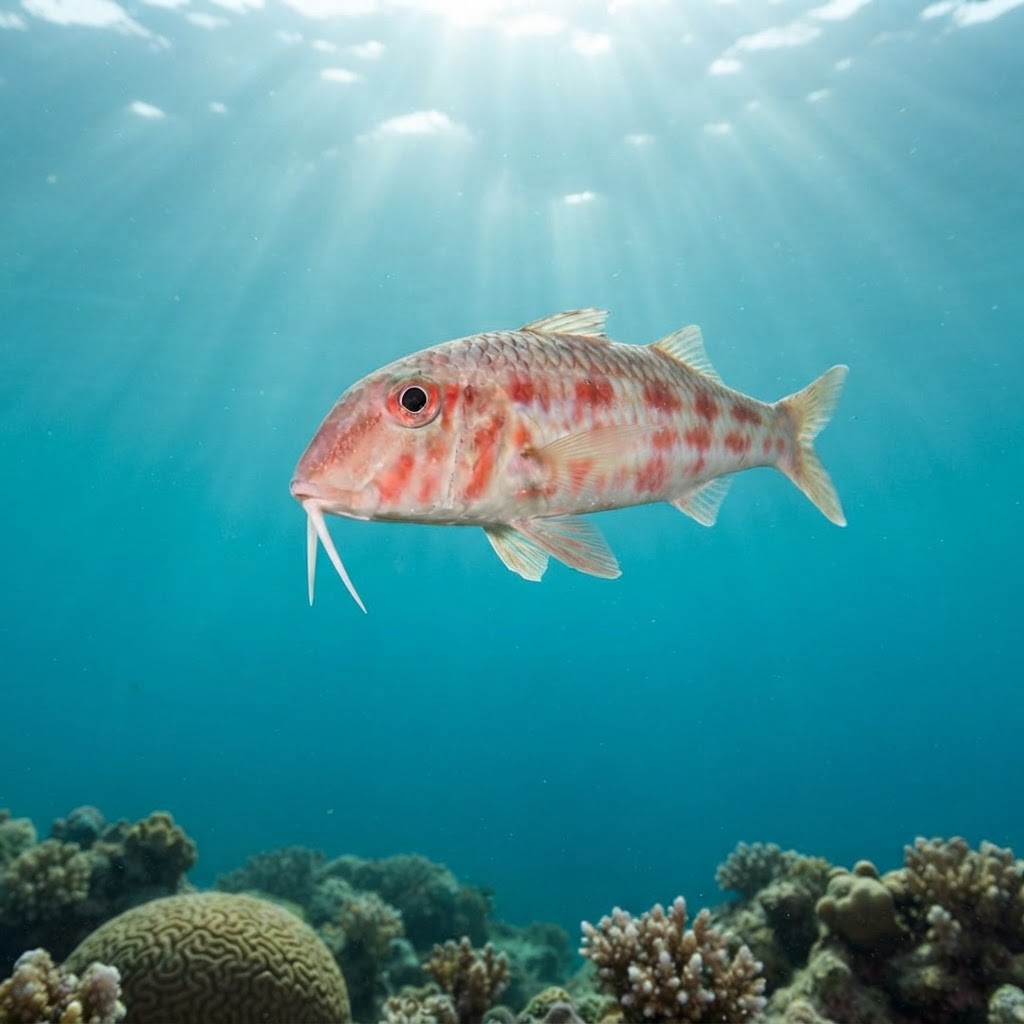
Slim, torpedo-shaped body around 27 cm, coloured pale pink to reddish with faint yellow stripes running along the flanks. The giveaway is the pair of long, sensitive barbels under the chin, constantly probing the sand or rubble. It swims low over the bottom rather than out in open water, often tilted nose-down as it feeds.
Look for it working sandy patches, seagrass edges and rubble close to the bottom, barbels sweeping side to side as it hunts for buried worms, crustaceans and small molluscs. It rarely schools in any numbers worth mentioning at these sites and tends to ignore divers who keep some distance, darting off only if approached directly. Most sightings are of single fish or loose pairs rather than groups.
Those chin barbels aren't just for show: they're loaded with chemical and touch sensors that let it detect prey buried in sand without seeing it, essentially letting it taste the seabed before it digs.
No clear seasonal pattern shows up in the data, so treat it as a year-round sighting on Mediterranean dives. It's logged in water running 13.1 to 15.9C, which points to cooler-season or deeper, shaded reef and sand habitat rather than a summer-only appearance.
Most consistently logged in Catalonia, Spain and the Ionian Islands, Greece, with solid numbers also coming out of Campania, Italy, Kvarner, Croatia, and Occitanie and the French Riviera in France. Spain and Greece between them account for the bulk of logged sightings, though it turns up as a scattered, uncommon find across the wider Mediterranean and into the Black Sea coast of Russia.
Mapping where Red Mullet is logged…
Catalonia in Spain and the Ionian Islands in Greece are the most reliable regions, with good numbers also reported from Campania in Italy, Kvarner in Croatia, and the Occitanie and French Riviera coasts of France.
There's no strong season in the sighting data, so it's considered a year-round find on Mediterranean dives, typically in cooler water between about 13 and 16C.
Look for a slim pinkish-red fish around 27 cm long, cruising low over sand or rubble with two long barbels hanging from its chin that it uses to probe the bottom for food.
They typically reach around 27 cm in length, making them a small to medium-sized reef and sand-dweller rather than an eye-catching giant.
No, they pose no threat to divers. They're bottom feeders that keep to themselves and will simply move off if you get too close.
Their chin barbels carry sensory organs that detect prey hidden in sand by touch and chemical cues, letting them find buried worms and crustaceans without needing to see them.
Site and sighting data is aggregated from diver logs, iNaturalist and GBIF. For taxonomy and conservation status:
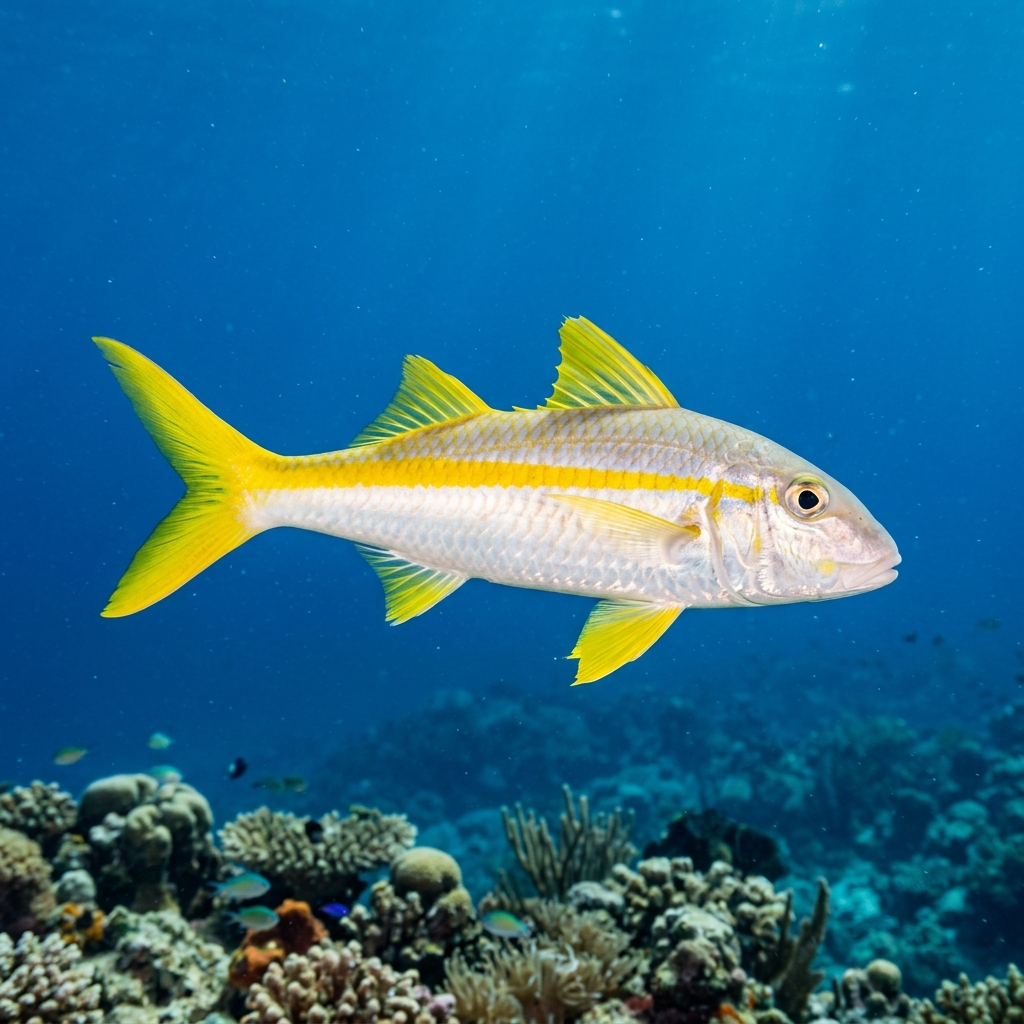
Yellowfin Goatfish
2,241 sites