Hemilepidotus hemilepidotus
Rare but rewarding: find Red Irish Lord camouflaged on rock in British Columbia's chilly 1 to 8C water, any month of the year.
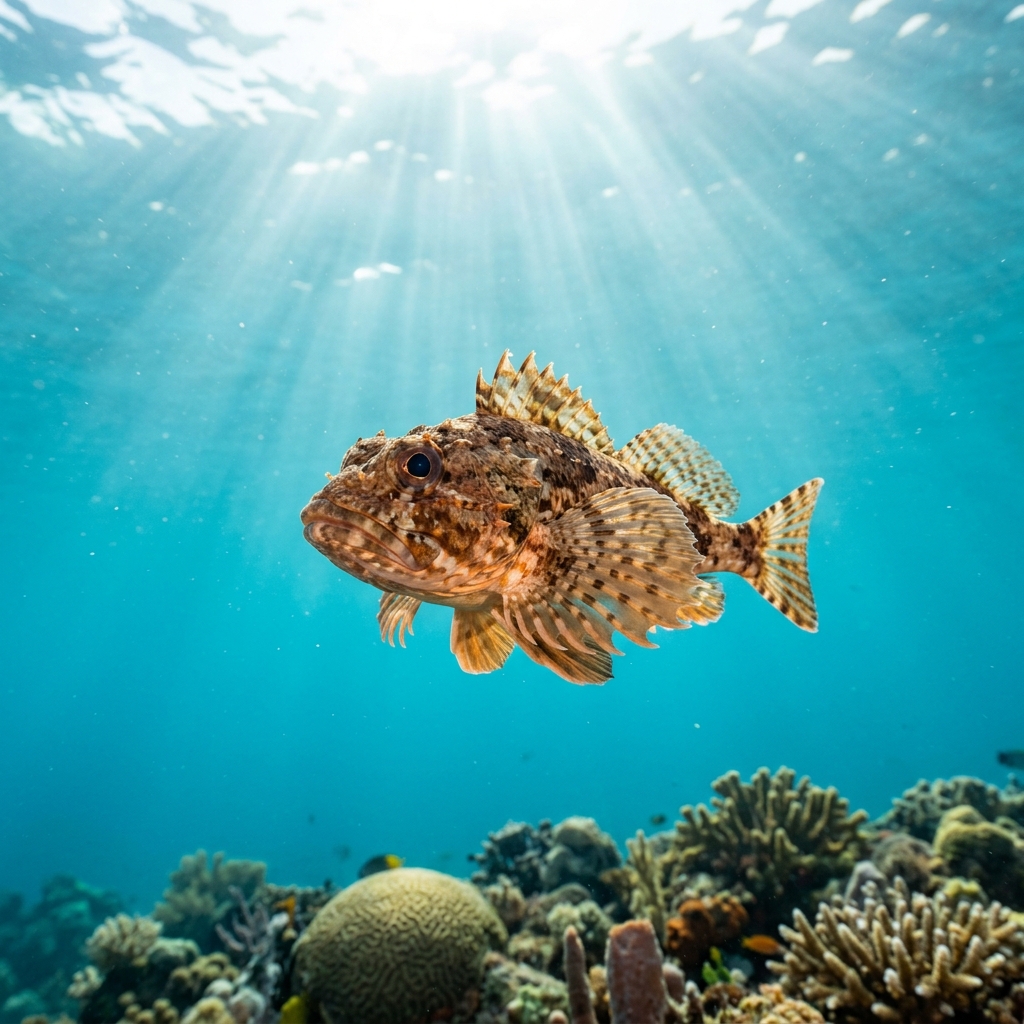
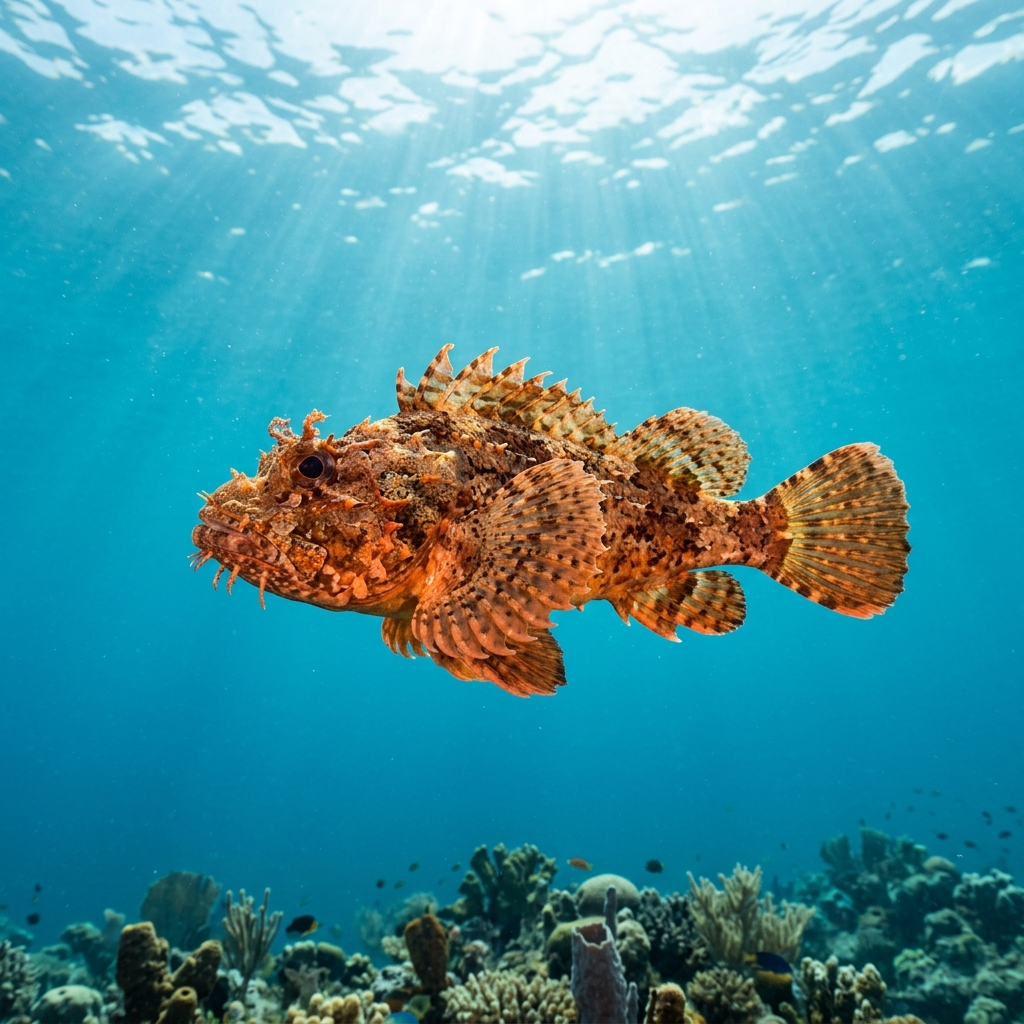
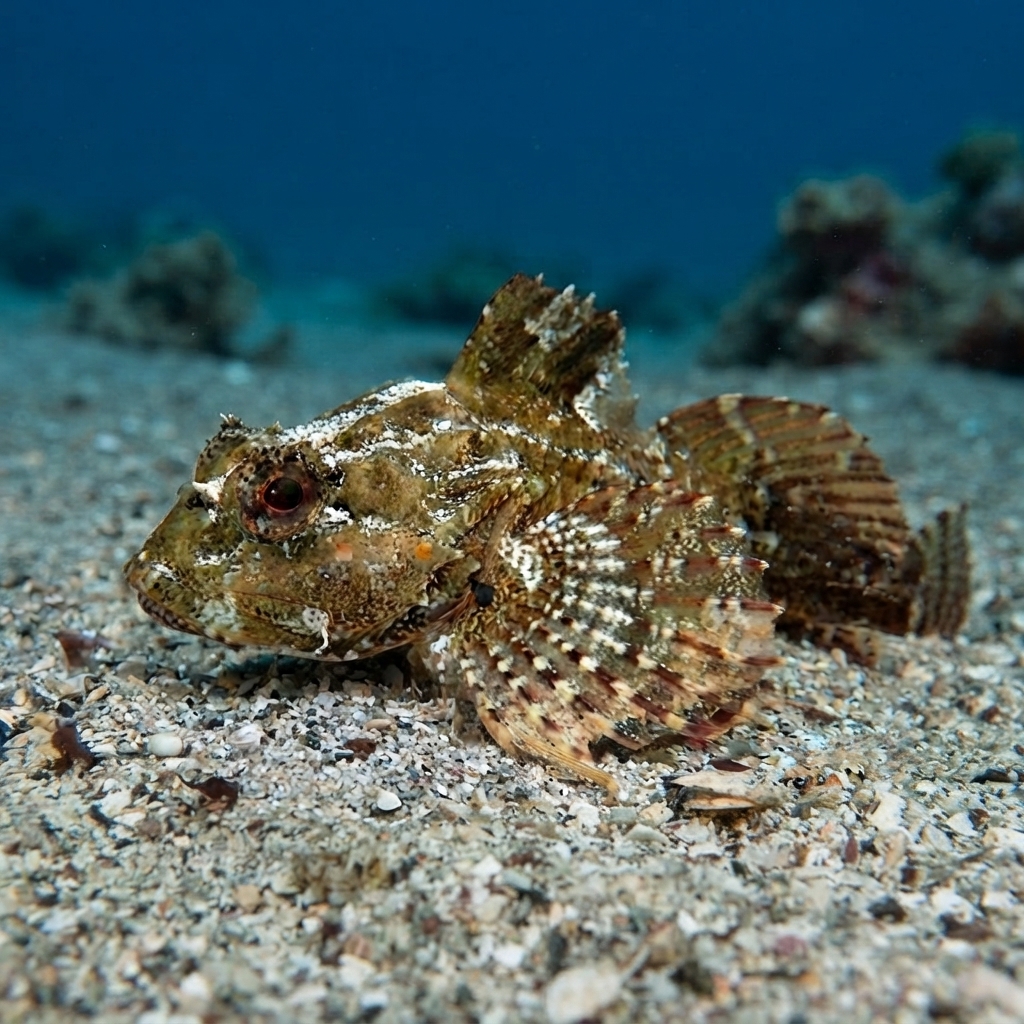
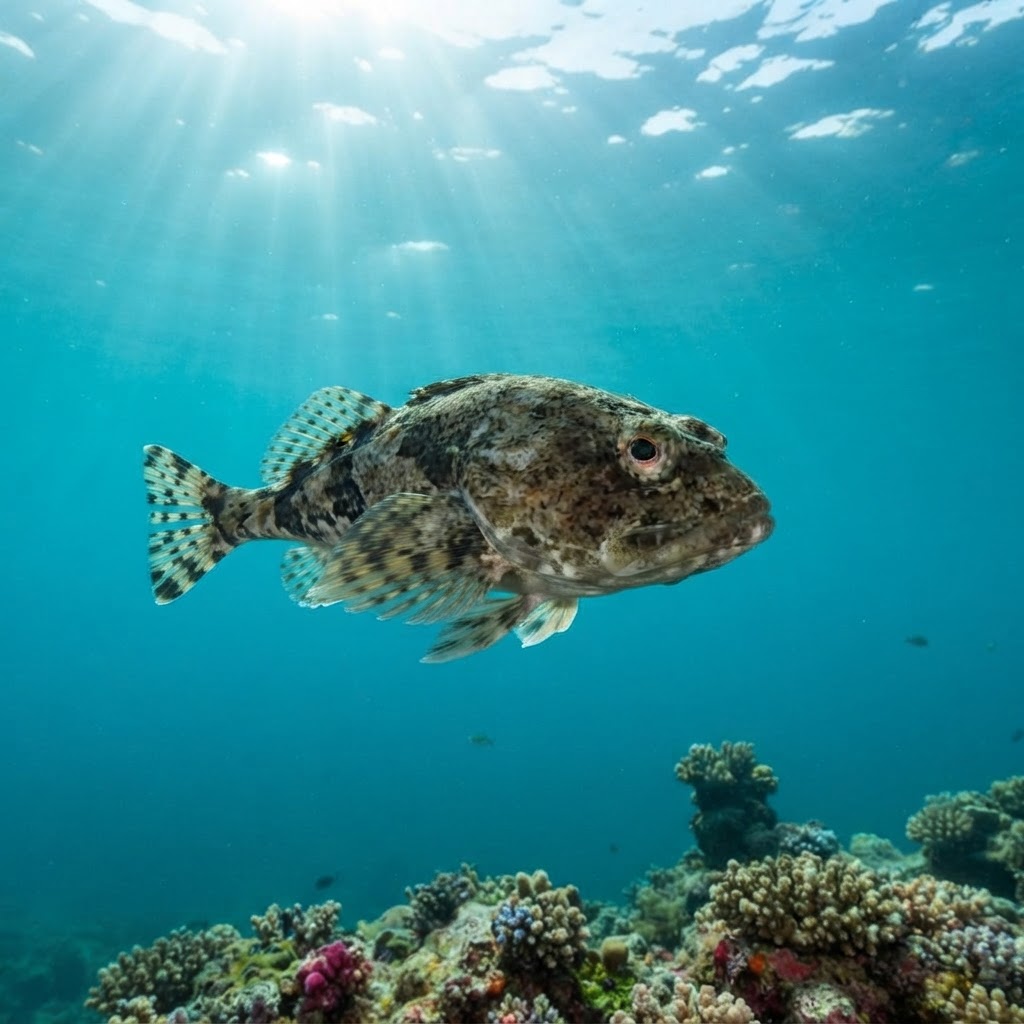
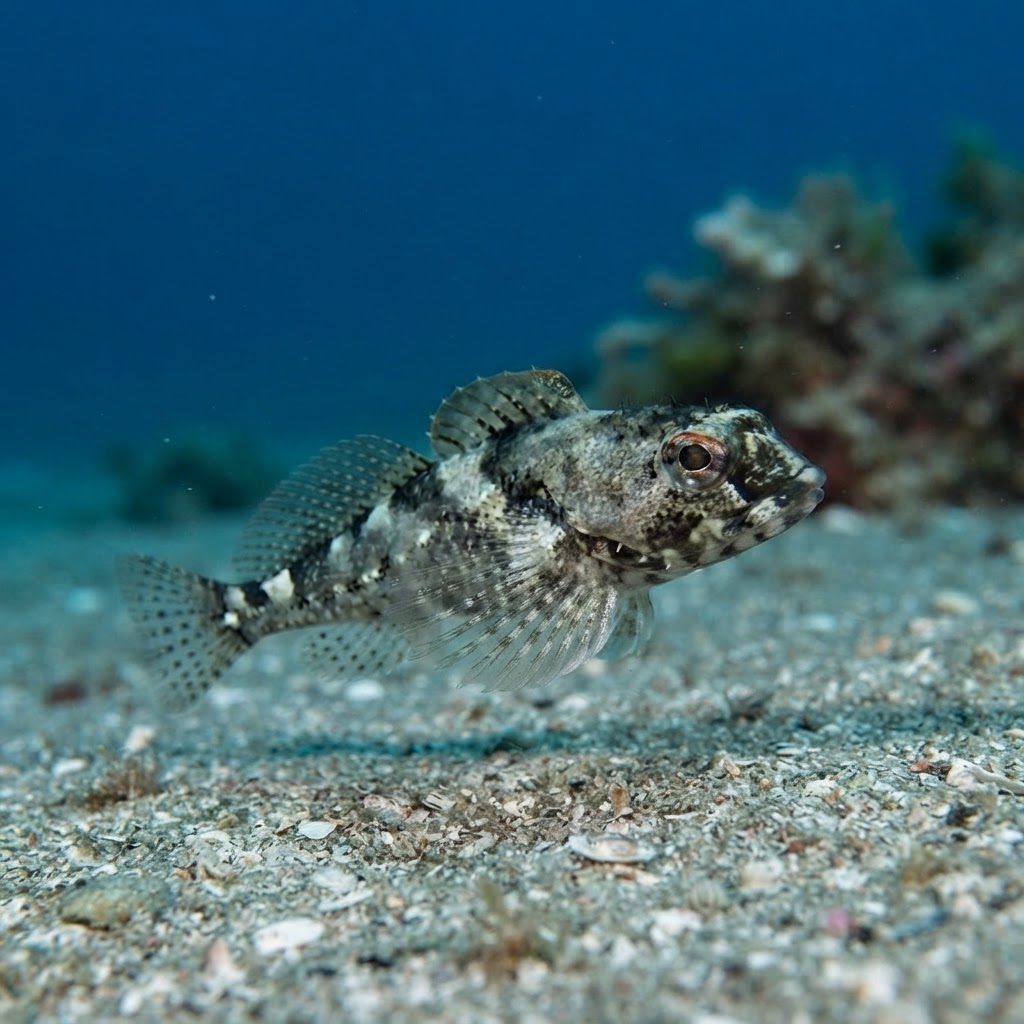
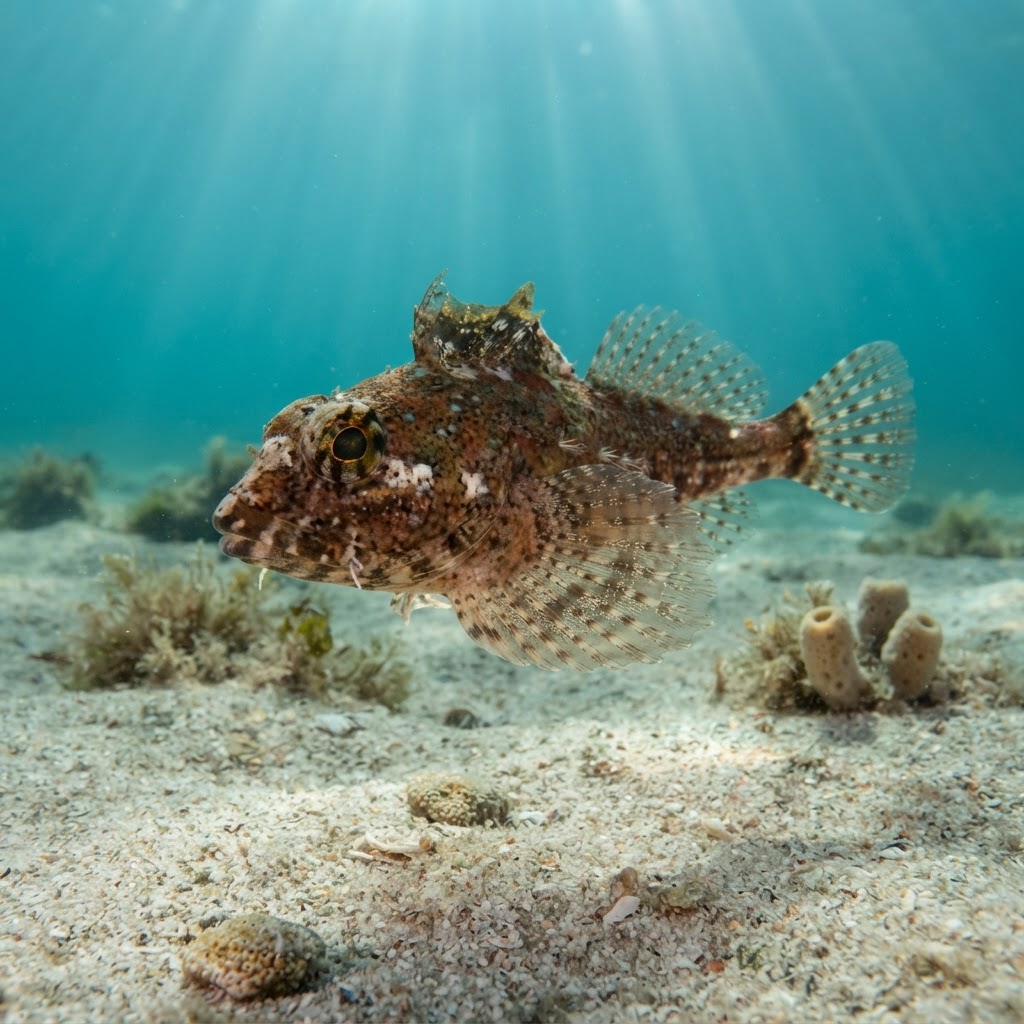
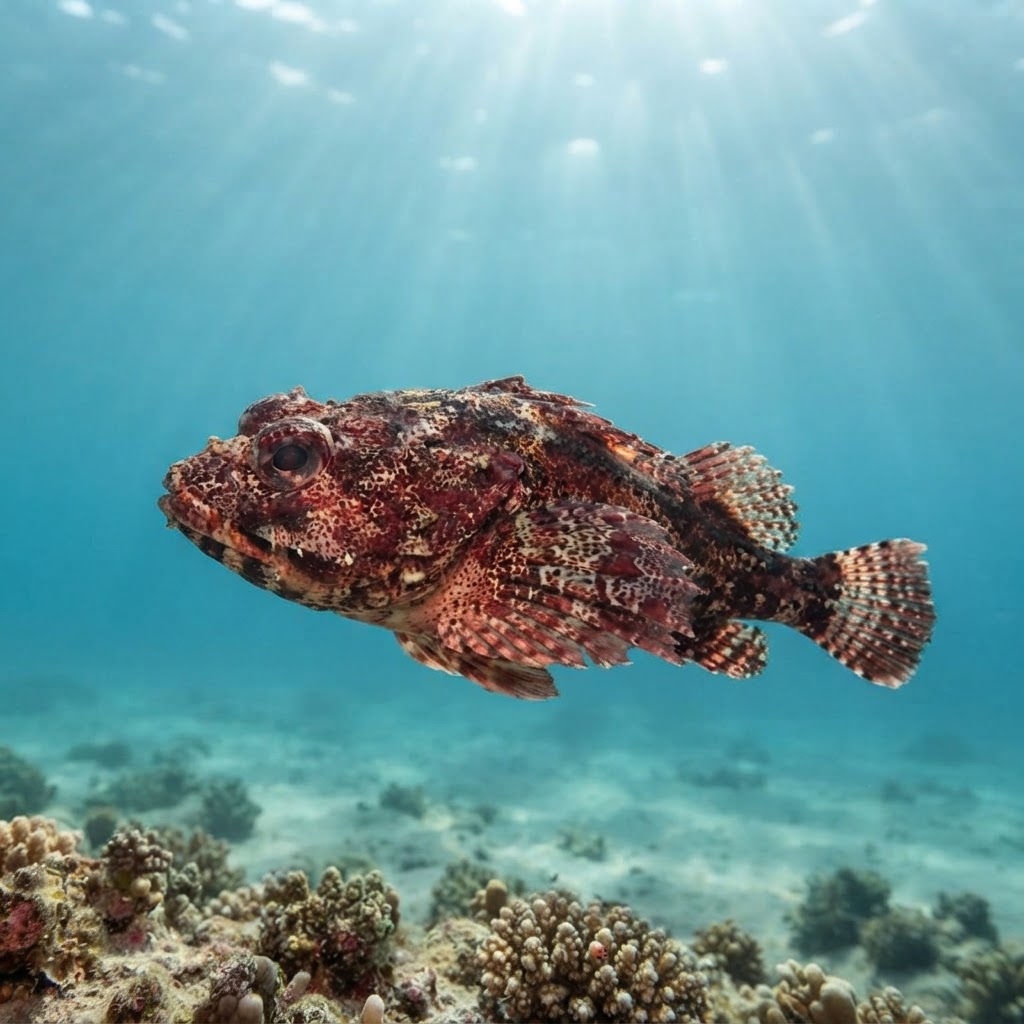
Squat, broad-headed bottom fish to about 36 cm, built low and wide rather than streamlined. Skin is mottled in blotches of brick red, rust, white and brown that break up its outline against rock and gravel, and the body tapers to a wide fan-like tail. It sits motionless on the bottom rather than swimming in open water, which combined with the blotchy camouflage is the main giveaway.
Spends most of its time parked directly on rock, gravel or cobble bottoms, relying on its blotchy colouring to disappear rather than fleeing. Divers usually find it by scanning slowly across the substrate rather than the water column, and it tends to hold still even at close range, only shifting position if pressed. Its stillness and rarity mean spotting one is often more about careful looking than luck of timing.
Its rock-matching camouflage is so effective that this fish barely bothers to swim away from divers, trusting its blotched pattern over the wide rocky bottoms it prefers to give it away.
No clear seasonal pattern shows up in sightings, and with a year-round comfort range of roughly 1 to 8C it can be found on cold-water dives in British Columbia, the Pacific Northwest and Alaska at any time of year.
Most reliably logged in British Columbia, Canada, which accounts for the large majority of sightings, with further finds across the Pacific Northwest and Alaska in the United States. Divers doing cold-water sites in these regions have the best shot, though it is logged as rare at most locations and only reaches uncommon or common status at a handful of spots.
Mapping where Red Irish Lord is logged…
British Columbia, Canada is the strongest region for this species, with further sightings across the Pacific Northwest and Alaska in the United States. It is logged at rocky cold-water sites rather than tropical reefs.
There is no strong seasonal pattern in sightings, so it is considered a year-round find. It suits water in the roughly 1 to 8C range typical of British Columbia and Alaska dives throughout the year.
Look for a broad, flat-bodied fish around 36 cm resting motionless on rock or gravel, patterned in blotches of red, rust, brown and white. It does not swim off readily, so scan the bottom closely rather than the open water.
They typically reach around 36 cm in length, with a stocky, bottom-hugging build rather than a long streamlined shape.
Yes, most dive sites where it has been logged rate it as a rare sighting, with only a few spots reporting it as uncommon or common. Patience and slow bottom scanning improve your odds.
Site and sighting data is aggregated from diver logs, iNaturalist and GBIF. For taxonomy and conservation status:
Shorthorn Sculpin
228 sites