Labracinus cyclophthalmus
Deep maroon reef fish logged across Visayas and Kenting, comfortable in 26-29C water year-round on Indo-Pacific reefs.
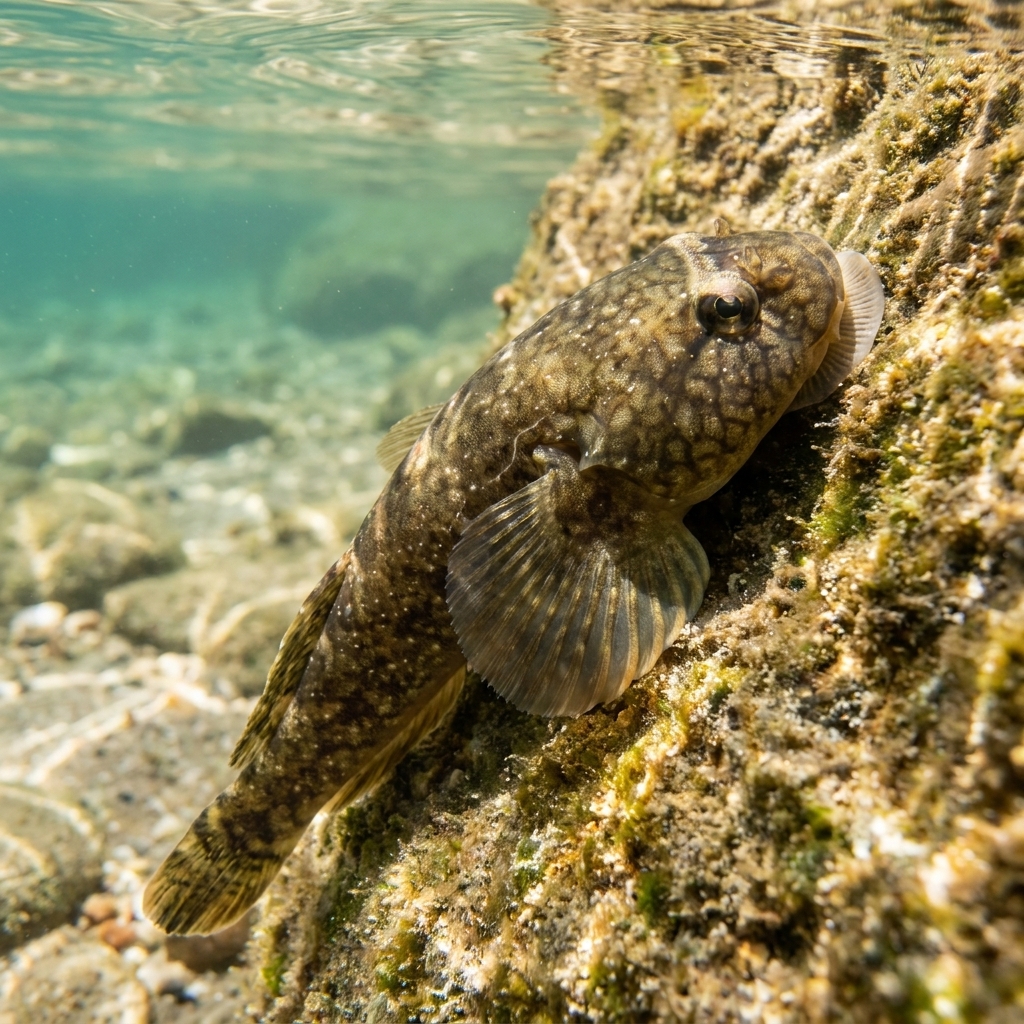
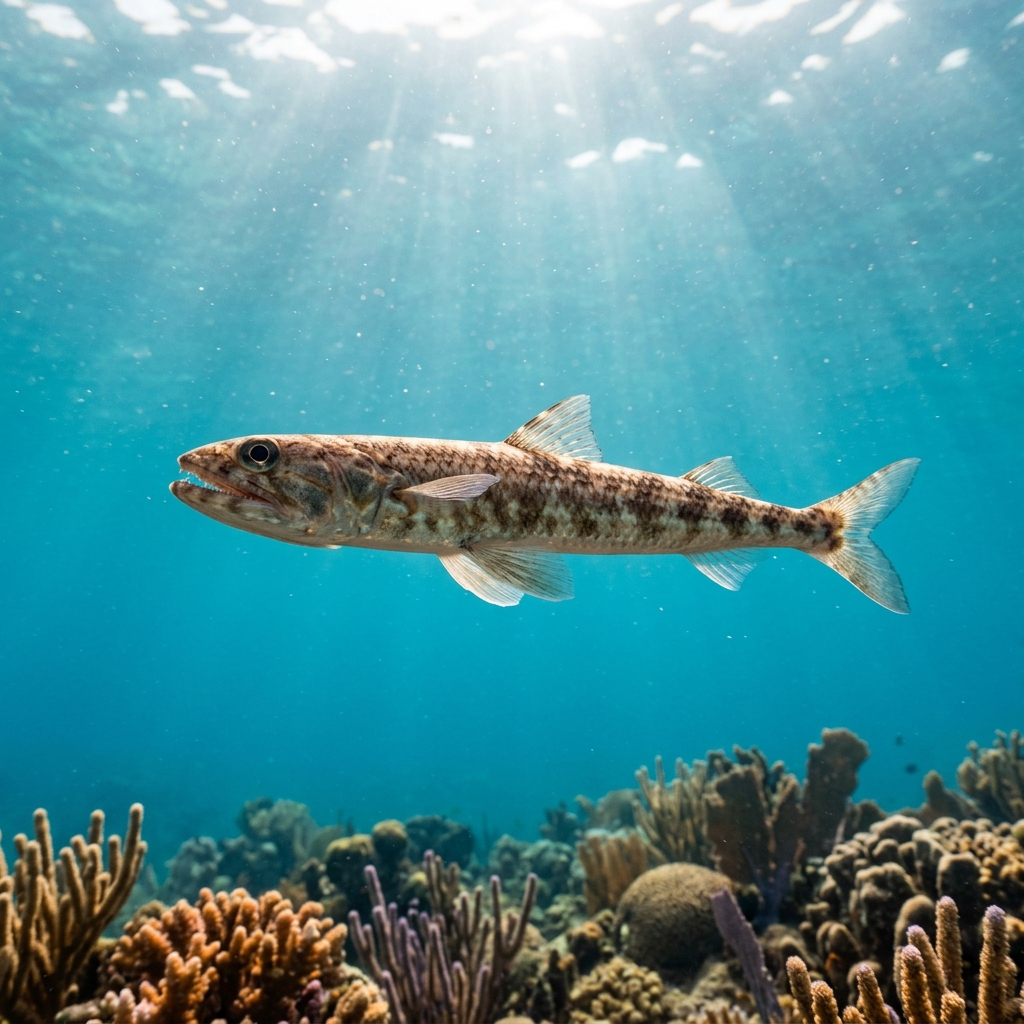
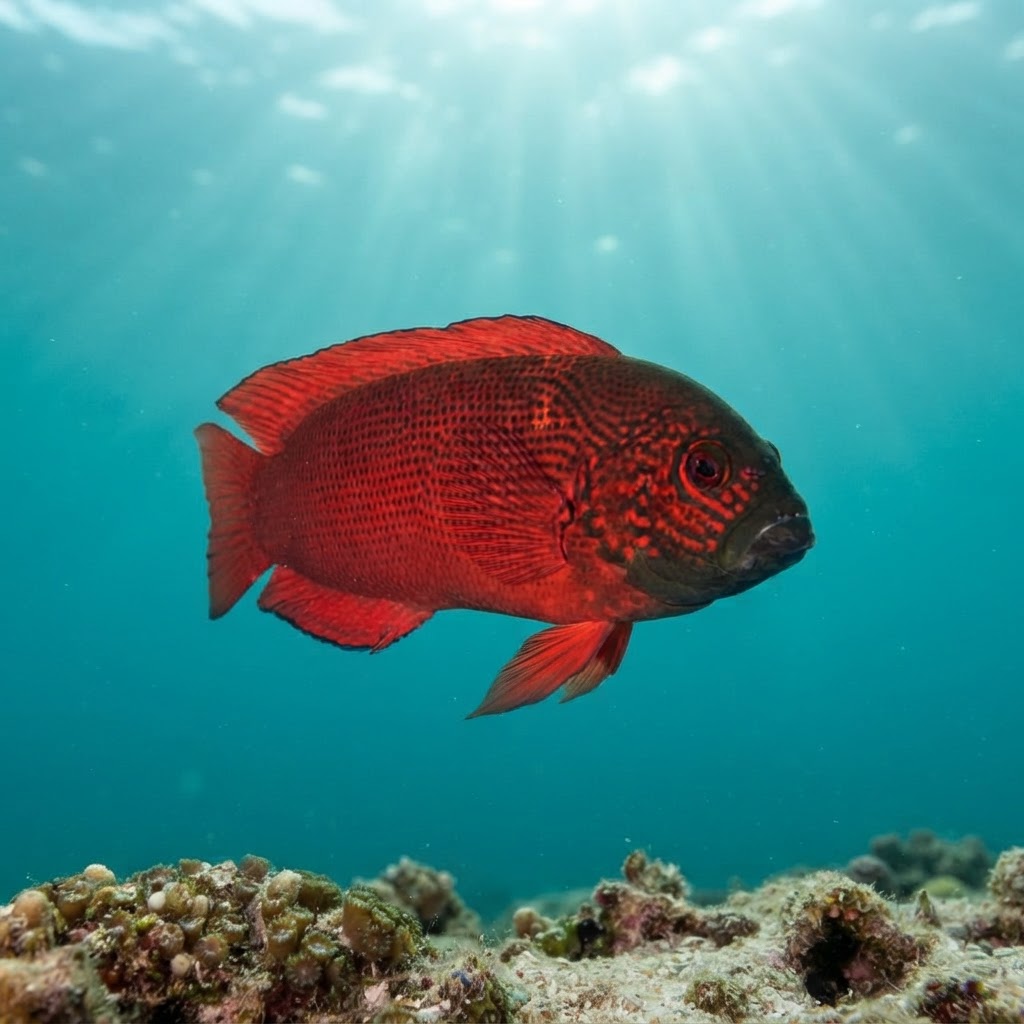
Elongate, slightly compressed body running deep maroon to blackish-red, growing to around 17 cm, with a continuous dorsal fin that gives it a slightly eel-like profile as it swims. It has a rounded head and a fairly plain colour pattern with no strong bars or spots, which combined with its habit of hugging rubble and crevices is the main thing divers key on. Colour can shift slightly with light, sometimes reading more brown than red depending on depth and sun angle.
Usually spotted picking around rubble patches, crevices and the base of coral heads rather than out in open water, often solitary. It tends to stay close to cover and will duck back into a hole or overhang if you get too close, so slow, low approaches give the best look. Most sightings are on daytime dives along reef slopes and rubble zones rather than in the open blue.
Pseudochromids like this one are known for aggressive, territorial behaviour toward other small reef fish despite their modest size, often chasing off intruders many times their own length from a chosen patch of rubble.
No clear seasonal pattern shows up in the sighting data, and it sits comfortably in 26 to 29.3C water, so it is a year-round find on the reefs where it lives.
Most reliably logged in the Philippines, especially across the Visayas, with strong numbers also coming out of Nusa Tenggara and Raja Ampat in Indonesia. Kenting in Taiwan is another consistent spot, and it turns up in smaller numbers around Dili in Timor-Leste.
Mapping where Red Dottyback is logged…
It is most commonly logged in the Philippines, particularly across the Visayas region, with good numbers also reported from Nusa Tenggara and Raja Ampat in Indonesia and around Kenting in Taiwan.
There is no strong seasonal pattern in the sightings, and it lives in warm 26 to 29C water year-round, so it can be found on its home reefs at any time of year.
Look for a deep maroon to blackish-red, elongate fish around 17 cm long, with a long continuous dorsal fin and a habit of staying close to rubble and reef crevices rather than swimming in open water.
They typically reach around 17 cm in length, making them a small, easily overlooked reef fish best spotted by scanning rubble patches and crevices closely.
No, they pose no danger to divers. They are a small, non-aggressive-to-humans reef fish that simply retreats into cover if approached too quickly.
Despite their small size, they can be surprisingly territorial, defending a chosen patch of rubble or reef structure against other small fish that stray too close.
Site and sighting data is aggregated from diver logs, iNaturalist and GBIF. For taxonomy and conservation status:
Soldierfish
3,612 sites