Acyrtus rubiginosus
A 3cm reef dweller most reliably logged around Soufriere-Scotts Head, Dominica, in warm water between 26 and 28°C.
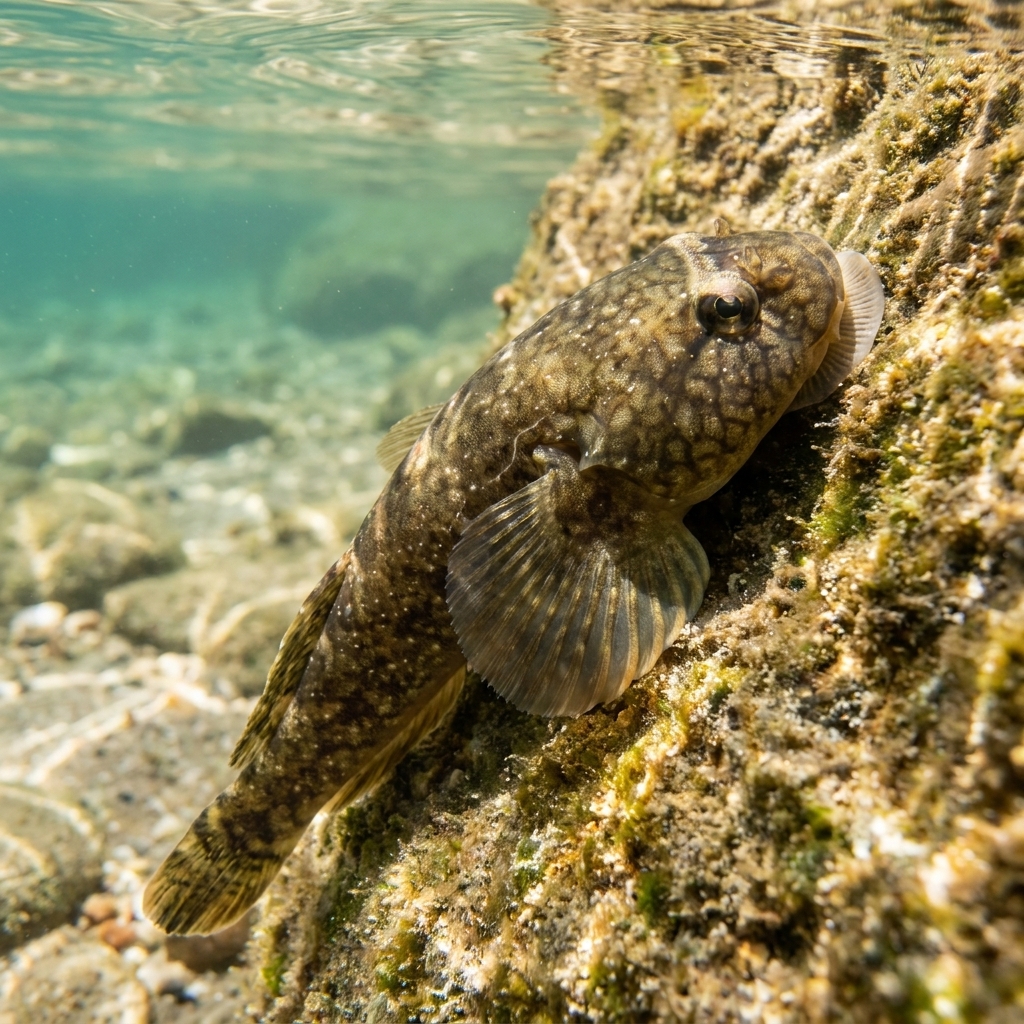
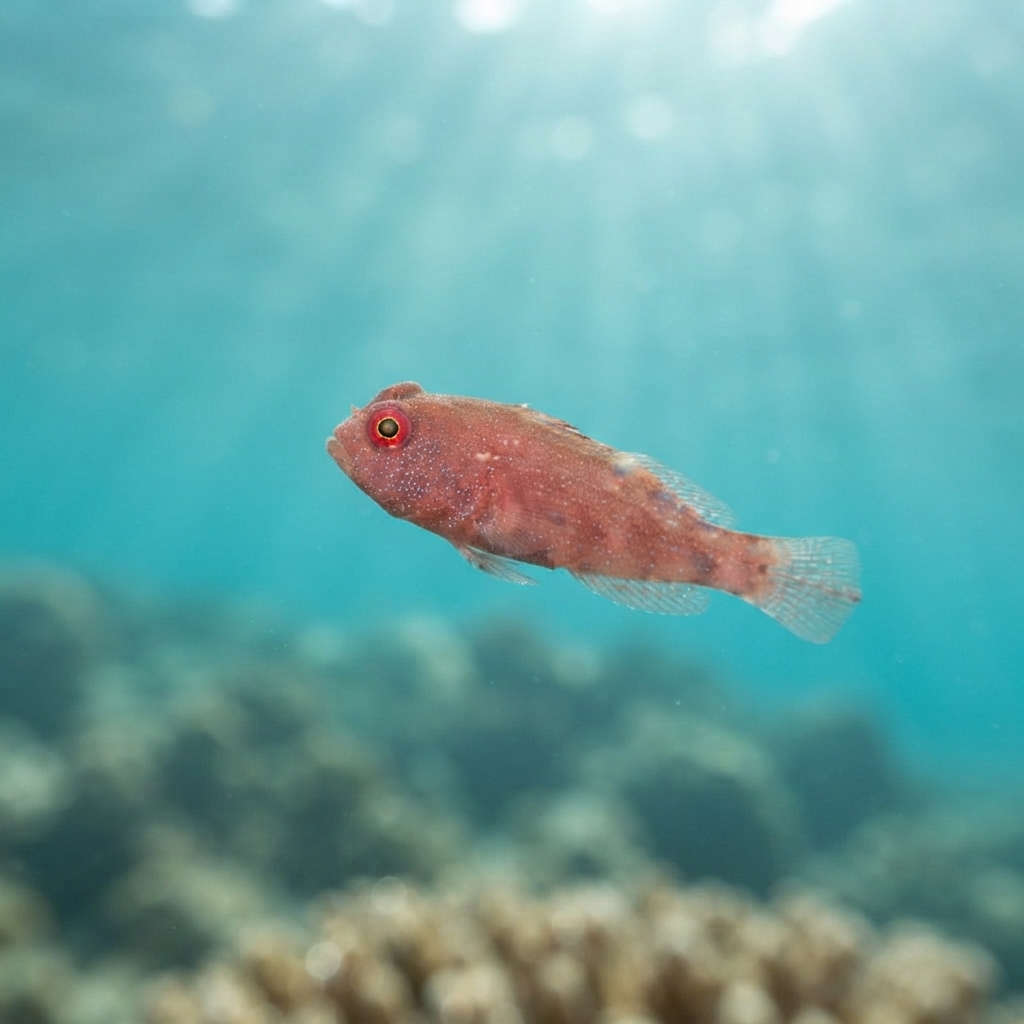
At just 3cm long, this is a fish you find by looking closely at rubble and sponge rather than scanning open water. It has a slender, tadpole-shaped body in reddish tones that blend into the coral debris it sits on, with no showy pattern to catch the eye. Like other clingfish, it has a suction disc formed from modified pelvic fins that lets it grip surfaces tightly, which is often the first clue divers notice as it stays glued in place rather than swimming off.
This is a still, ground-hugging fish that spends its time clamped onto rubble, sponge, or coral debris rather than swimming in the open. Divers who find one usually do so by slowing down and checking small crevices and encrusted surfaces close to the substrate, since it holds its position with its sucker disc and does not dart off the way a free-swimming fish would. It is not a fish you spot from a distance; it rewards a slow, macro-focused pass over the reef floor.
Clingfish in this family rely on a specialised sucker disc, not a swim bladder trick or camouflage alone, to stay put on wave-washed or current-swept surfaces where a loose-swimming fish would be swept away.
Recorded water temperatures sit in a narrow 26.4 to 28.2°C band, consistent with year-round tropical conditions, and there is not enough seasonal data to point to a particular window. Treat this as a species you can look for on any dive in its known range rather than one tied to a specific month.
Dominica is by far the strongest place to look, particularly around Soufriere-Scotts Head Marine Reserve, which accounts for the great majority of logged sightings. A smaller number of records come from Long Island in the Bahamas, so it is worth scanning rubble and sponge patches there too, though sightings anywhere for this species are uncommon rather than routine.
Mapping where Red Clingfish is logged…
The most reliable region is Soufriere-Scotts Head Marine Reserve in Dominica, where the majority of sightings have been logged. A smaller number of records also come from Long Island in the Bahamas.
There is no clear seasonal pattern in the data, and water temperatures stay in a warm 26.4 to 28.2°C range year-round, so any time of year in its known range is reasonable to look for one.
Look for a tiny, reddish, tadpole-shaped fish no longer than about 3cm, clamped motionless onto rubble, sponge, or coral debris. Its suction disc keeps it fixed in place, so it will not dart away like most small reef fish.
They stay small, typically reaching only around 3cm in length, making them one of the more overlooked fish on a reef unless you are actively searching close to the bottom.
Like other clingfish, it uses a sucker disc made from fused pelvic fins to grip hard and encrusted surfaces, letting it hold position in places a typical free-swimming fish could not.
Site and sighting data is aggregated from diver logs, iNaturalist and GBIF. For taxonomy and conservation status:
Soldierfish
3,612 sites