Pomatoschistus quagga
A 4cm goby logged uncommonly in Campania, Italy, in cool 17.4 to 19.5C water. Here's how divers actually find one.
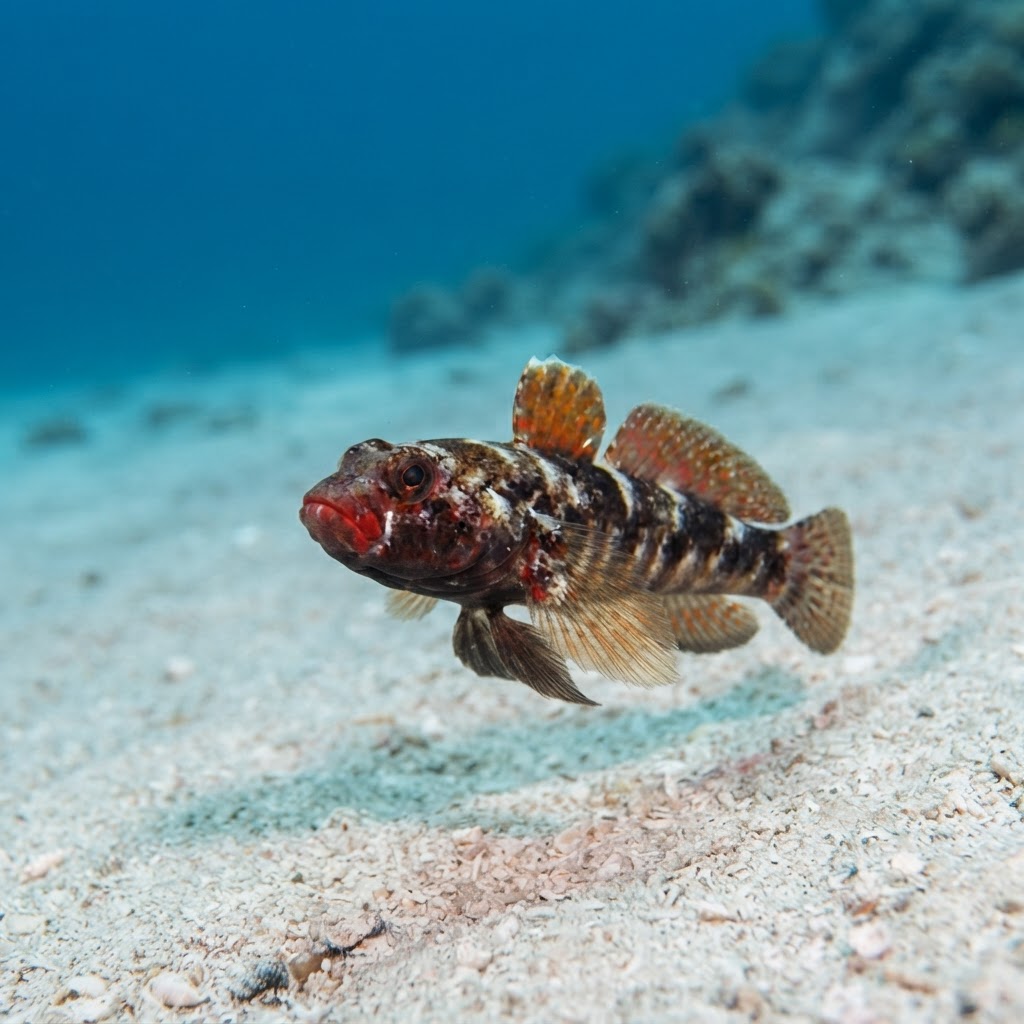
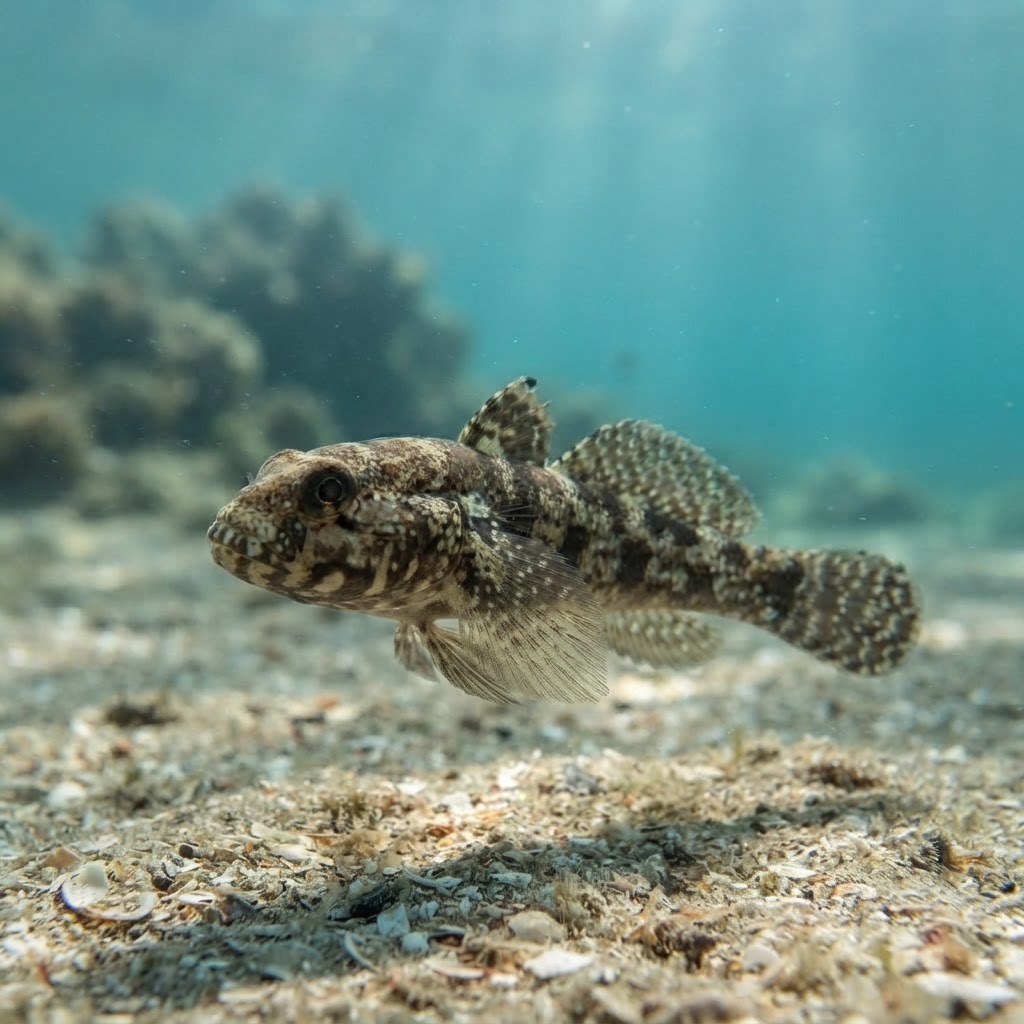
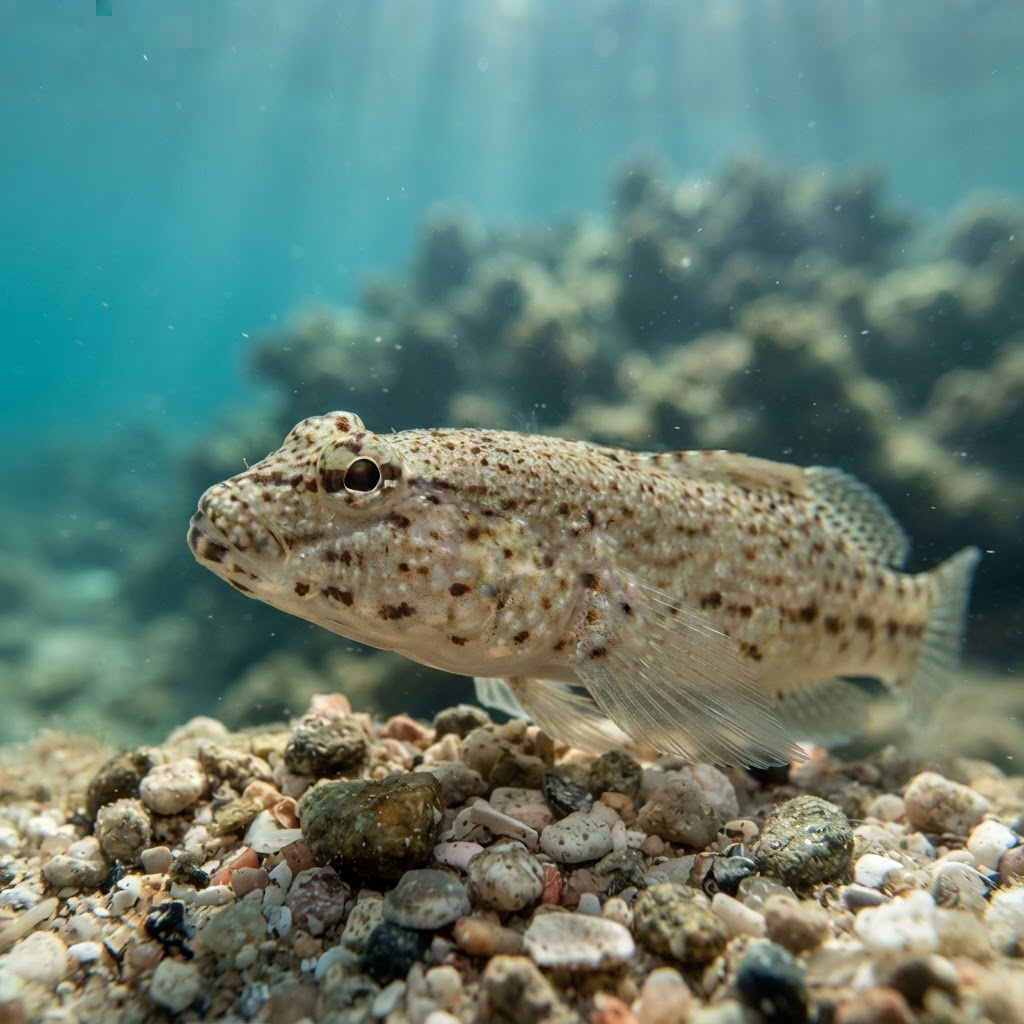
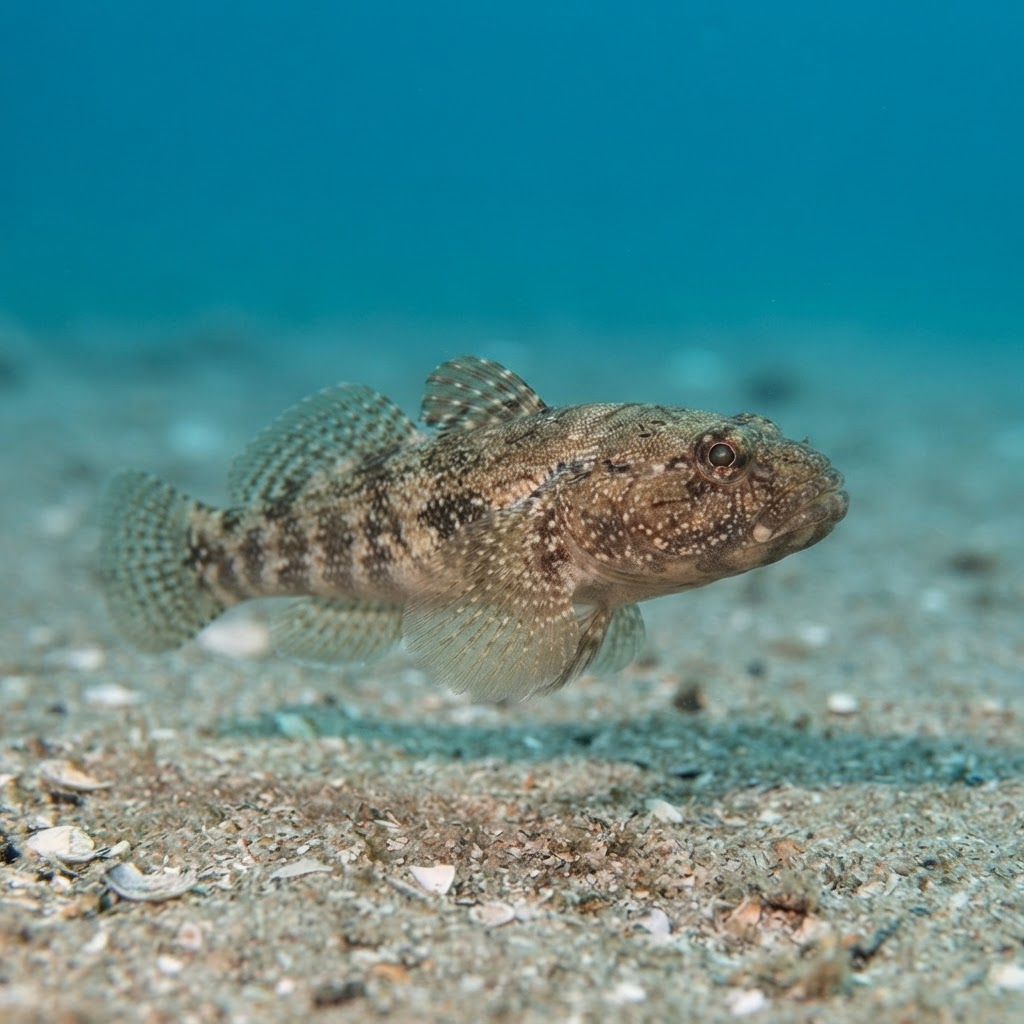
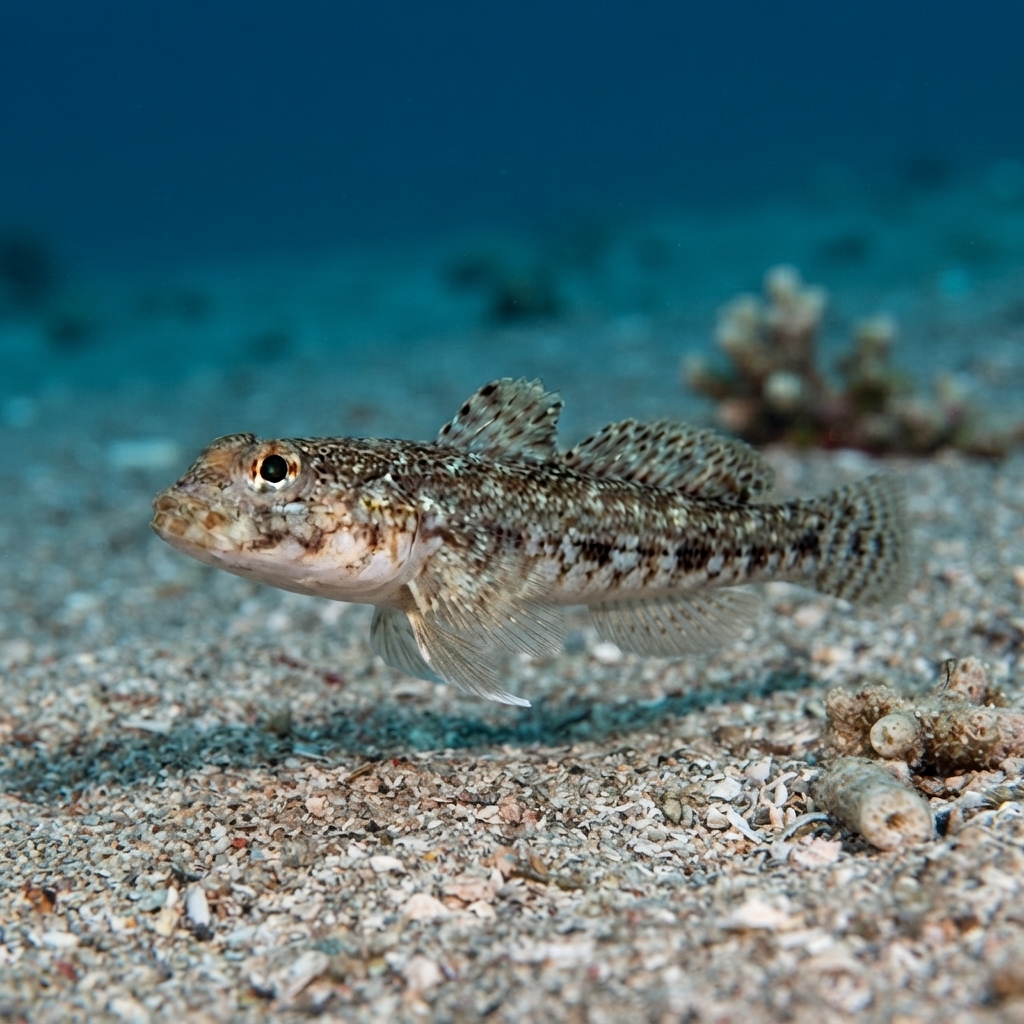
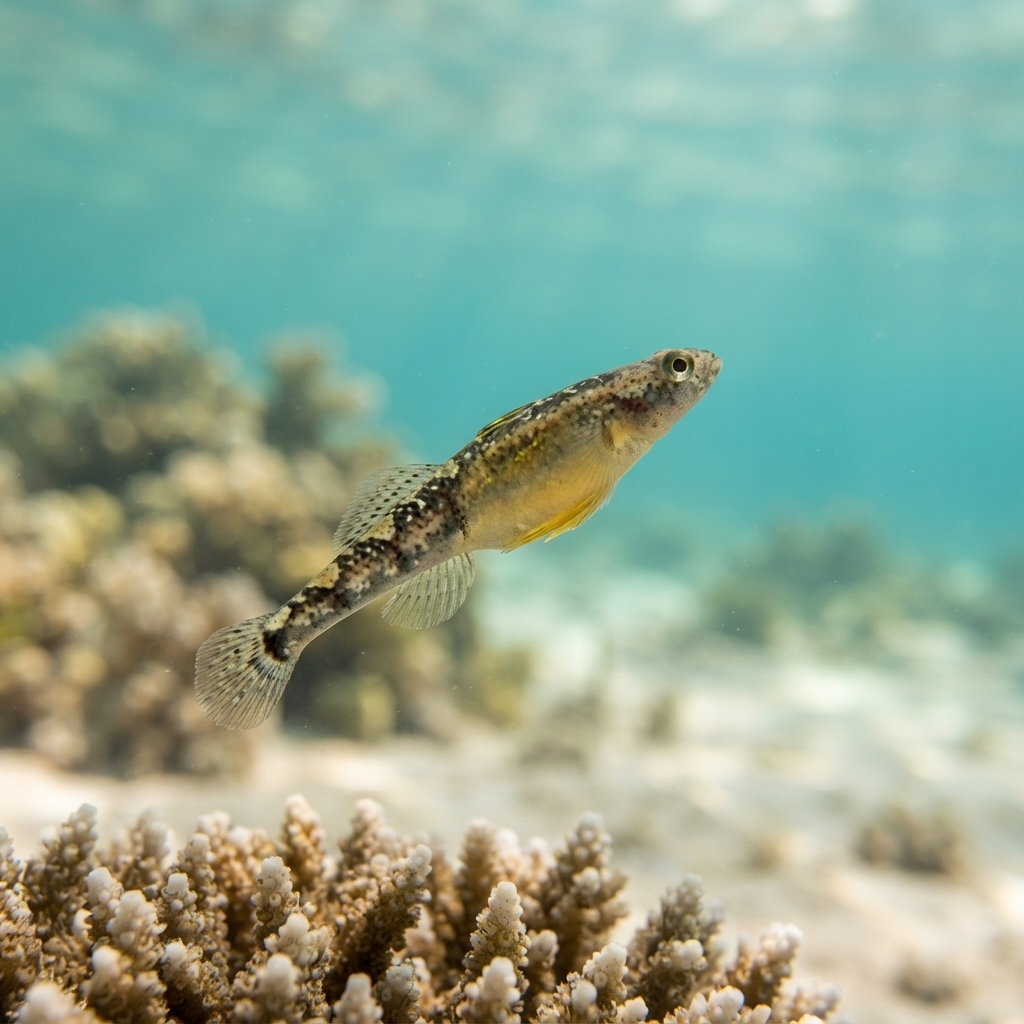
At just 4cm, this is a fish you need to be looking for the sand, not the water column, to find. It has the classic goby build: an elongated body that tapers to a blunt head, with two dorsal fins and fused pelvic fins forming a small sucker disc that lets it perch motionless on sediment or rock. Colouration is pale and mottled, blending closely with the sandy or gravelly bottom it sits on, which is usually the biggest giveaway it takes a slow, patient scan to pick one out at all.
Like most small gobies, expect to find it resting on the substrate rather than swimming freely, using its fused pelvic fins to anchor itself against current on sand or fine gravel. It's likely to stay still or make short darting movements when approached rather than fleeing far, so a slow, low approach with a torch or macro lens gives the best chance of a good look. Logged as uncommon at its one known site, so this is very much a species for divers actively hunting small stuff rather than something you stumble across.
Gobies in this family lack a swim bladder, which is part of why they spend their lives in close contact with the bottom rather than hovering in midwater like many other small reef fish.
Sightings so far don't show a clear seasonal pattern, and the recorded water temperature range of 17.4 to 19.5C suggests cooler-water conditions typical of Mediterranean spring through autumn diving rather than a strict single-month peak. Treat it as a year-round possibility in the right habitat until more data builds a clearer picture.
Reef neighbours a diver could mistake it for. Use the identification notes above to tell them apart.
The only confirmed sighting in the data comes from Campania, Italy, making it the one reliable region for this species right now. There is not enough logged data elsewhere to point divers anywhere else with confidence.
Mapping where Quagga Goby is logged…
The most reliable logged sighting is in Campania, Italy, which is currently the only region with a confirmed record of this species. It's a good starting point if you're specifically hunting for it.
There isn't enough data yet to pin down a clear season, and it has been recorded in water between 17.4 and 19.5C. Treat sightings as possible year-round rather than tied to one particular month.
Look for a tiny, pale, mottled fish around 4cm long resting on sand or rock rather than swimming in open water. Its blunt head, two dorsal fins, and fused pelvic sucker disc are classic goby features, but its small size and camouflage make it easy to miss.
They stay small, reaching only around 4cm in length, which puts them firmly in macro-photography territory rather than being an easy spot from a distance.
No, it poses no danger to divers. It's a small, bottom-dwelling fish that will typically hold still or dart a short distance away if approached.
Like other gobies, it has no swim bladder, so it can't hover effortlessly in the water column the way many reef fish do. Instead it relies on a suction-like pelvic fin structure to grip the bottom and stay put.
Site and sighting data is aggregated from diver logs, iNaturalist and GBIF. For taxonomy and conservation status:
Slender Goby
806 sites