Odontopyxis trispinosa
A 7cm armoured oddball found in the chilly waters of British Columbia and California, usually spotted resting still on the seabed.
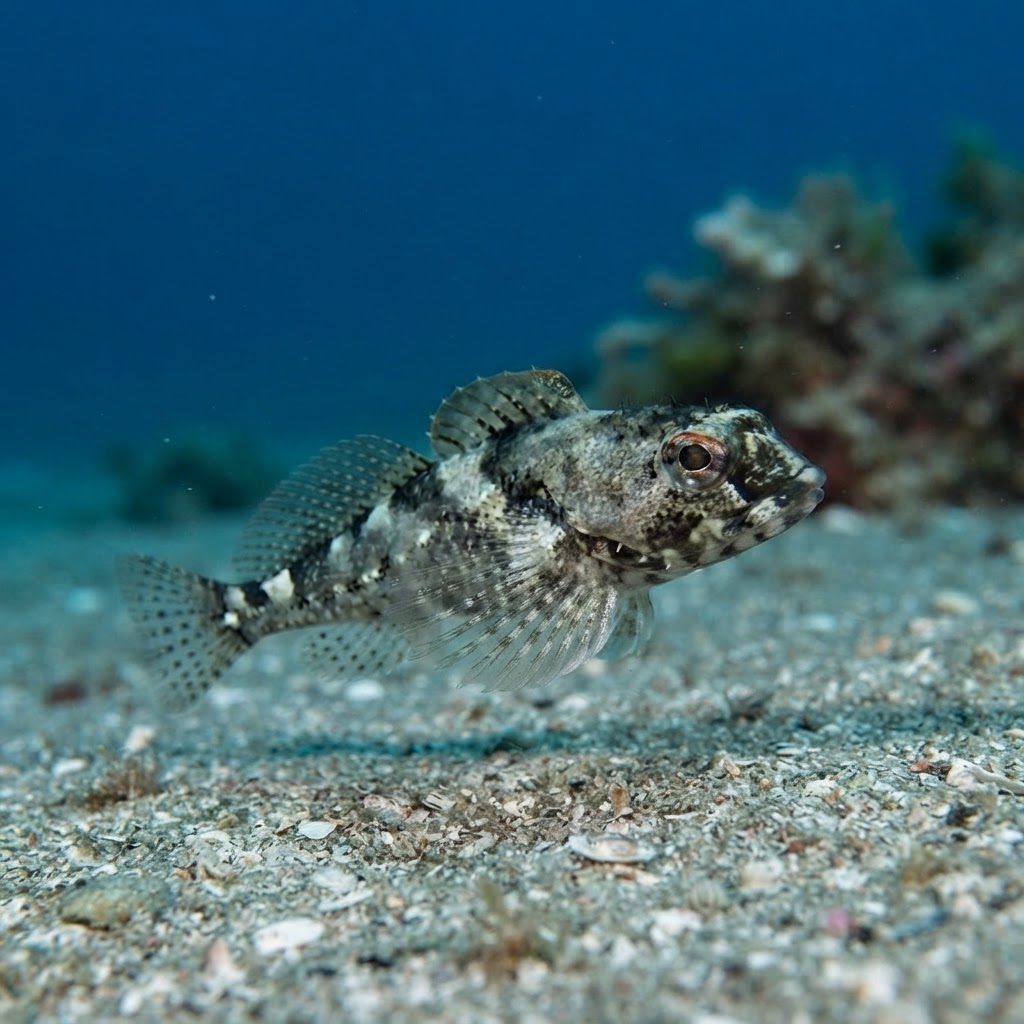
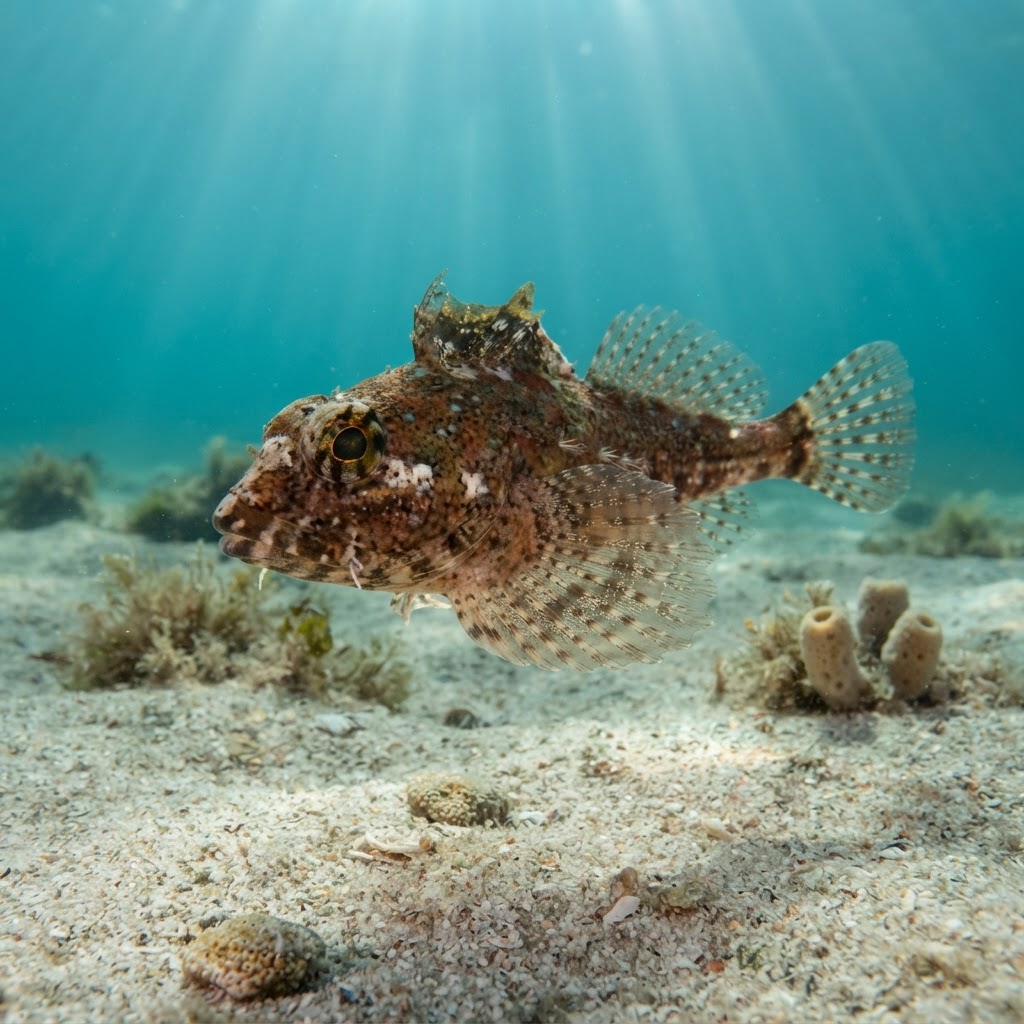
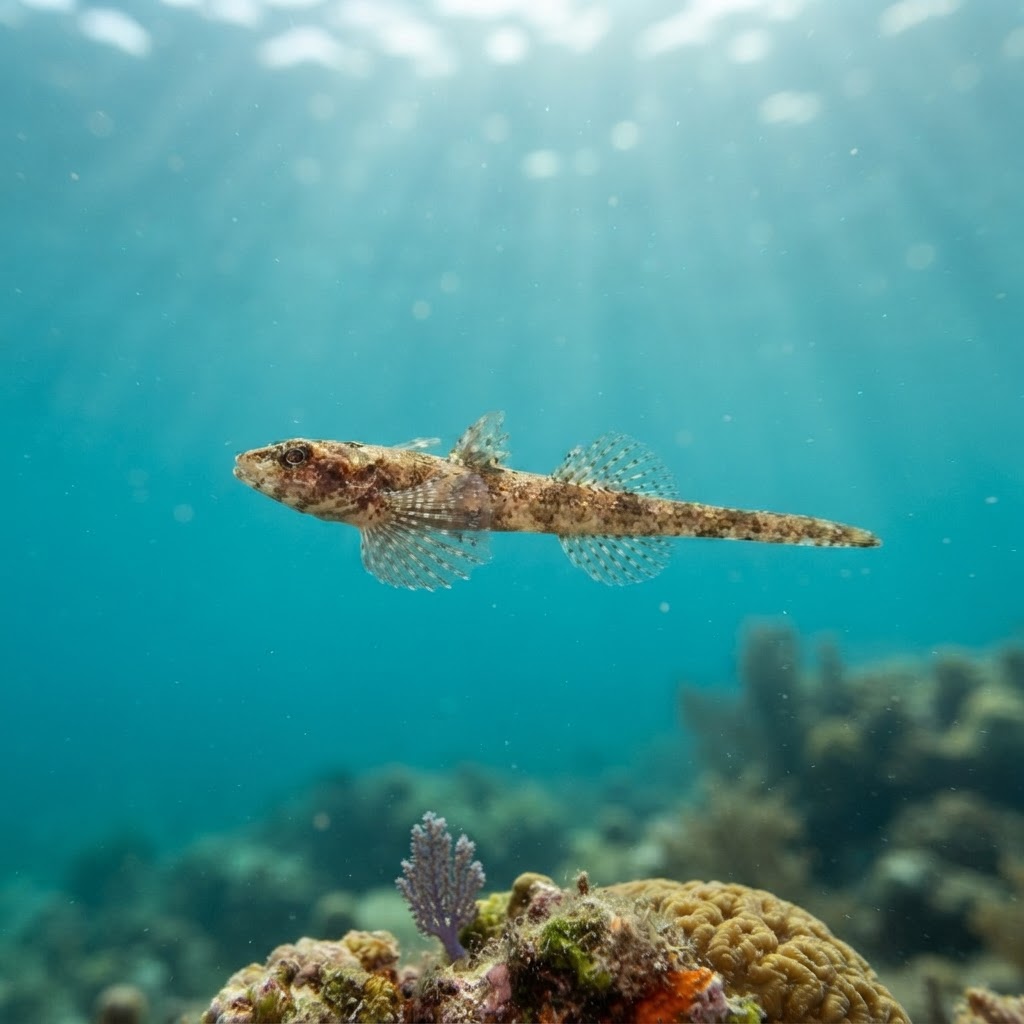
A tiny, slender fish rarely more than 7cm long, with a body encased in bony plates rather than scales, giving it an angular, armoured look. Colour runs pale sandy brown to grey, which blends it straight into the seabed it lies on. Look for a pointed, slightly upturned snout and a flattened underside, since it rests directly on the bottom rather than swimming in open water.
Expect to find it lying motionless on sand or fine sediment, relying on its drab colouring to stay unnoticed rather than fleeing. It shows little reaction to divers, often letting a slow, close look pass without moving. Most logs describe single, low-key sightings rather than any grouping or active swimming behaviour.
Its bony, plated body is a defining trait of the poacher family, trading swimming speed for a suit of armour that most predators find awkward to bother with.
No clear seasonal pattern shows up in the sightings, so treat it as a year-round find on these coasts. It sits in a narrow 5.1 to 9.5C water-temperature niche, which matches the cold water these regions hold through most of the year.
Most divers who log this species do so in the Pacific Northwest of the United States, with a further concentration in California, and across the border in British Columbia, Canada. It's a cold-water bottom-dweller, so expect sightings on temperate coastlines rather than anywhere tropical.
Mapping where Pygmy Poacher is logged…
It's most reliably reported along the Pacific Northwest coast of the United States, including California, and in British Columbia, Canada. These cold-water sightings are consistent but always uncommon to rare.
There's no detected season in current sightings, so it's considered a year-round possibility wherever it's found. Cold water in the 5 to 9.5C range is what it needs, not a particular month.
Look for a small, armour-plated fish under 7cm, coloured sandy brown to grey and lying flat on the seabed. Its bony plates and pointed snout separate it from soft-bodied bottom fish nearby.
They top out at around 7cm, making them one of the smaller bottom-dwelling fish a diver might spot on a cold-water dive.
Instead of scales, its body is covered in bony armour plates, a family trait shared across poachers that gives it a rigid, almost sculpted look rather than a typical fish's smooth flanks.
Site and sighting data is aggregated from diver logs, iNaturalist and GBIF. For taxonomy and conservation status:
Shorthorn Sculpin
228 sites