Pycnopodia helianthoides
Spot the sunflower star along British Columbia and the US Pacific Coast in cold 7-14 °C water. Here's where, when, and how to identify this critically endangered sea star.
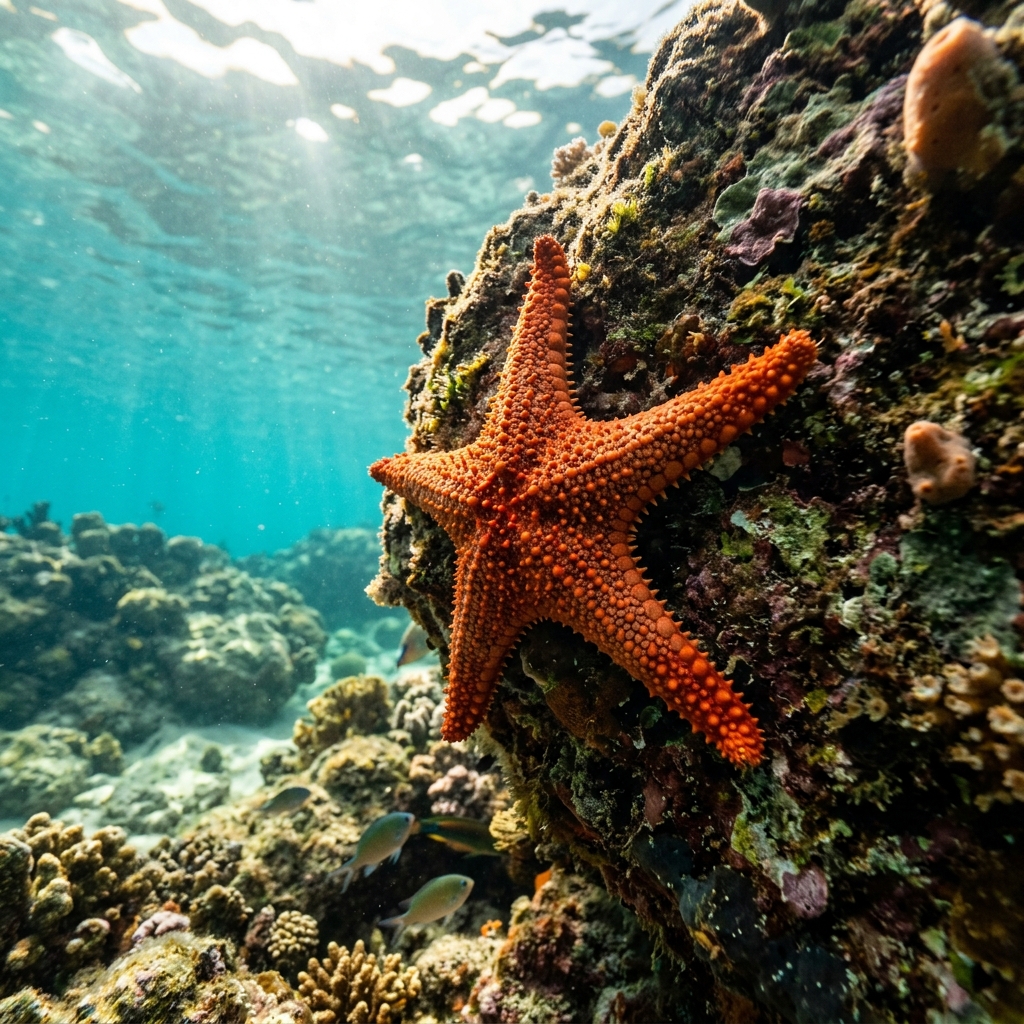
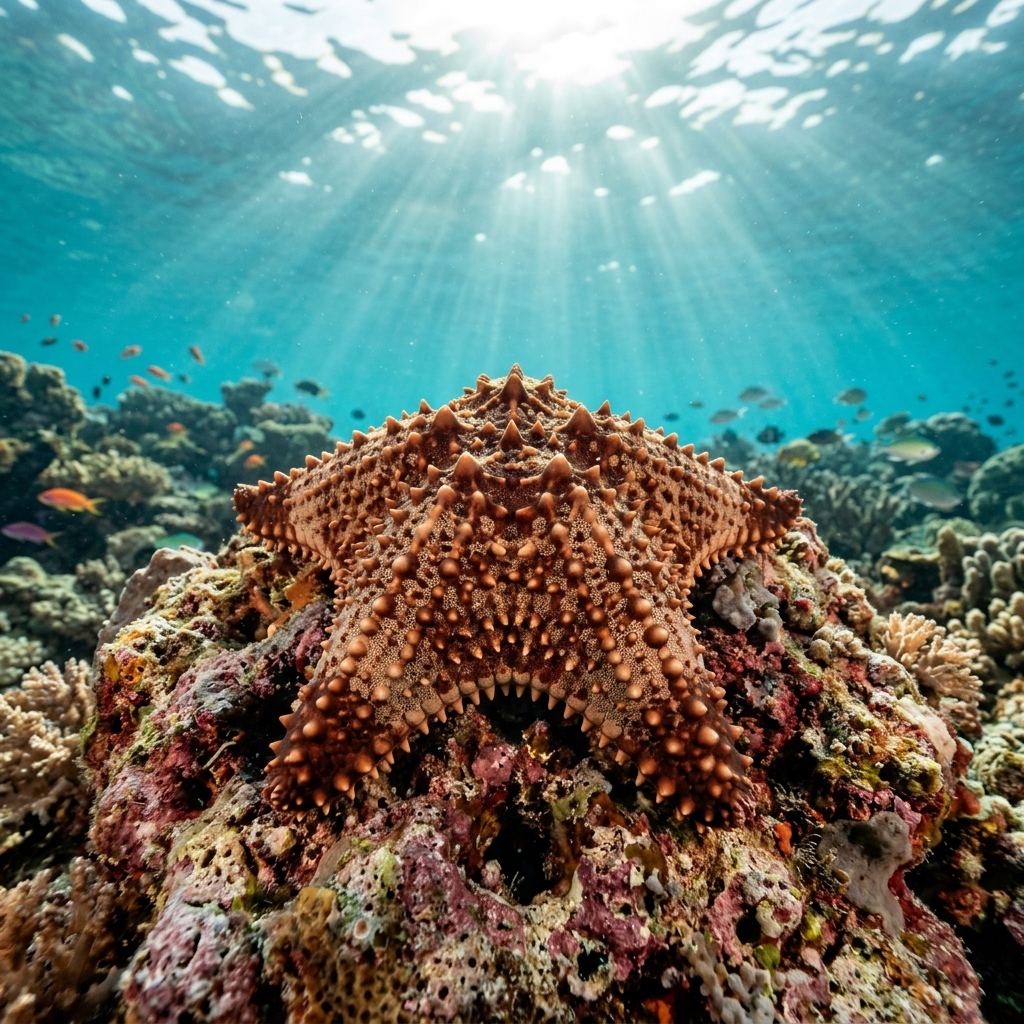
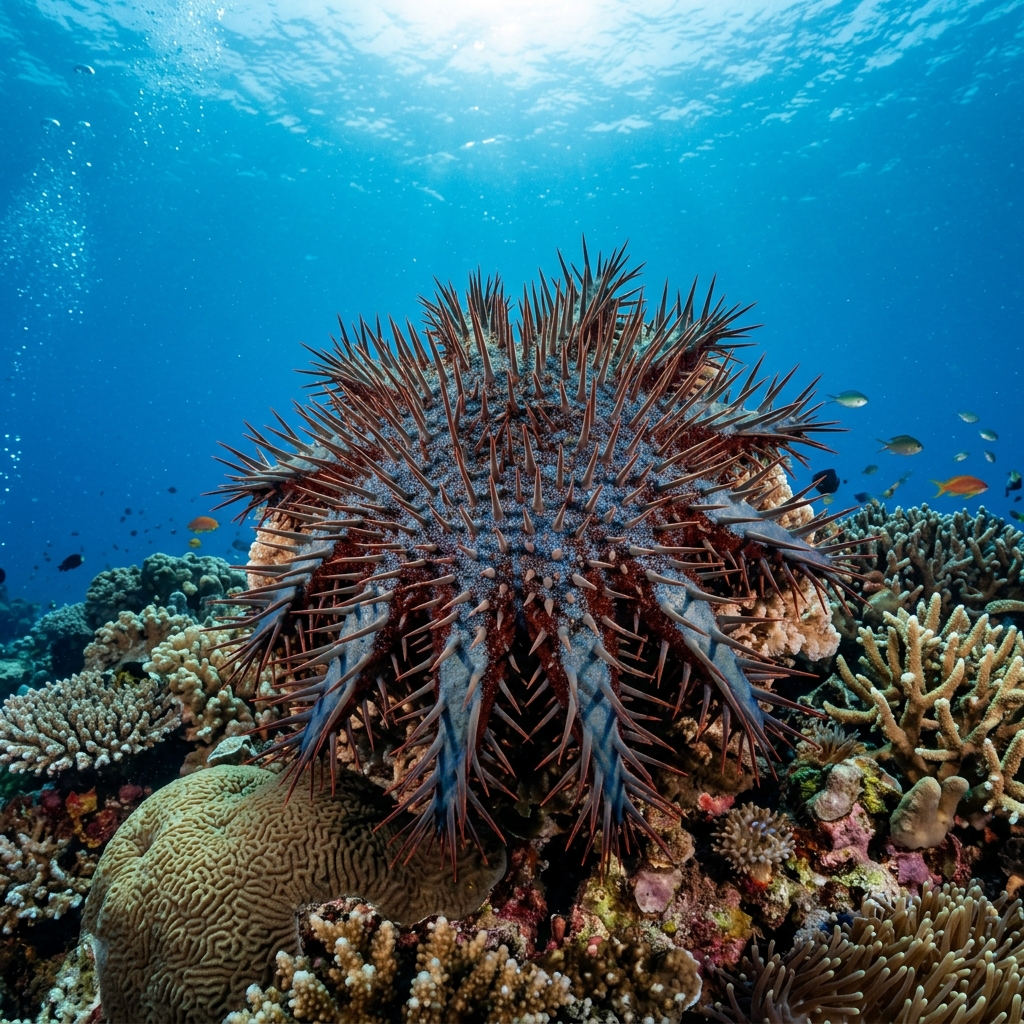
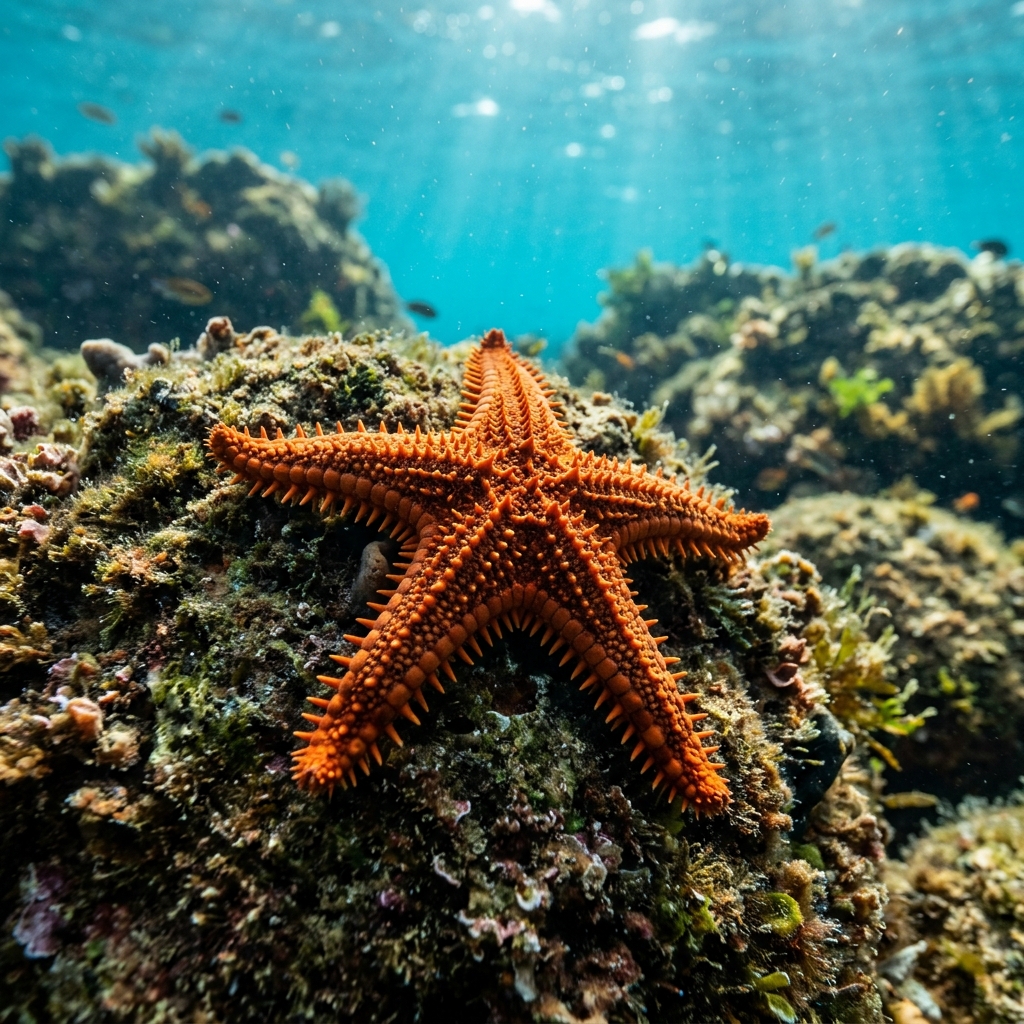
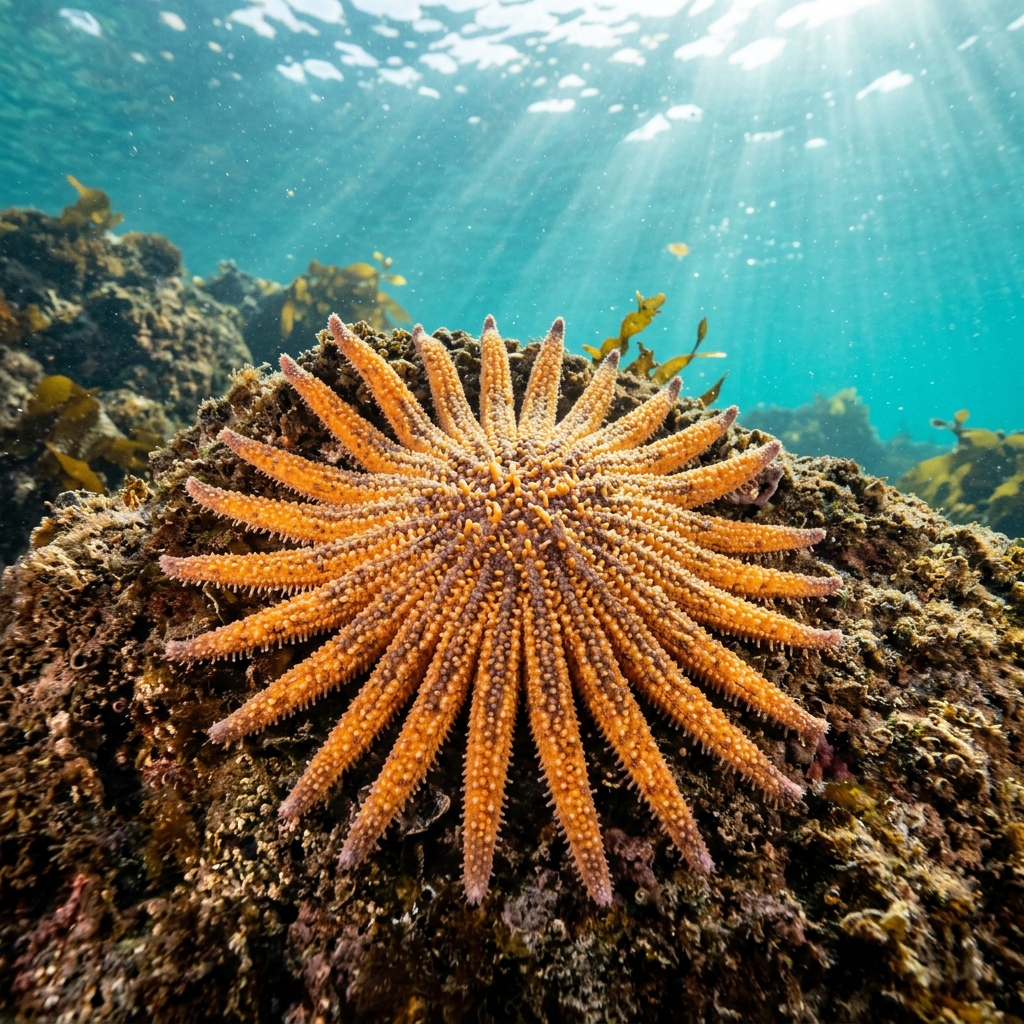
With up to 24 arms radiating from a broad, soft-bodied disc that can span nearly a metre, nothing else on a North Pacific reef looks quite like it. Colour ranges from orange, yellow, and red to purple or grey, often with a mottled pattern. The skin has a distinctly floppy, almost velvety texture compared with stiffer sea stars, and the sheer arm count is the key field mark, no other local species comes close.
Sunflower stars are active hunters and move surprisingly fast for a sea star, you may spot one pursuing a sea urchin or scallop across open rock or sand. They are typically found crawling over rocky reef and kelp-forest substrate, often in shallower to mid-water depths. They rarely react to divers and will continue foraging if you keep a respectful distance.
Sea star wasting disease, which emerged catastrophically along the Pacific Coast from 2013 onwards, has devastated sunflower star populations. Before the outbreak, this was one of the largest and most abundant predatory sea stars in the North Pacific; sightings today are a fraction of historical levels, which is why every encounter should be appreciated rather than taken for granted.
Based on logged sightings, encounters are most concentrated between June and January. This aligns with the species' preference for cold water (observed between roughly 7 and 14 °C), so the shoulder seasons of autumn and early winter in British Columbia and the Pacific Coast tend to be productive.
Sightings concentrate along the British Columbia Coast, which accounts for the majority of logged encounters, making this the most reliable region to search for one. The US Pacific Coast, particularly Washington, Oregon, and northern California, is the next best bet, with a smaller number of records from Alaska. Outside North America, sightings are extremely rare.
Mapping where Sunflower Star is logged…
British Columbia is the most reliable region, with sightings logged across many sites along its coast. The US Pacific Coast, including Washington and northern California waters, is the next best area. A small number of records also come from Alaska.
Logged sightings concentrate from June through January in the Northern Hemisphere. The species prefers cold water between roughly 7 and 14 °C, so late summer through early winter dives in British Columbia or the Pacific Coast give you the best window.
Count the arms, sunflower stars can have up to 24, far more than any other sea star you will encounter in the North Pacific. The body is large, soft, and floppy with a velvety surface, and colours range from orange and yellow to purple or grey. Size alone makes it stand out; adults can approach a metre across.
They are one of the largest sea stars in the world, with adults capable of reaching close to a metre in diameter across their full arm span. They are also relatively fast movers for their size, which can make a large individual appear almost animated as it crosses the reef.
Yes, they are listed as Critically Endangered by the IUCN. Sea star wasting disease caused dramatic population crashes from 2013 onwards, and populations have not recovered to historical levels. Divers can help by logging sightings on iNaturalist, which supports ongoing recovery monitoring.
For a sea star, surprisingly fast, sunflower stars can travel over a metre per minute using thousands of tiny tube feet. This speed makes them effective predators of urchins, clams, and scallops, and on a dive you may actually watch one actively chase down prey.
The Sunflower Star is listed as critically endangered by the IUCN. Observe from a distance, avoid touching or feeding it, and report sightings to local marine research organisations.
The sunflower star is listed as Critically Endangered on the IUCN Red List following population collapses linked to sea star wasting disease. If you see one, consider logging your sighting with iNaturalist, citizen-science records are actively used by researchers monitoring the recovery of this species.
Site and sighting data is aggregated from diver logs, iNaturalist and GBIF. For taxonomy and conservation status:
Common Sea Star
2,271 sites