Hemigrapsus nudus
Purple-mottled crab under Pacific Northwest and British Columbia rocks, in cold 8.5-14.5C water, year-round and easy to spot at low tide.
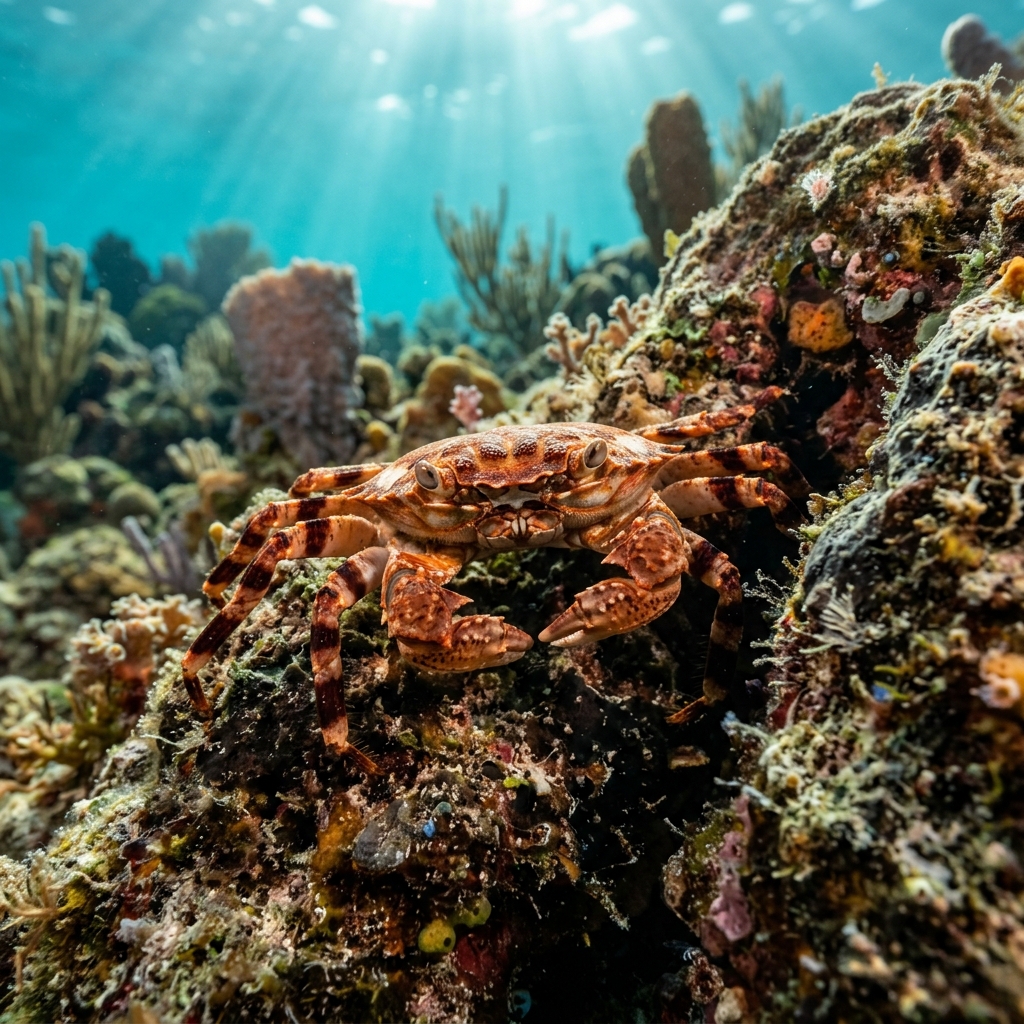
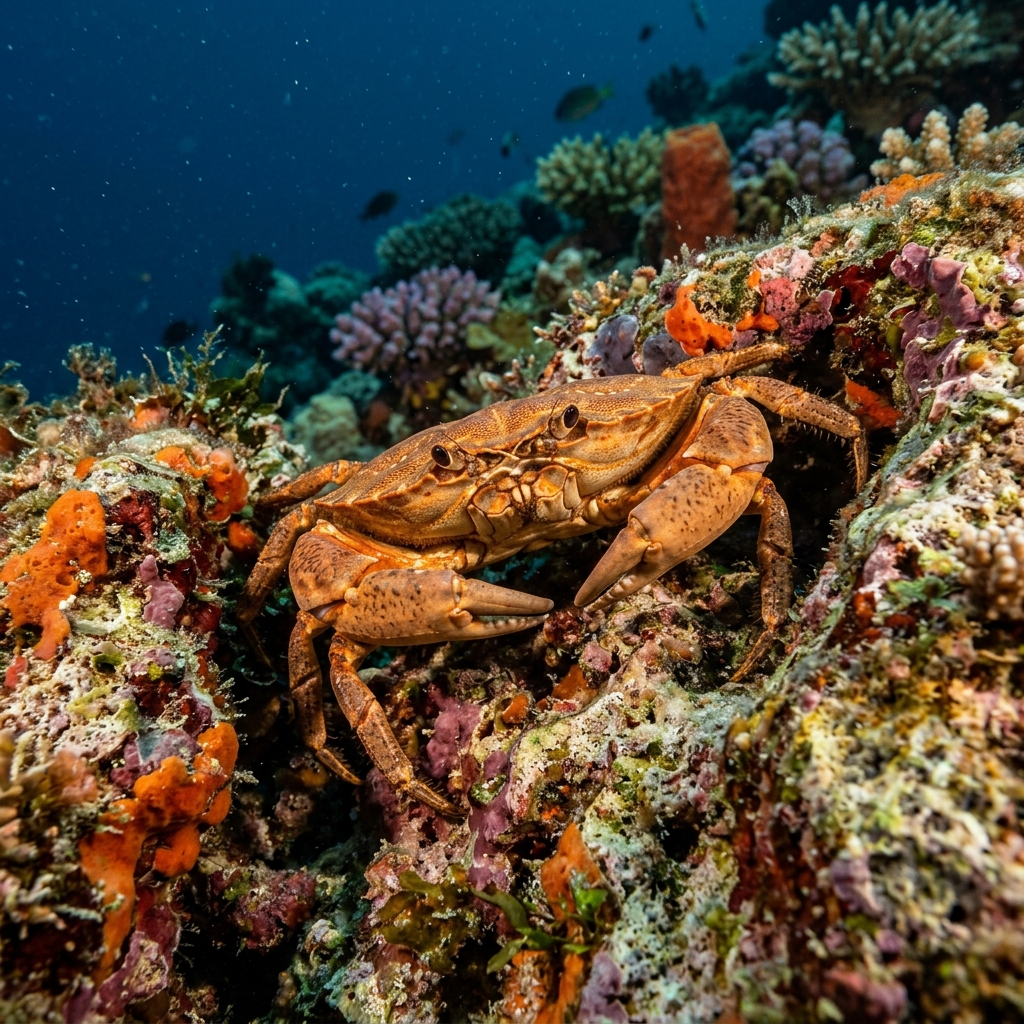
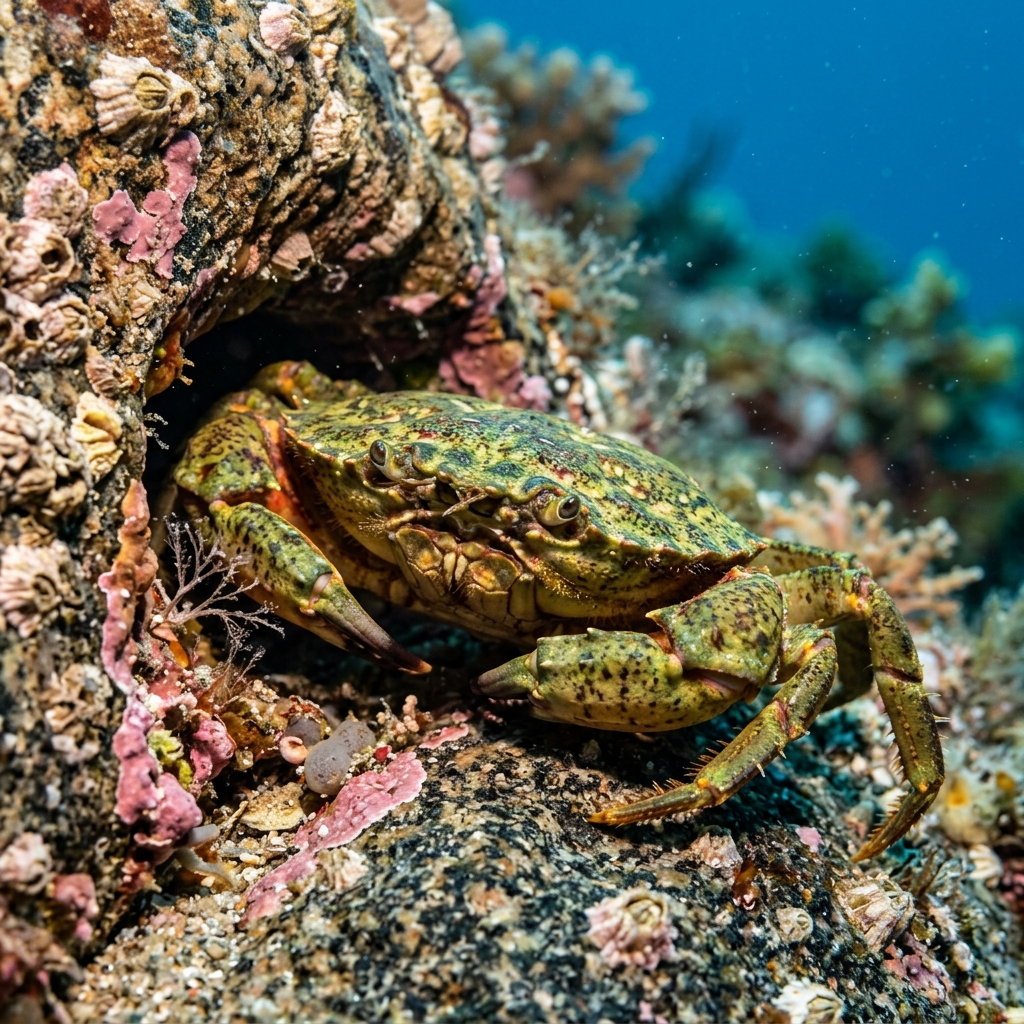
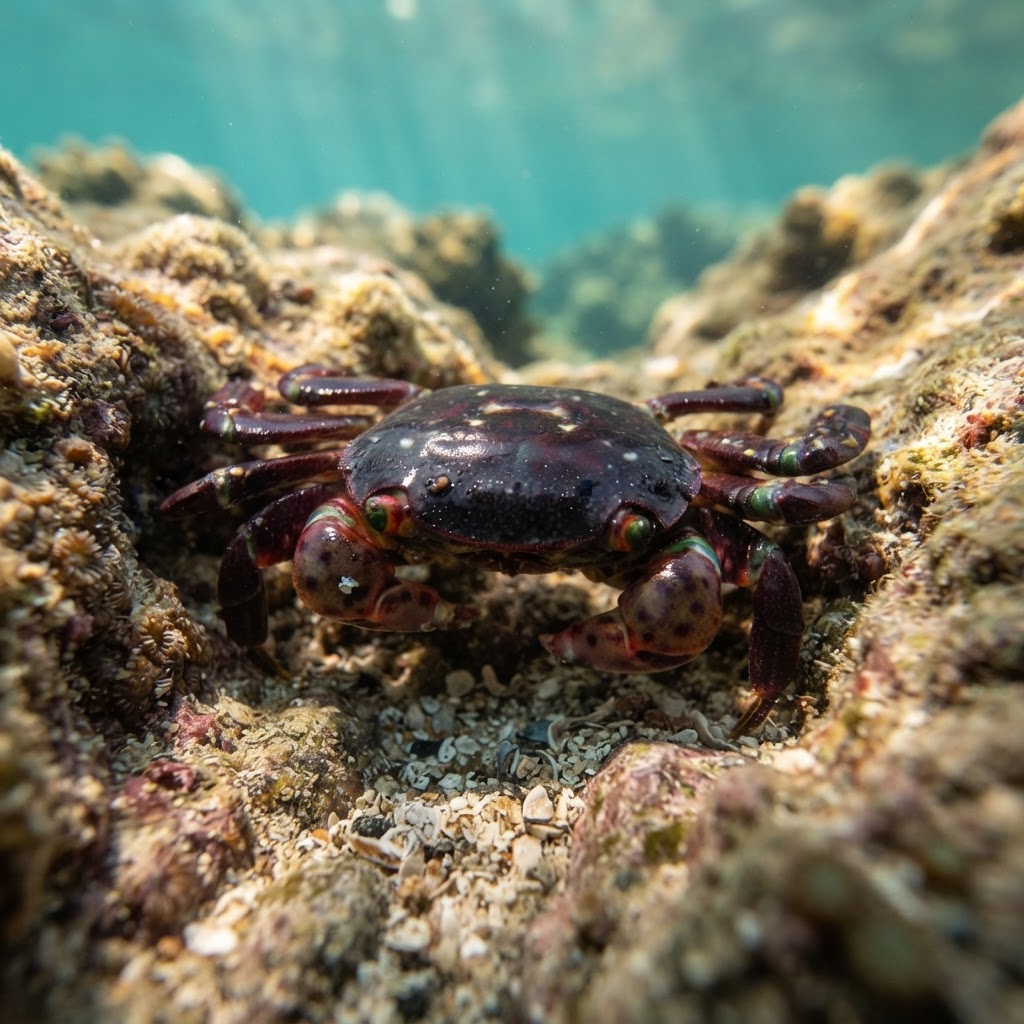
Look for a squarish, flattish carapace mottled in shades of purple, olive and sometimes red, usually no wider than a golf ball to a large coin. The two claws are often unequal in size and marked with dark spots at the base of the fingers, a good field clue against similar shore crabs. It moves fast sideways when a rock is lifted and tucks into crevices rather than standing its ground.
Found tucked under rocks and cobble in the intertidal zone, where it stays out of direct light and scuttles for cover the moment a rock is turned or a shadow passes over. It is quick and defensive rather than bold, often flattening into a crevice or bracing with claws raised if cornered. Most encounters happen while wading or exploring tide pools rather than on an open dive, since it favours the shallow, wave-washed rocky shoreline.
It can tolerate long stretches out of water between tides, closing up in damp crevices and slowing its metabolism until the next high tide floods its patch of shore.
Sightings run year-round with no clear seasonal spike in the data, which fits a species living in a narrow 8.5 to 14.5C band typical of cool Pacific coastlines. Low tide is the practical trigger for finding it, any month, rather than a particular season.
This is a cold-water, benthic species most reliably found along the Pacific coast of North America, with the strongest logs coming from the Pacific Northwest in the United States and British Columbia in Canada. California sites add a smaller but steady share of sightings, with occasional records further north in Alaska.
Mapping where Purple Shore Crab is logged…
It is most reliably found along the Pacific Northwest coast of the United States and around British Columbia in Canada, with a steady presence in California too. It lives in the rocky intertidal zone, so most sightings come from shore exploring or tide-pooling rather than deep dives.
There is no strong season in the data, sightings happen year-round in its cool 8.5 to 14.5C water range. The real trigger is tide timing, low tide exposes the rocks and cobble where it shelters.
Check the carapace for a mottled purple and olive pattern and a squarish shape, plus dark spots at the base of the claw fingers. It is small, quick, and usually seen darting for cover when a rock is disturbed rather than sitting in the open.
Exact size figures are not confirmed here, but in the field it reads as a small crab, typically no bigger than a large coin across the carapace, easy to miss unless you are actively turning rocks.
No, it poses no real risk to divers or waders. It relies on speed and hiding rather than aggression, though like any crab it can give a light pinch if handled carelessly.
It can survive extended periods out of water between tides by sheltering in damp crevices and slowing down, which lets it live higher up the shore than many marine crabs manage.
Site and sighting data is aggregated from diver logs, iNaturalist and GBIF. For taxonomy and conservation status:
European Green Crab
2,469 sites