Scarus fuscopurpureus
Find purple-brown parrotfish year-round on Red Sea reefs, most reliably around South Sinai in 24-29C water.
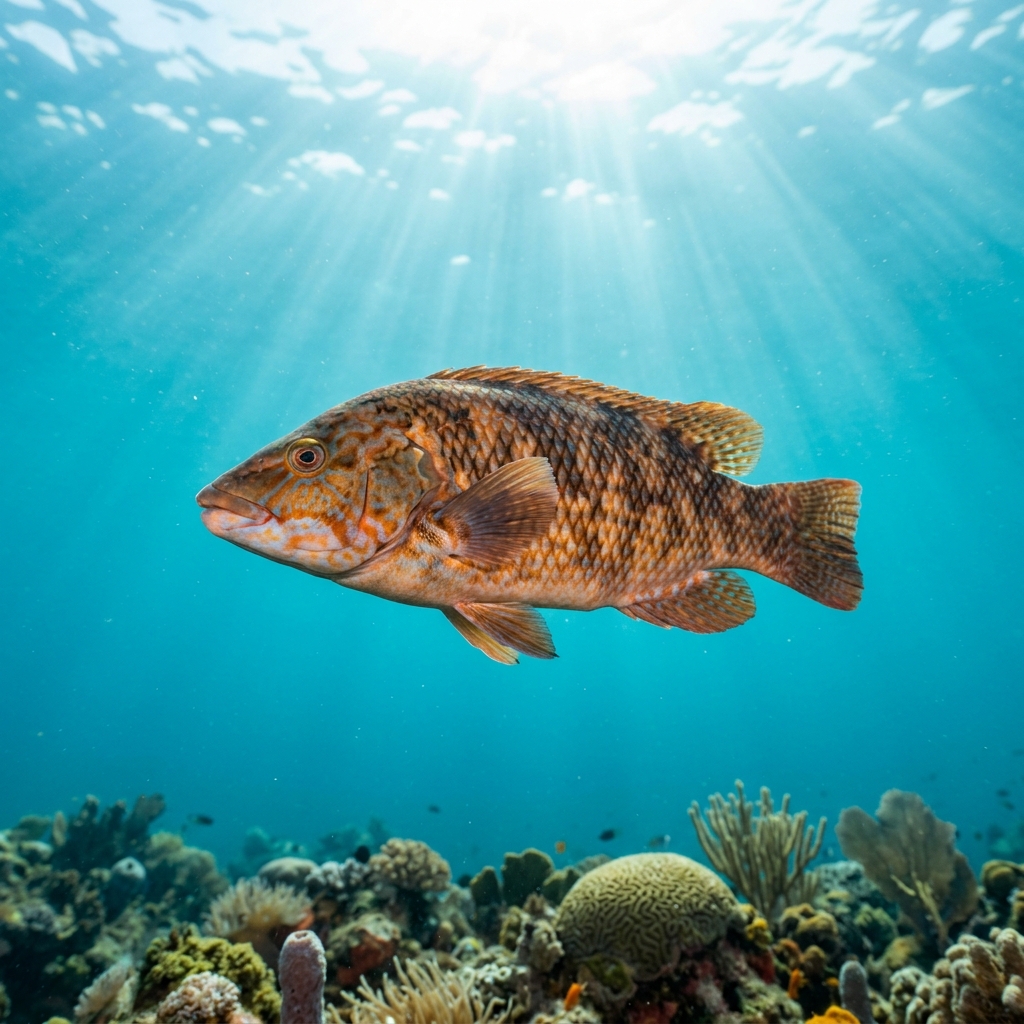
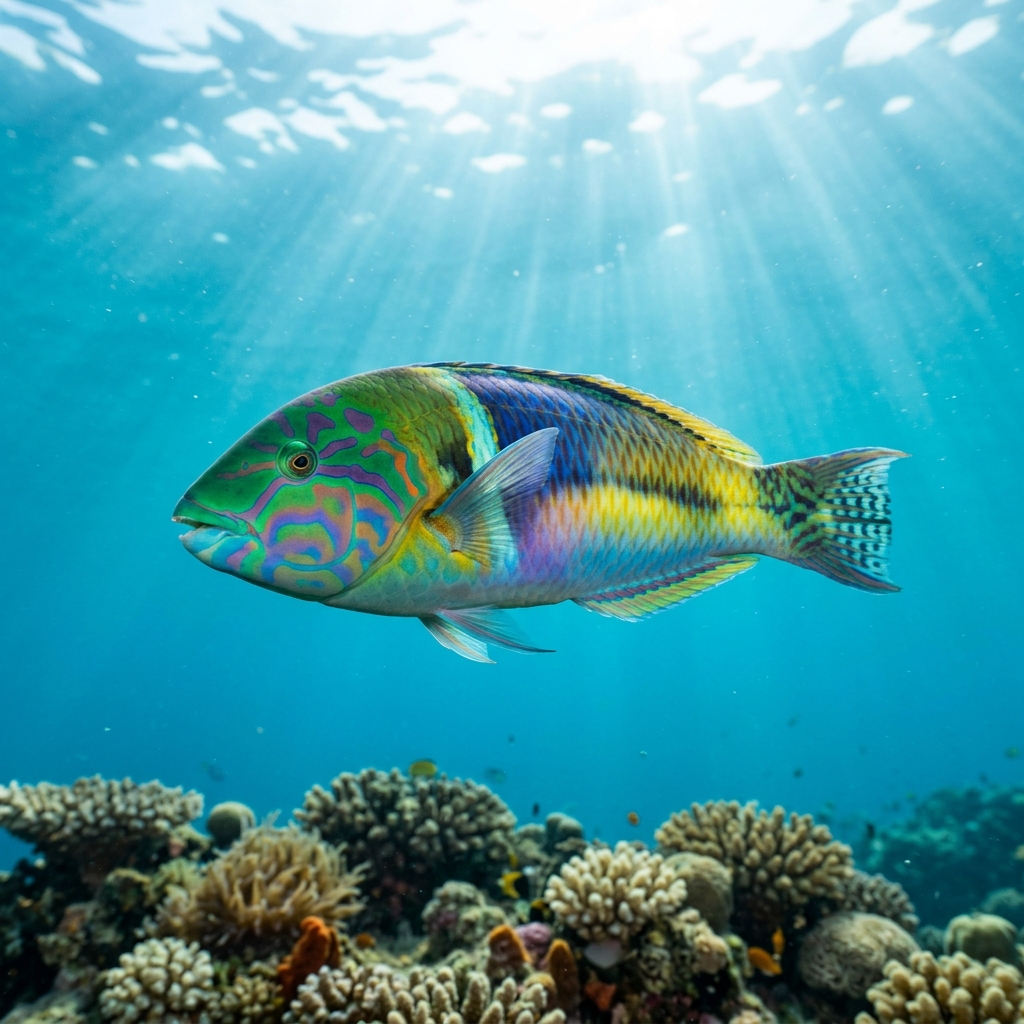
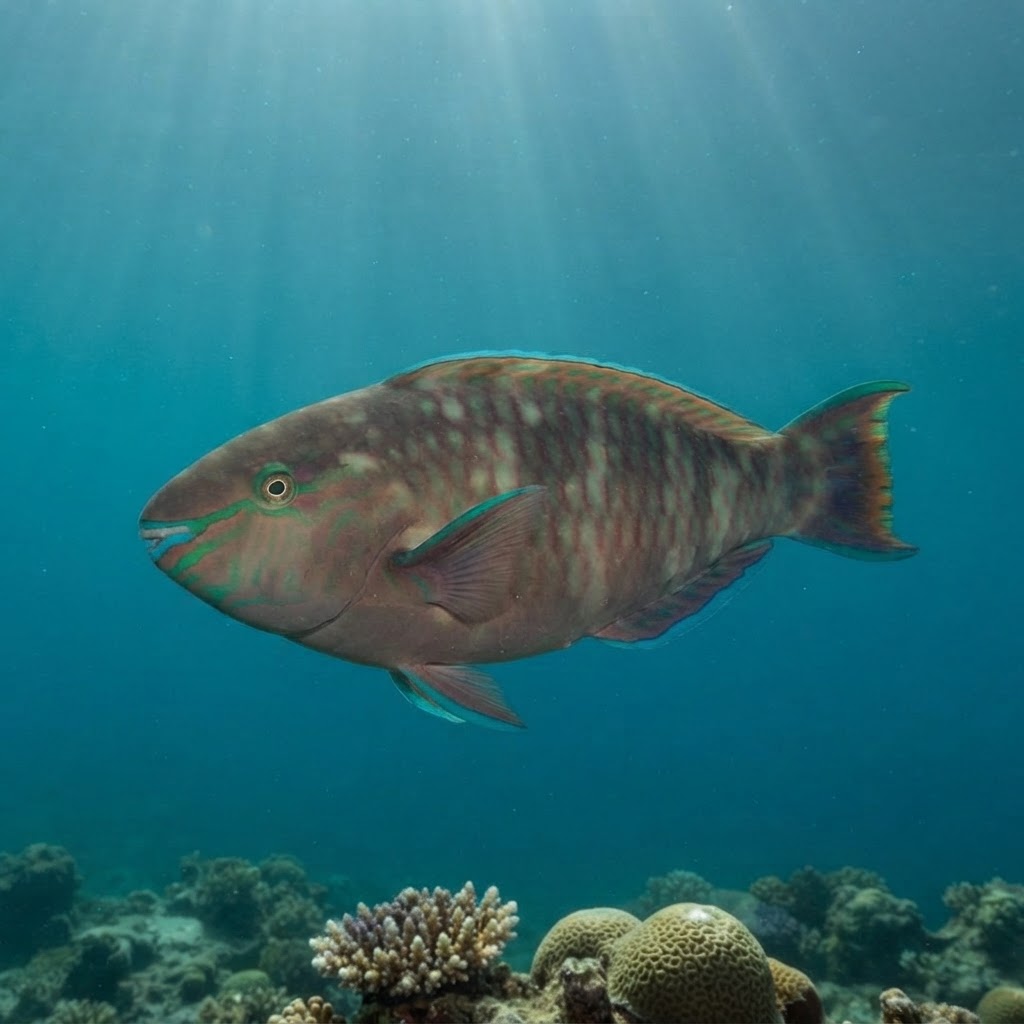
A stocky, medium-sized parrotfish around 26 cm, with an overall dusky purple-brown body that can look almost uniform in dim light. The fused beak-like teeth are the giveaway for the family, and this species lacks the bright turquoise or green highlights of some Red Sea parrotfish, keeping to muted browns and purples across the body and fins. Look for it grazing low over reef structure rather than out in open water.
Expect to see it working over the reef in the shallow to mid-depth zone, generally between 2 and 20 metres, scraping algae and turf off rock and dead coral with that fused beak. It is logged as uncommon at most sites where it appears, common at a smaller number, so sightings tend to be a pleasant surprise rather than a guarantee, and individuals are usually unbothered by divers keeping a normal distance.
Parrotfish teeth are fused into a solid beak that lets them rasp algae straight off hard reef surfaces, and the grinding process is a real source of the fine sand that builds up on nearby beaches.
No clear seasonal pattern shows up in the sightings, and with a comfortable range of roughly 24.8 to 29.2C, these reefs stay diveable year-round, so there is no need to time a trip around a particular month for this species.
This one is very much a Red Sea and northern Red Sea/Gulf of Aqaba fish, most commonly logged in Egypt, especially around South Sinai and the Red Sea Riviera, with a solid secondary population in Eilat, Israel and Aqaba, Jordan. Smaller numbers turn up along Saudi Arabia's Red Sea coast and further south around Marsa Alam, so divers working the classic Sinai and Aqaba Gulf sites have the best odds.
Mapping where Purple-brown Parrotfish is logged…
They are most reliably seen in Egypt's South Sinai and Red Sea Riviera regions, with additional sightings around Eilat in Israel and Aqaba in Jordan. Smaller numbers are logged along Saudi Arabia's Red Sea coast.
There is no strong seasonal pattern in the sightings, and water temperatures on these reefs stay in a comfortable 24.8 to 29.2C range through the year, so they can turn up on any dive regardless of month.
Look for a stocky parrotfish around 26 cm long with a dusky, muted purple-brown body and a fused beak-like mouth. It is usually seen grazing close to the reef surface rather than swimming in open water.
They typically reach around 26 cm in length, making them a medium-sized member of the parrotfish group rather than one of the larger reef parrotfish.
No, they are not considered dangerous to divers. They are reef grazers that go about scraping algae off rock and coral and generally ignore passing divers.
They use their fused beak-like teeth to rasp algae and turf off dead coral and rock, which is their main food source. The leftover crushed coral material contributes to the sand found on nearby reefs and beaches.
Site and sighting data is aggregated from diver logs, iNaturalist and GBIF. For taxonomy and conservation status:
Bird Wrasse
3,632 sites