Ozius verreauxii
A rare reef crab logged only around the Galápagos Islands, spotted year-round in 21-27C water among volcanic rock and rubble.
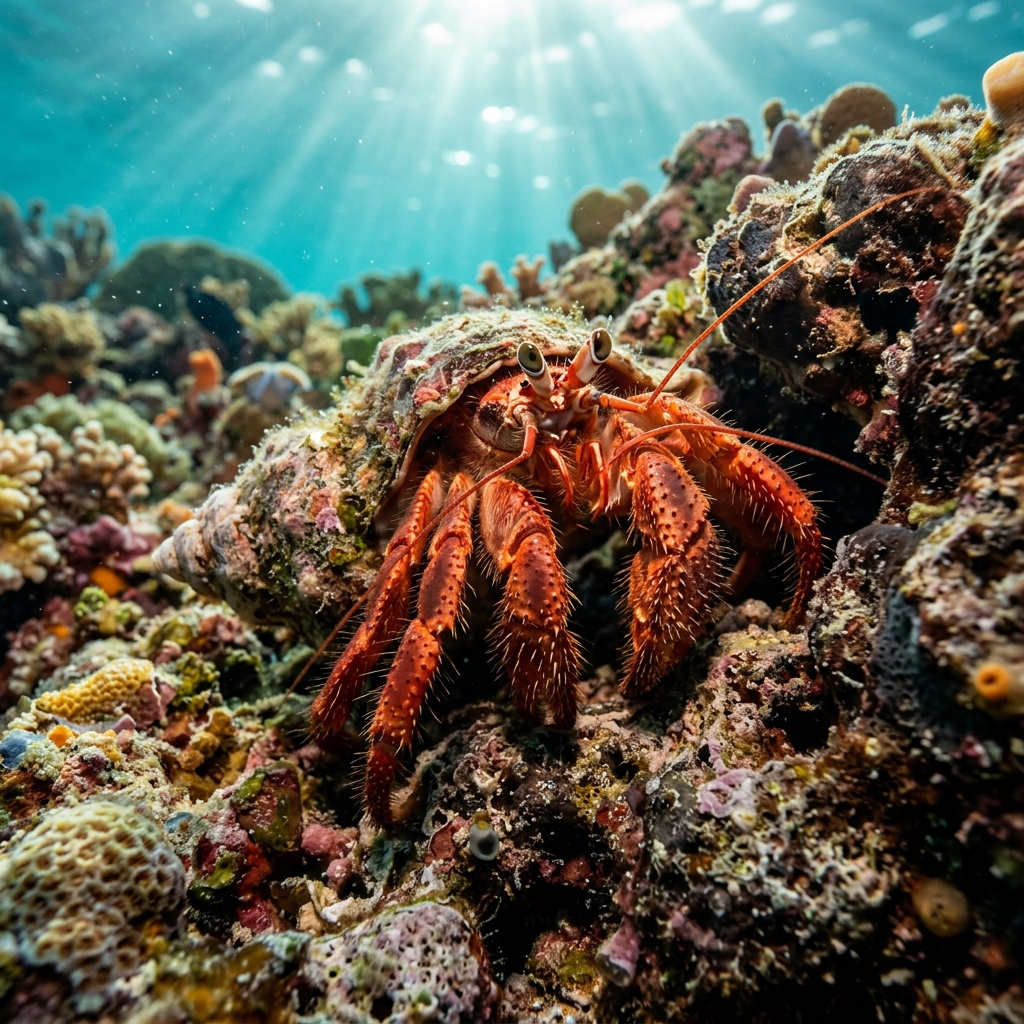
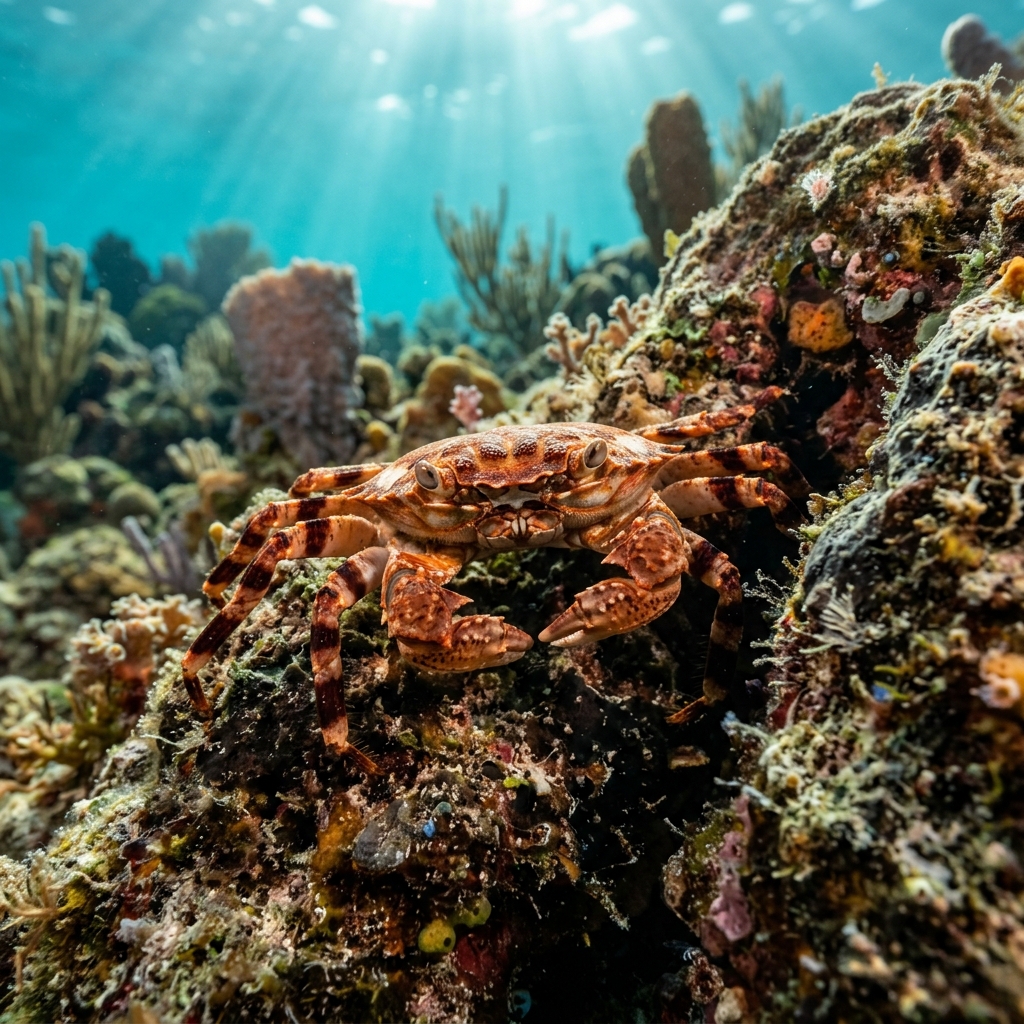
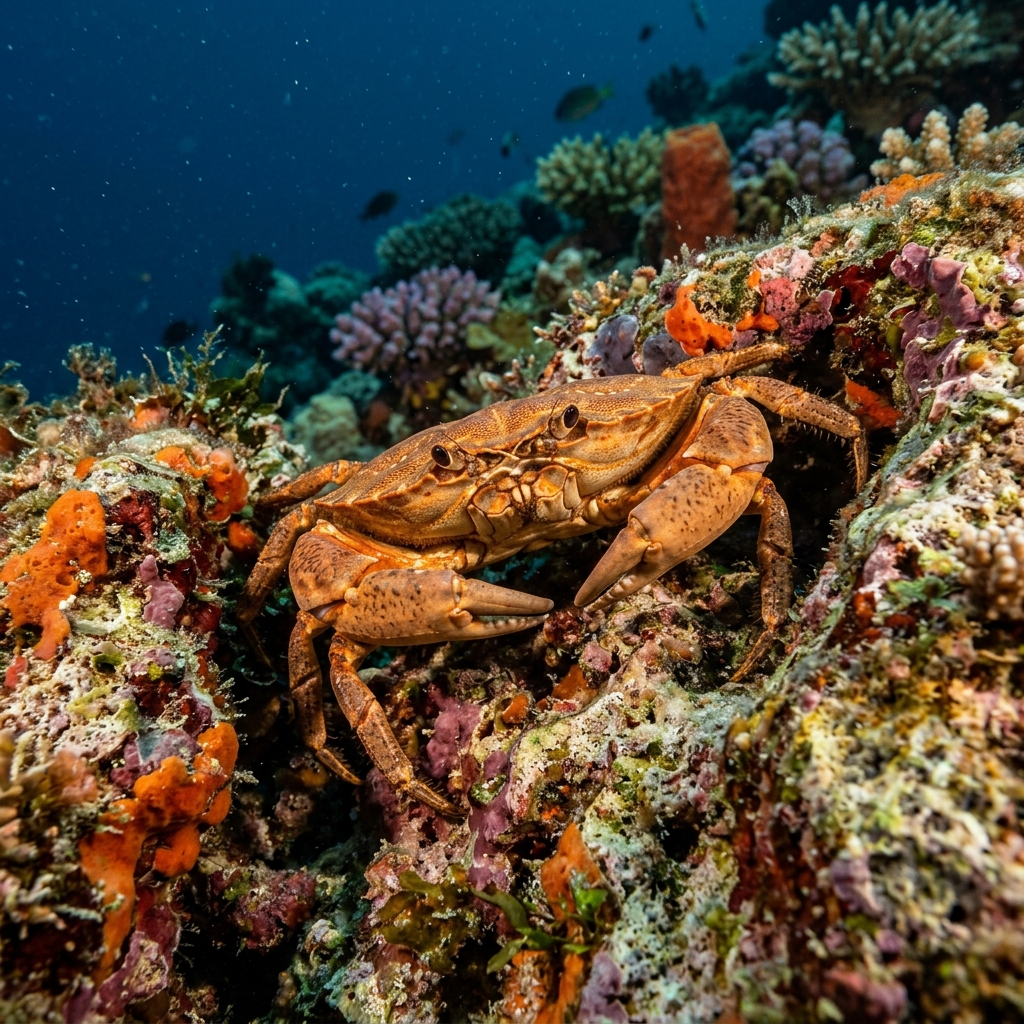
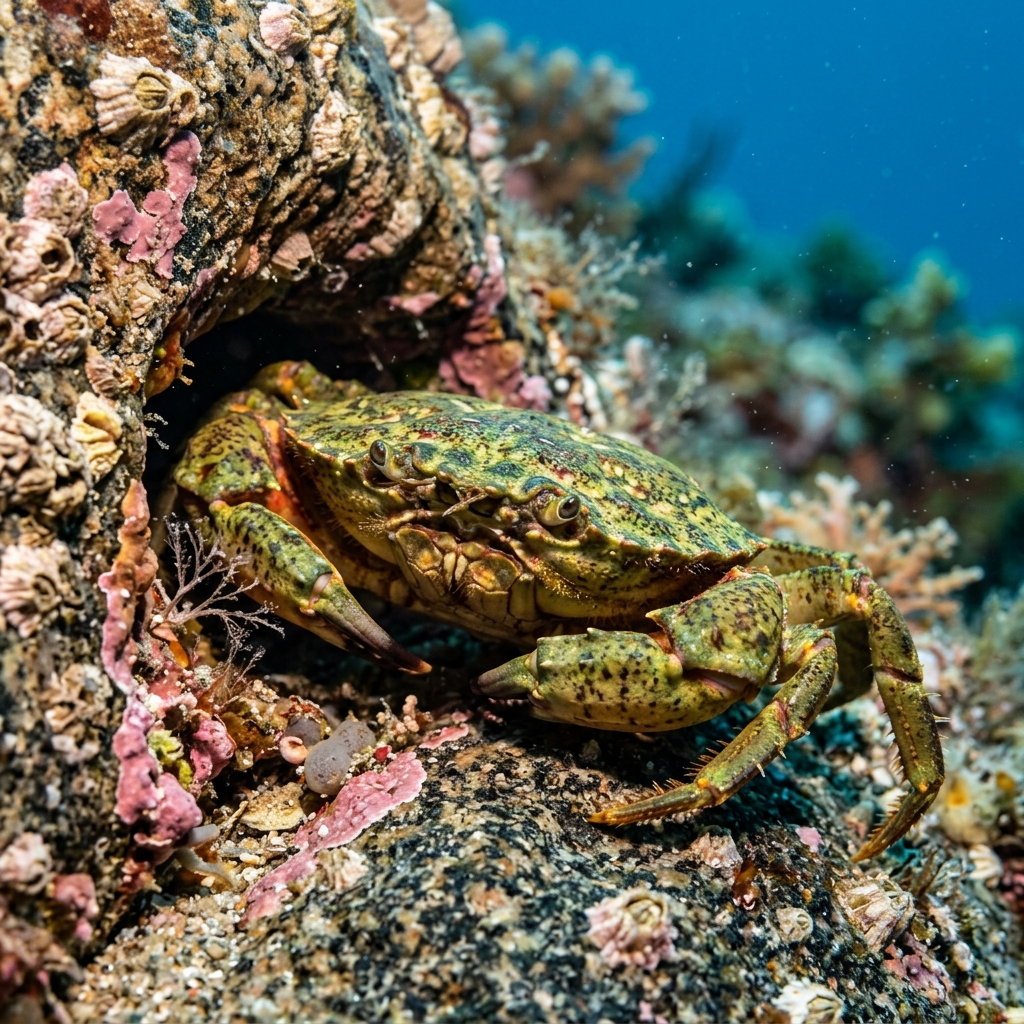
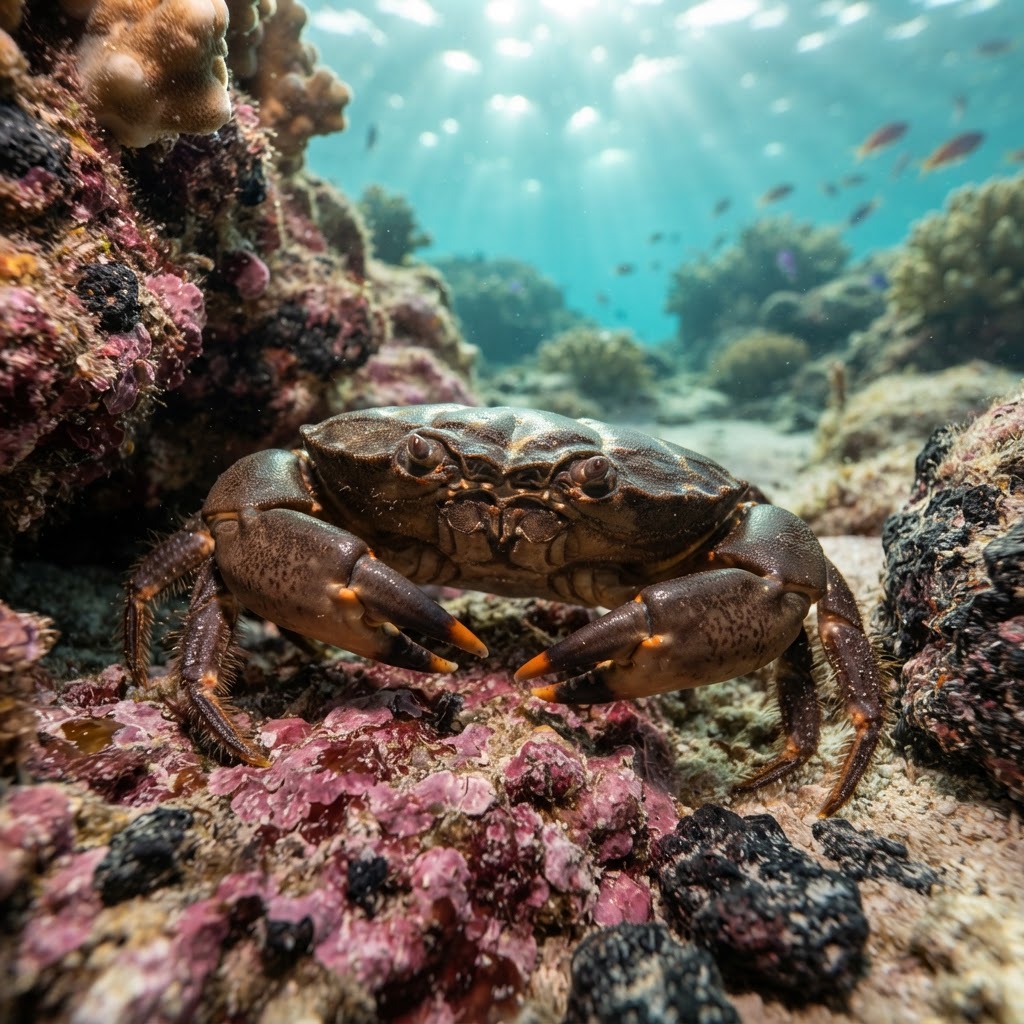
A stocky, rounded crab with a hard, dark reddish-brown to purplish shell and thick, blunt-tipped claws built for crushing rather than slicing. It sits low and tight against rock, often wedged into a crevice with only the front of its carapace and claws visible. There is no bright pattern to key on here; the giveaway is the smooth, heavy-armoured look of the shell paired with a squat body shape, not colour.
Divers who find this crab usually spot it tucked into a crevice or under a rock ledge on the reef, holding still rather than scuttling about in the open. It is logged as rare to uncommon at every site, so it takes a deliberate look under ledges and among boulders rather than turning up on an open swim. It shows little reaction to divers beyond retreating deeper into its hiding spot if disturbed.
Its thick, blunt claws are built for crushing hard-shelled prey like snails and small molluscs rather than tearing softer food, which is typical of stone crabs in the family Oziidae.
Sightings do not show a clear season, and the water temperature range logged (21 to 27C) covers most of the year in Galápagos, so this is best treated as a year-round find rather than a seasonal one.
Every logged sighting so far comes from the Galápagos Islands, Ecuador, making this the only region divers have reliably found this crab on rocky reef and rubble bottoms. It has not turned up elsewhere in diver records, so treat Galápagos as the place to look rather than a jumping-off point to other regions.
Mapping where Punched Stone Crab is logged…
The only confirmed sightings logged by divers are around the Galápagos Islands, Ecuador, on rocky reef and rubble habitat. It has not been reported from other regions in diver records so far.
There is no detected seasonal pattern, and the recorded water temperatures (21 to 27C) span most of the year in Galápagos, so sightings are treated as possible year-round.
Look for a squat, heavily armoured crab with a dark reddish-brown to purplish shell and thick, blunt claws, usually wedged into a rocky crevice rather than out in the open. There is no bold colour pattern; the ID relies on its stocky build and crushing-claw shape.
No, this species poses no known danger to divers. It is a small, retreating crab that hides in crevices rather than interacting with people.
Yes, it is logged as rare at most of the sites where it has been recorded and uncommon at the rest, so spotting one takes a careful search under rocks and ledges rather than a casual reef swim.
Site and sighting data is aggregated from diver logs, iNaturalist and GBIF. For taxonomy and conservation status:
European Green Crab
2,469 sites