Anampses chrysocephalus
A tiny, color-blocked wrasse that's tricky to log: here's how to spot one and what water temps it favours, from 12 to 26 C.
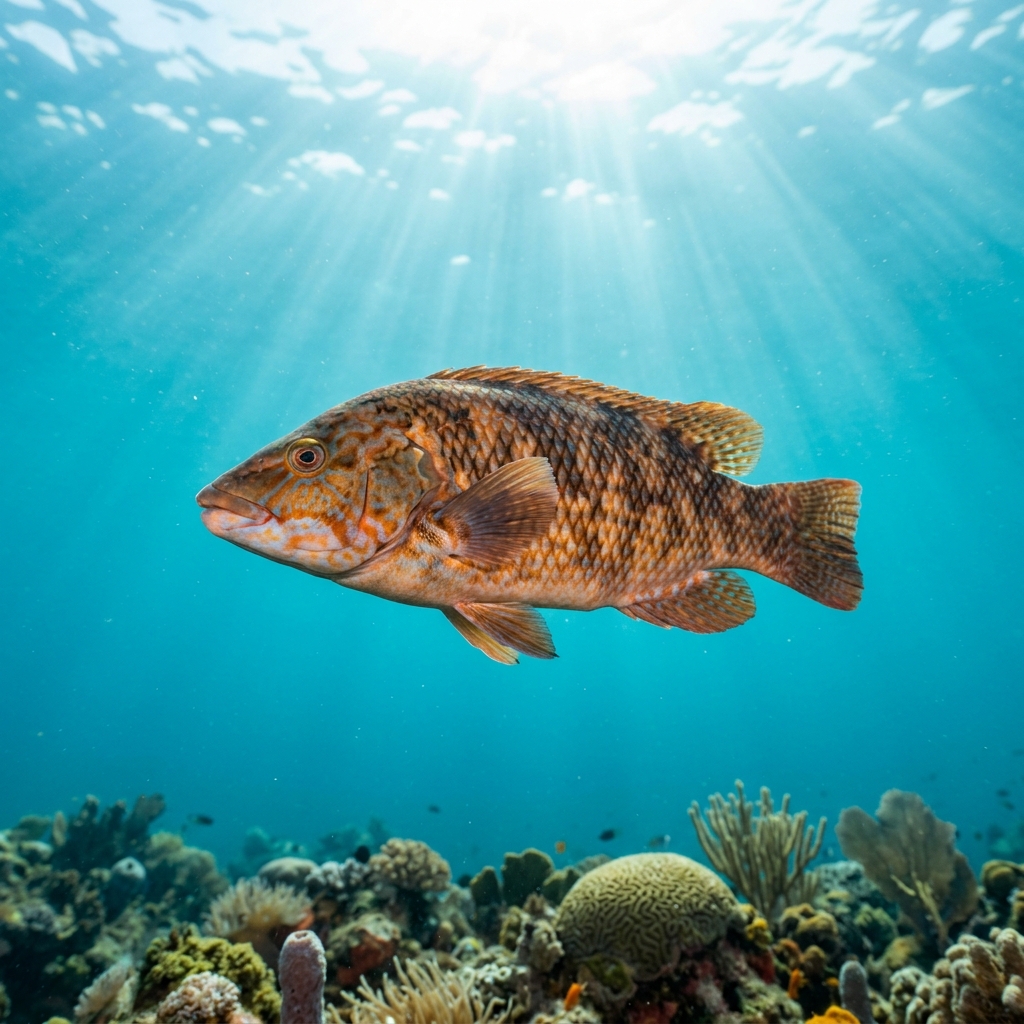
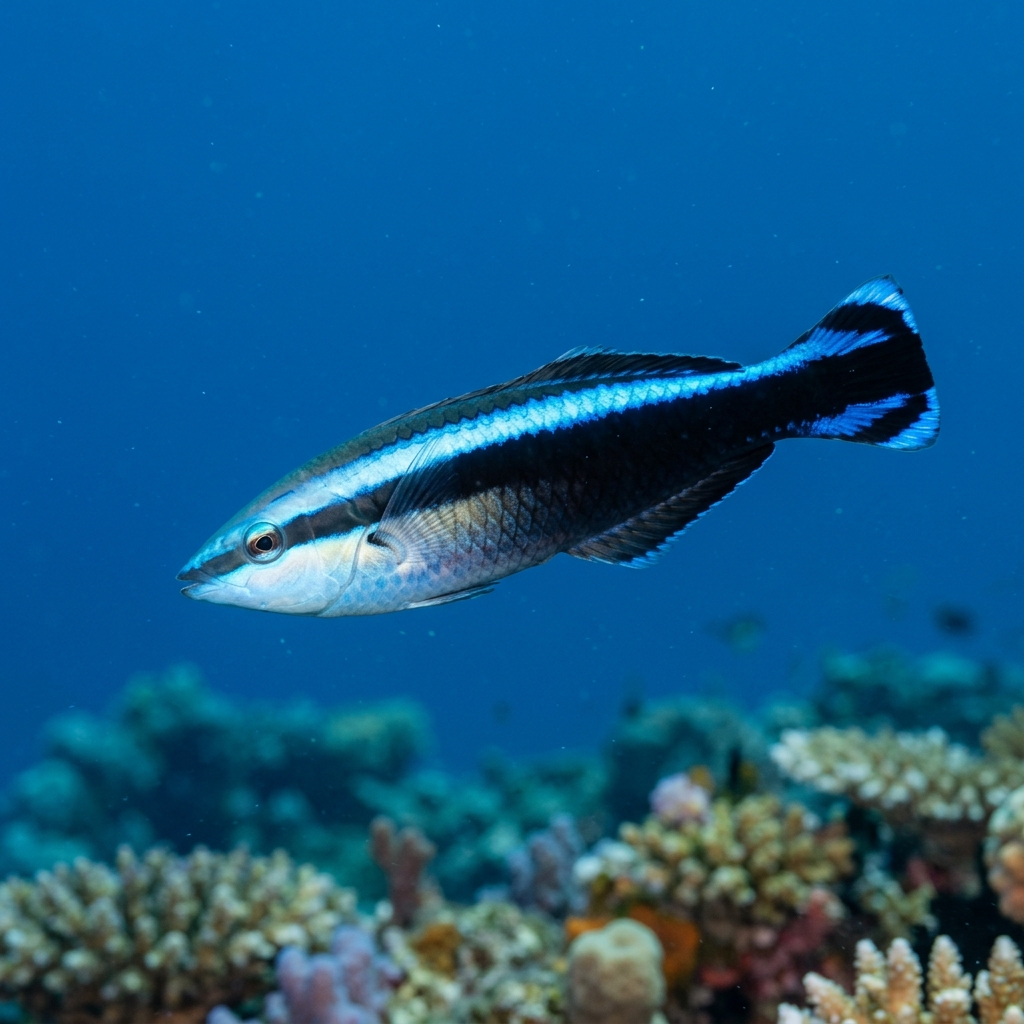
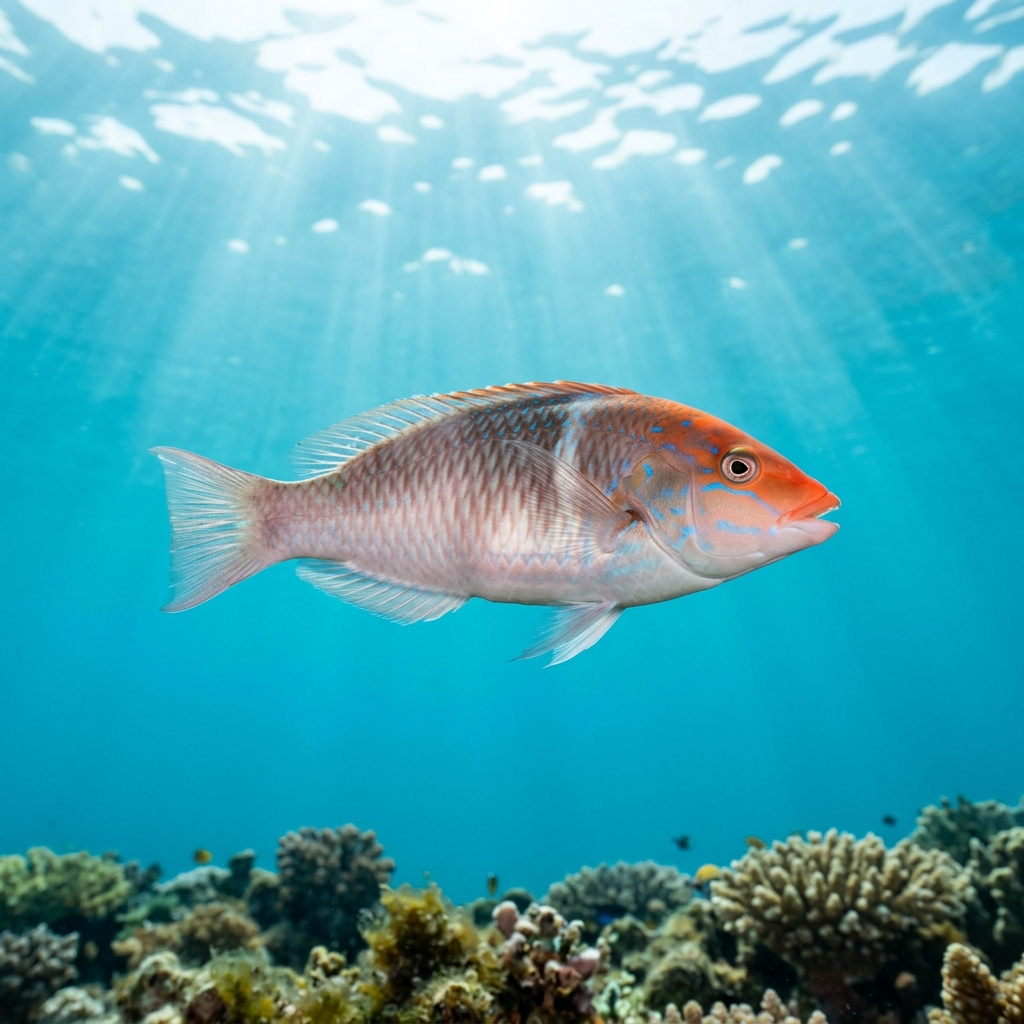
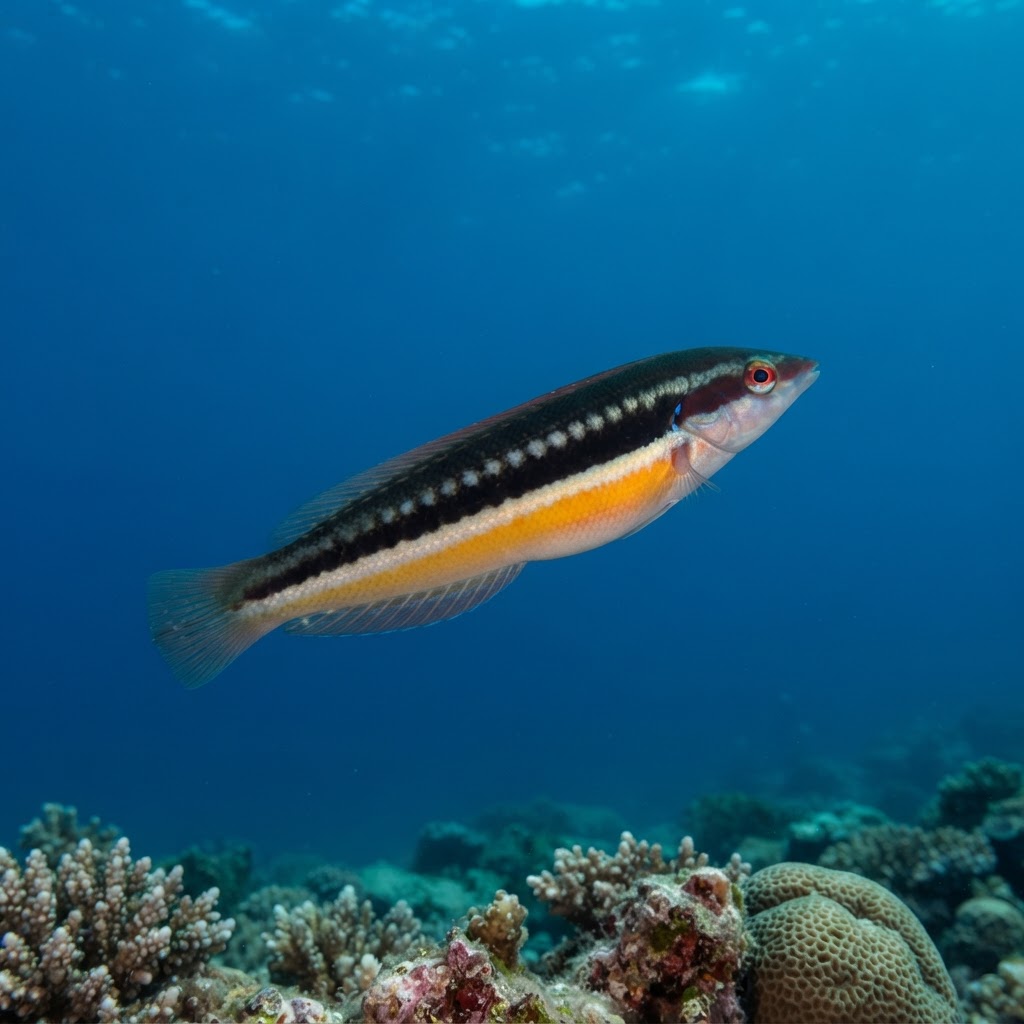
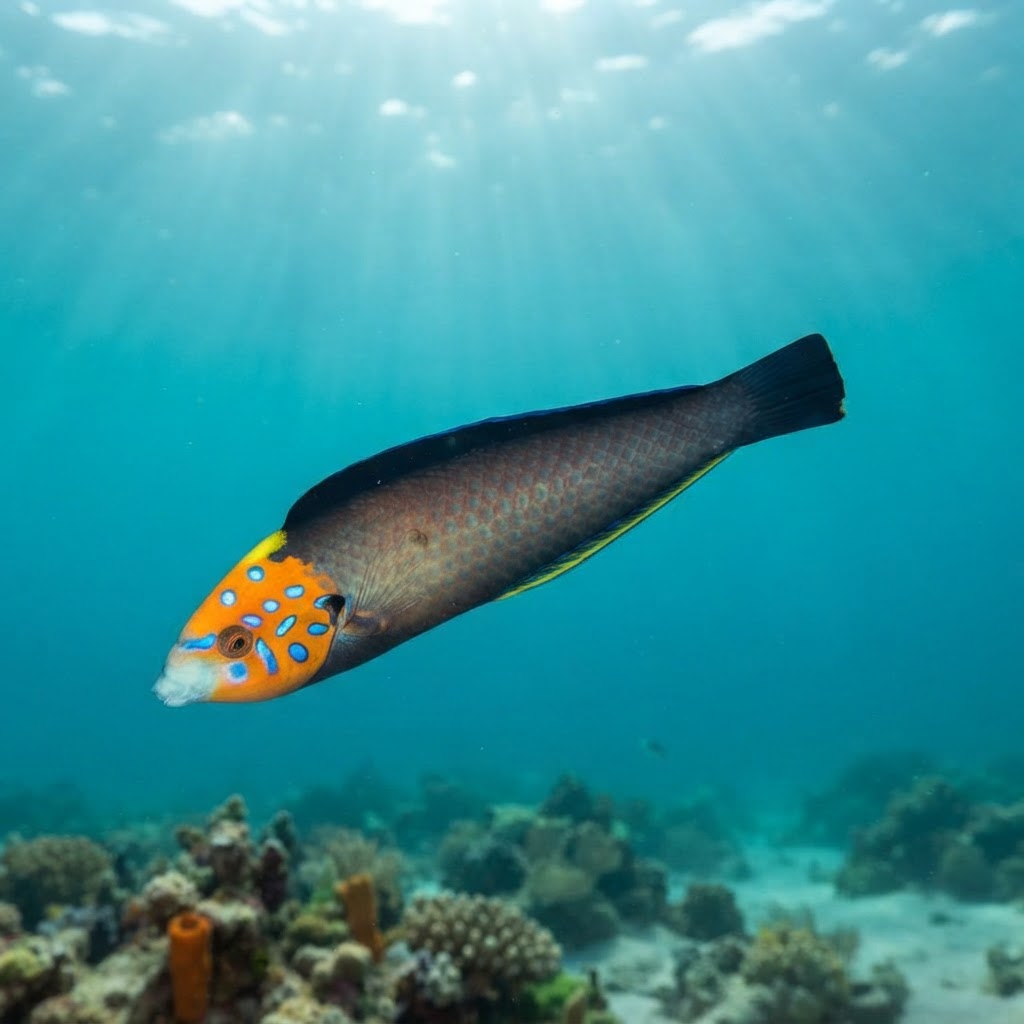
Small wrasse, around 12 cm, with a body split into color zones: an orange-red head and forebody giving way to a dark blue-black rear half and tail. The contrast line between the two colours is sharp rather than blended, which is the main thing to key on underwater. It swims low and close to the reef, darting between rubble and coral heads rather than cruising open water.
Divers typically spot this wrasse picking around low reef structure and rubble patches, staying close to cover rather than out in open water. It tends to be a quick, darting swimmer, more often glimpsed briefly than watched at length, and it doesn't show any particular interest in divers either way.
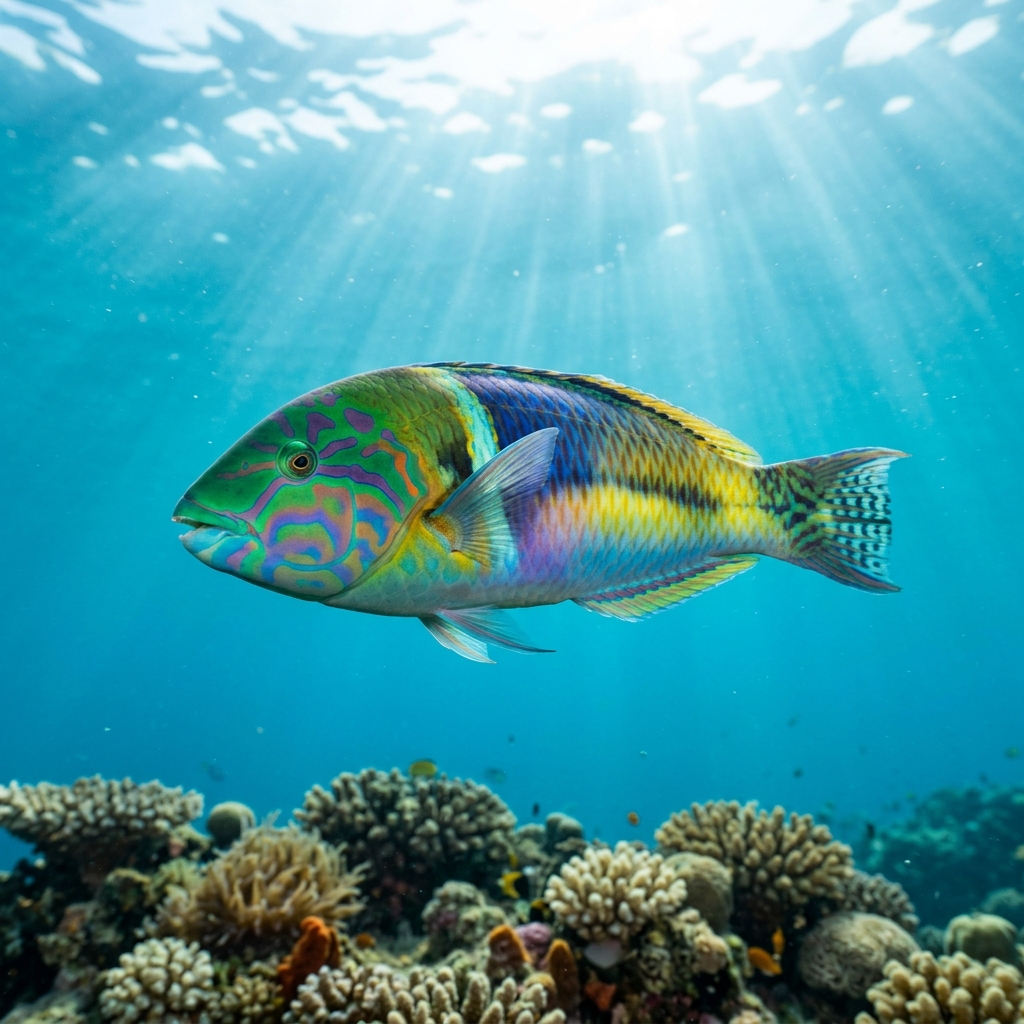
Like many wrasses, it likely changes colour pattern between juvenile, female, and male life stages, though the dramatic orange-and-blue-black look is what most divers photograph and remember.
Observed water temperatures range widely, from 12.1 to 26.0 C, and there isn't enough monthly sighting data to detect a real seasonal pattern, so treat it as a year-round possibility on reefs within that range.
There isn't enough logged dive-site data yet to name specific regions with confidence for this species. Anampses chrysocephalus is native to the Pacific, particularly around Hawaii, but broader diver-reported sightings across dive sites are still too sparse to map reliably here.
Mapping where Psychedelic Wrasse is logged…
Look for a small wrasse, about 12 cm, with a sharply divided colour pattern: an orange-red front half and a dark blue-black rear half and tail. It stays low, darting around reef rubble rather than swimming in open water.
They're a small wrasse species, typically reaching around 12 cm in length, so you'll be looking for a compact, fast-moving fish rather than anything large.
There isn't a clear seasonal pattern in the sighting data, so it's best treated as a year-round possibility. It's been logged in water temperatures anywhere from 12.1 to 26.0 C.
No, they're not considered dangerous to divers. They're small, reef-associated fish that keep their distance and pose no threat.
Dive-site logging for this species is still too limited to pin down reliable regions, though it's known from Pacific reef habitat, notably around Hawaii.
Site and sighting data is aggregated from diver logs, iNaturalist and GBIF. For taxonomy and conservation status:
Cleaver Wrasse
2,700 sites