Pseudobalistes fuscus
Spot blue triggerfish in the Egyptian Red Sea and Maldives. Recognise that vivid blue-green body and dark-edged scales. Most sightings Jun, Feb in Sharm el Sheikh.
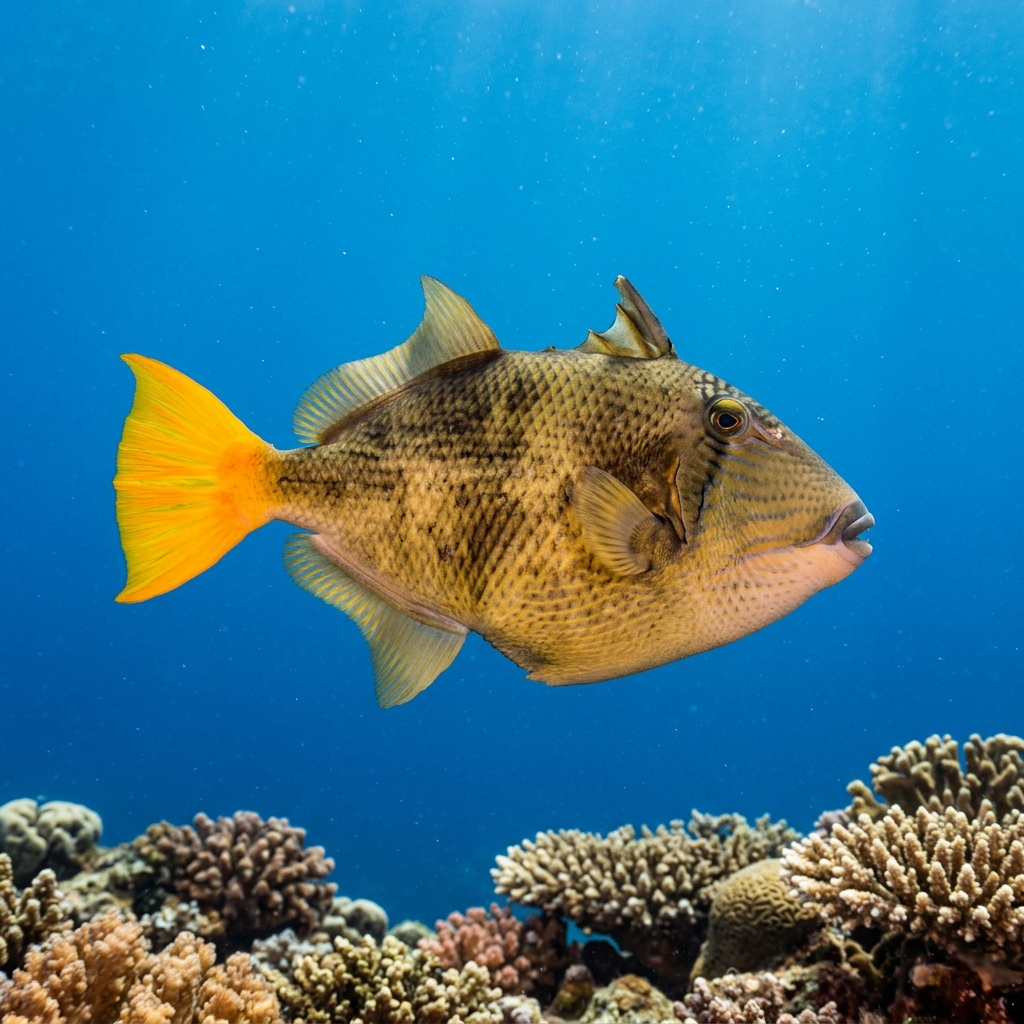
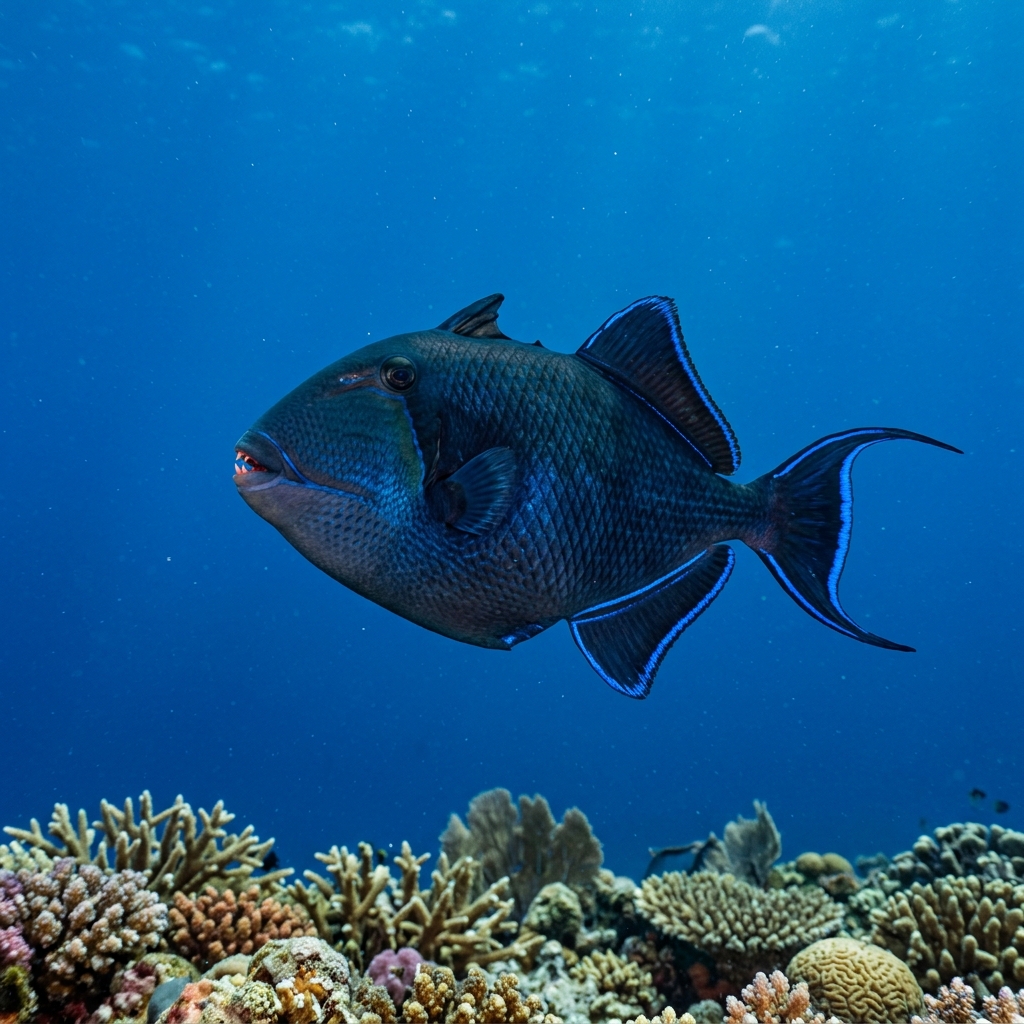
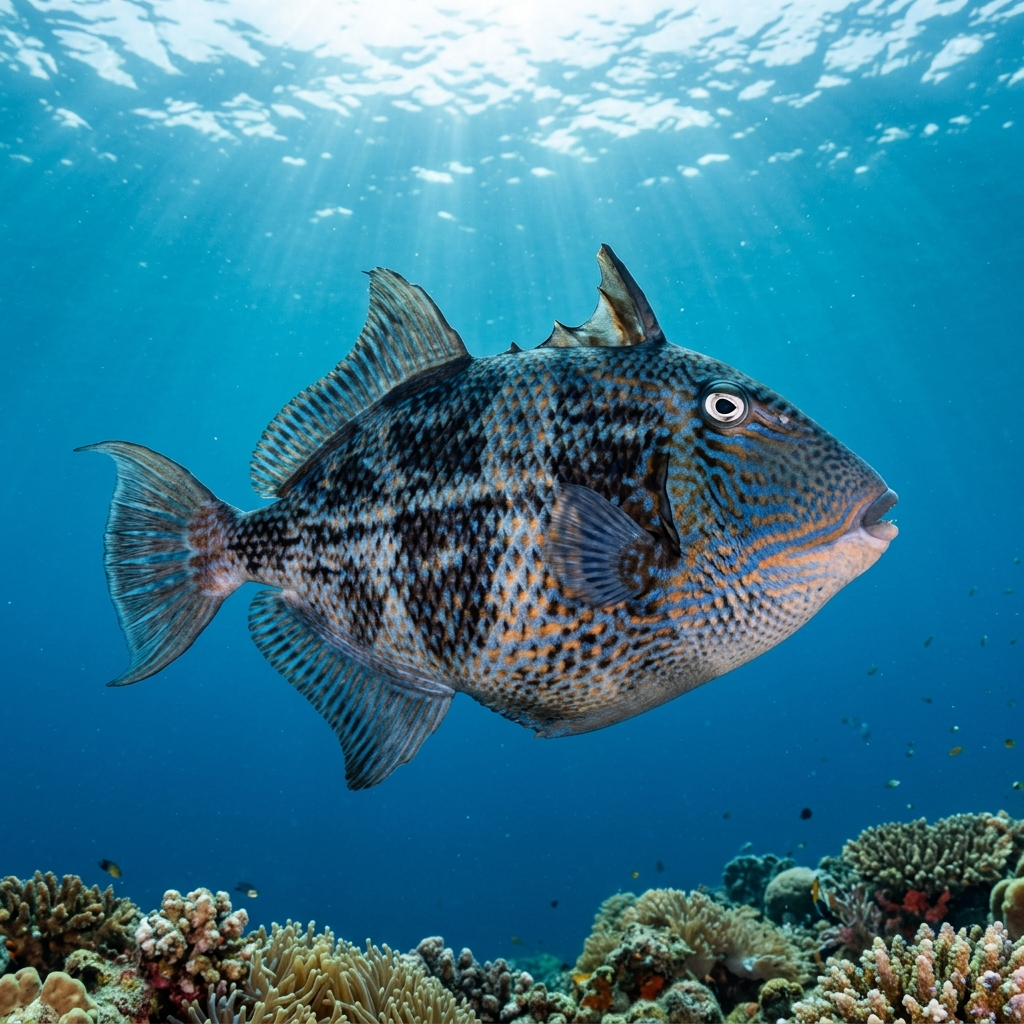
A large, deep-bodied triggerfish whose base colour runs from blue-green to rich indigo, with each scale outlined in dark brown or black, creating a striking net-like pattern across the flanks. The face is pale bluish-grey with faint yellow or greenish streaks radiating from the eye, and the tail fin has an elongated upper and lower lobe in adults that gives it a crescent-moon silhouette. Juveniles show a much bolder pattern of bright blue spots and lines on a yellow-ochre background, making them look almost like a different fish entirely. That deep oval body and the characteristic trigger spine (first dorsal spine that locks upright) confirm the triggerfish family at a glance.
Blue triggerfish tend to patrol outer reef slopes and rubble zones, often alone, moving deliberately as they search for hard-shelled prey such as echinoderms and molluscs. They are generally not bothered by divers and will continue foraging at a steady distance rather than fleeing, though if cornered they may angle their body to display their full profile. Like most large triggerfish, a brooding adult can be territorial around a nest and will angle upward to escort you away from the area, so give any fish behaving that way a wide berth.
Juveniles look so different from adults that they are frequently misidentified as a separate species; the bright yellow-and-blue spotted pattern gradually shifts over months into the dark-netted blue-green adult colouration.
In the Northern Hemisphere (including the Red Sea and Maldives) sightings concentrate from June through February, so the second half of the year and early winter are the most productive. In Southern Hemisphere locations such as New Caledonia and Réunion, the peak runs September to January, aligning with the local warm season.
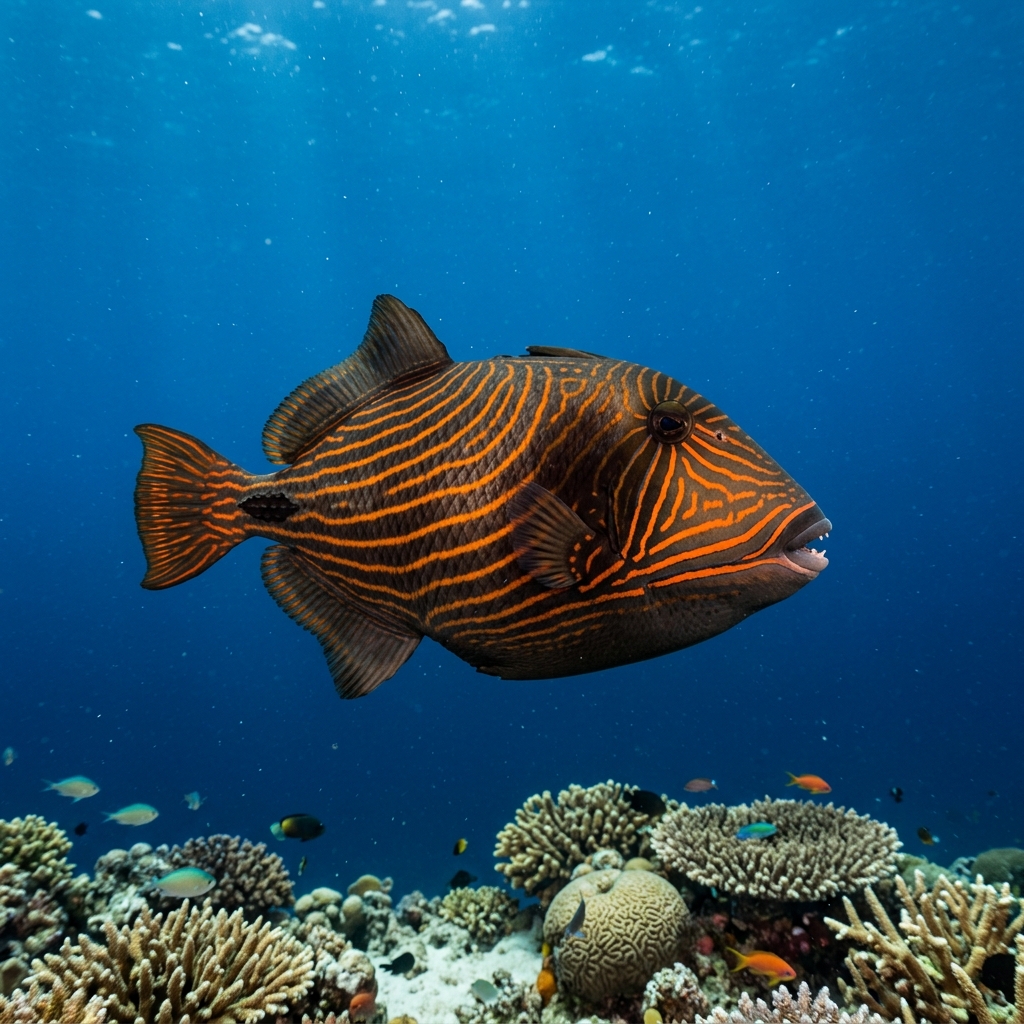
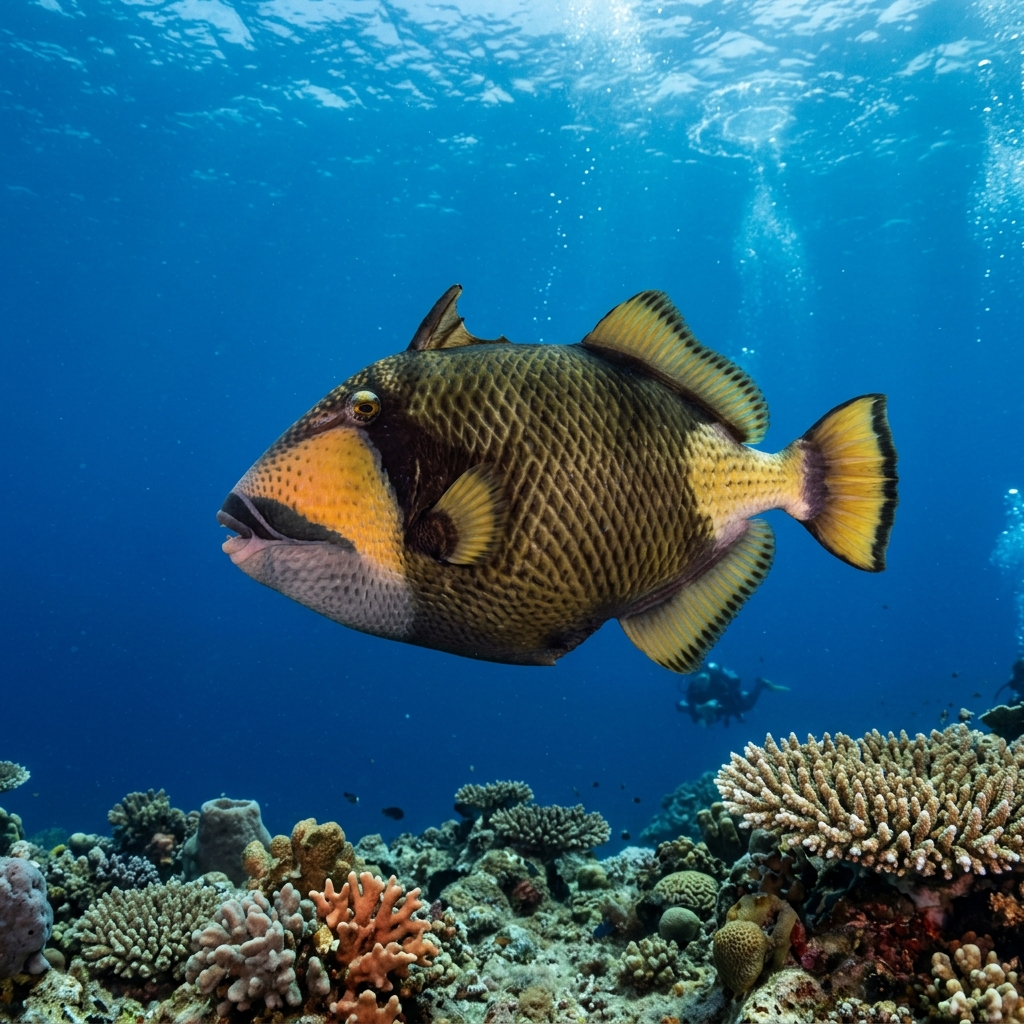
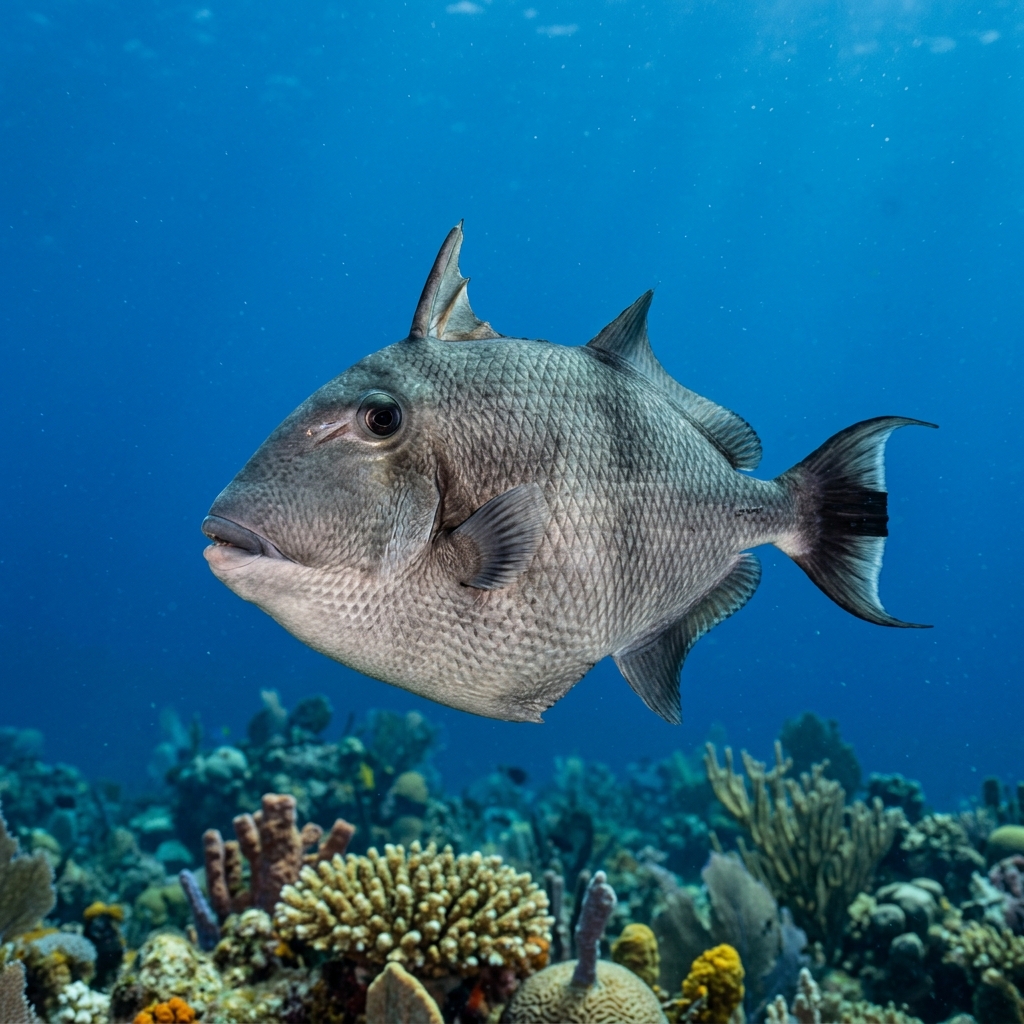
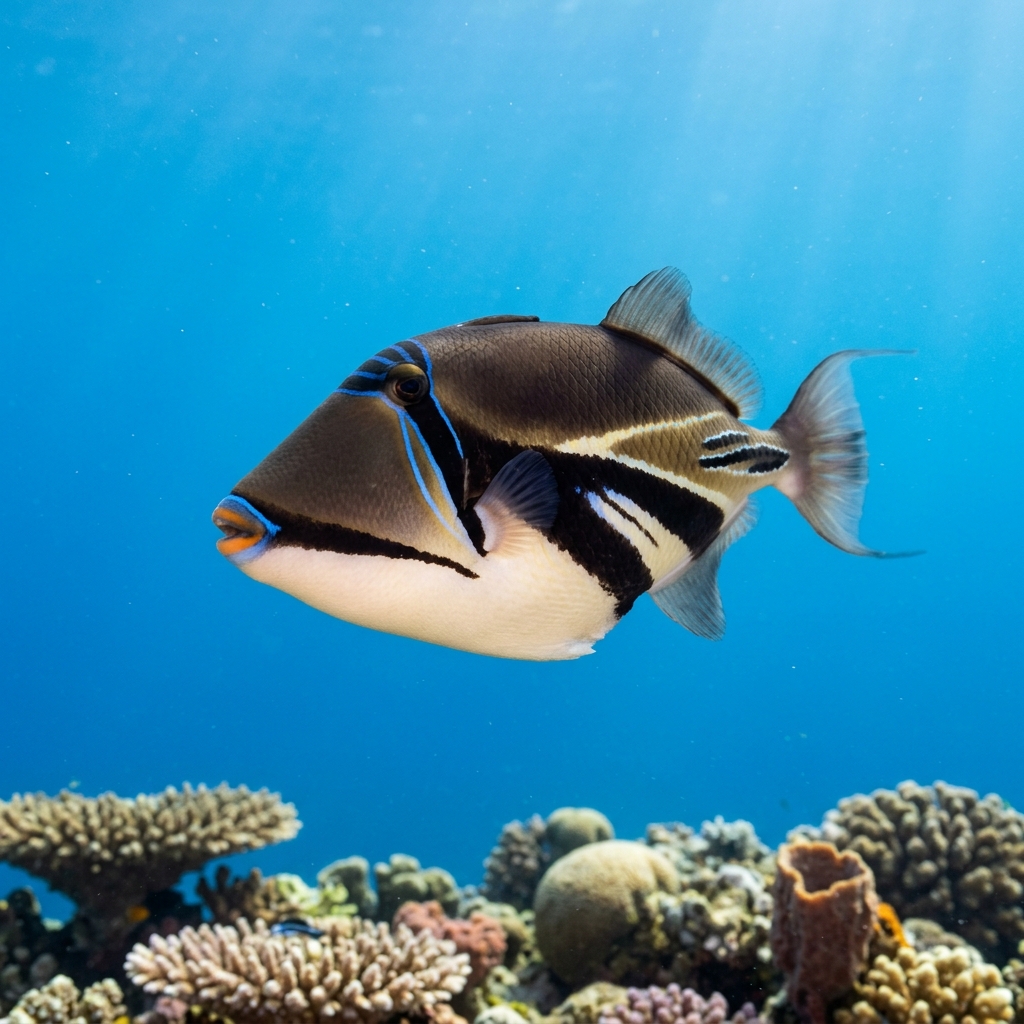
Reef neighbours a diver could mistake it for. Use the identification notes above to tell them apart.
By far the most reliable place to find blue triggerfish is the Egyptian Red Sea, where sightings are concentrated across Sharm el Sheikh, Marsa Alam, Safaga, and Hurghada. Outside Egypt, divers regularly log them in Felidhoo and Mulaku in the Maldives, around Nouméa in New Caledonia, Saint-Gilles-les-Bains on Réunion, and Rarotonga in the Cook Islands. Smaller but consistent records also come from Indonesia, Mozambique, and Israel.
Mapping where Blue Triggerfish is logged…
The Egyptian Red Sea is by far the strongest destination, with Sharm el Sheikh, Marsa Alam, and Safaga all producing regular sightings. Good secondary spots include Felidhoo and Mulaku in the Maldives, Nouméa in New Caledonia, Réunion, and Rarotonga in the Cook Islands.
In the Red Sea and Maldives, sightings peak from June through February. In southern destinations like New Caledonia and Réunion, the September-to-January window sees the most activity. Outside those periods sightings drop noticeably, though the species is present year-round in the warmest reef zones.
Look for the blue-green to indigo body with a distinctive dark-outlined scale pattern that creates a net-like texture across the flanks. Adults develop elongated tail lobes giving a crescent-shaped tail. Juveniles are yellow with bright blue spots and lines and look quite different, but the deep oval body and trigger spine confirm the same species.
Blue triggerfish can reach around 55 cm in total length, making them one of the larger triggerfish species on the reef. In the water they appear notably deep-bodied and robust compared to smaller triggerfish like the lagoon or redtooth triggerfish.
They are not considered dangerous. Unlike titan triggerfish, blue triggerfish do not typically charge divers. A brooding adult near a nest may make short warning runs, but simply moving away resolves the situation. No special precautions are needed on a normal dive.
Site and sighting data is aggregated from diver logs, iNaturalist and GBIF. For taxonomy and conservation status:
Lagoon Triggerfish
2,435 sites