Macropharyngodon geoffroy
A small, jewel-patterned wrasse found almost exclusively around Hawaii's reefs in 25.7 to 29 C water, year-round.
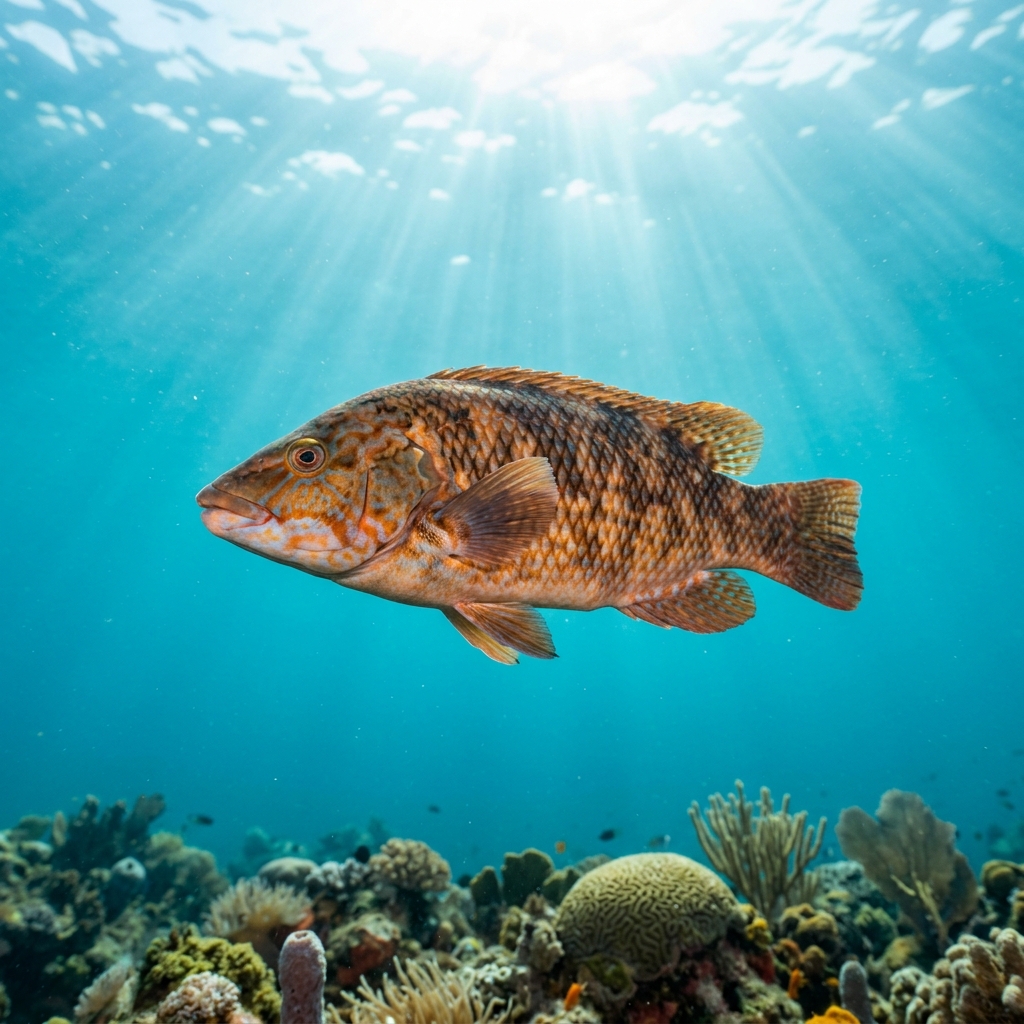
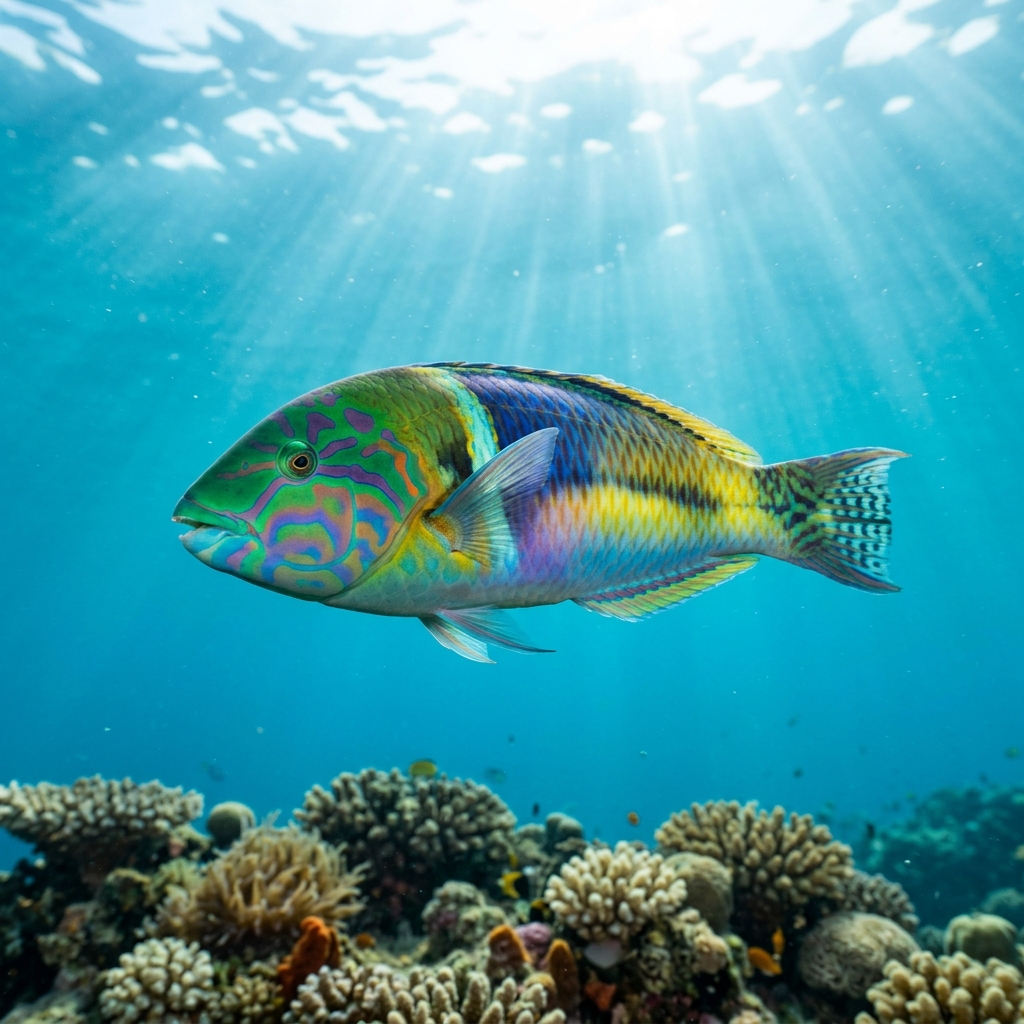
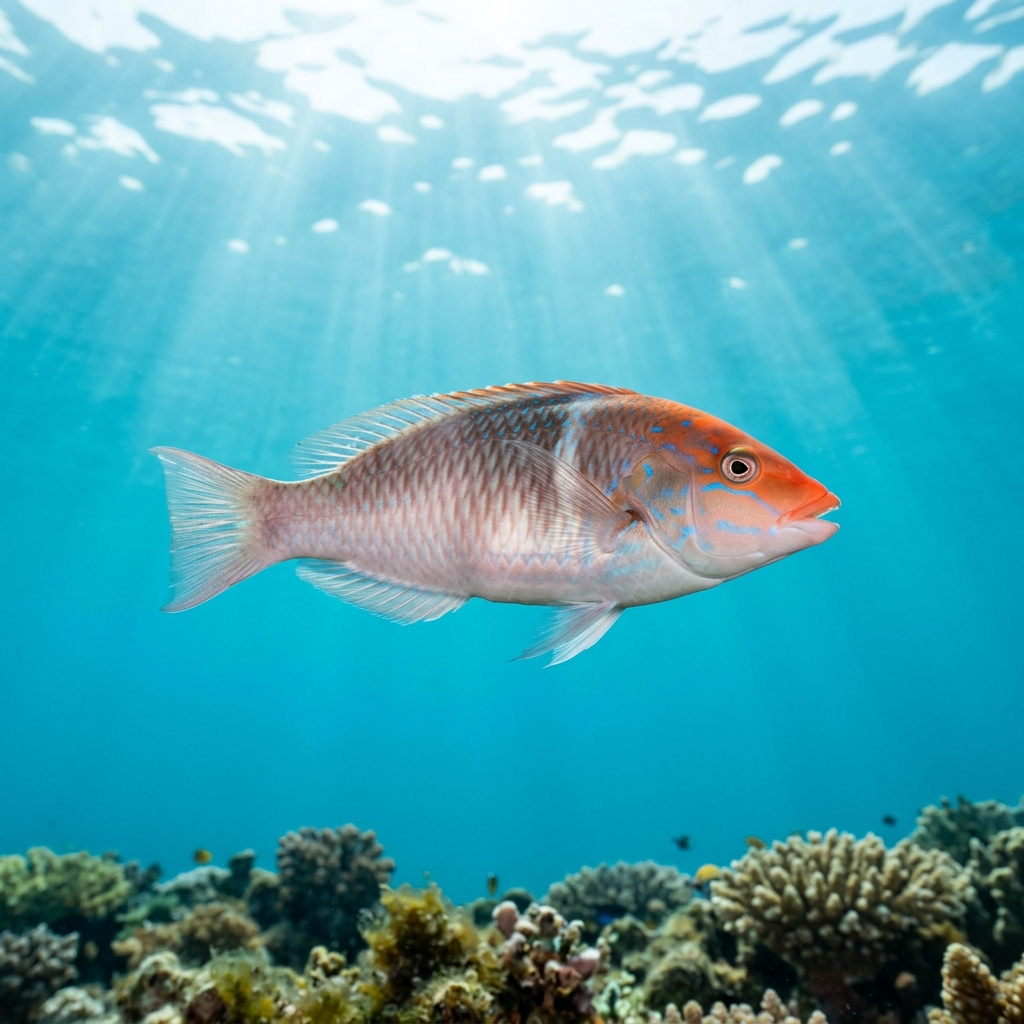
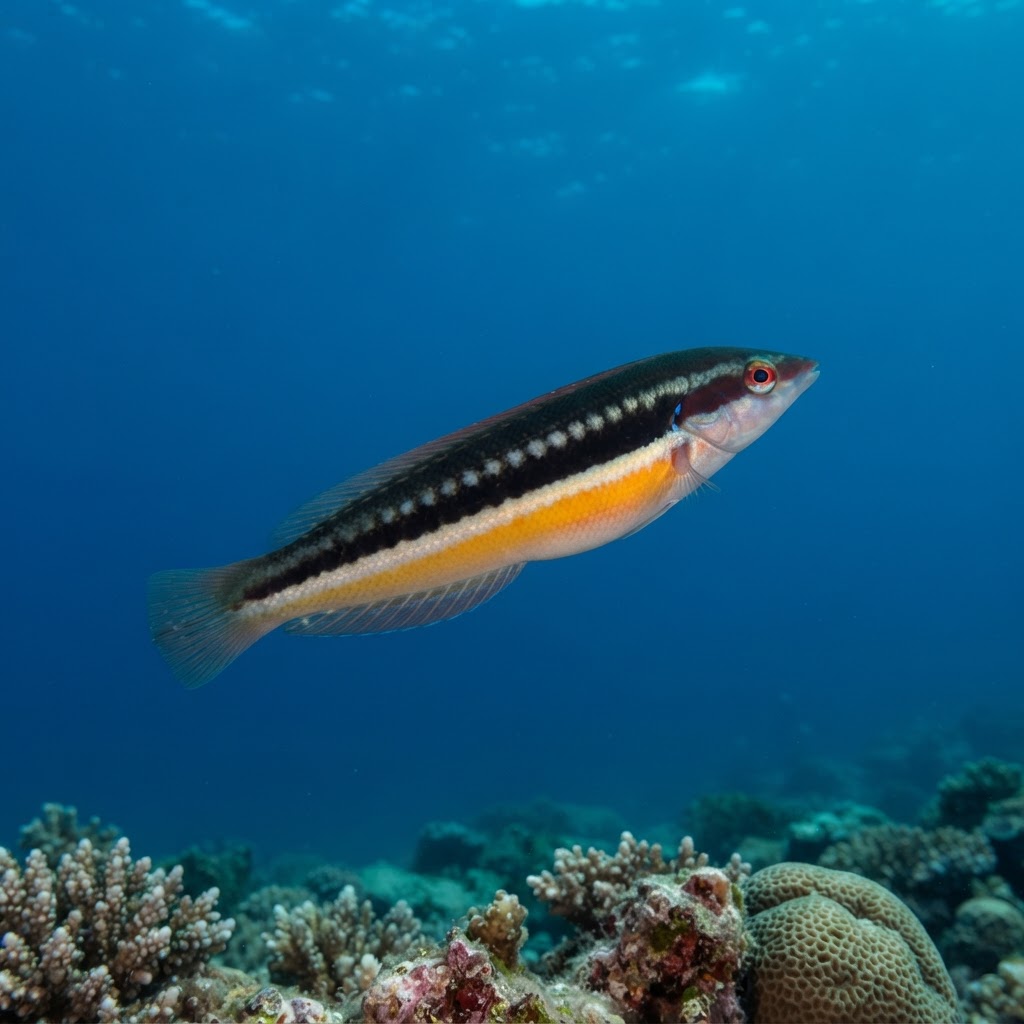
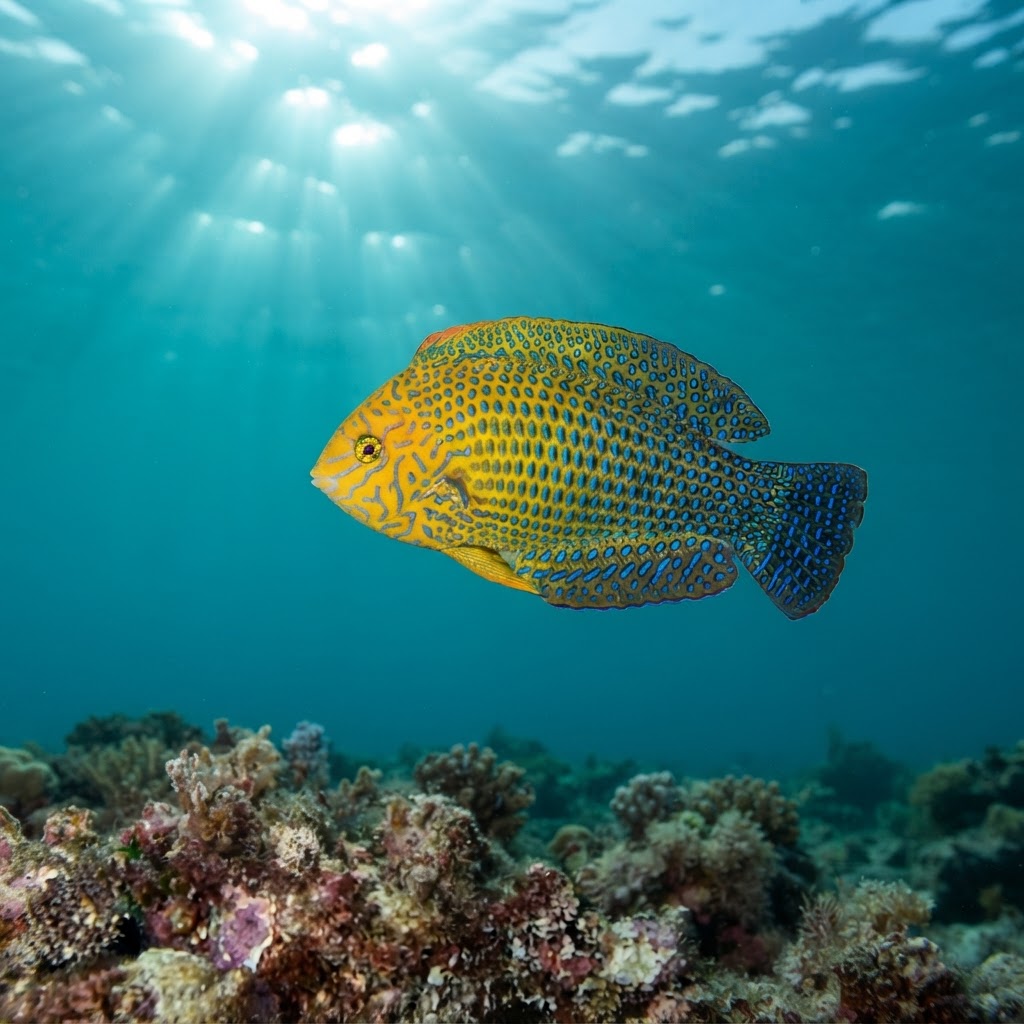
A small wrasse, only about 10 cm, with a distinctive net-like pattern of green or orange scale edges over a paler body. It stays close to the reef, darting between coral rubble and sand patches with quick, jerky movements rather than cruising in open water. Look for the reddish-orange spotting on the head and the way it seems to disappear into rubble the moment it senses a diver.
Divers typically spot it picking through sand and rubble patches close to the reef, foraging for small invertebrates rather than holding still for photos. It is skittish and quick to dart for cover among coral rubble or sand when a diver gets close, so slow, low approaches give the best look. Most sightings are logged as uncommon rather than common, so patience scanning rubble edges pays off more than searching open reef.
Like many wrasses in the genus, it buries itself in sand at night and when startled, using loose rubble and sediment as an escape route rather than fleeing into open water.
No clear seasonal pattern shows up in the sightings, and the water temperature range logged (25.7 to 29 C) covers Hawaii's reefs comfortably all year, so it is a year-round find rather than a seasonal one.
This one is essentially a Hawaii specialty among logged sightings, with sites concentrated across the Hawaiian Islands and nowhere else showing up in the data. If you are diving or snorkelling reef rubble zones in Hawaii, it is one of the small wrasses worth scanning for at close range.
Mapping where Potter's Wrasse is logged…
Sightings are concentrated almost entirely in Hawaii, making it a reliable target on Hawaiian reef and rubble dives rather than a species you would plan a trip elsewhere for.
There is no strong seasonal pattern in the sightings, and warm reef temperatures in Hawaii hold steady enough that it can be seen year-round.
Look for a small, roughly 10 cm wrasse with a net-like pattern of green or orange scale outlines over its body, foraging low over sand and rubble. It moves in quick, darting bursts rather than swimming smoothly, and tends to vanish into rubble when approached.
They stay small, reaching around 10 cm in length, which is typical for this genus of reef wrasses.
No, they pose no danger to divers. They are small, shy reef fish that keep their distance and pose no threat.
Like other wrasses in its genus, it will dive straight into sand or loose rubble to escape a threat, using sediment as cover rather than swimming away in open water.
Site and sighting data is aggregated from diver logs, iNaturalist and GBIF. For taxonomy and conservation status:
Bird Wrasse
3,632 sites