Pomacanthus arcuatus
Spot gray angelfish across Florida, the Yucatán Peninsula, and Roatán. Most sightings fall Oct, Apr. Here's how to ID one and where to find them.
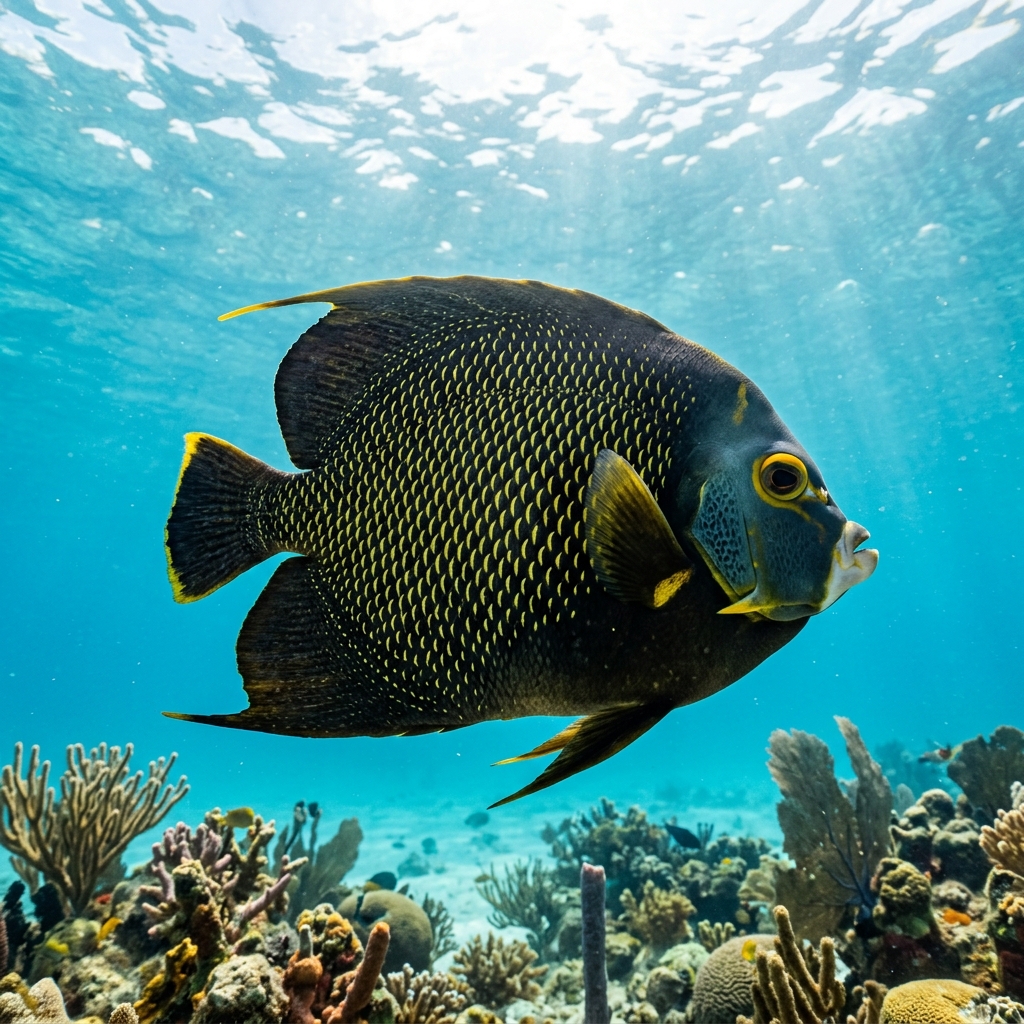
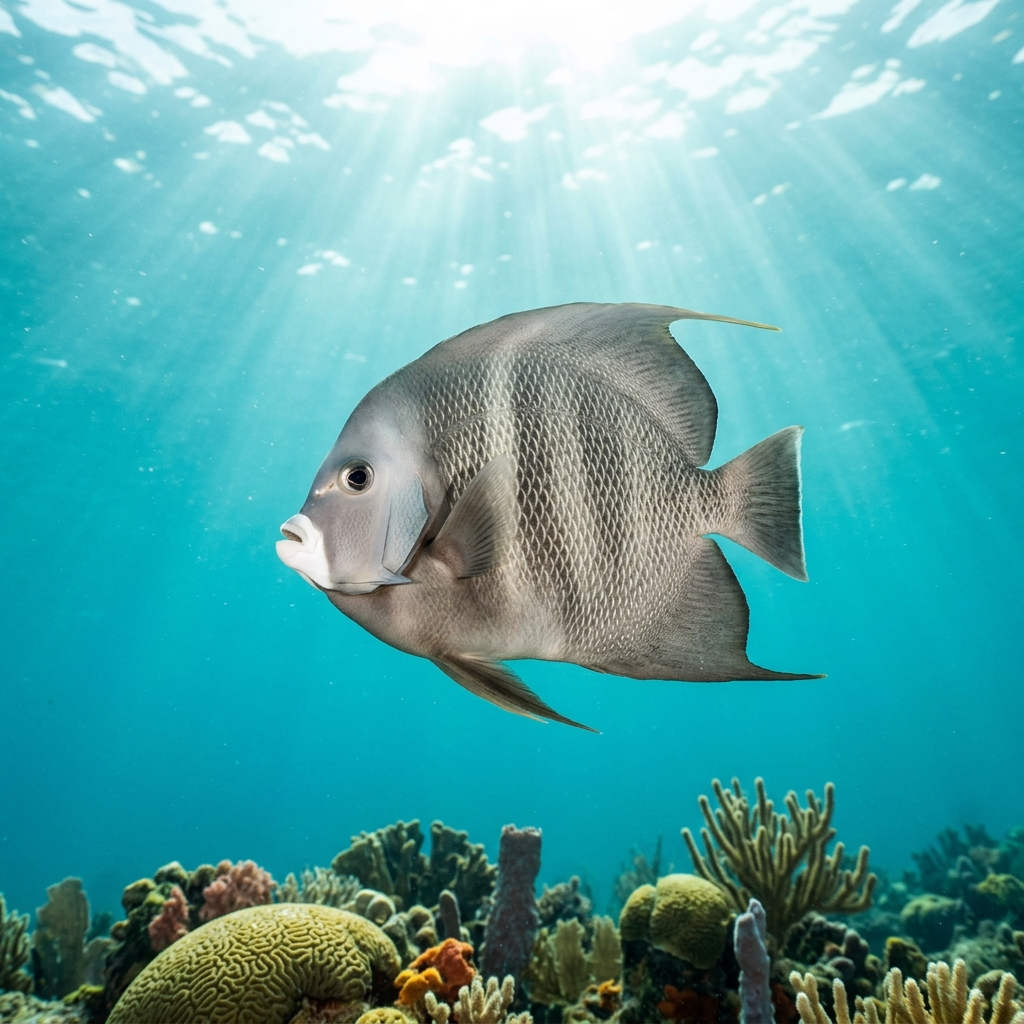
A large, disc-shaped angelfish dressed in pale grey with each scale edged in a slightly darker shade, giving the body a subtle scalloped look. The chin and inner surface of the pectoral fins flash yellow, which is a quick field mark when the fish turns. Juveniles are strikingly different: jet black with vivid yellow vertical bands and a yellow-tipped tail, looking almost nothing like the muted adult. Adults can grow impressively large for a reef fish, often appearing noticeably bigger than surrounding wrasses and parrotfish.
Gray angelfish tend to move slowly and deliberately along the reef, often in pairs, picking at sponges and algae on coral surfaces. They are relatively tolerant of divers and will often hold their position or circle back with mild curiosity rather than bolting, which makes observation easy if you approach calmly and avoid sudden movements. Look for them in shallow to mid-depth reef areas, typically working the same stretch of wall or patch reef repeatedly.
Gray angelfish form long-term pair bonds and the same two individuals will patrol a shared territory together for extended periods, which is why you so often see them in twos rather than alone or in groups.
Northern Hemisphere sighting records concentrate from October through April, suggesting cooler-season dives produce the most encounters. The species is observed in water between roughly 25 and 29 °C, so it is present on tropical Caribbean reefs year-round, but autumn-to-spring trips appear to offer the best odds.
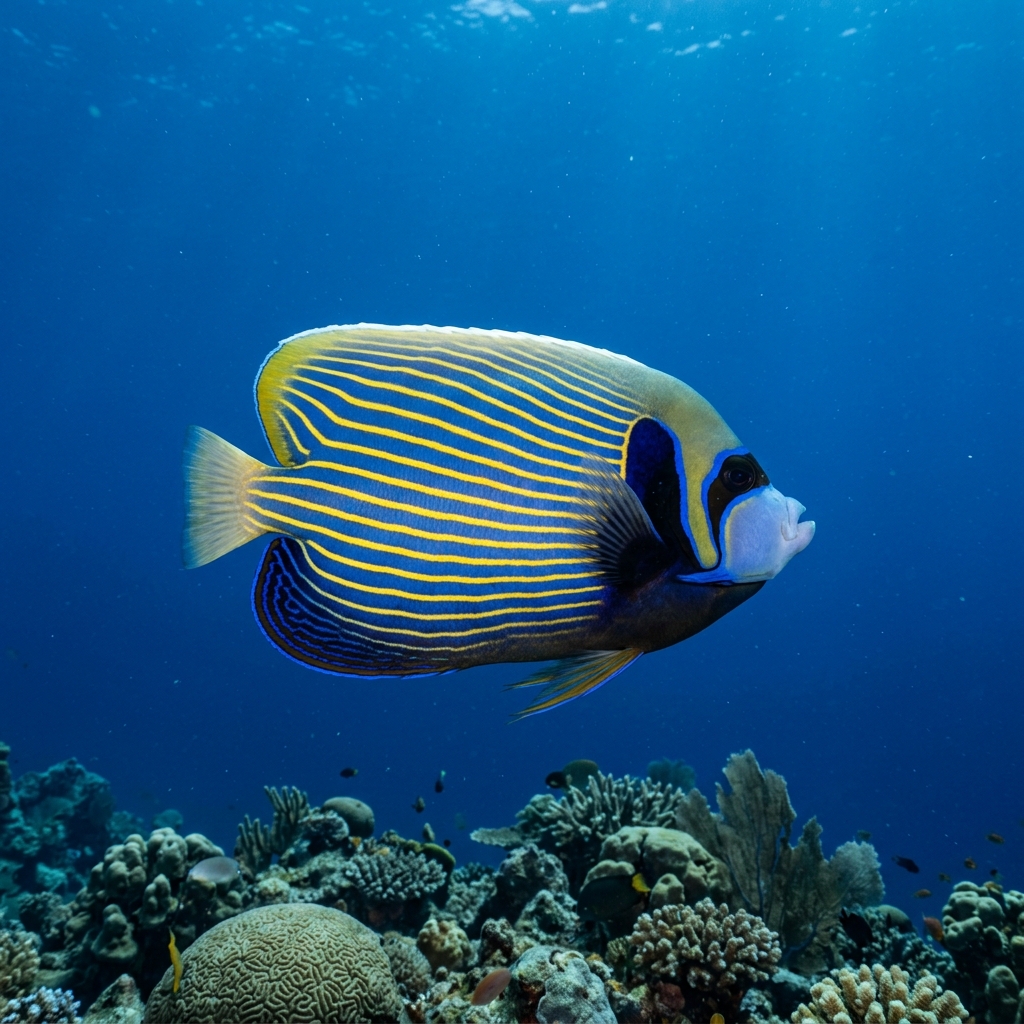
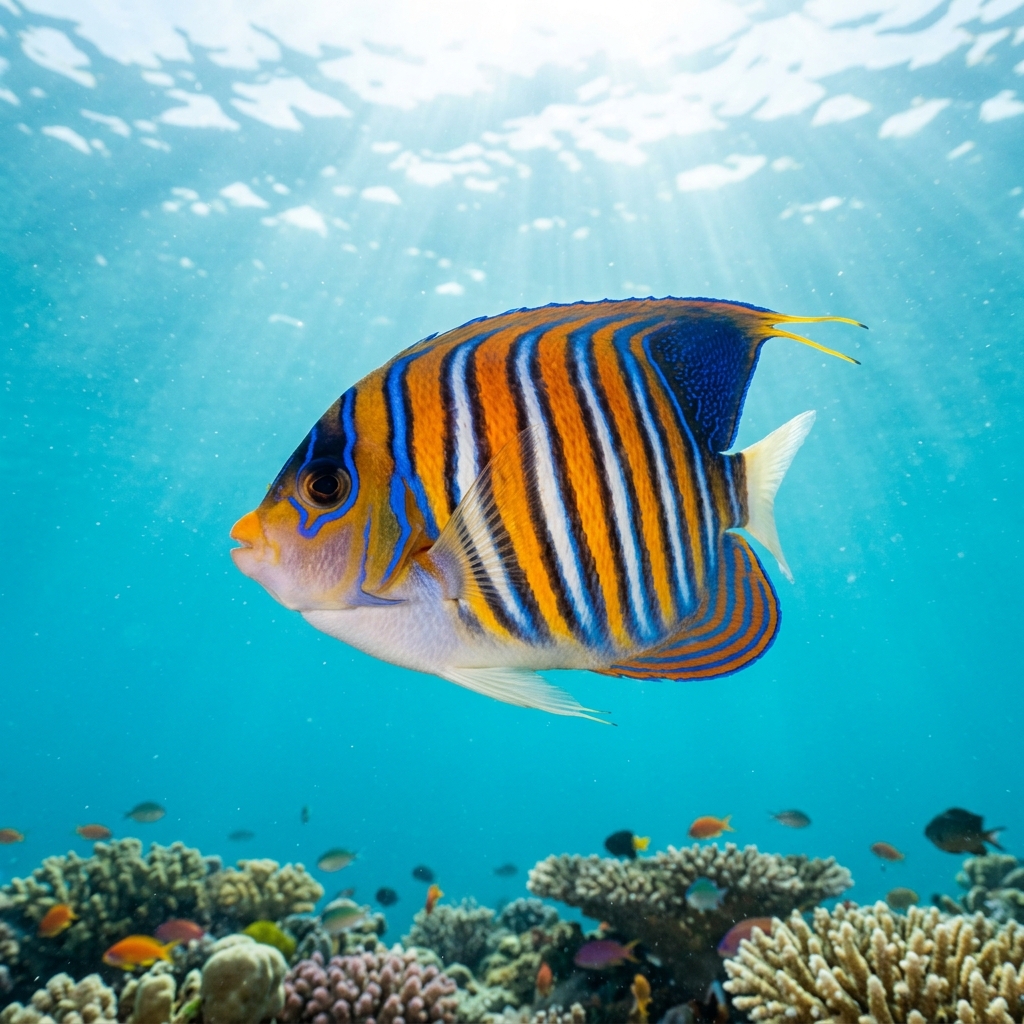
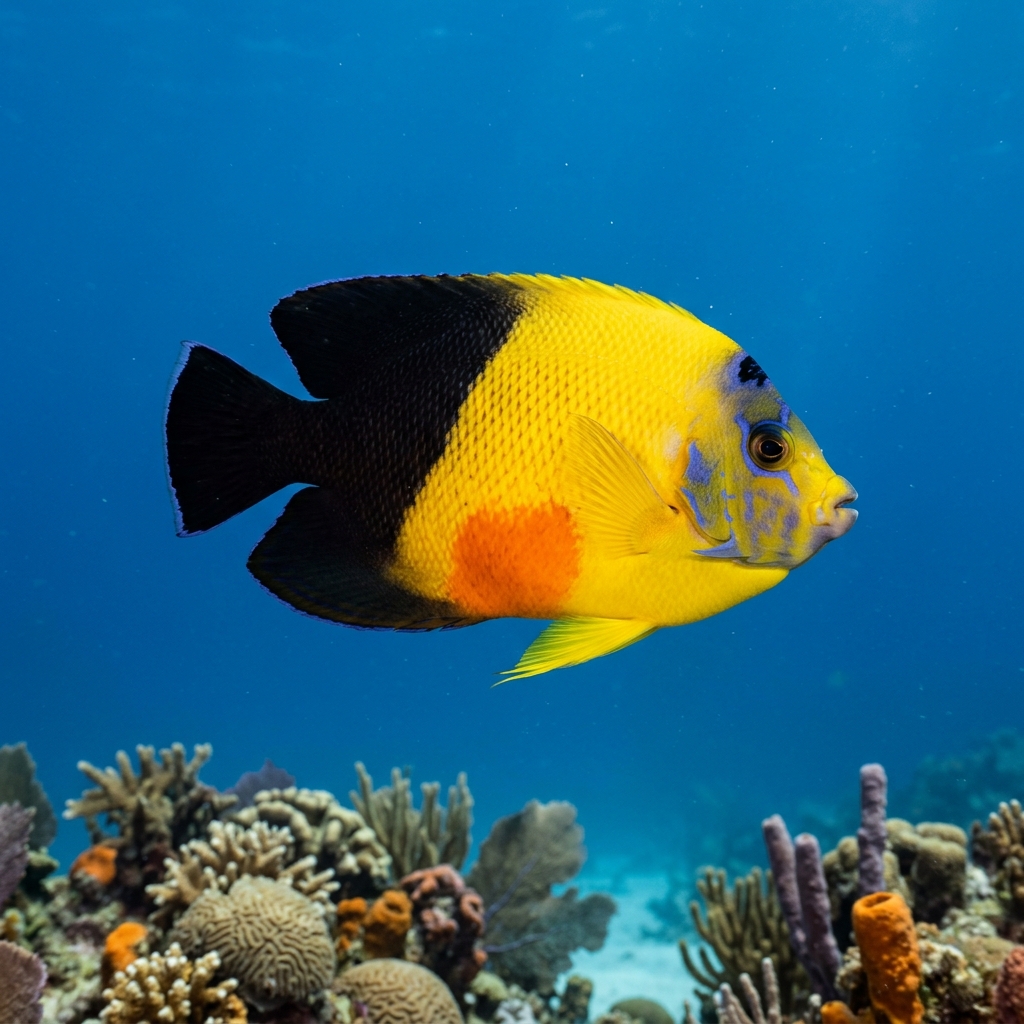
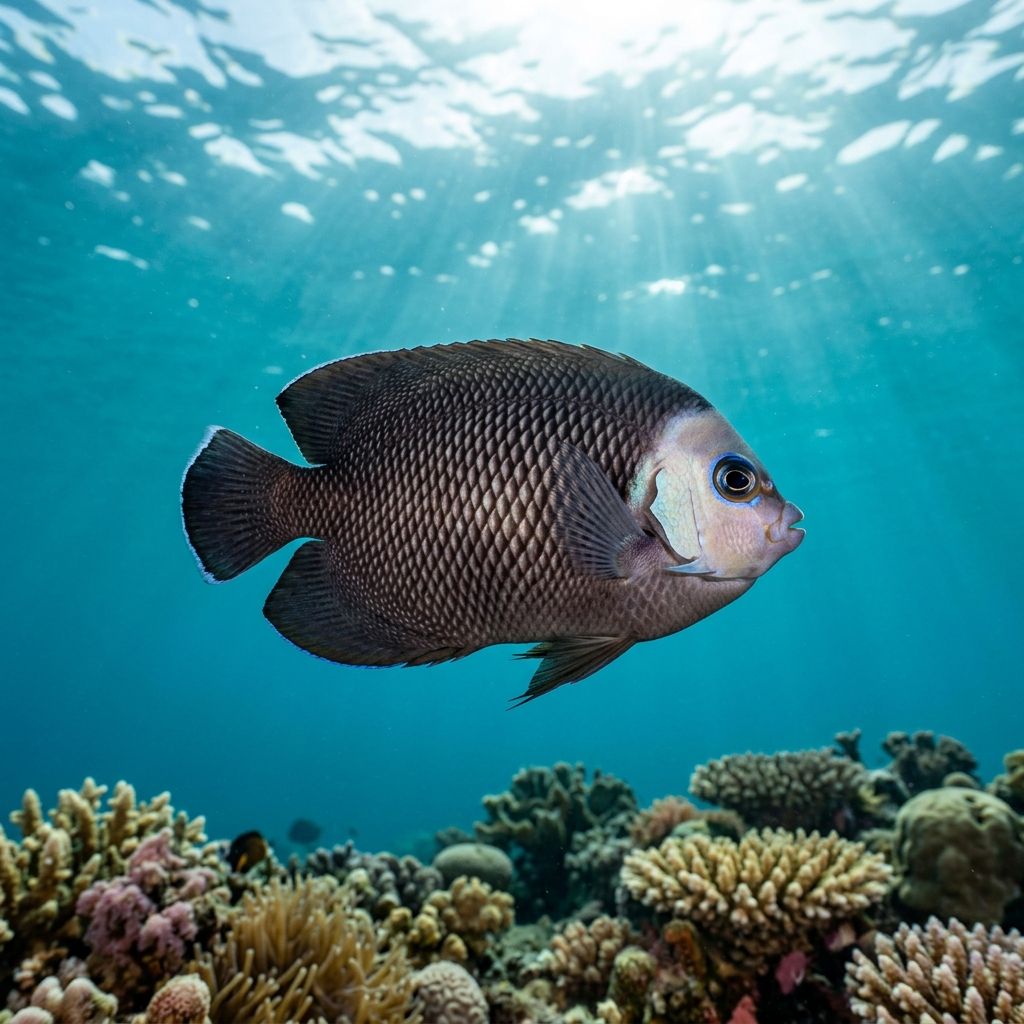
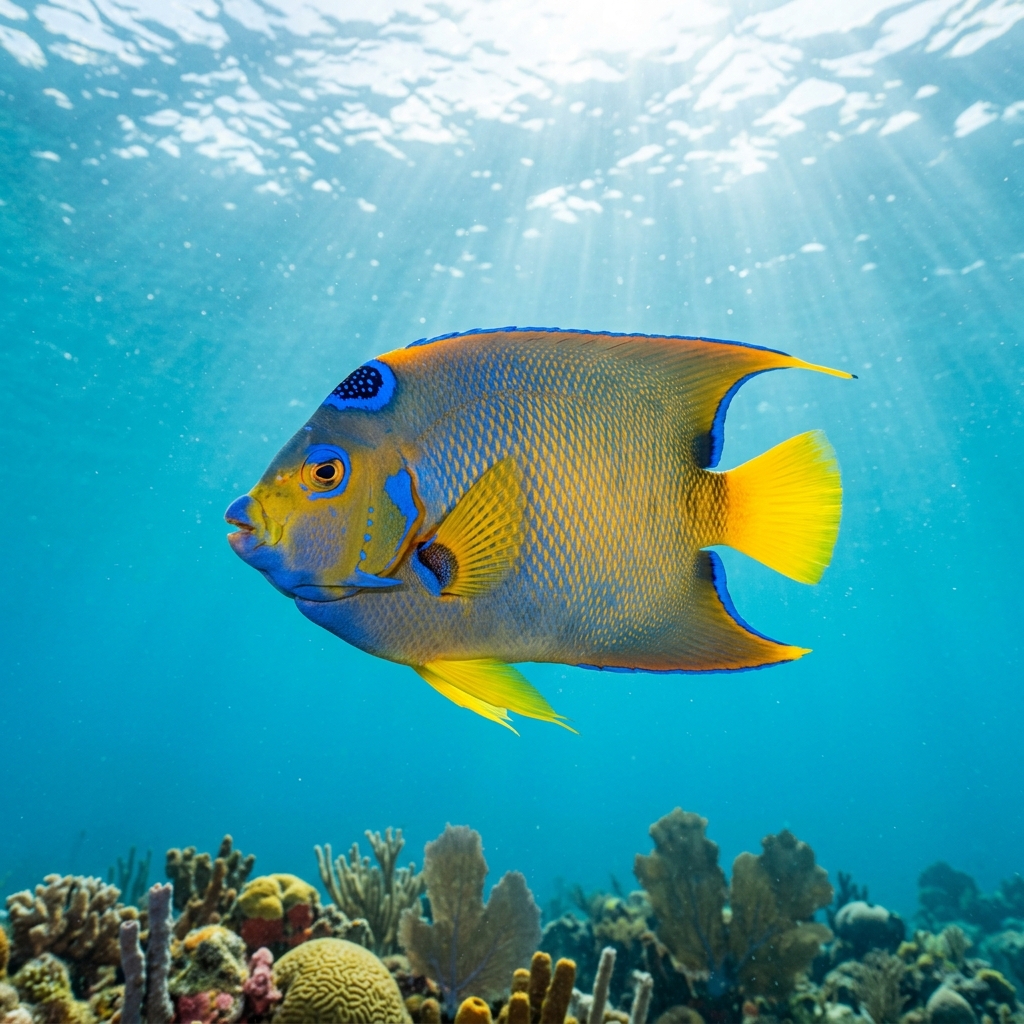
Reef neighbours a diver could mistake it for. Use the identification notes above to tell them apart.
Gray angelfish are most commonly logged across the Caribbean and western Atlantic, with the strongest representation in Florida and the US Southeast, the Yucatán Peninsula in Mexico, and Roatán in Honduras. The Cayman Islands, British Virgin Islands, Belize, US Virgin Islands, and Colombia's San Andrés and Providencia archipelago all have reliable records too. This is firmly a Caribbean species; if you are diving anywhere in that region, there is a reasonable chance of an encounter.
Mapping where Gray Angelfish is logged…
Gray angelfish are a Caribbean and western Atlantic species. The most sightings come from Florida, the Yucatán Peninsula in Mexico, Roatán in Honduras, and the Cayman Islands. Strong populations are also recorded in the British Virgin Islands, Belize, the US Virgin Islands, and Colombia's San Andrés and Providencia.
Logged sightings in the northern hemisphere concentrate between October and April. The species tolerates water from roughly 25 to 29 °C, so it is present on Caribbean reefs all year, but cooler-season dive trips appear to produce the most consistent encounters.
Look for a large, disc-shaped fish in pale grey with each scale darkly edged, giving a scalloped pattern across the body. The yellow chin and yellow inner pectoral fins are the quickest field marks. Adults often swim in pairs, which also helps narrow the ID on a busy reef.
Gray angelfish are among the larger angelfish species in the Caribbean. Adults commonly reach around 40 to 45 cm in length, and they carry a broad, deep body that makes them look substantial underwater, noticeably larger than most wrasses and smaller reef fish sharing the same habitat.
Gray angelfish form stable, long-term pair bonds, with the same two individuals holding and patrolling a shared territory together. This is why encounters almost always involve a pair rather than a solitary fish or a group. The pair will spawn together repeatedly, releasing eggs into the water column.
Site and sighting data is aggregated from diver logs, iNaturalist and GBIF. For taxonomy and conservation status:
Rock Beauty
1,573 sites