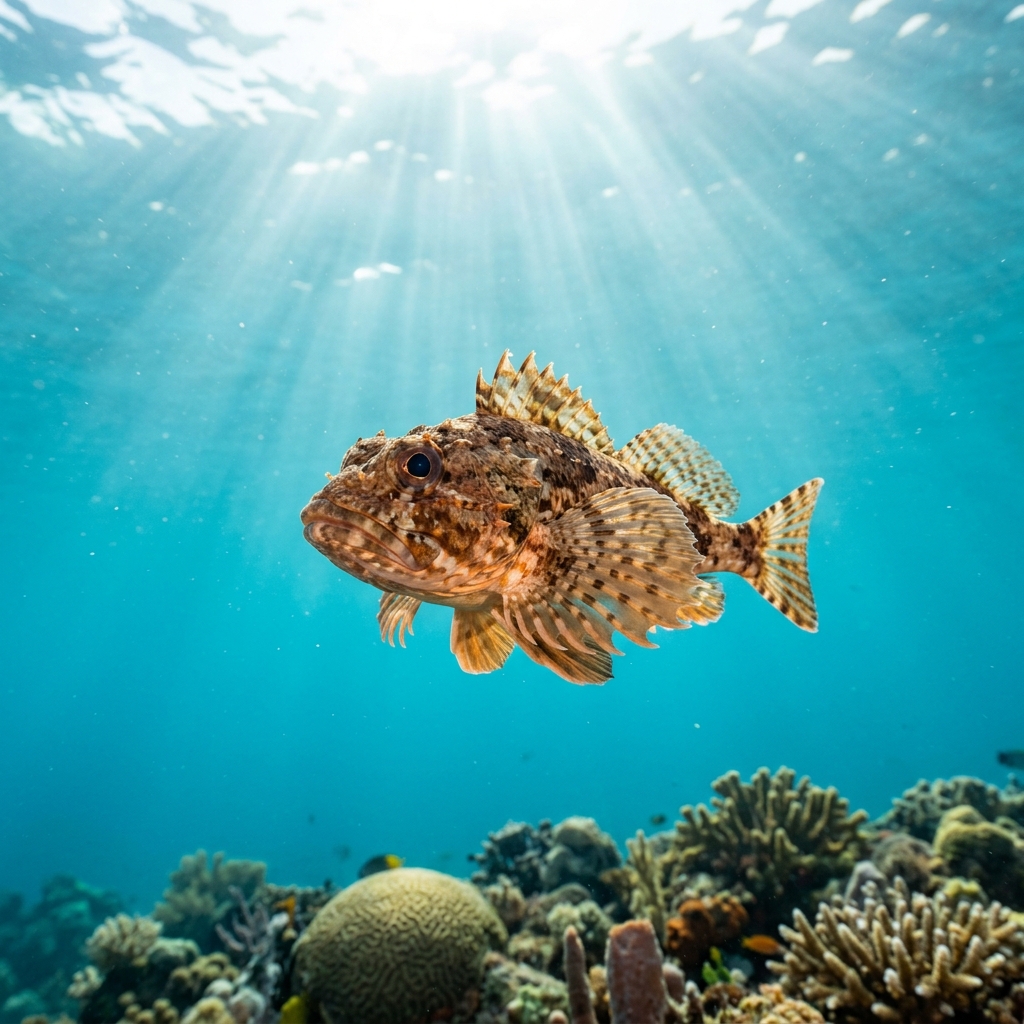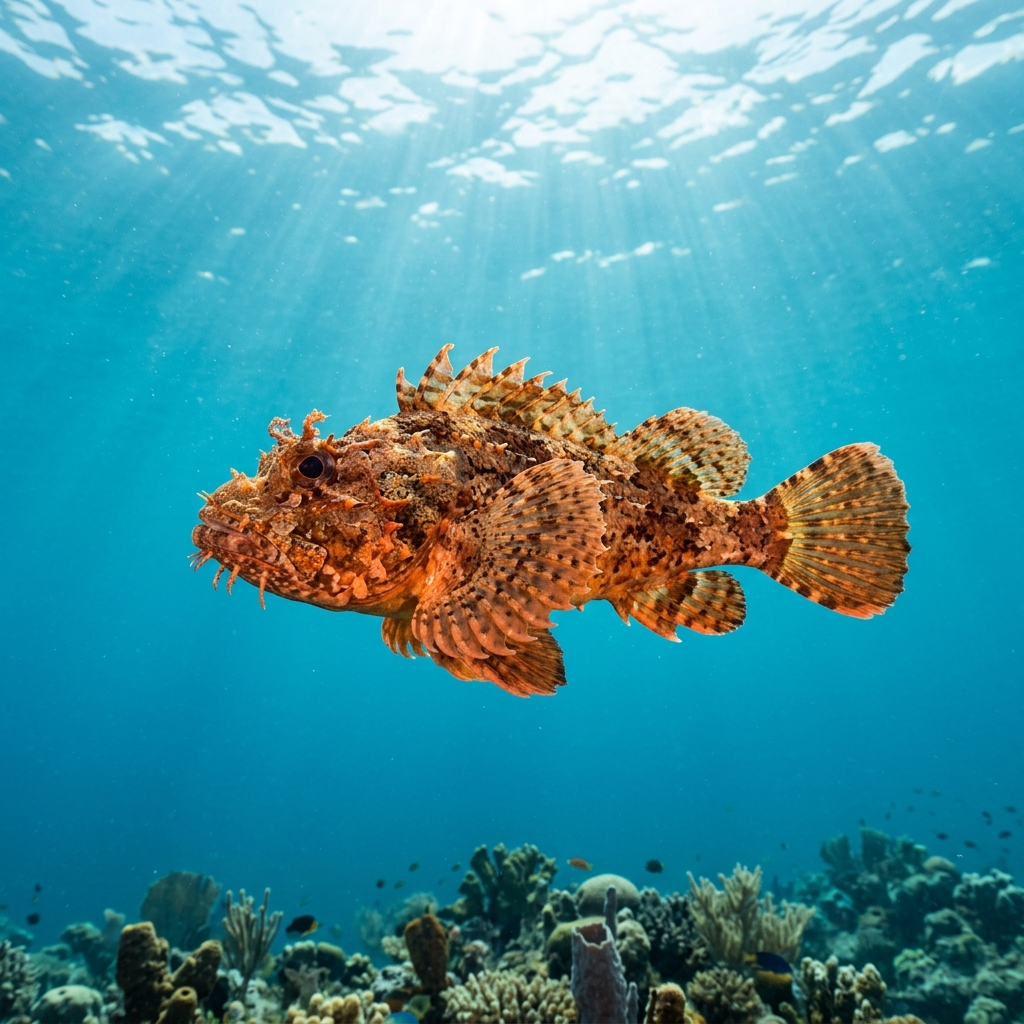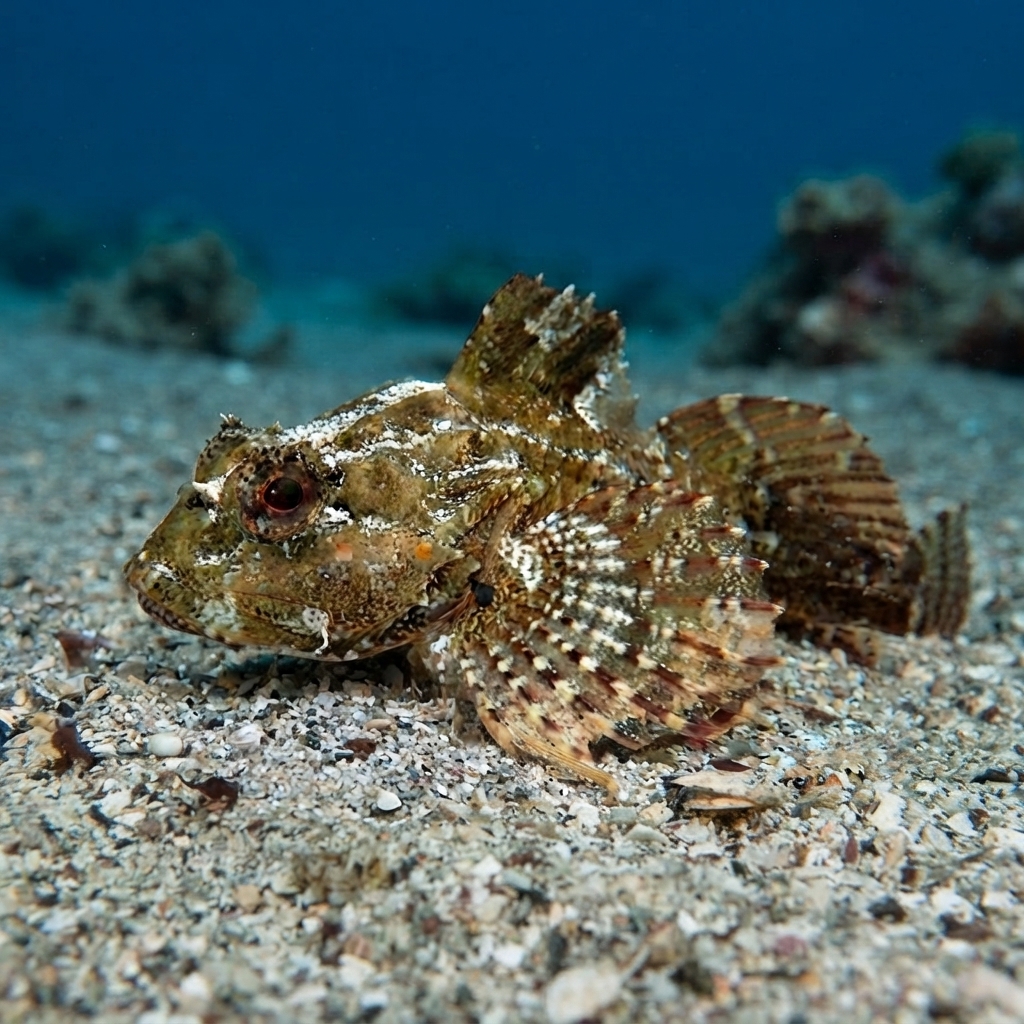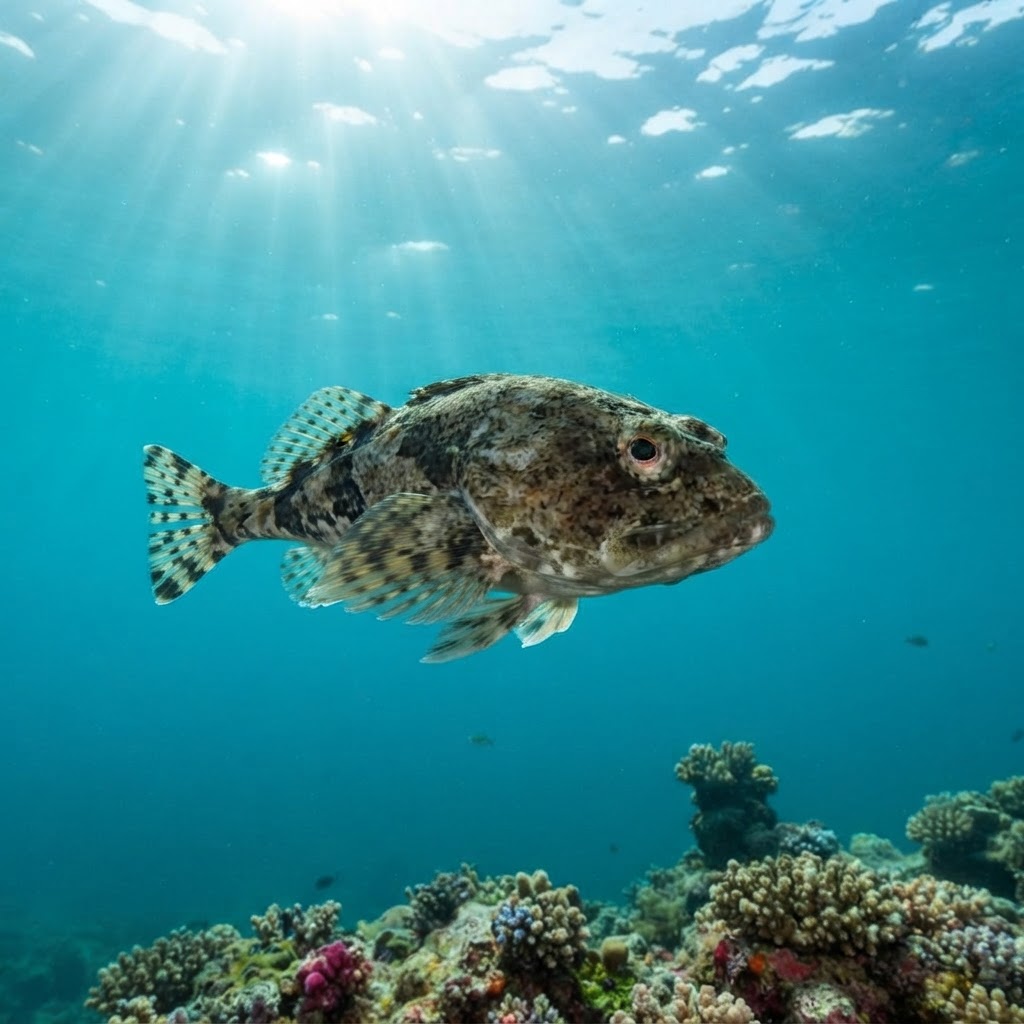
Agonus cataphractus
Spot pogge on cold sandy seabeds in Schleswig-Holstein and Jutland, a small armoured fish thriving in 7-12C water year-round.
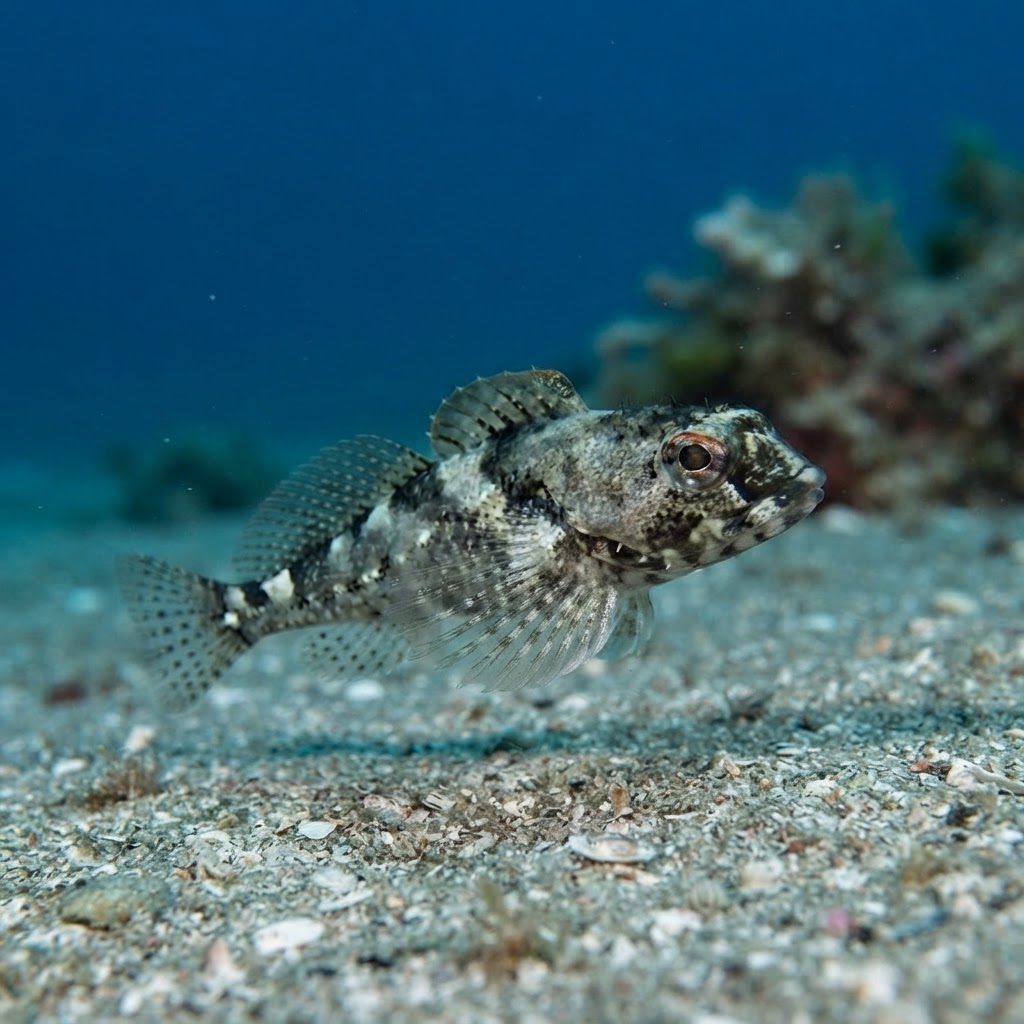
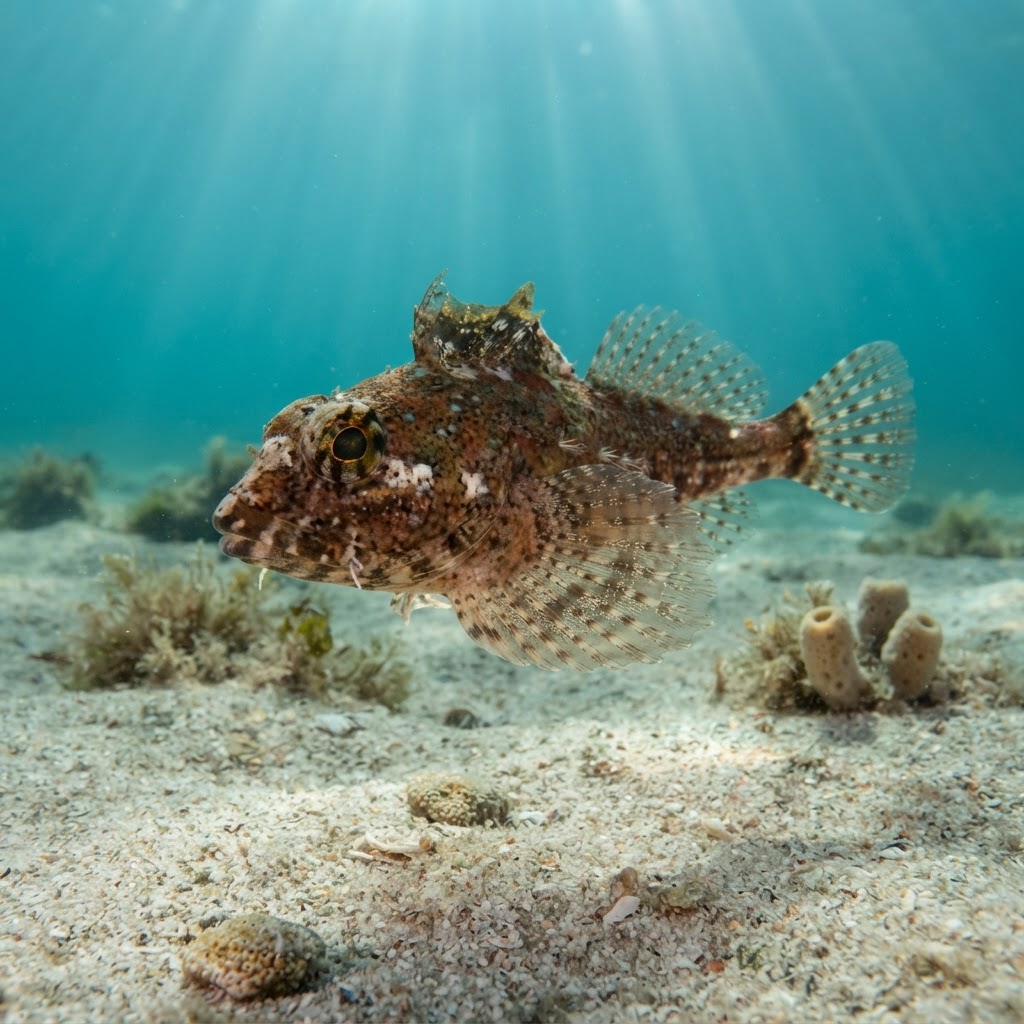
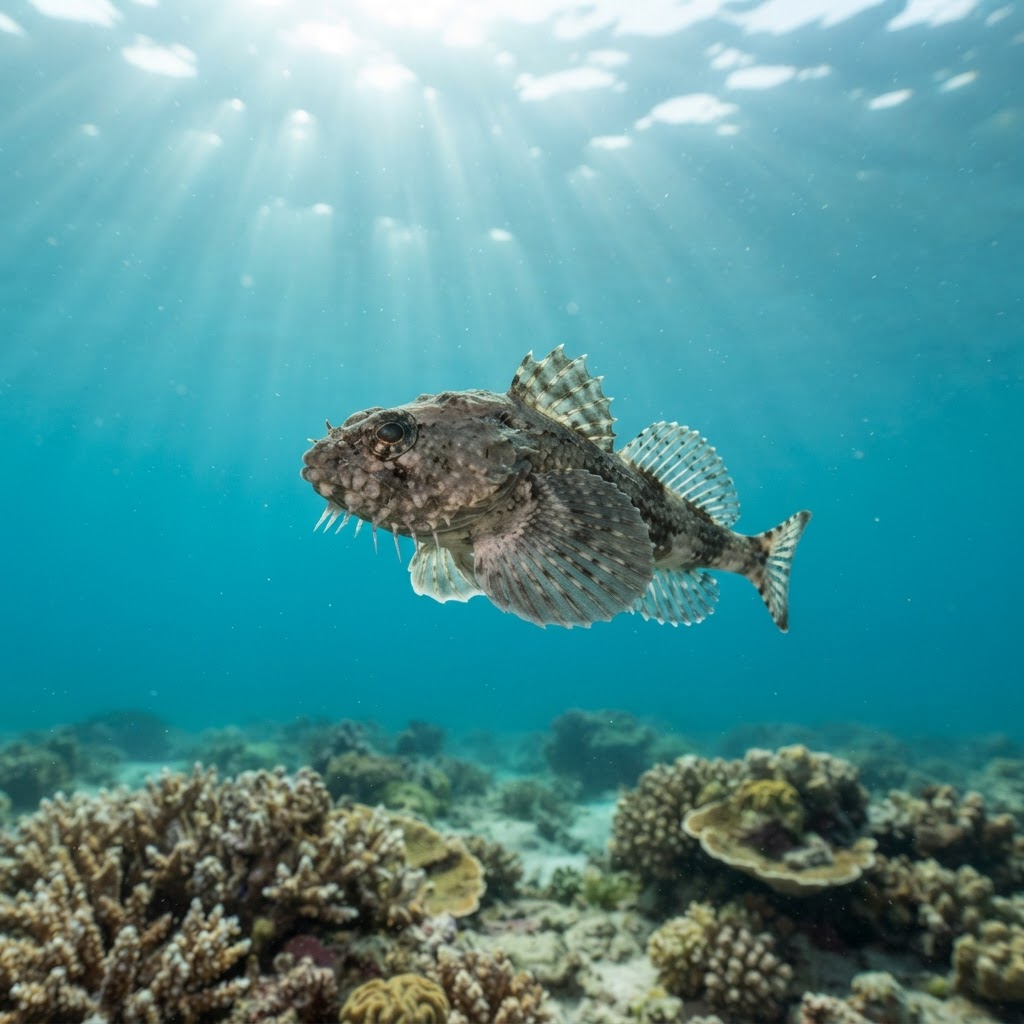
Small, at around 15cm, with a bony, armour-plated body made of ridged segments rather than scales, giving it an angular, almost tank-like cross-section. Mottled brown to grey colouring helps it blend into sand and mud. Look for the whisker-like barbels around its downturned mouth and the row of bony spines running along its flanks, and note it tends to rest motionless on the bottom rather than swim in open water.
Found sitting still on sand or mud rather than cruising, often half-buried or tucked against the bottom where its armoured, mottled body breaks up its outline. It relies on staying put and blending in rather than fleeing, so divers with a slow, low approach and a careful eye on the substrate get the best look. Most sightings come from divers working silty or sandy patches rather than open water or rock reef.
That bony, plated body isn't scales at all, it's a set of interlocking armour segments, which is what gives pogge its stiff, angular look compared with a typical soft-bodied fish.
Sighting data doesn't point to a clear season, and with a comfort range of 7 to 11.7C it's built for cold northern European water year-round, so any month with a dive plan in the Baltic or Kattegat region is fair game.
Most reliably logged in Germany, particularly across Schleswig-Holstein, and in Denmark's Jutland region, with a smaller but steady presence in Sweden's Bohuslän. Across these areas it turns up as an uncommon find on sandy or muddy seabeds rather than around rock or reef structure.
Mapping where Pogge is logged…
Pogge is most often logged in Germany's Schleswig-Holstein region and Denmark's Jutland, with a smaller number of sightings in Sweden's Bohuslän. It favours sandy or muddy seabeds rather than reef or rock structure.
There's no strong seasonal pattern in the sighting data, and it sits comfortably in 7 to 11.7C water, so it's a realistic year-round find on cold-water dives in northern Europe.
Look for a small, armour-plated fish around 15cm long, mottled brown or grey, resting still on sand or mud with barbels around its mouth and a row of bony spines along its sides.
Pogge typically reach around 15cm, making them a small, easy-to-overlook bottom-dweller best spotted by scanning sand and mud closely rather than the open water.
Instead of scales, pogge are covered in bony armour plates that give them a stiff, angular, almost tank-like shape, quite different from most fish divers encounter.
Site and sighting data is aggregated from diver logs, iNaturalist and GBIF. For taxonomy and conservation status:
Shorthorn Sculpin
228 sites