Porichthys notatus
Uncommon find in British Columbia and the Pacific Northwest, this scaleless fish hides under rocks in cold water year-round.
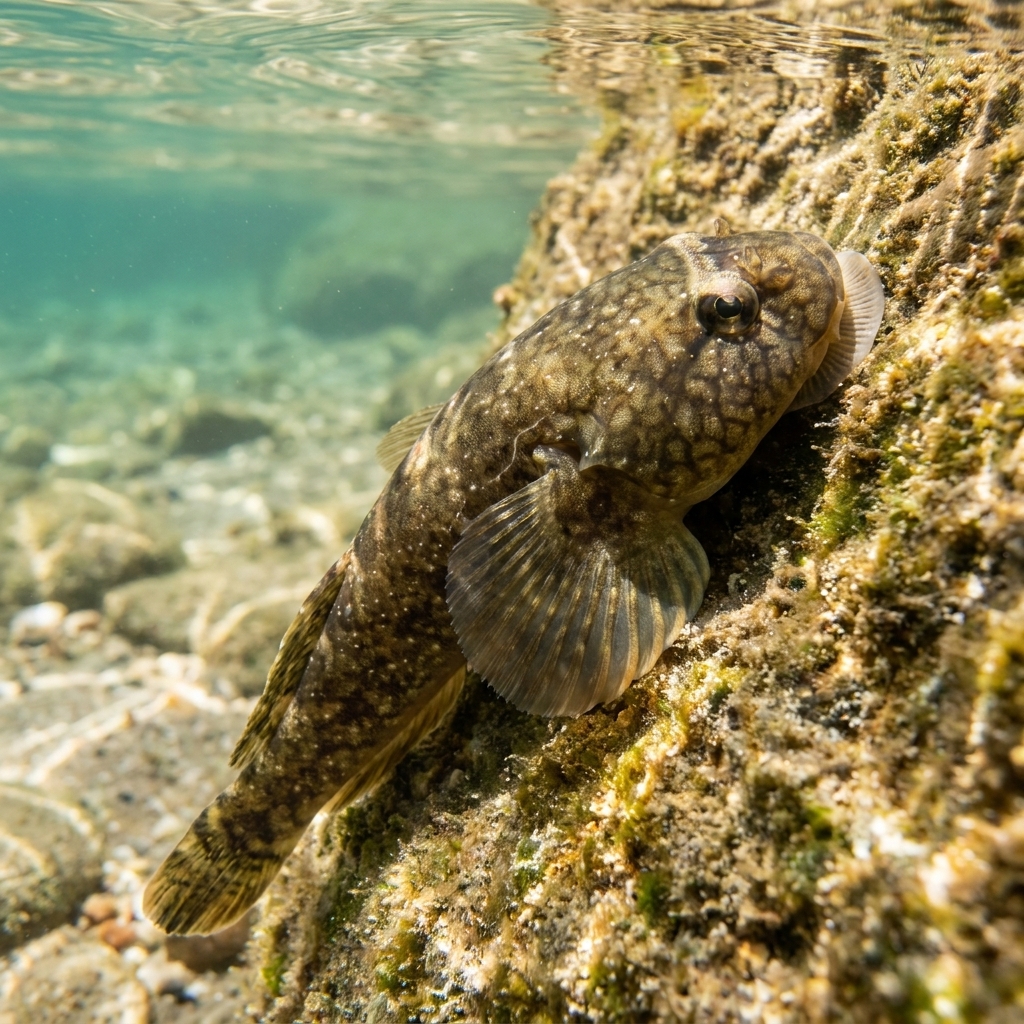
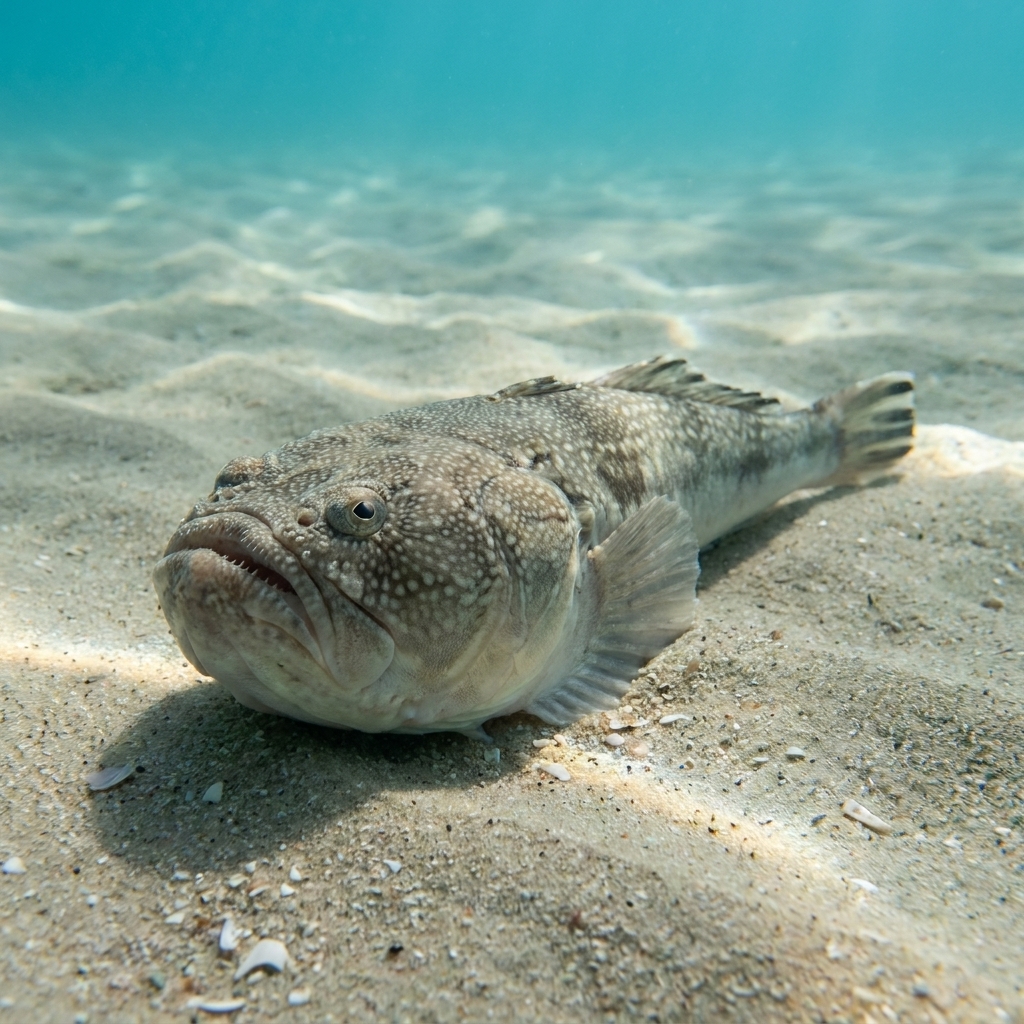
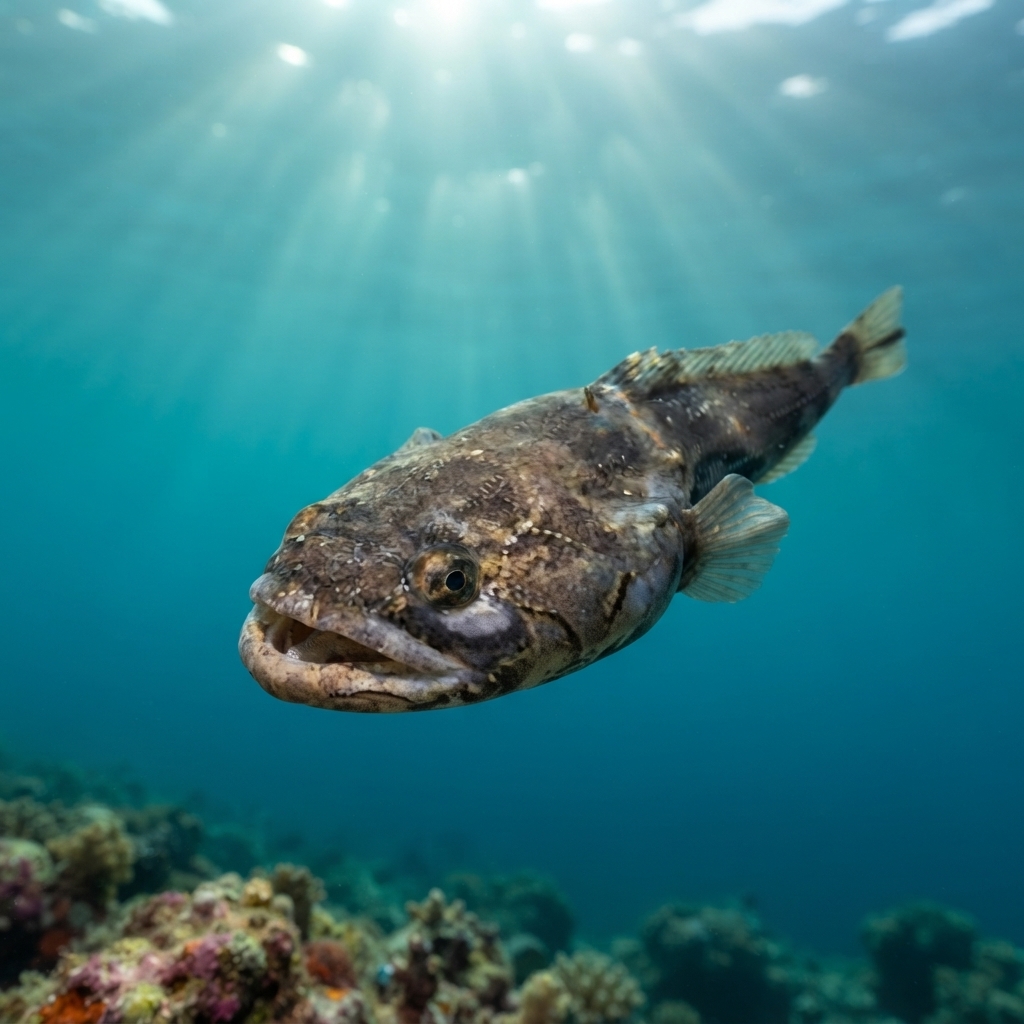
Look for a slender, scaleless brown to olive-grey body covered in fine mottled speckling that blends into rock and mud. Rows of small round light organs (photophores) run along the belly and sides, visible as pale dots if you get close. The head is broad and flattened with a wide mouth, and the whole fish rarely tops 27 cm, usually found lying still against or under a rock rather than swimming in open water.
Divers usually find this fish wedged motionless under a rock ledge or ducked into a crevice, relying on its mottled skin to disappear against the substrate rather than swimming away. It is most often spotted during slow, methodical searches along rocky bottoms rather than mid-water, and shows little reaction to a diver's torch or presence once located. Most logs describe it as uncommon to rare, so finding one usually takes a bit of patient looking under ledges.
This fish can produce its own light from rows of photophores along its body, and males also hum loudly underwater to attract mates, a sound divers occasionally pick up as a low buzz near the seafloor.
Sightings show no clear seasonal pattern, so treat this as a year-round find. It sits comfortably in the 6.9 to 16.8 C range typical of Pacific Northwest and British Columbia waters, which stay within that band for most of the year.
Most reliably logged in British Columbia, Canada, which accounts for the bulk of recorded sightings, with a smaller but steady presence across the Pacific Northwest region of the United States. Divers exploring rocky reefs and silty ledges in these cold-water regions have the best documented chance of finding one.
Mapping where Plainfin Midshipman is logged…
British Columbia, Canada is the most consistent region for sightings, with additional records from the Pacific Northwest coast of the United States. Look for rocky reefs and ledges where it can wedge itself out of sight.
There is no strong seasonal pattern in the sightings, so it can turn up any time of year. It is adapted to cold water between roughly 7 and 17 C, which matches Pacific Northwest conditions for most months.
Check for a scaleless, mottled brown body, a flattened wide head, and rows of small pale light-producing spots along the belly and flanks. It is usually found lying still under a rock rather than swimming freely.
They typically reach around 27 cm in length, making them a small, easily overlooked fish that blends into rocky or silty bottoms.
It can glow using rows of light organs on its skin and males produce a distinctive humming sound underwater during courtship, a trait that has made it a subject of bioacoustics research.
Site and sighting data is aggregated from diver logs, iNaturalist and GBIF. For taxonomy and conservation status:
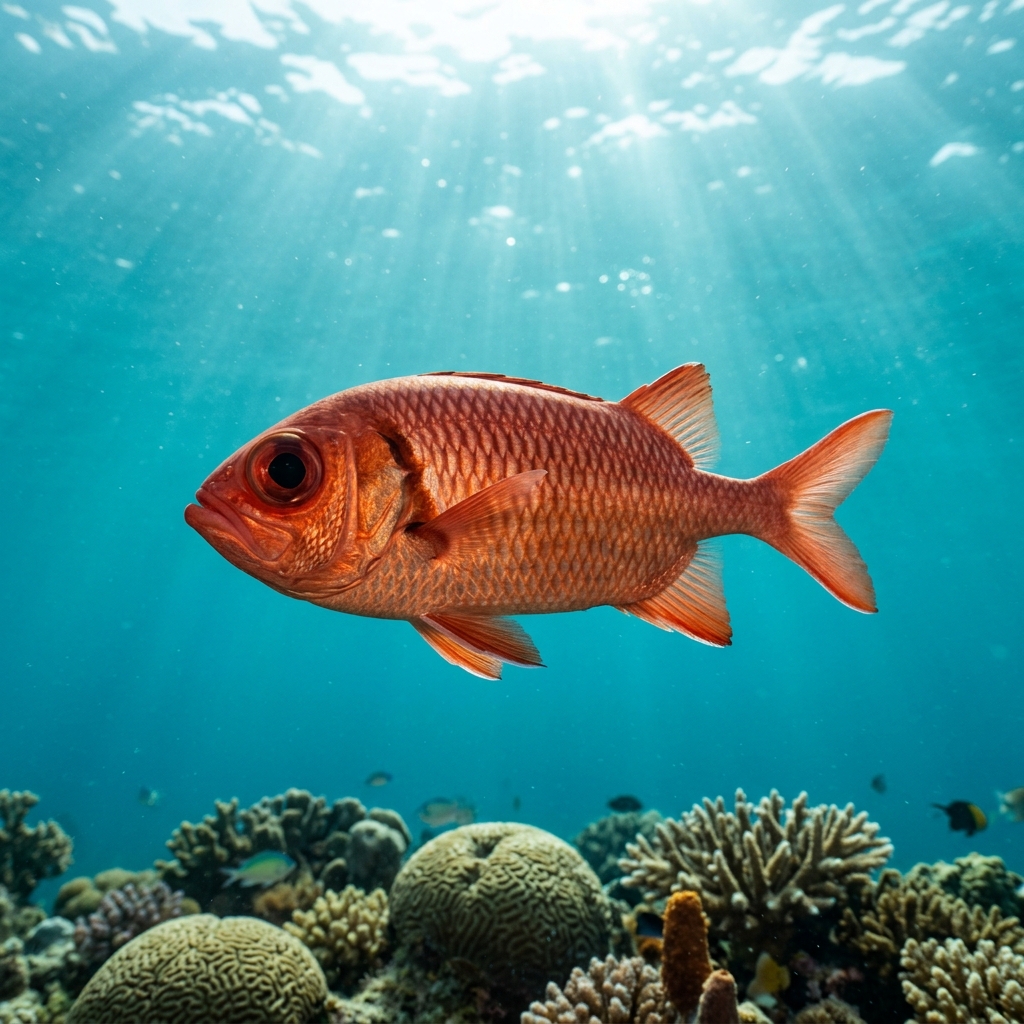
Soldierfish
3,612 sites