Coris dorsomacula
Uncommon reef wrasse logged from Bali to Peleliu; look for pink stripes on a blue-green body in 22-29°C water.
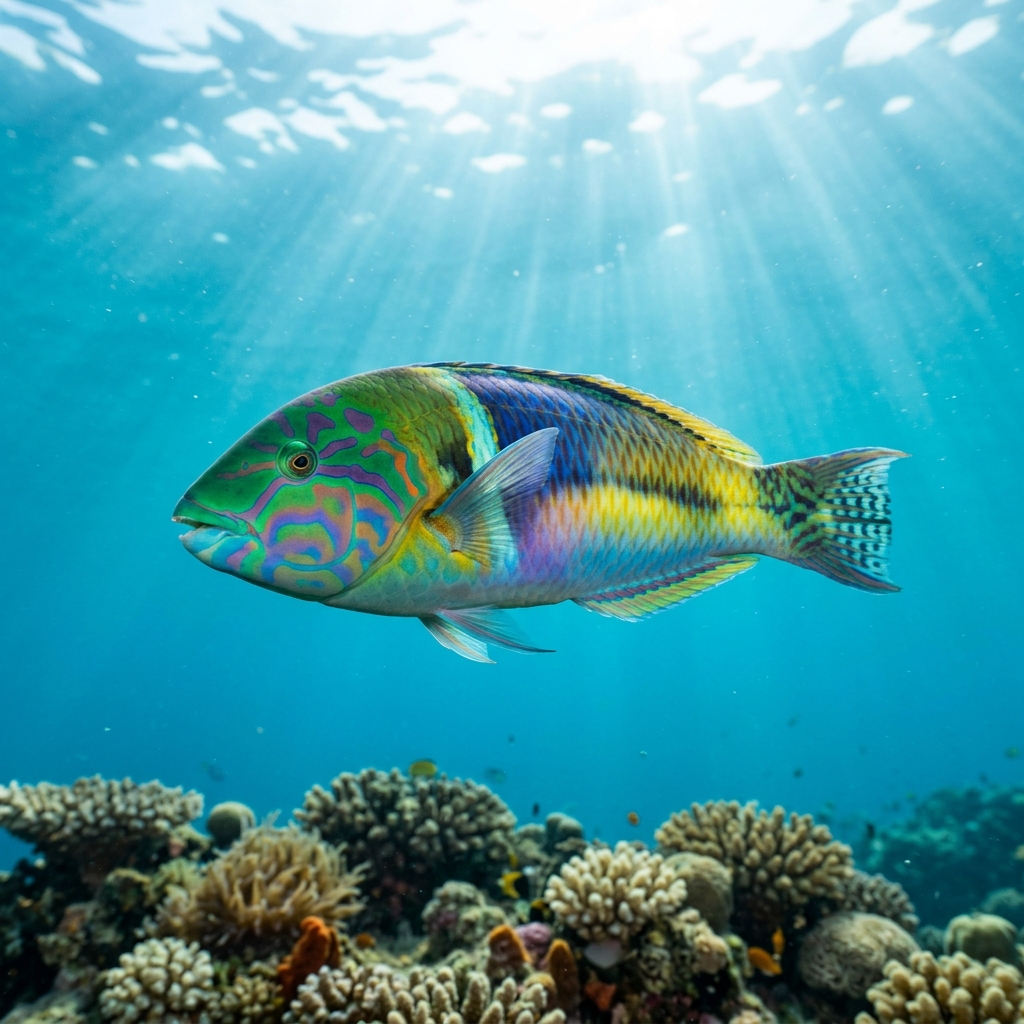
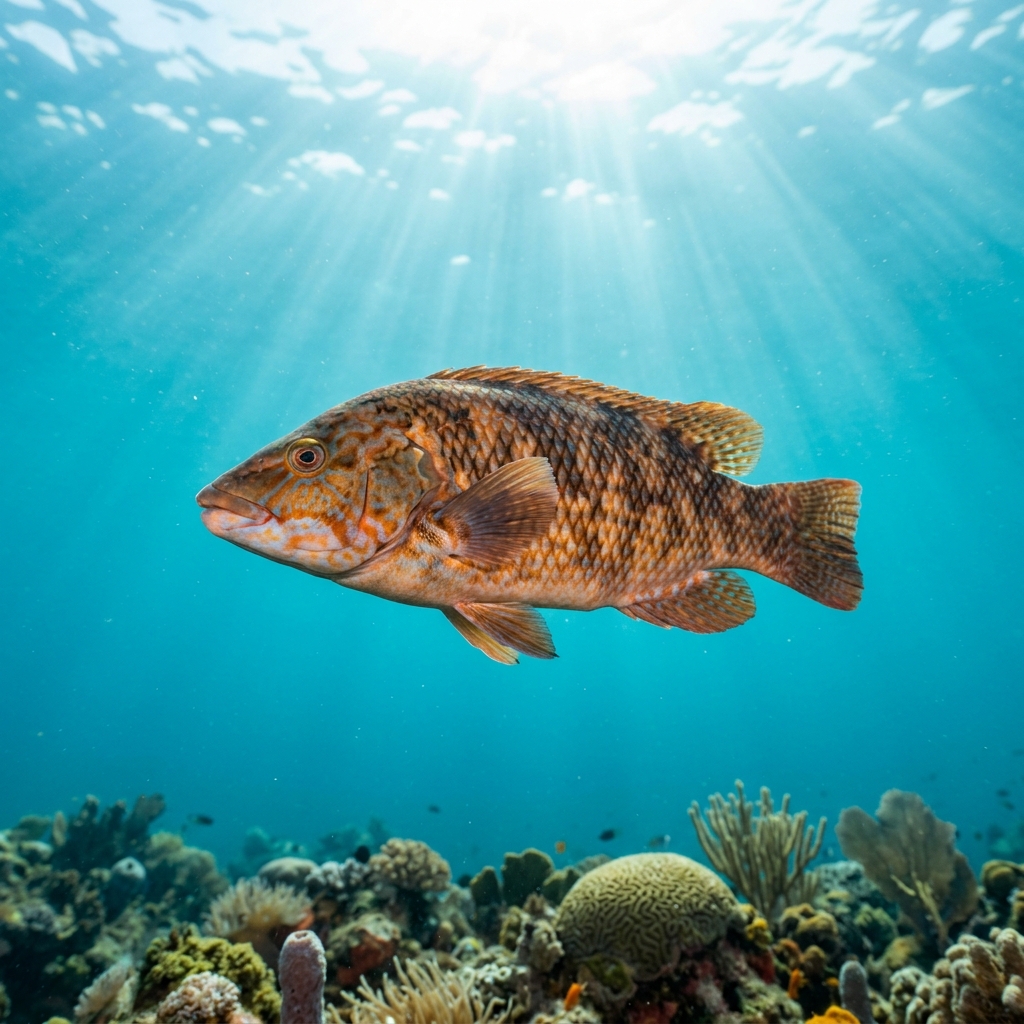
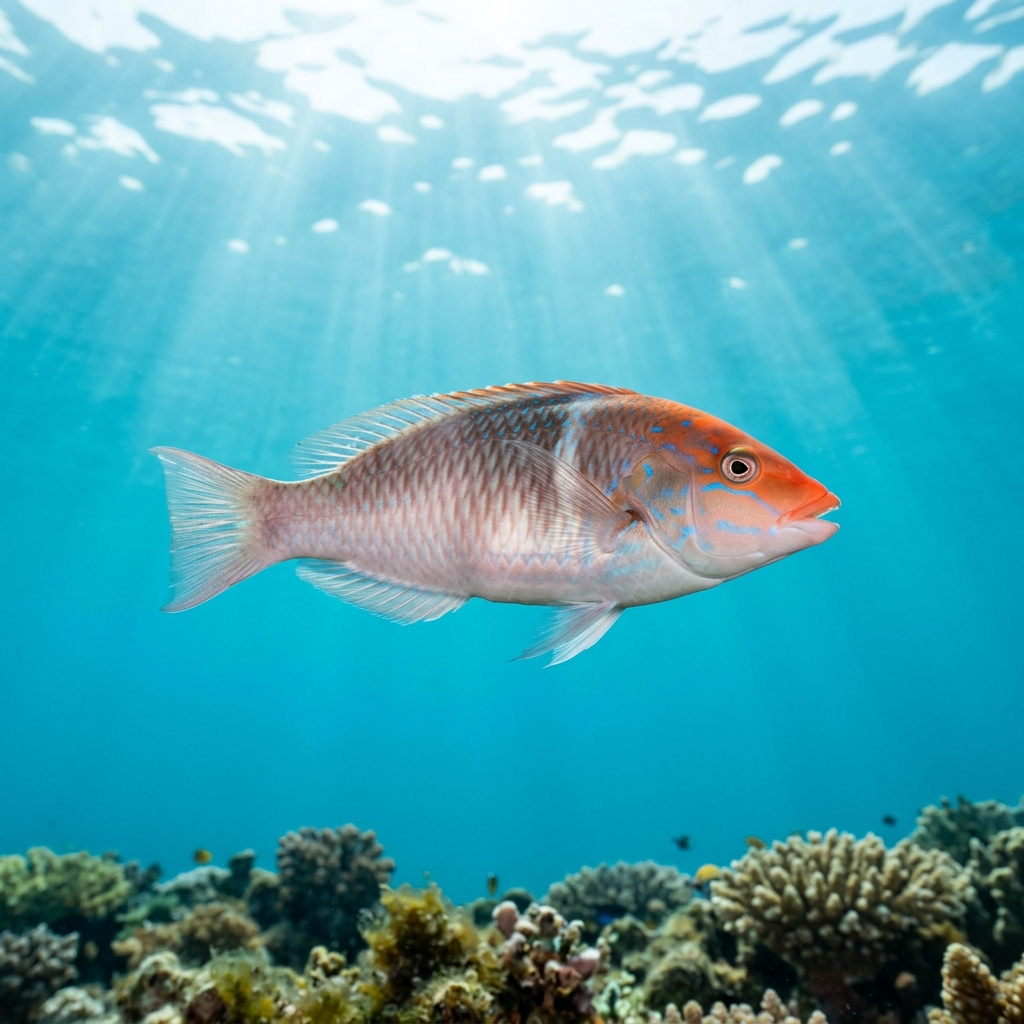
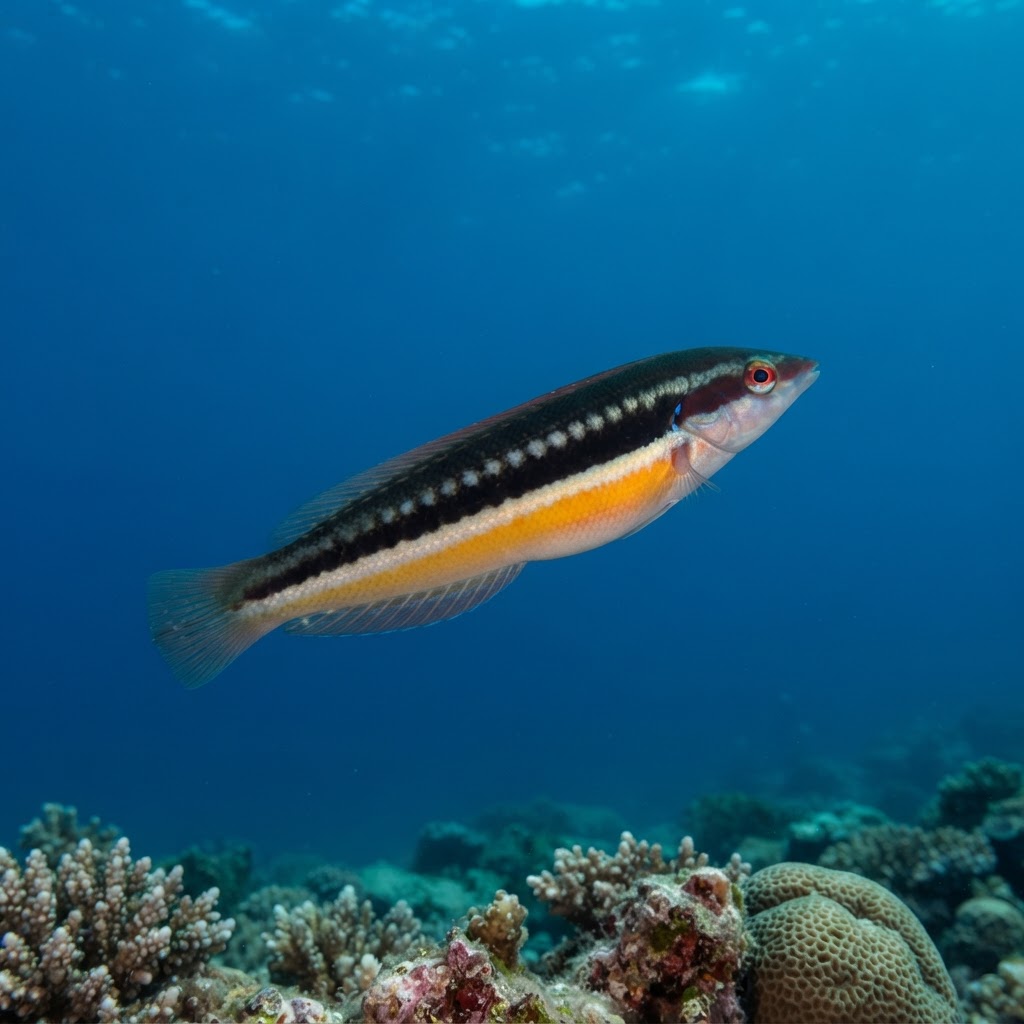
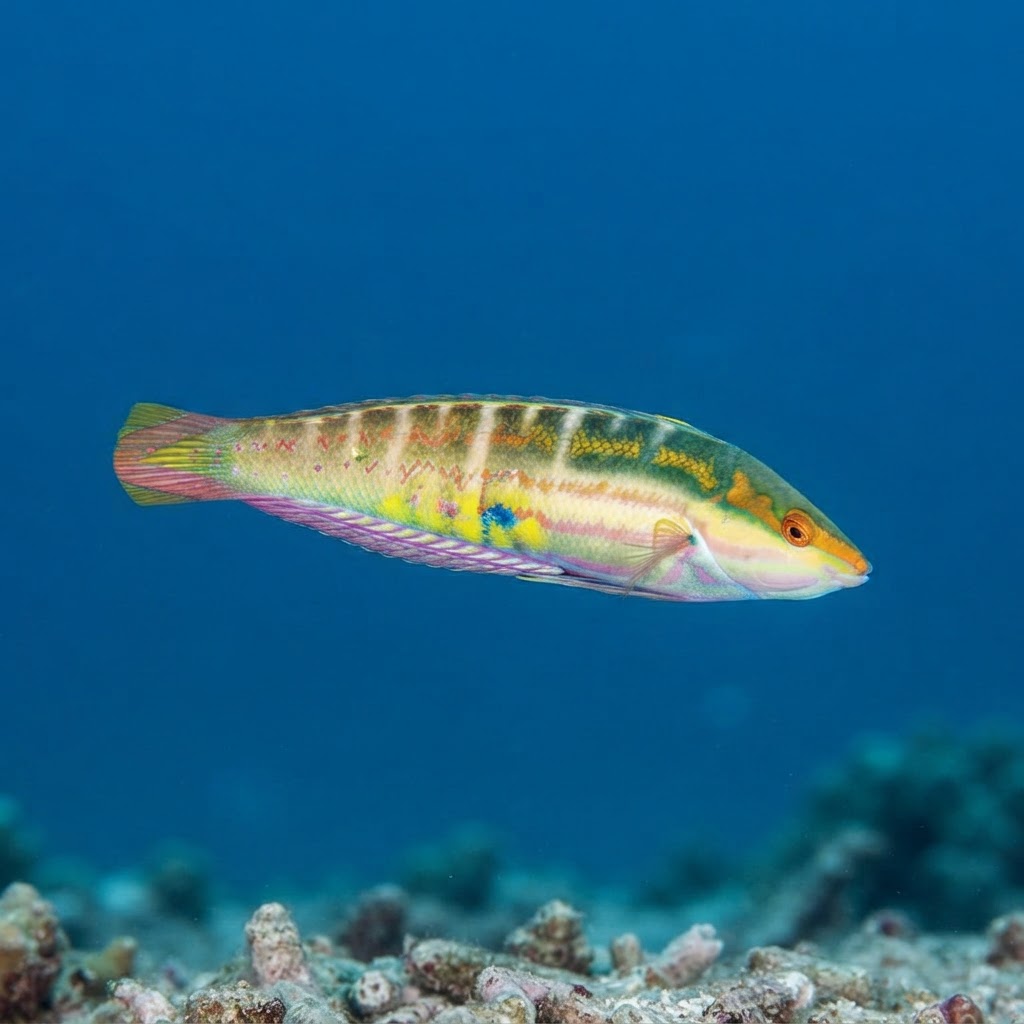
Grows to around 26 cm with an elongated, torpedo-shaped body typical of Coris wrasses. Adults show a blue-green to olive body crossed by diagonal pink or salmon stripes running from behind the head toward the tail, with a pale patch often visible near the base of the tail. It swims with the quick, darting wrasse motion low over the reef rather than hovering in open water.
Typically seen picking around rubble patches, coral bases and sandy edges of the reef, often alone or loosely associating with other small wrasses rather than in tight schools. It keeps a low profile close to the substrate and tends to move off steadily rather than bolt when a diver approaches, so a slow, level approach gives the best look. Most sightings come from daytime reef dives in the 2 to 40 m range rather than deep or night dives.
Like many Coris wrasses it likely changes colour and pattern significantly between juvenile and adult stages, so a small striped fish on the reef may be a young pink-lined wrasse rather than a different species entirely.
Sighting records don't point to a clear season, and its comfortable range of roughly 22 to 29°C spans both tropical Indonesian and Palauan reefs and the more temperate waters off New South Wales, so it's reasonable to look for it year-round wherever it's found.
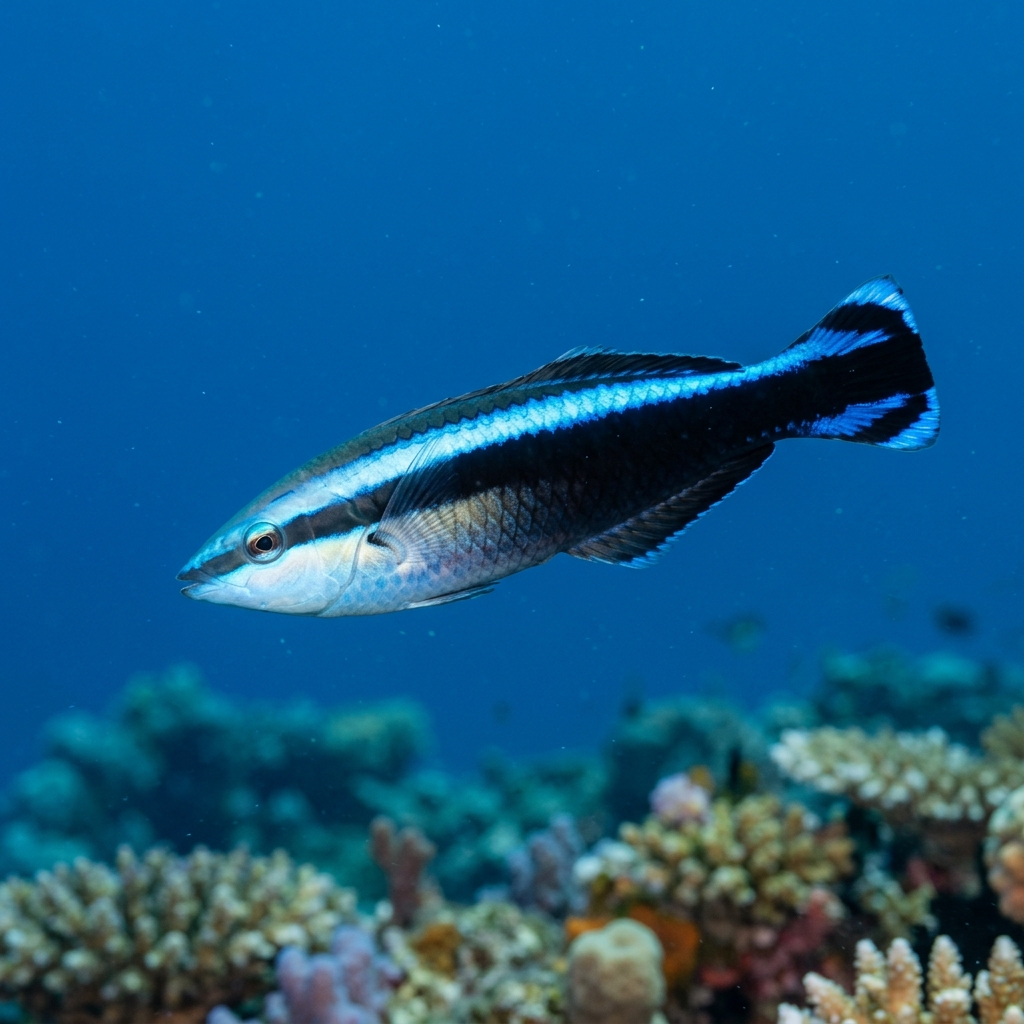
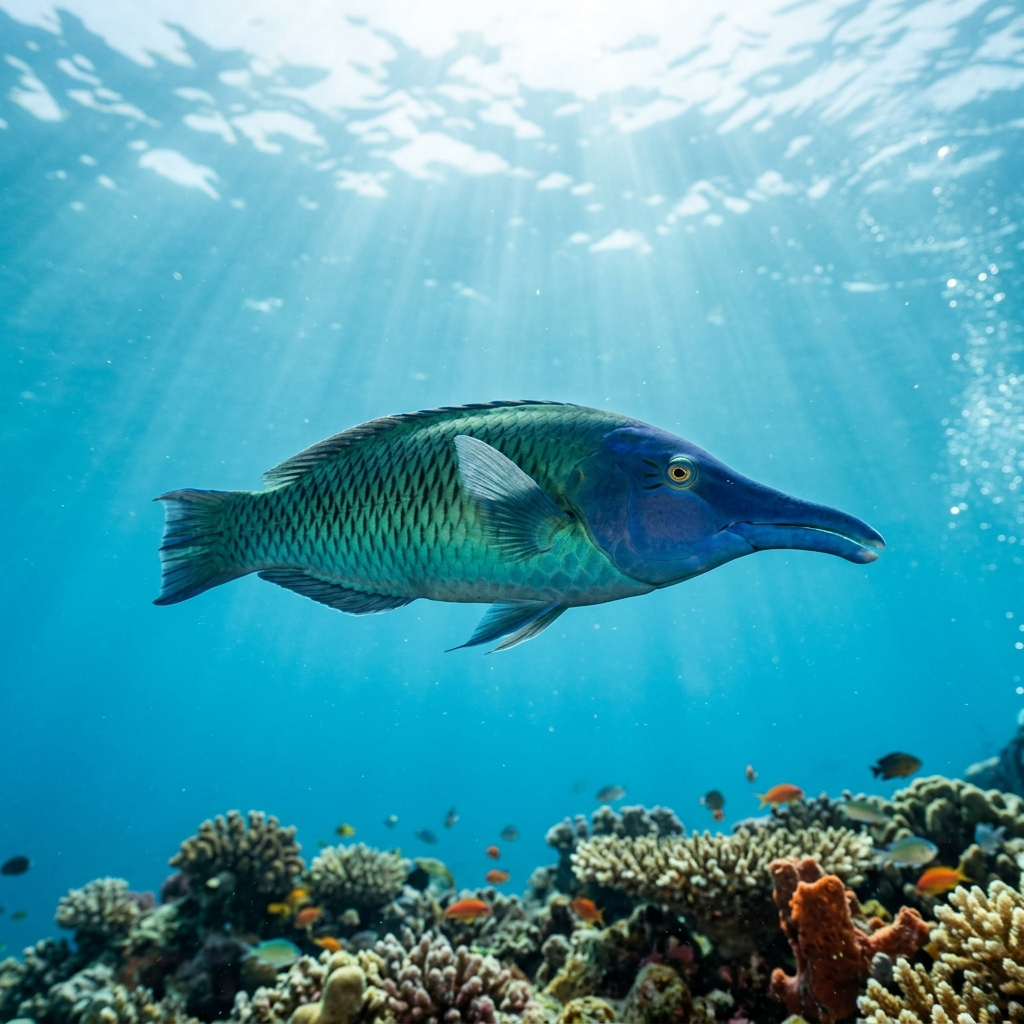
Reef neighbours a diver could mistake it for. Use the identification notes above to tell them apart.
Most reliably logged in New South Wales in Australia and Bali in Indonesia, with a solid presence around Peleliu in Palau and further sightings in Sulawesi, Xiaoliuqiu, Kenting and Longdong in Taiwan. Across all these areas divers report it as an uncommon find rather than a guaranteed one, so treat it as a bonus sighting on a reef dive rather than the main target.
Mapping where Pink-lined Wrasse is logged…
It's most often logged in New South Wales, Australia and Bali, Indonesia, with further sightings around Peleliu in Palau and several sites in Taiwan including Xiaoliuqiu and Kenting.
There's no strong seasonal pattern in the sightings, and its temperature range of about 22 to 29°C covers reefs in these regions all year, so it can turn up on any dive regardless of month.
Look for a slender, torpedo-shaped fish around 26 cm with a blue-green to olive body crossed by diagonal pink stripes, usually seen darting low over rubble or reef.
They typically reach around 26 cm in length, making them a mid-sized reef wrasse rather than one of the larger Coris species.
No, they pose no danger to divers and will simply move off if approached too quickly.
Site and sighting data is aggregated from diver logs, iNaturalist and GBIF. For taxonomy and conservation status:
Bird Wrasse
3,632 sites