Lagodon rhomboides
Small silver fish with a dark shoulder spot, most often logged around Florida in water near 23-27C, year-round on shallow reefs.
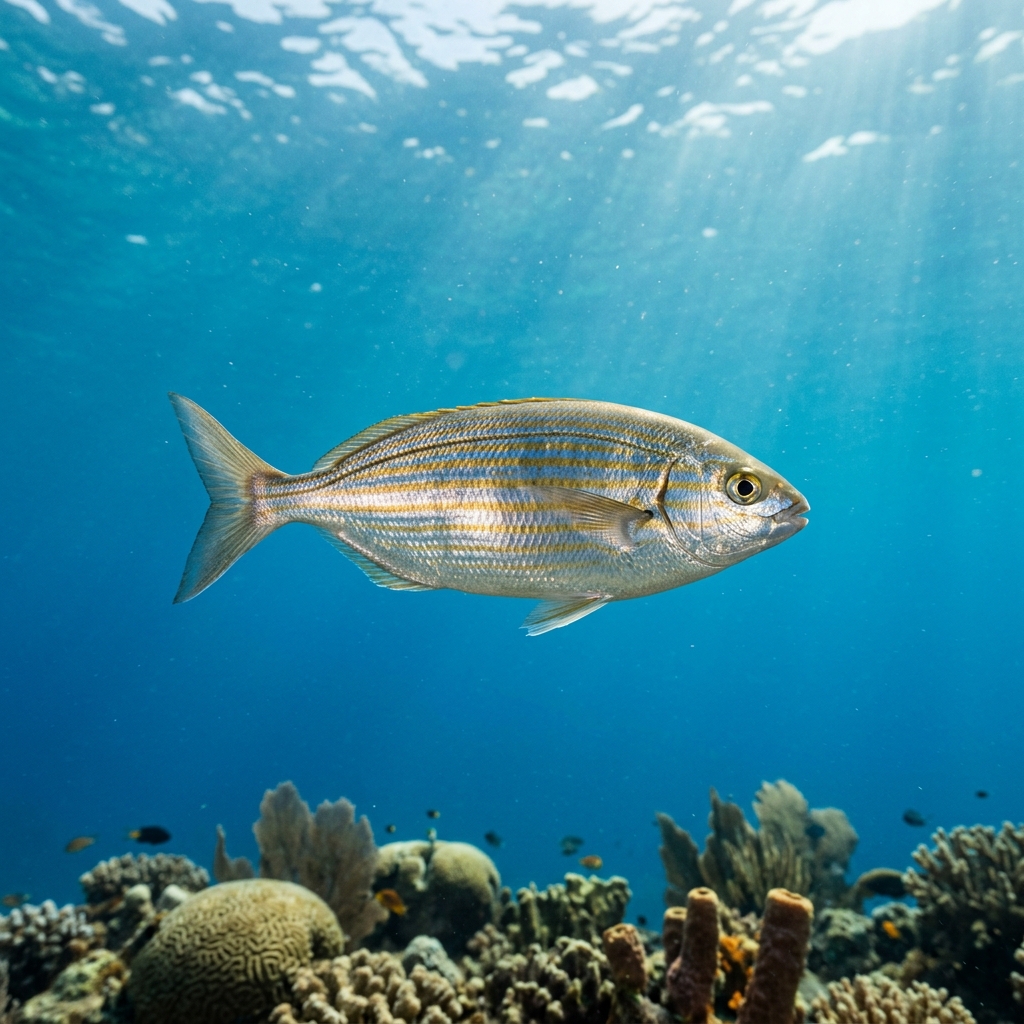
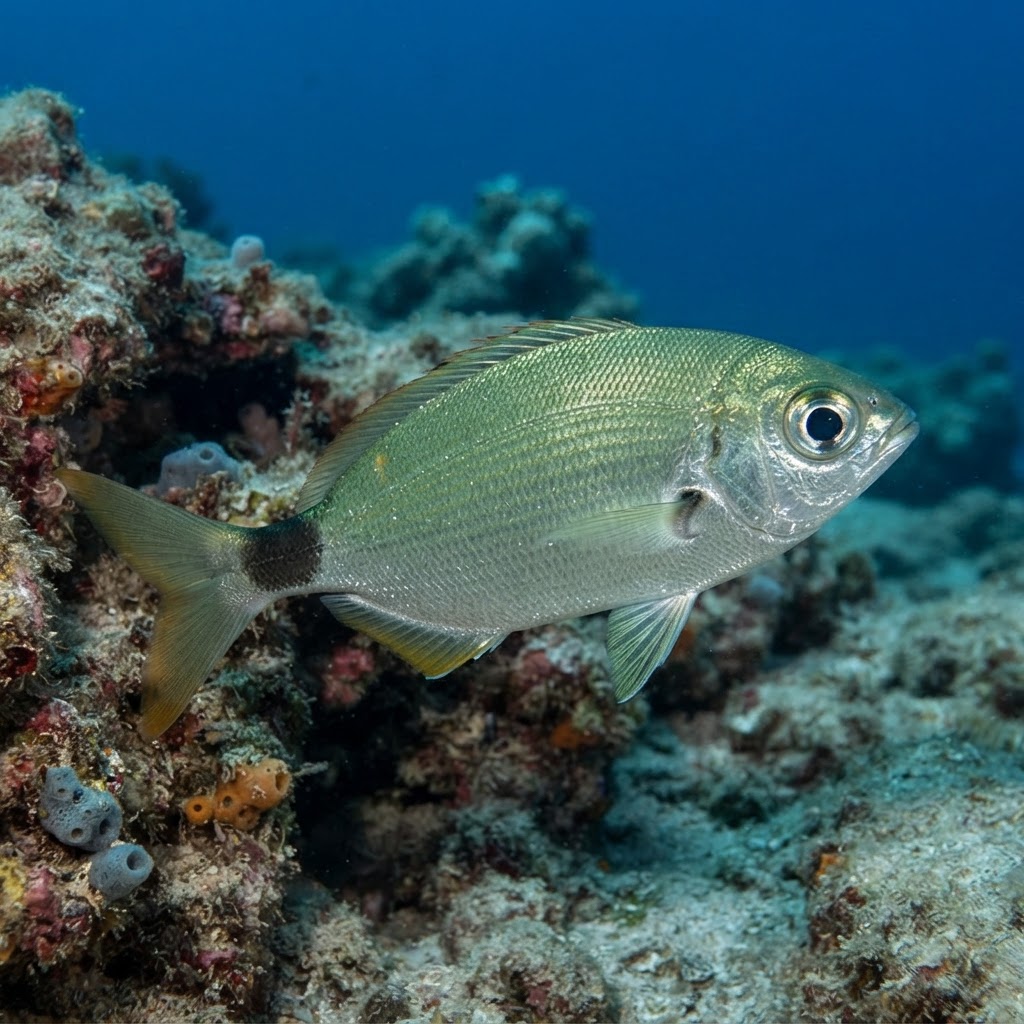
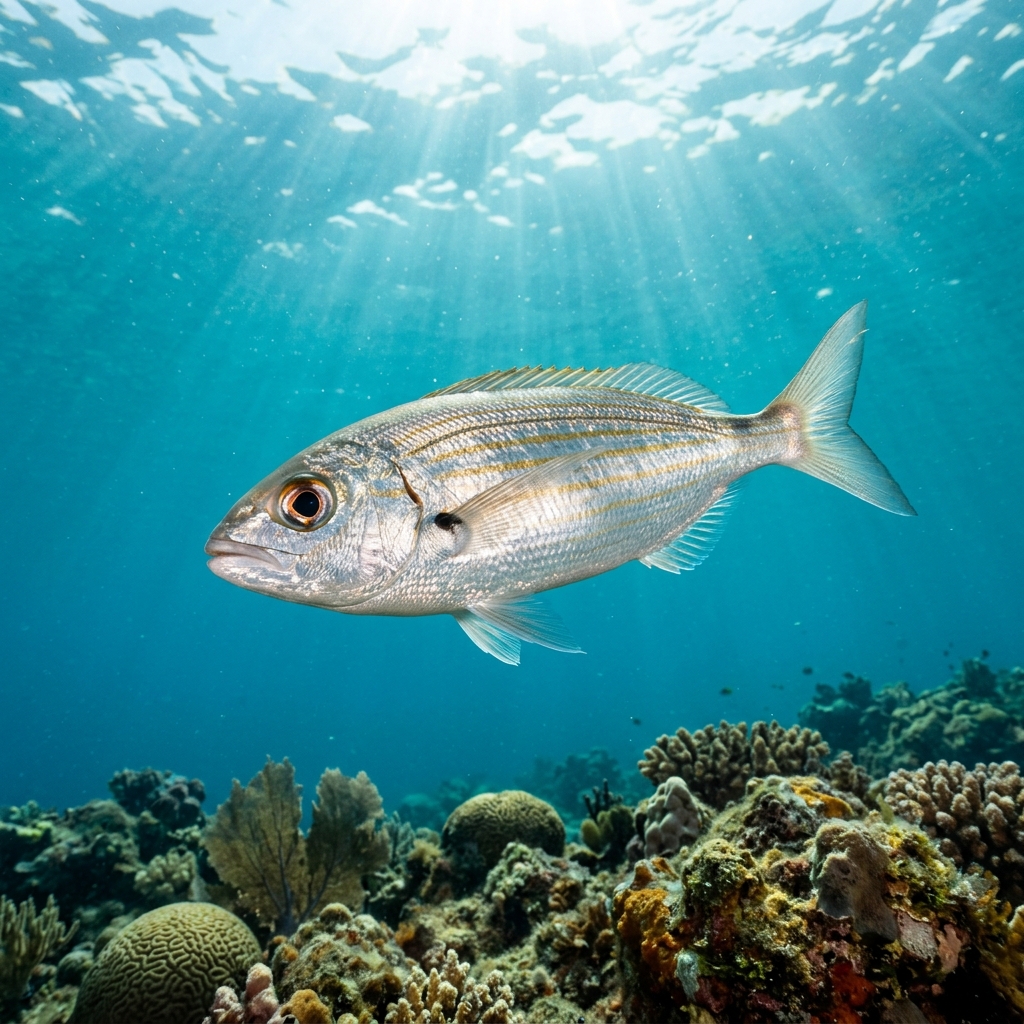
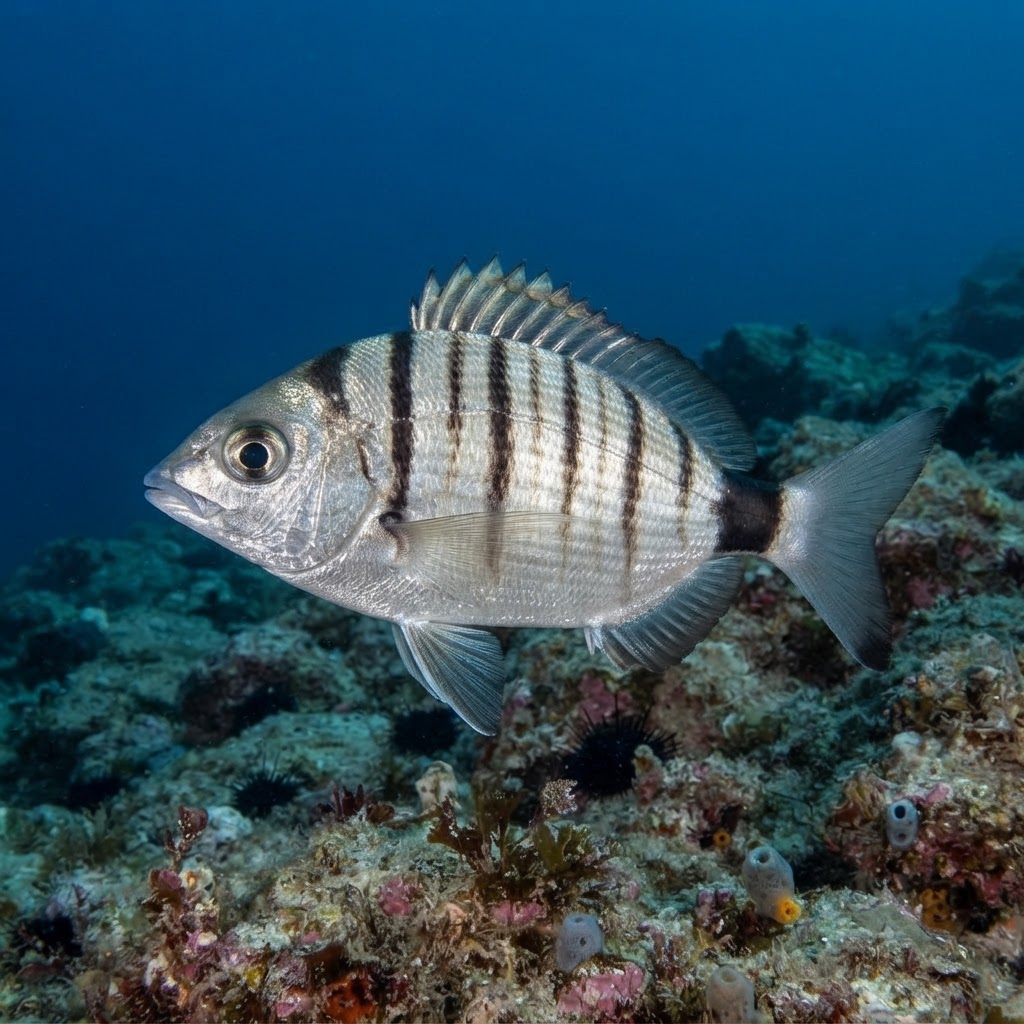
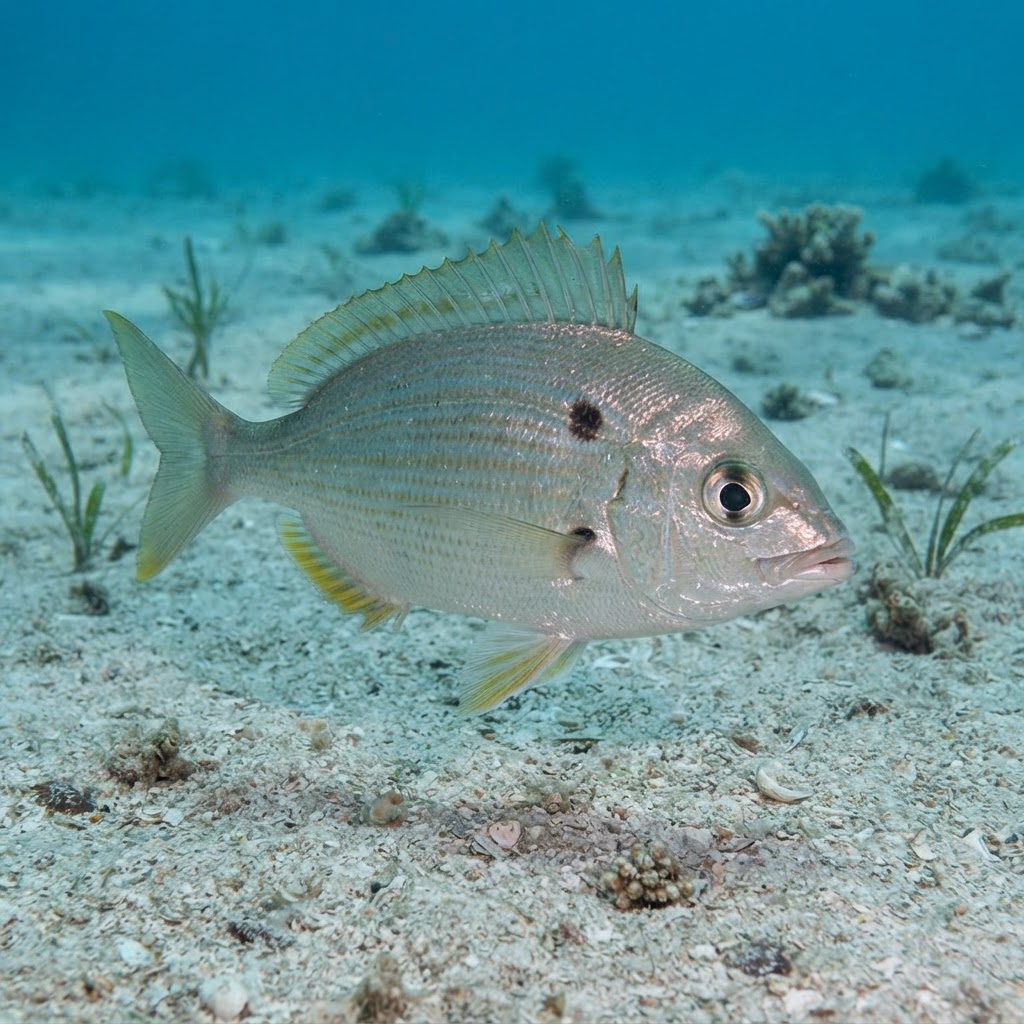
Look for a small, deep-bodied silver fish, around 28cm at most, with faint yellow-gold horizontal stripes running down its sides. The giveaway is a single dark, rounded spot just behind the gill cover, roughly at shoulder height. Its body is compressed and diamond-shaped in profile, and it tends to hang in loose groups just off the bottom rather than schooling tightly in open water.
Divers typically find pinfish hovering in loose, unhurried groups just above seagrass beds, sand flats or the base of reef structure, picking at small invertebrates and algae. They are generally unbothered by divers, holding their position or drifting off a short distance rather than bolting, which makes them an easy, low-drama fish to watch while you wait for bigger things to show up. Most logs describe them as uncommon to common at a site rather than the star of the dive.
Despite the name, the 'pin' refers to sharp spines in its dorsal fin rather than any resemblance to a pinfish lure, and those spines are a real deterrent to predators trying to swallow it whole.
Sightings show no strong seasonal pattern, and the recorded water temperatures of roughly 23 to 27C suggest it stays put across the year rather than migrating with the seasons. Plan around good visibility and calm conditions rather than a particular month.
This is very much a Florida fish for divers, with sites across the state making up the bulk of sightings, followed by scattered logs in Texas and the Carolinas. It also turns up occasionally off Mexico's Yucatan Peninsula, but Florida is where you have the best odds of running into it.
Mapping where Pinfish is logged…
Florida is by far the most reliable place to see them, with consistent logs across the state. Smaller numbers turn up in Texas, the Carolinas, and occasionally around Mexico's Yucatan Peninsula.
There is no clear seasonal pattern in the sighting data, and the fish tolerates a fairly stable warm-water range, so it is reasonable to expect them on Florida dives at any time of year.
Check for a small silver fish with faint yellow stripes and a distinct dark spot behind the gill cover. It sits low near seagrass or sand rather than schooling in midwater.
They typically reach around 28cm in length, making them a small to mid-sized fish you will usually see in loose groups rather than as a single standout individual.
No. They pose no threat to divers and are generally calm around people, though their dorsal spines are sharp enough to deter predators and are best not handled.
Their common name comes from the sharp pin-like spines in their dorsal fin, not their appearance, and those spines help them avoid being swallowed by predators.
Site and sighting data is aggregated from diver logs, iNaturalist and GBIF. For taxonomy and conservation status:
Saddled Bream
3,846 sites