Rhinecanthus assasi
Common on Red Sea reefs from South Sinai to Marsa Alam, this bold-patterned triggerfish shows up year-round in 25-29°C water.
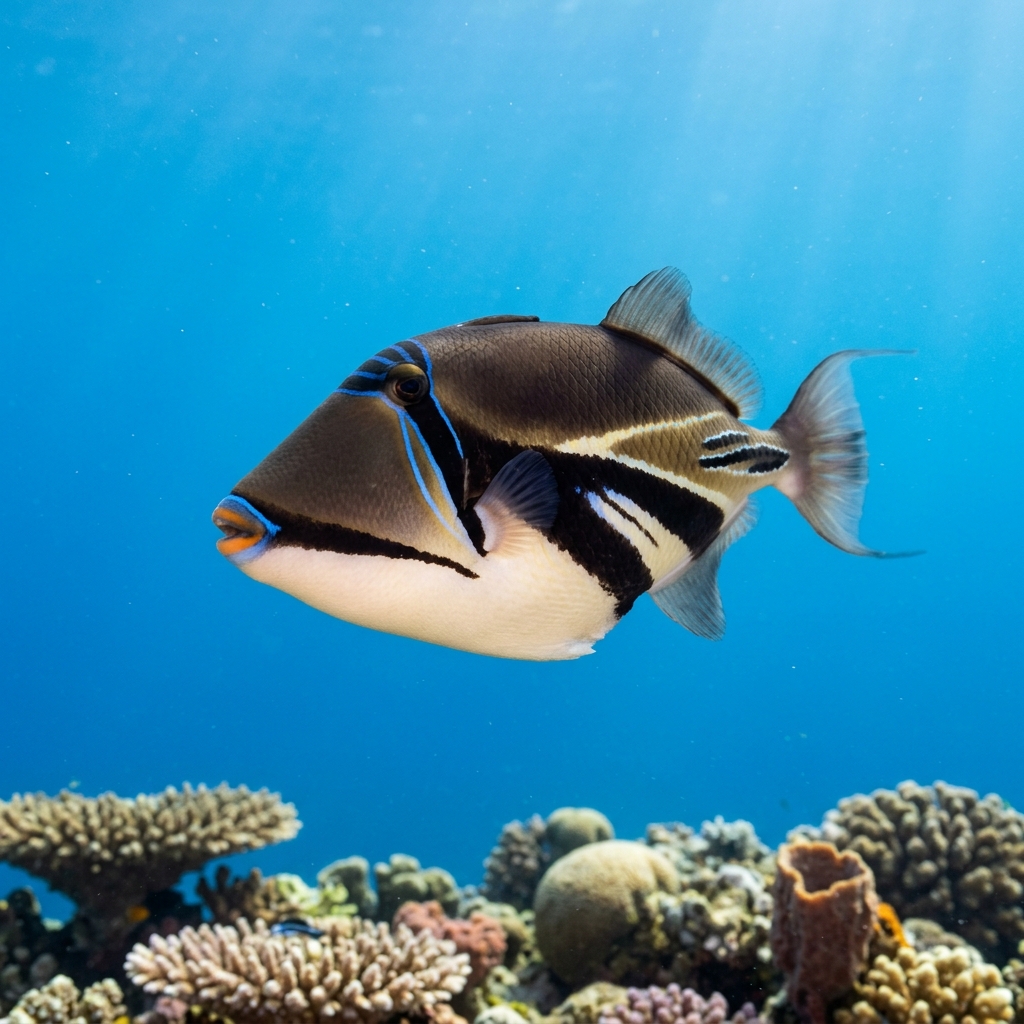
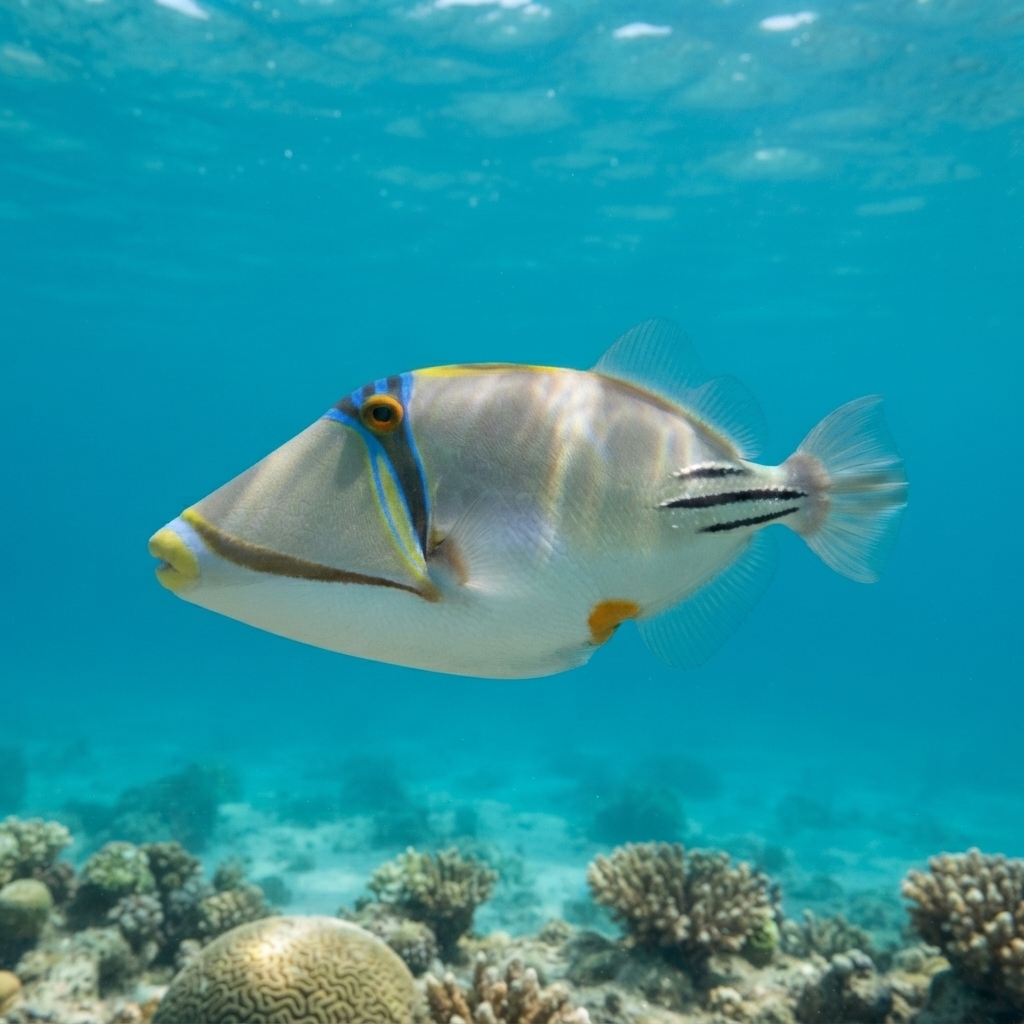
Small for a triggerfish at around 21 cm, with a pale grey-white body cut through by a bold black band that runs from the mouth back through the eye like a bandit mask. Yellow and blue lines streak the lower body and tail base, and a black-outlined patch sits near the pectoral fin. The angular, almost triangular body shape and the trigger-like first dorsal spine are typical of the family, but the sharp geometric facial markings are what give it away underwater.
Look for it picking over sand patches, rubble and shallow reef flats, often alone, nosing into the substrate for food rather than schooling. It tends to hold its ground rather than bolt, giving divers a decent look before it ducks into a crevice, though like other triggerfish it can turn territorial if you get too close to a nest site. Most sightings are during the day on the shallower parts of the reef.
Triggerfish get their name from a locking dorsal spine that a fish can raise and wedge into a burrow or crevice to jam itself in place, making it hard for a predator, or a diver's hand, to pull it out.
No strong seasonal pattern shows up in the sightings, and with a comfortable range of roughly 25 to 29°C, it sits on these reefs year-round, so any month works for a dive trip.
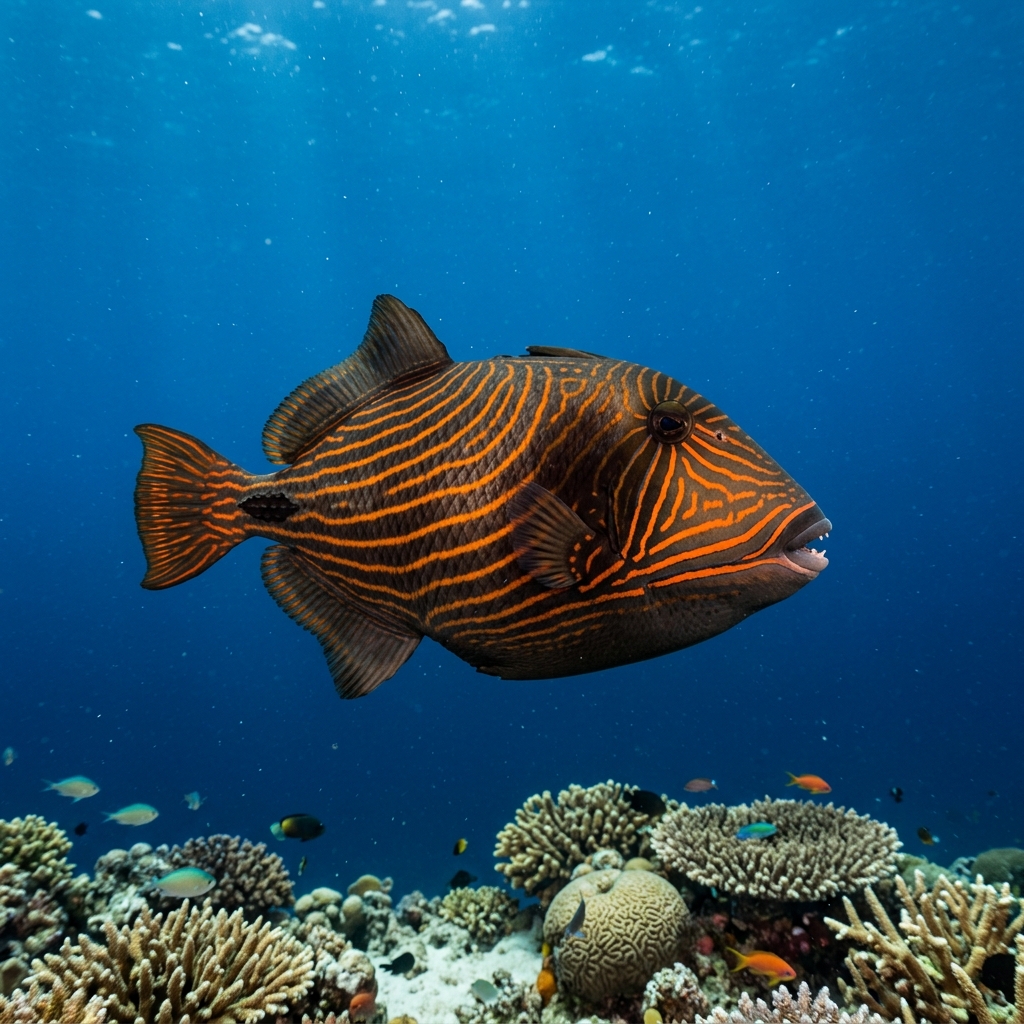
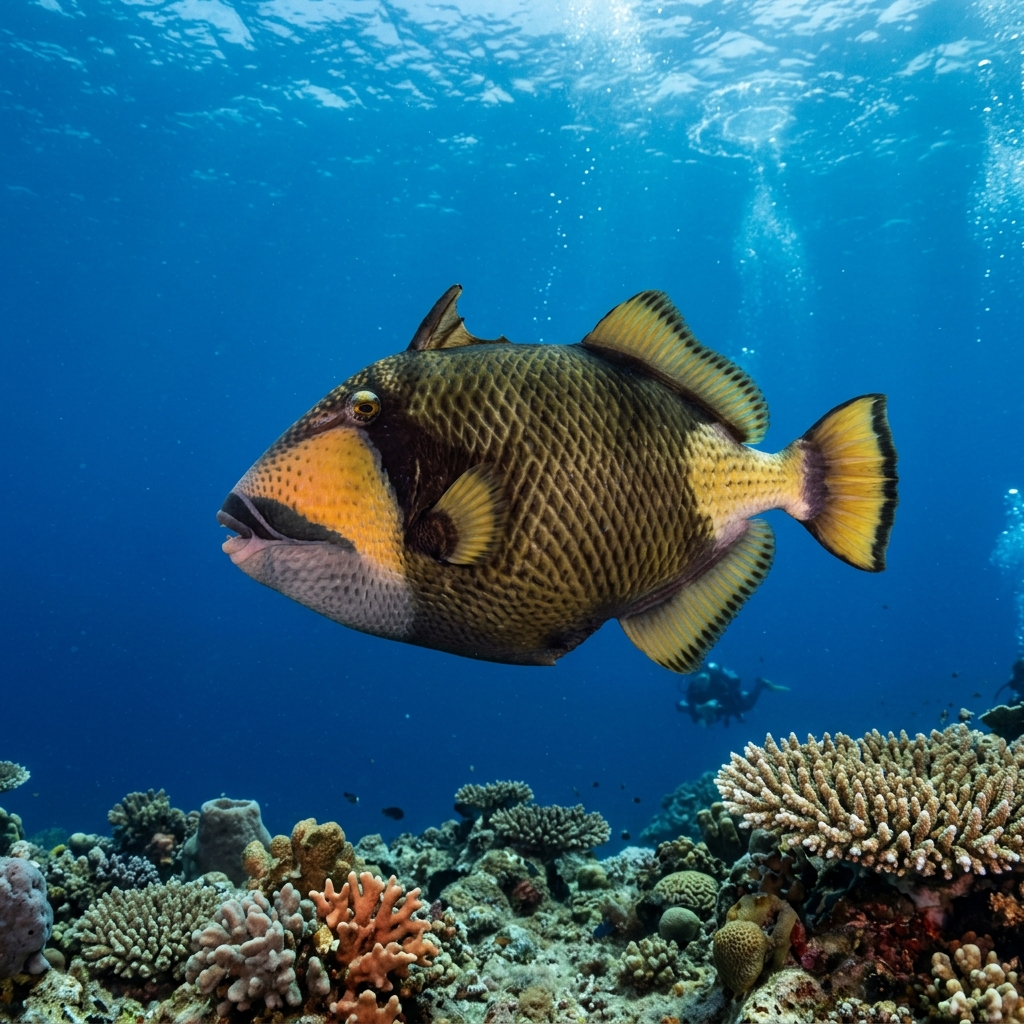
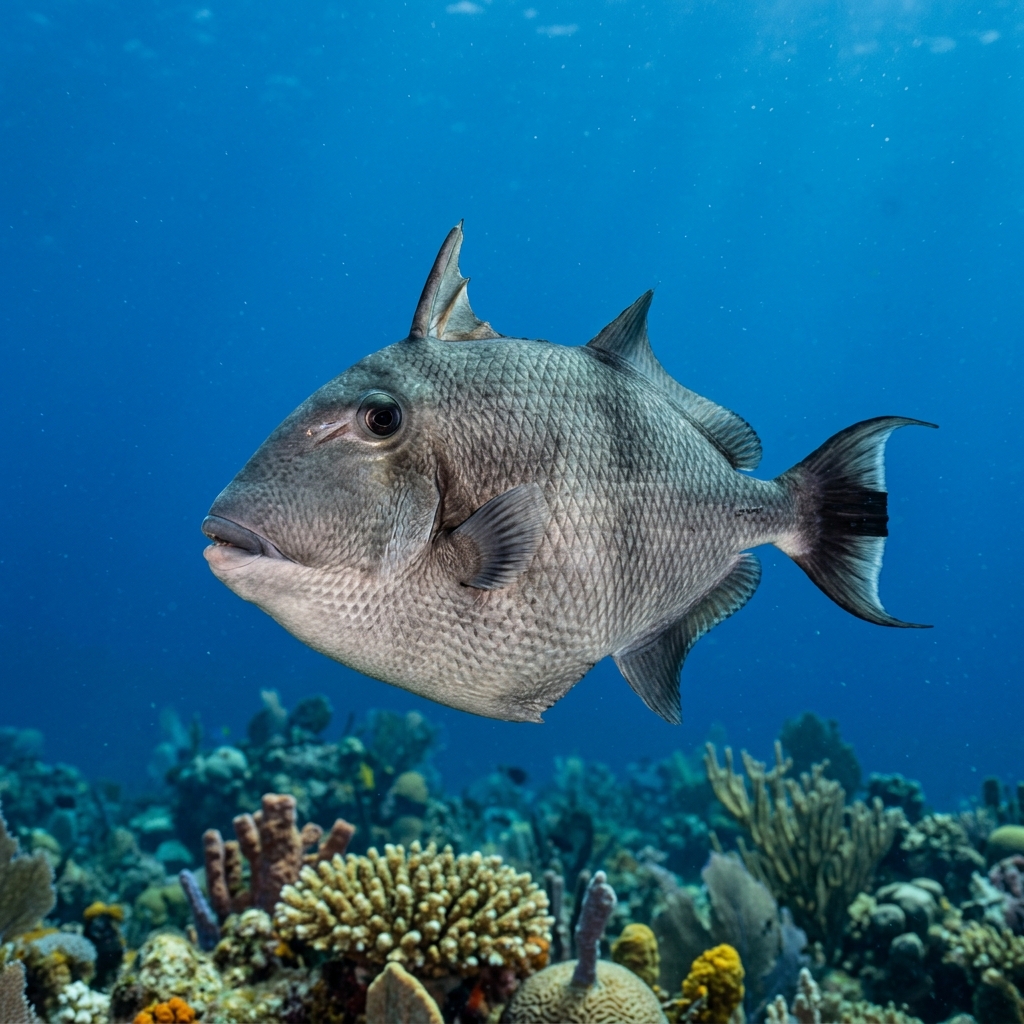
Reef neighbours a diver could mistake it for. Use the identification notes above to tell them apart.
This is a Red Sea regular, most heavily logged across South Sinai, Marsa Alam and the Deep South, and the wider Red Sea Riviera in Egypt. It also turns up reliably in Oman's Daymaniyat Islands and Muscat, along the Israeli and Jordanian coasts around Eilat and Aqaba, and along the Saudi Red Sea coast.
Mapping where Picasso Triggerfish is logged…
They are most reliably seen in Egypt's Red Sea, especially South Sinai, Marsa Alam and the Deep South, and the Red Sea Riviera. Good numbers also show up in Oman's Daymaniyat Islands and around Eilat, Israel, and Aqaba, Jordan.
There is no marked season in the sightings, and the water they favour, roughly 25 to 29°C, holds steady across the year on these Red Sea and Gulf of Oman reefs, so they can be found on any month's dive.
Look for a small, angular triggerfish with a pale body cut by a bold black bandit-mask stripe through the eye and yellow-blue streaks near the tail. It grows to about 21 cm and is usually seen alone over sand or rubble patches.
They typically reach around 21 cm in length, making them one of the smaller triggerfish species divers encounter on Red Sea and Gulf of Oman reefs.
No, they are not considered dangerous to divers. They will generally hold their ground and let you get a good look rather than flee, though it is worth giving any triggerfish guarding a nest a bit of space.
Site and sighting data is aggregated from diver logs, iNaturalist and GBIF. For taxonomy and conservation status:
Lagoon Triggerfish
2,435 sites