Spicara smaris
Slim silvery schoolers common on Catalonia and Riviera dive sites, best spotted in mid-depth water between 12 and 18 C.
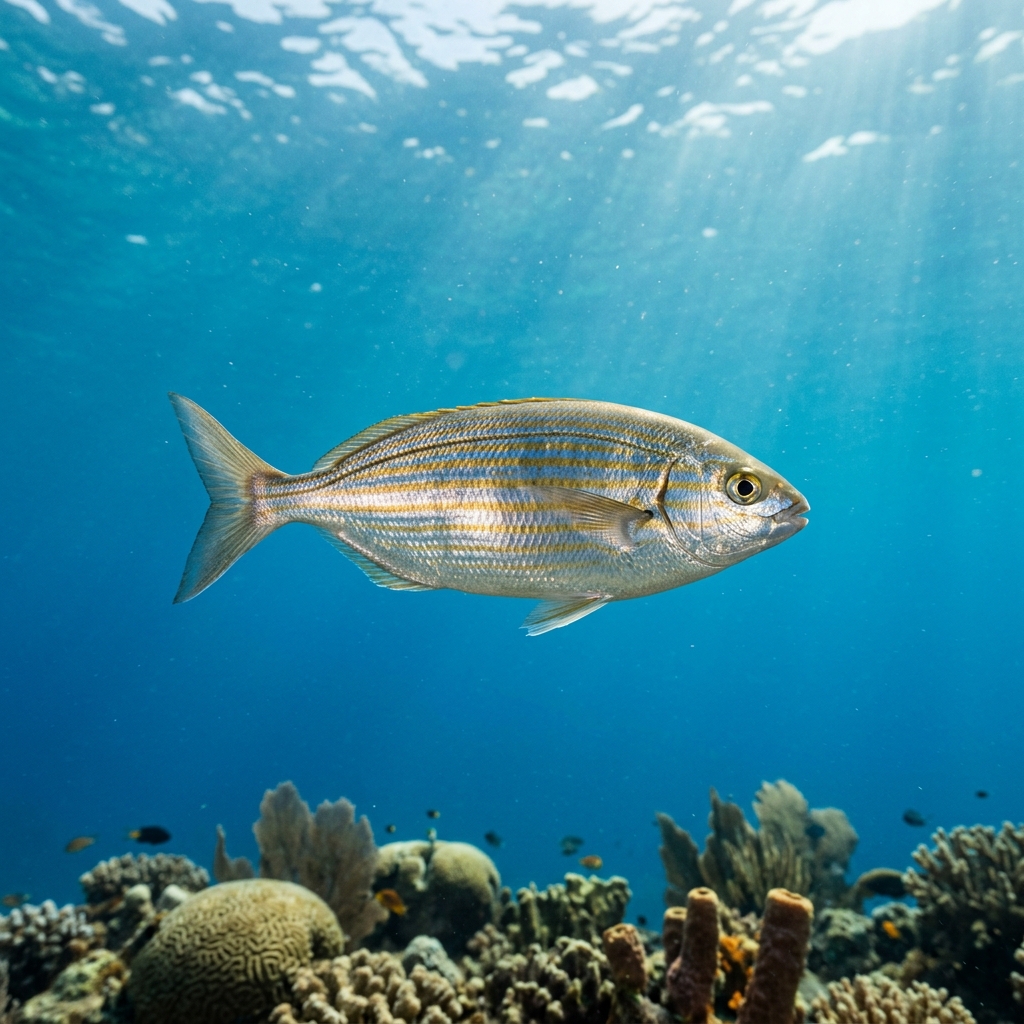
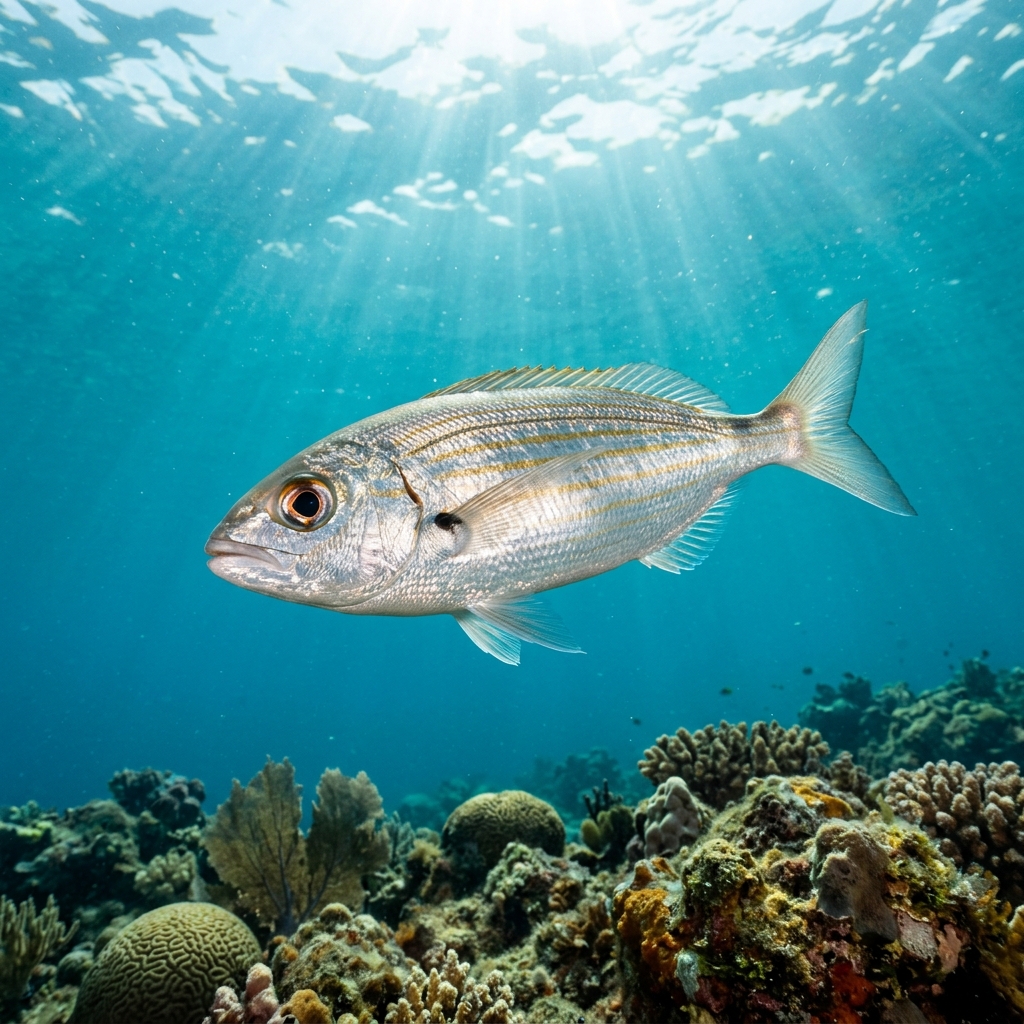
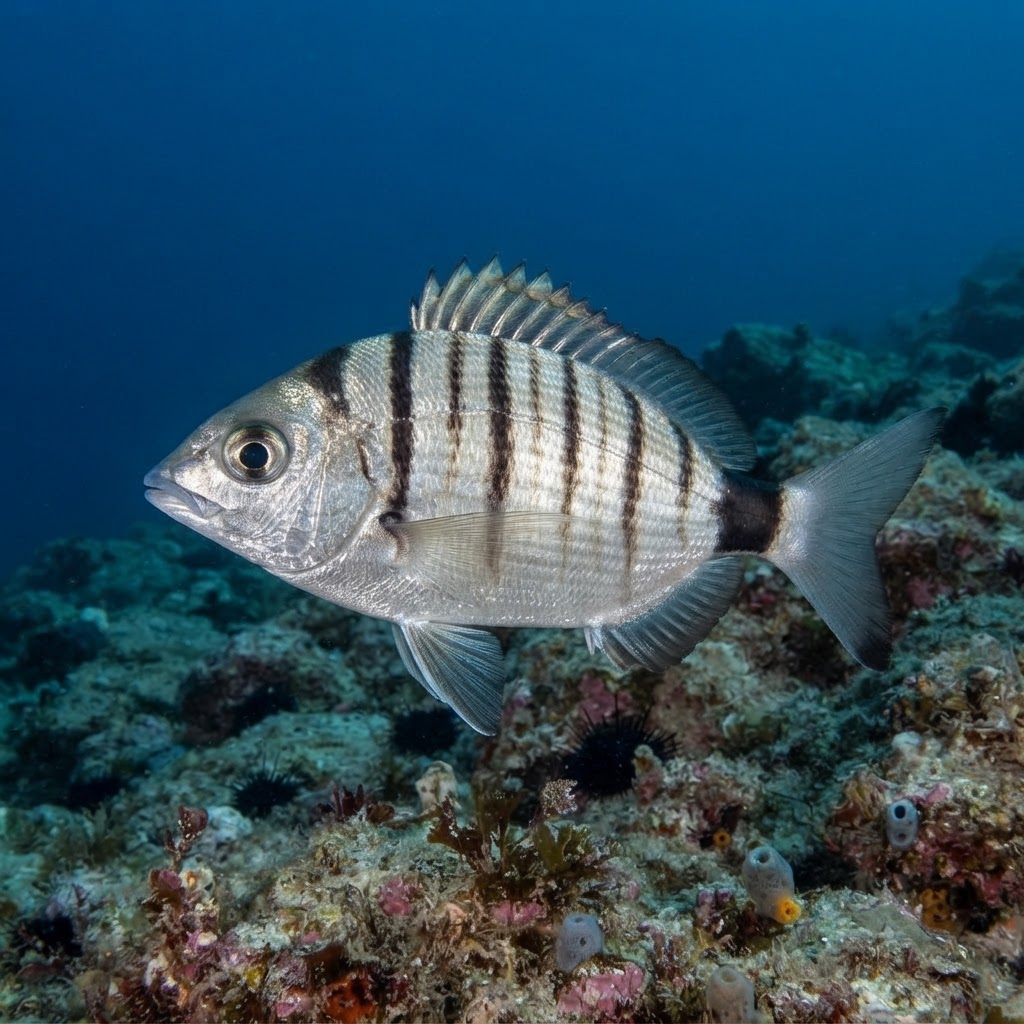
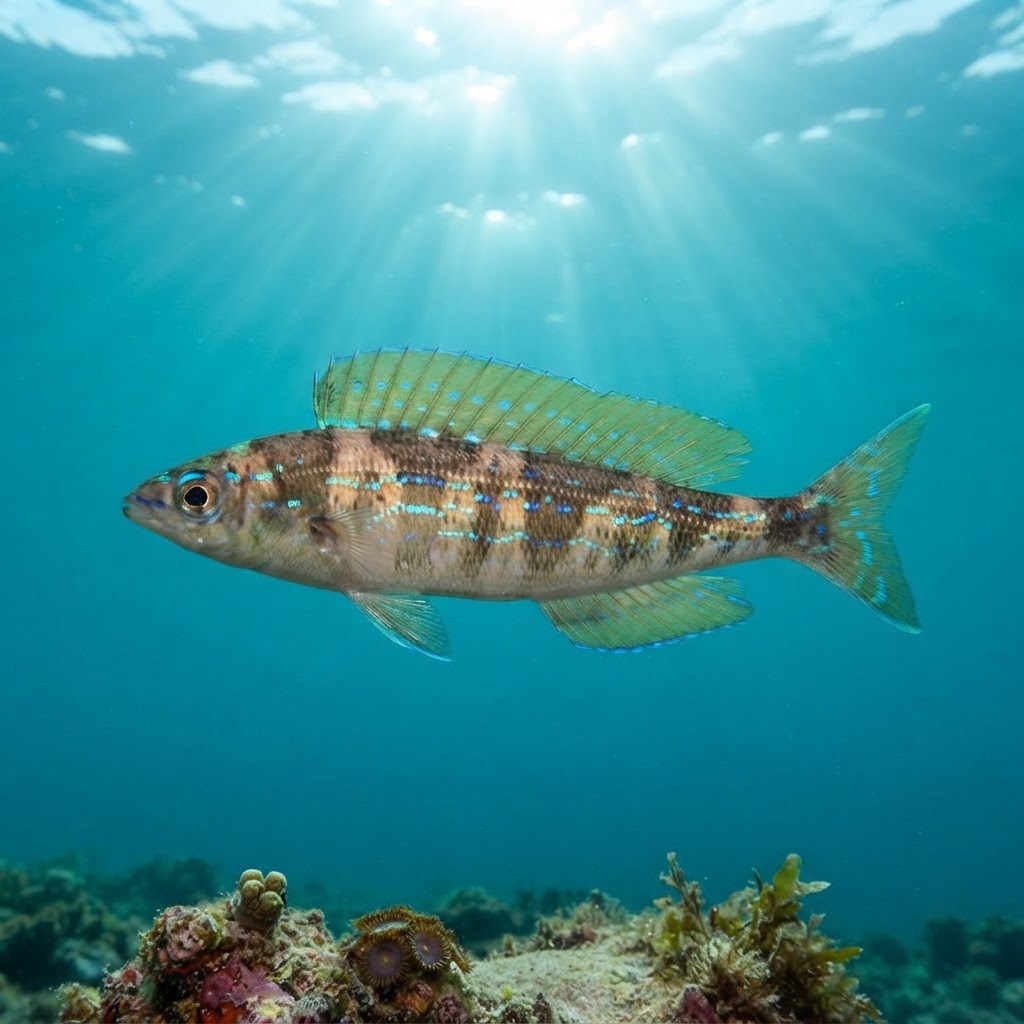
Slender, torpedo-shaped body reaching about 17 cm, with a silvery-grey flank and a faint dusky stripe running along the side that can fade in and out depending on light and mood. The back often carries a slightly olive or bluish tinge, and the fish tends to show up in loose to tight schools rather than alone, which is often the easiest first clue to its identity. There's no bold blotch or bar to key on, so body shape and schooling behaviour do most of the identification work underwater.
Usually seen moving in loose schools over rocky reef and seagrass edges, hovering in mid-water rather than hugging the bottom. They're generally indifferent to divers, drifting on with the current rather than scattering, which makes them easy to swim through rather than something you have to chase down. Most sightings are at moderate depths where light still reaches the reef well.
Picarel schools often mix with other small schooling sparids on the reef, so a loose silvery cloud over rock or seagrass is worth a second look rather than dismissing it as "just baitfish".
Sightings are logged year-round with no strong seasonal pattern, and the observed water temperature range of 11.8 to 18.8 C spans much of the Mediterranean diving calendar, so there's no need to time a trip around it specifically.
Most reliably logged around Catalonia and Murcia in Spain, and along the French Riviera and Provence coast, with a strong presence in Liguria, Italy, too. Smaller but consistent numbers turn up in Crete, Greece, and the Balearic Islands, making this a fish you'll cross paths with on a wide spread of Western and Central Mediterranean sites rather than one specific hotspot.
Mapping where Picarel is logged…
They're most commonly logged in Catalonia and Murcia in Spain, along the French Riviera and Provence, and in Liguria, Italy, with additional sightings in Crete, Greece. They show up widely across Mediterranean rock and seagrass sites rather than being tied to one specific region.
Sightings are recorded throughout the year with no clear seasonal peak, and the species tolerates a fairly wide temperature range of around 12 to 18 C, so most Mediterranean dive seasons will do.
Look for a slim, silvery, torpedo-shaped fish around 17 cm long, often with a faint dusky stripe along the flank, moving in loose schools in mid-water over rock or seagrass rather than sitting still on the bottom.
They typically reach around 17 cm in length, making them one of the smaller schooling fish you'll encounter on Mediterranean reef dives.
No. They're a small, harmless schooling fish with no defensive spines or aggressive behaviour towards divers.
Site and sighting data is aggregated from diver logs, iNaturalist and GBIF. For taxonomy and conservation status:
Saddled Bream
3,846 sites