Phyllodesmium poindimiei
Find Branched Soft Coral Eater in New South Wales and Queensland, Australia, best Aug, Dec. Spotted in 18-26°C waters across Australian and Philippine reefs.
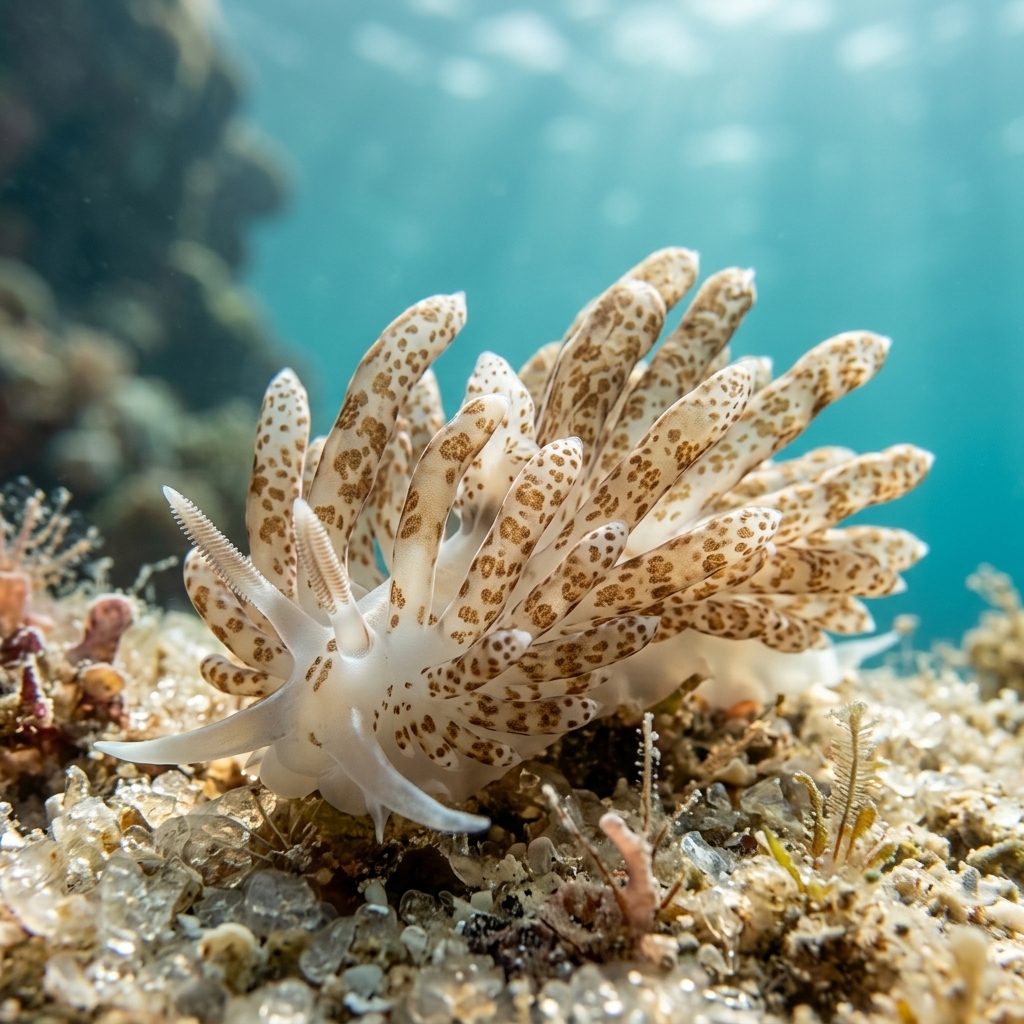
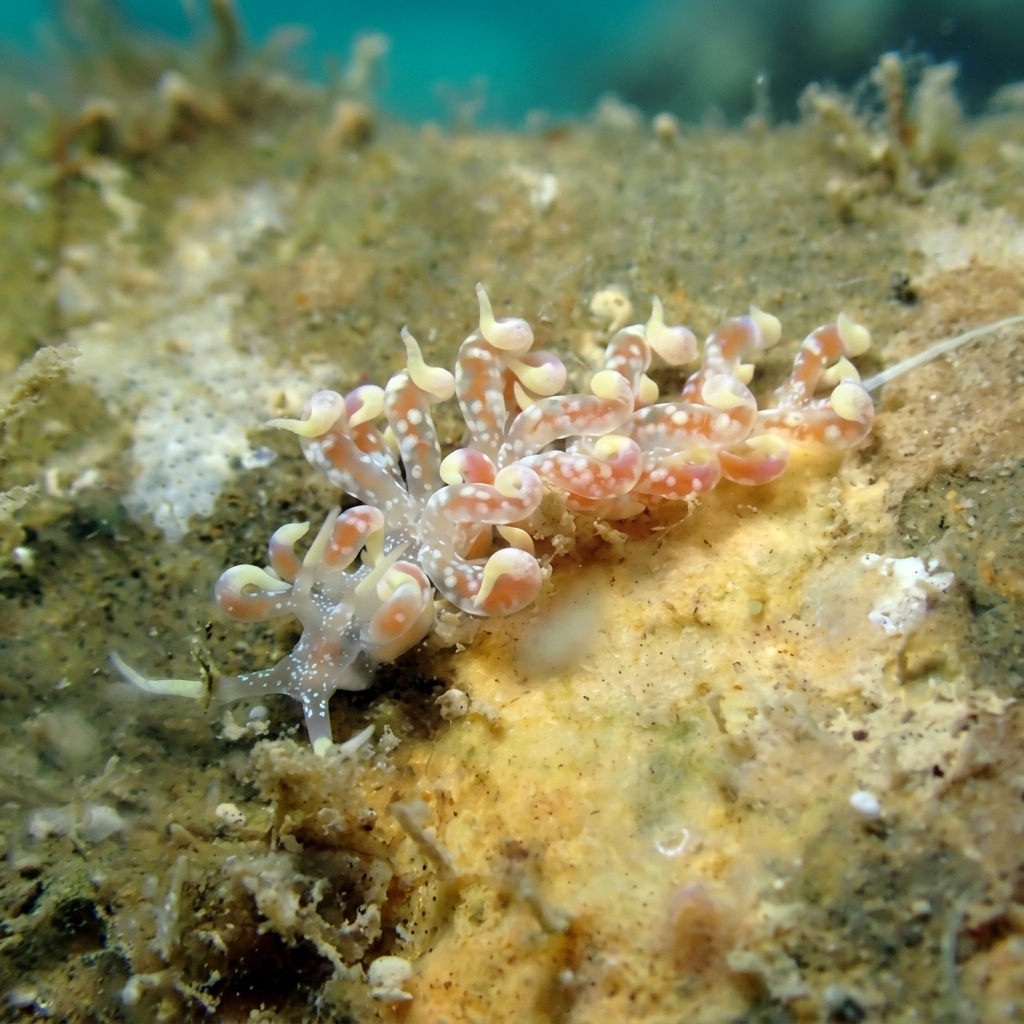
This aeolid nudibranch (a slug-like mollusc bearing rows of finger-like appendages called cerata along its back) is best spotted by its elongated, pale to translucent body draped with clusters of branched cerata that often mirror the texture of the soft corals it feeds on. The cerata typically show warm orange or yellowish tips, making the animal look almost like part of the coral itself, which is precisely what makes it so easy to overlook. Body length is small; scan slowly across branching soft coral colonies rather than open reef to find one.
You will almost always find one sitting directly on or pressed tightly against a branching soft coral colony, it matches its host so closely that slow, methodical searching beats luck every time. It tends to be slow-moving and shows little reaction to divers or torch light, so there is no need to rush. Night dives and dusk dives on soft-coral-rich walls and slopes offer some of the best chances, as the animals are often more exposed when feeding.
Like several other aeolid nudibranchs that feed on cnidarians (animals such as corals and anemones), Phyllodesmium poindimiei may sequester (store and reuse) nematocysts, the stinging cells from its prey, into specialised tips of its cerata, potentially repurposing them for its own defence.
In the Southern Hemisphere (primarily Australia), sightings concentrate between August and December, making late austral winter through early summer the prime window to search for this species.
Reef neighbours a diver could mistake it for. Use the identification notes above to tell them apart.
Australia dominates the sighting records, with New South Wales and Queensland together accounting for the large majority of logged encounters, sites along the New South Wales coast and the Queensland reef systems are your best starting points. A solid secondary population turns up in Palawan and Apo Reef in the Philippines, and there is at least one confirmed record from Sipidan and East Sabah in Malaysia.
Mapping where Branched Soft Coral Eater is logged…
Australia is by far the strongest location, with New South Wales and Queensland producing the most sightings. The Philippines, particularly around Palawan and Apo Reef, is a reliable secondary destination, and records also exist from Sipidan in East Sabah, Malaysia.
In Australia, where most sightings occur, encounters are concentrated between August and December. Outside this window sightings drop off noticeably, so plan your trip accordingly if Australia is your target destination.
Look for a small, pale or translucent nudibranch with rows of branched, tree-like cerata along its back, often with warm orange or yellow tips. It rests directly on branching soft corals and blends in remarkably well, so search the coral surface carefully rather than scanning open water.
It is logged as rare at the majority of sites where it has been recorded, so a sighting is never guaranteed. Patience, slow searching on soft coral structures, and diving with a guide familiar with the local macro life will improve your odds considerably.
Site and sighting data is aggregated from diver logs, iNaturalist and GBIF. For taxonomy and conservation status:
Blue Dragon
3,163 sites