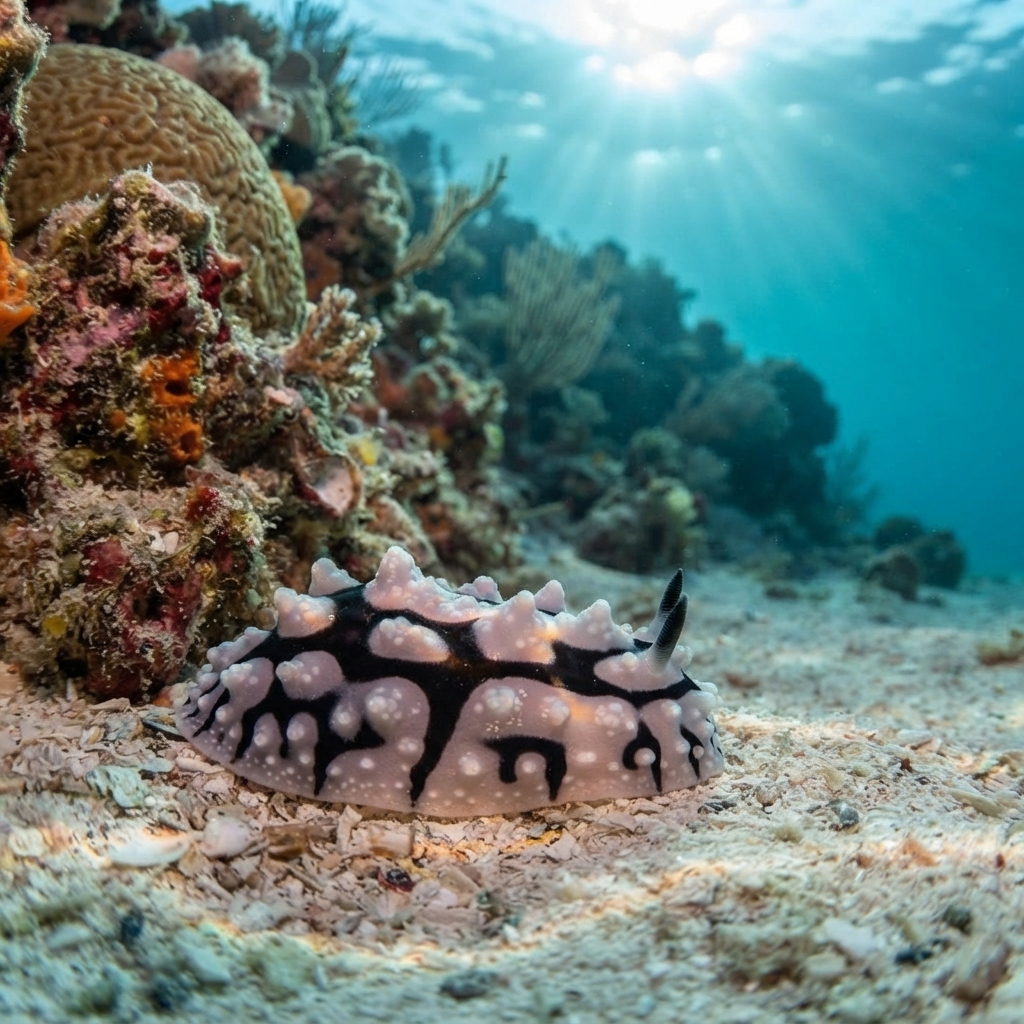
Phyllidiopsis sinaiensis
A little-logged nudibranch found only around Aqaba, Jordan, in water between 21 and 27 C. Here's how to spot one on the reef.
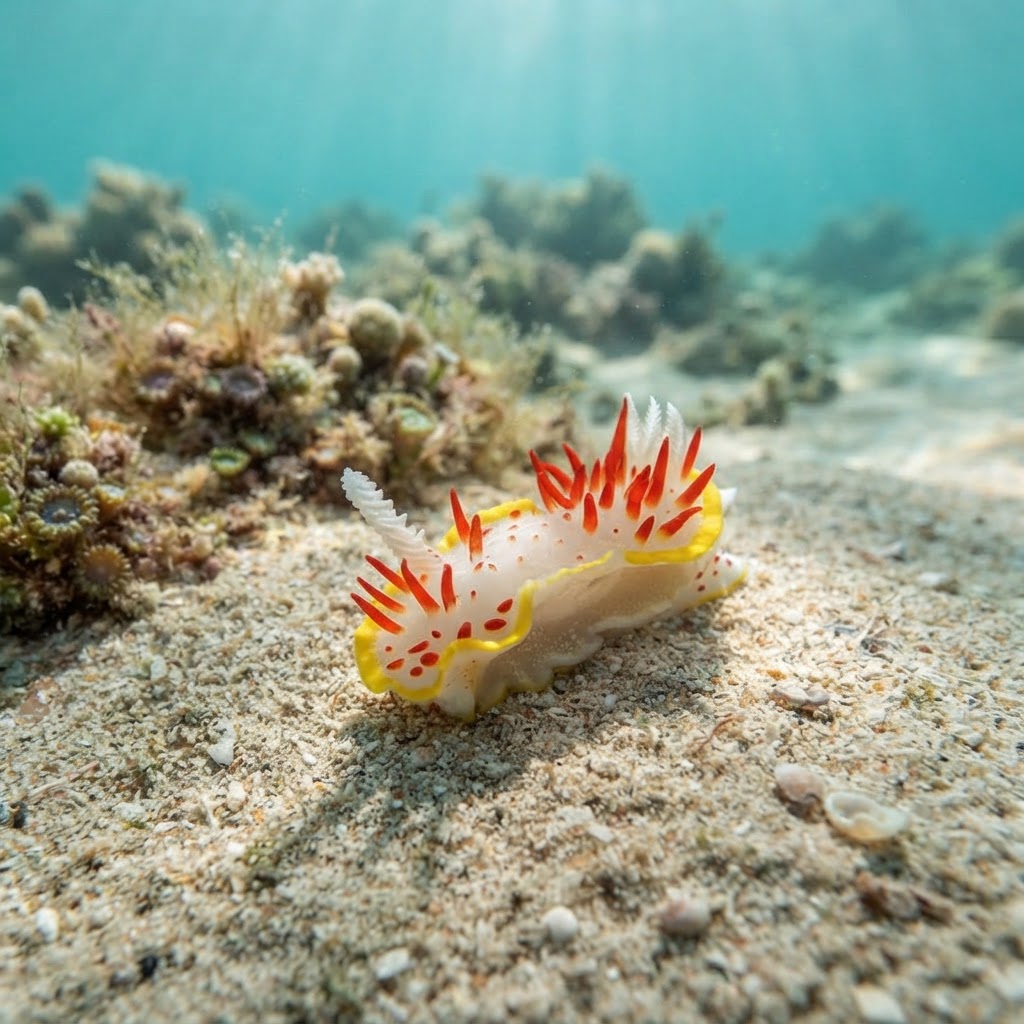
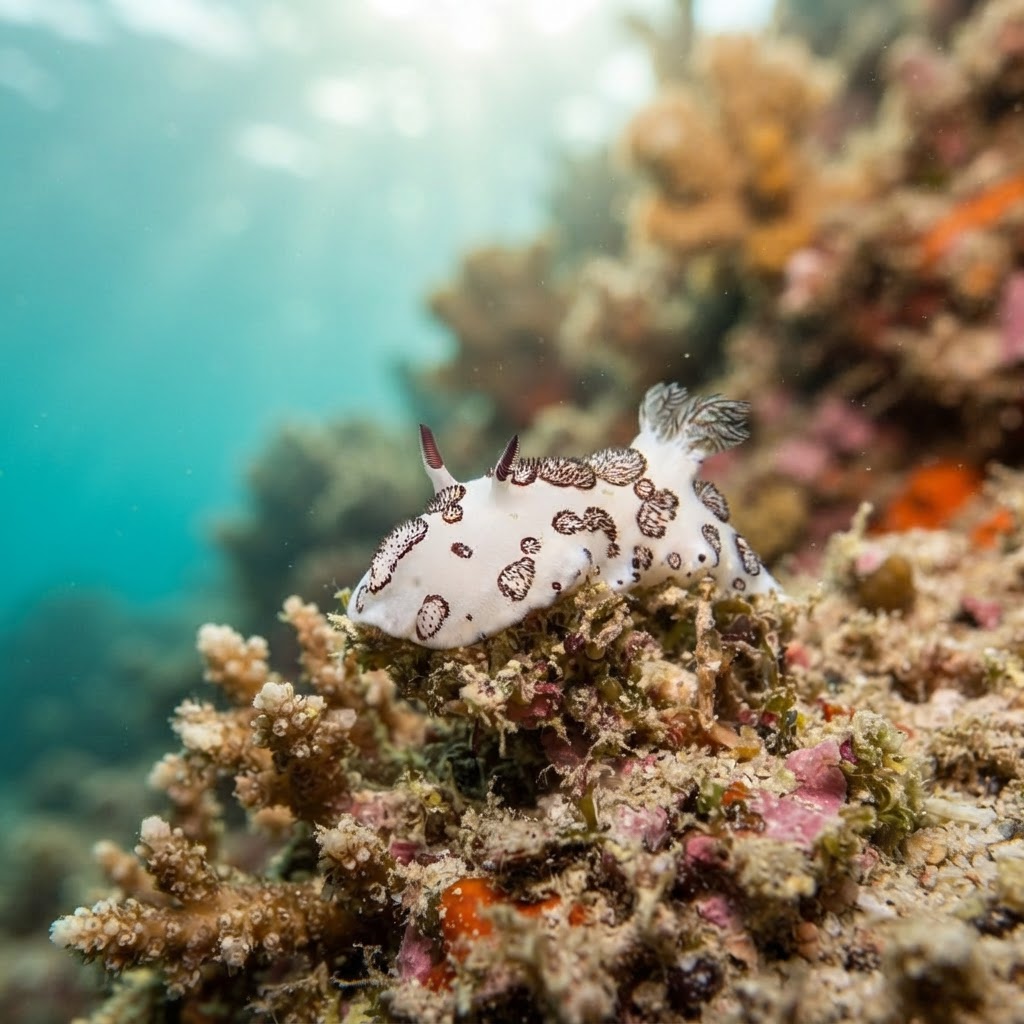
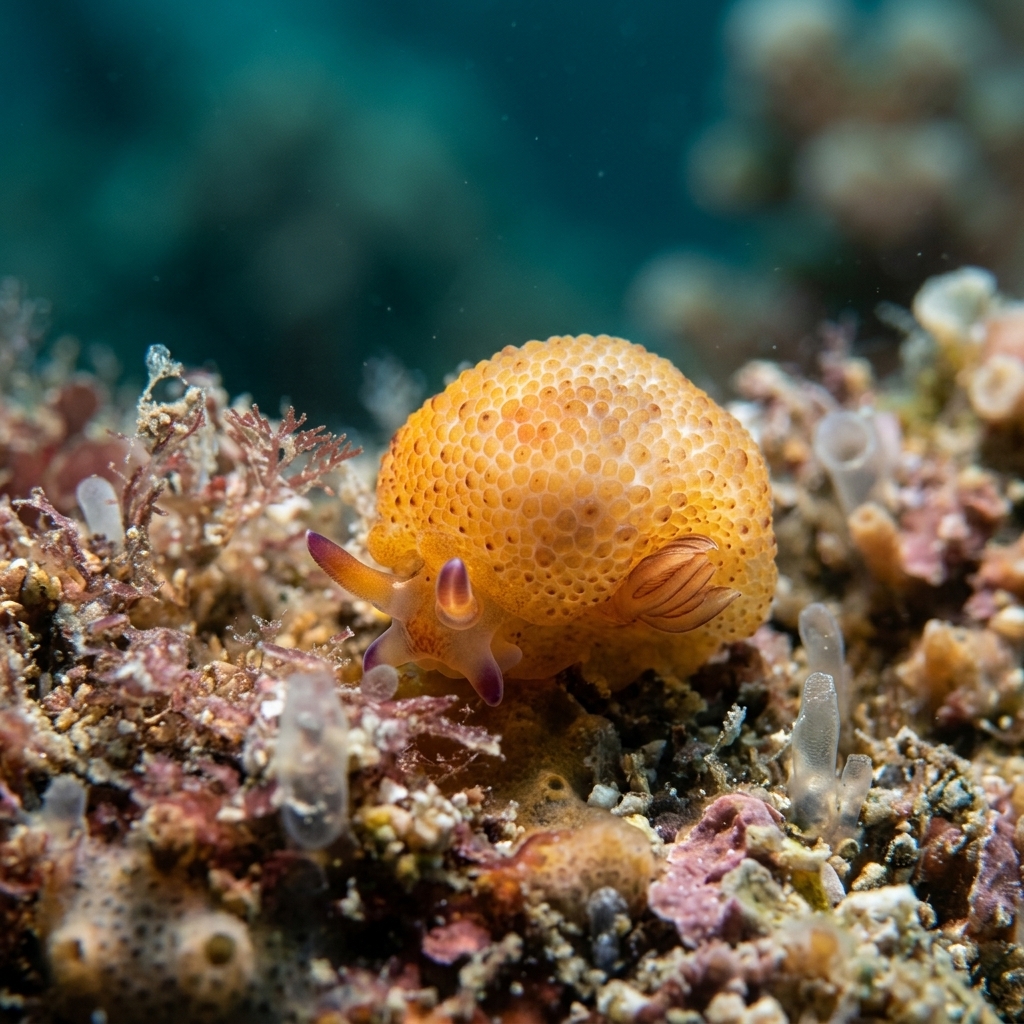
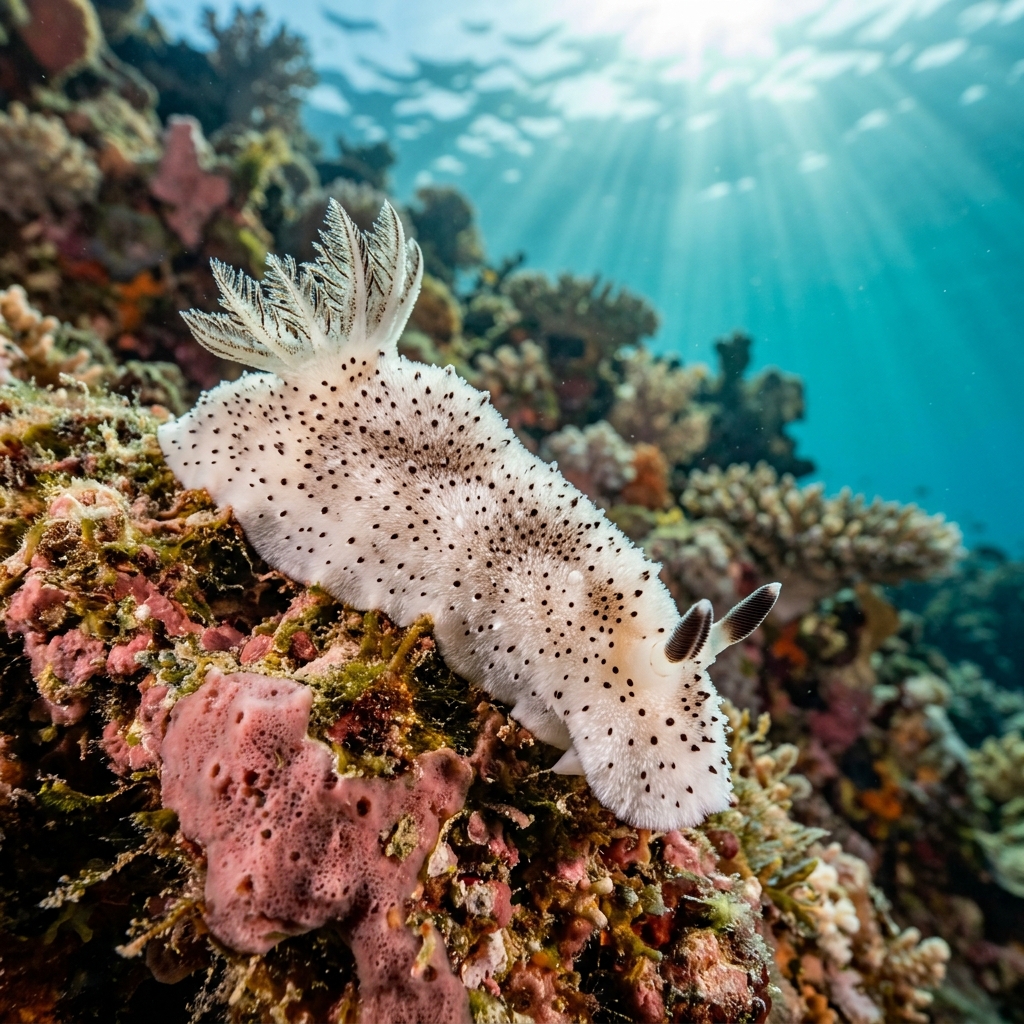
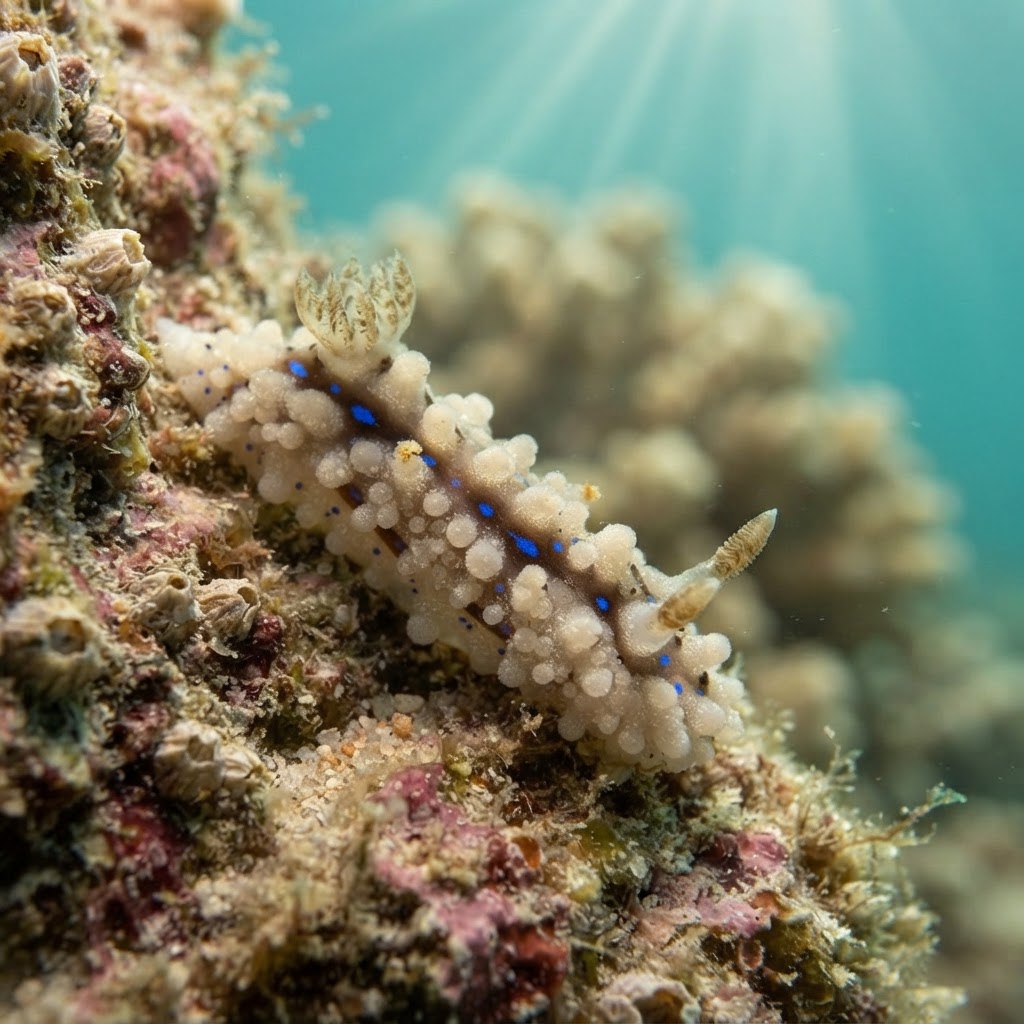
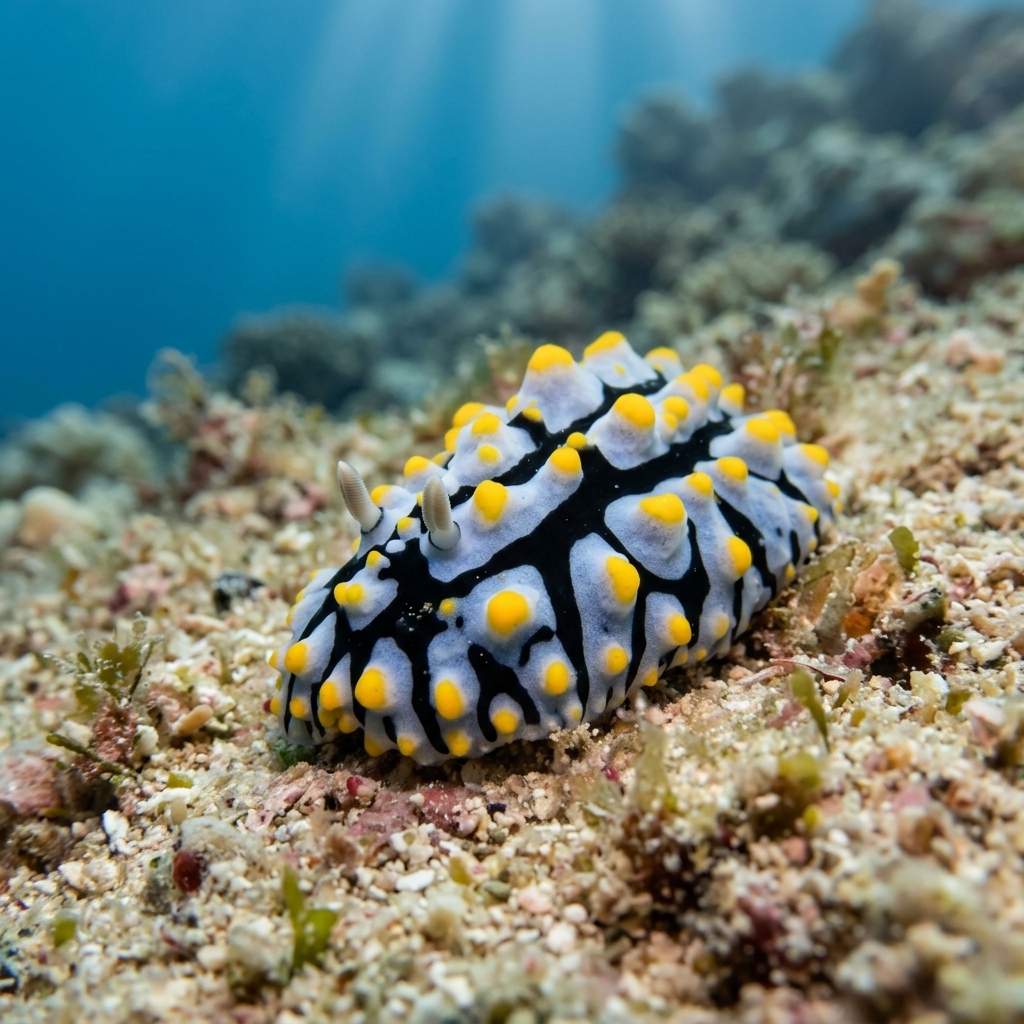
A small ridged nudibranch (phyllidiid) with a firm, textured mantle rather than the soft frilly gills these slugs' cousins show on their backs. Look for a patterned back of raised tubercles in contrasting tones against the reef substrate, and a narrow foot barely visible from above as it grazes slowly over rock and rubble. It moves too slowly to mistake for anything but a nudibranch, but the specific pattern takes a close look to confirm against similar phyllidiids.
Found grazing slowly across rock, rubble and encrusting sponge on the reef, doing what most phyllidiids do: hunting sponge tissue at an unhurried pace regardless of who's watching. Divers who log it are usually on a slow macro-focused dive, scanning low reef structure rather than open water, since these slugs are easy to swim straight past.
Phyllidiids like this one are toxic to most predators, drawing chemical defences from the sponges they eat, so the bold surface pattern most divers photograph is likely a warning rather than decoration.
Sightings don't show a clear season, and the water here sits in a comfortable 21 to 27 C range year-round, so any month diving Aqaba gives a fair shot at finding one.
Reef neighbours a diver could mistake it for. Use the identification notes above to tell them apart.
Every logged sighting of this species comes from Aqaba, Jordan, making the Jordanian Red Sea the place to look for it. It hasn't turned up in diver records elsewhere yet, so treat Aqaba's reef and rubble patches as the known range for now.
Mapping where Phyllidiopsis sinaiensis is logged…
Every recorded sighting comes from Aqaba, Jordan, so that stretch of the Jordanian Red Sea is currently the only known place to find it while diving.
There's no detected seasonal pattern, and water temperatures in Aqaba stay in a diveable 21 to 27 C range through the year, so sightings are possible on any month's dive.
Look for a small, firm-bodied nudibranch with a ridged, tuberculate mantle rather than soft feathery gills, moving slowly across rock and rubble. Its pattern needs a close look to separate it from other phyllidiids on the same reef.
Exact size data isn't confirmed for this species, but like most phyllidiids it's a small nudibranch best spotted by scanning low reef structure closely rather than looking for a large animal.
No, it poses no danger to divers. Its chemical defences are aimed at predators, not people, so it can be observed and photographed at a normal distance without any risk.
Like other phyllidiid nudibranchs, it feeds on sponges, and the toxins it picks up from that diet are thought to make it unpalatable to reef predators.
Site and sighting data is aggregated from diver logs, iNaturalist and GBIF. For taxonomy and conservation status:
Blue Dragon
3,163 sites