Alpheus deuteropus
A rarely logged snapping shrimp best known from Hawaii's reefs, tucked in rubble at 22-28C year-round. Here's how to spot one.
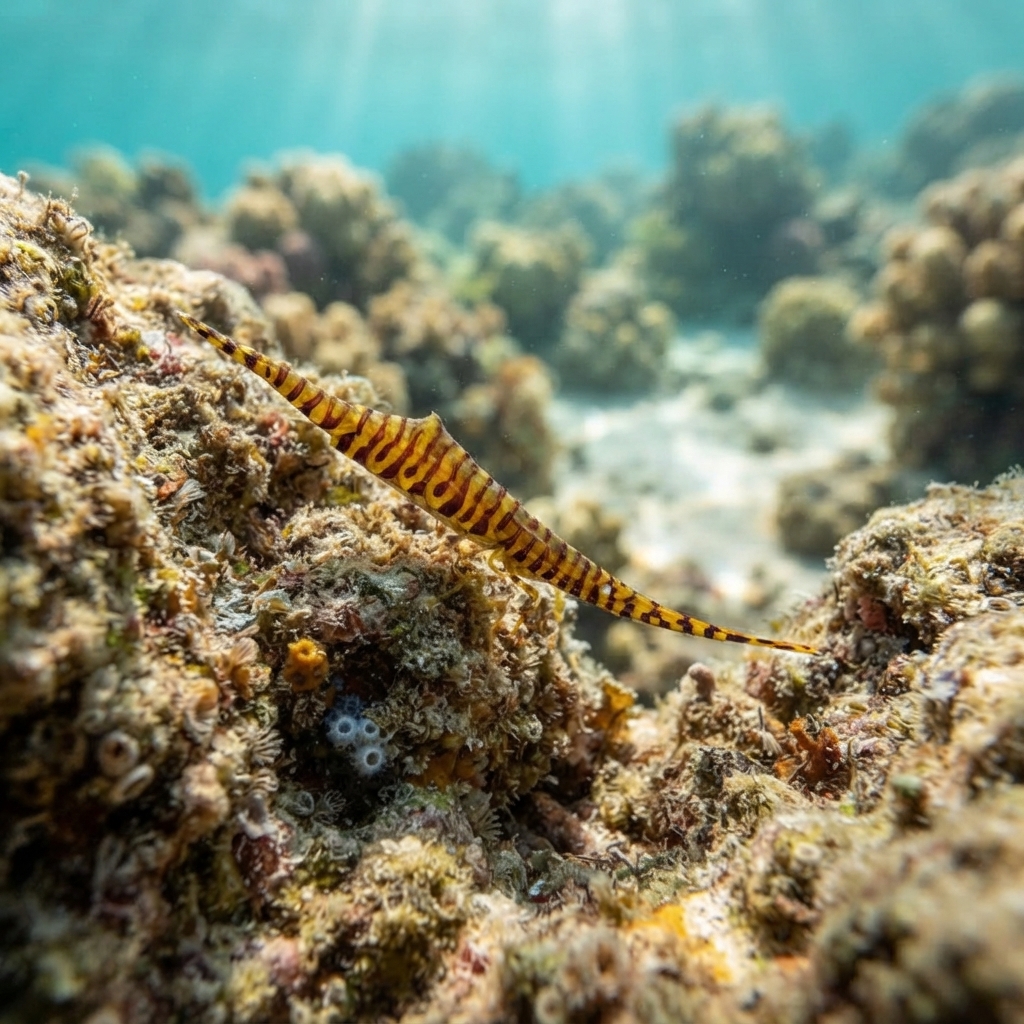
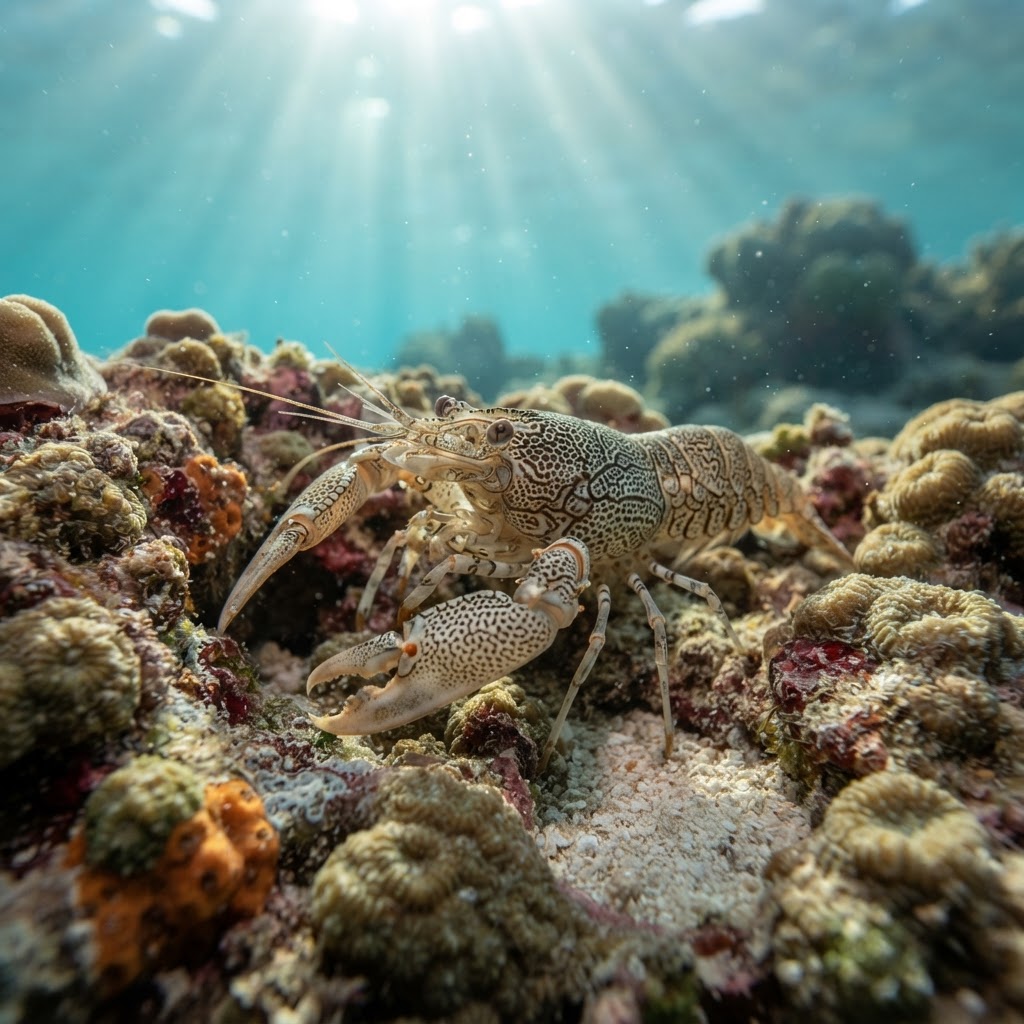
A small burrowing shrimp, marked with mottled, patterned bands across its enlarged snapping claw that give it a carved, engraved look against the paler body. Look for one claw noticeably larger than the other, a classic snapping shrimp (alpheid) trait, and a body that stays low and half-hidden in rubble or sand pockets rather than swimming in the open. Divers typically spot the claw or antennae first, poking out of a crevice, before the whole animal comes into view.
Expect to find it tucked into rubble, sand burrows, or crevices low on the reef rather than out in open water, which is likely why it's logged as rare to uncommon even at its known sites. Like other snapping shrimp, it probably retreats quickly at the first sign of a diver's shadow or fin wash, so slow, careful looking near rubble patches pays off more than fast swimming past. Most sightings are opportunistic finds during macro-focused dives rather than planned encounters.
It belongs to the snapping shrimp family, alpheids, known for a specialised claw that snaps shut fast enough to create a shockwave and an audible crack, used to stun prey or warn off rivals.
Sightings show no clear seasonal pattern, and with water temperatures ranging comfortably from 22.4 to 28.4C, it appears to be present year-round on the reefs where it's found. Plan around convenient travel dates rather than a particular month.
Reef neighbours a diver could mistake it for. Use the identification notes above to tell them apart.
Most diver logs of this species come from Hawaii, where it turns up at several sites, with a single additional record from Karnataka, India. If you're specifically hunting one down, Hawaii is by far the more reliable starting point given the current spread of sightings.
Mapping where Petroglyph Shrimp is logged…
Hawaii is the most reliable region, with multiple sites logging this species, plus a single record from Karnataka, India. Outside these areas, confirmed sightings are currently very limited.
There's no detected seasonal pattern, and it's found across a temperature range of 22.4 to 28.4C, suggesting it can be seen year-round at its known sites rather than during a specific window.
Look for a small shrimp with mottled, patterned markings on an enlarged snapping claw, tucked into rubble or sand crevices rather than swimming freely. One claw is distinctly larger than the other, a hallmark of snapping shrimp.
No, they pose no danger to divers. They're small, shy, and retreat into crevices rather than interact with people underwater.
Its family, alpheidae, is famous for a specialised claw that snaps shut so fast it creates a cavitation bubble and shockwave, loud enough to stun small prey and audible to divers nearby.
Site and sighting data is aggregated from diver logs, iNaturalist and GBIF. For taxonomy and conservation status:
Sally Lightfoot Crab
2,422 sites